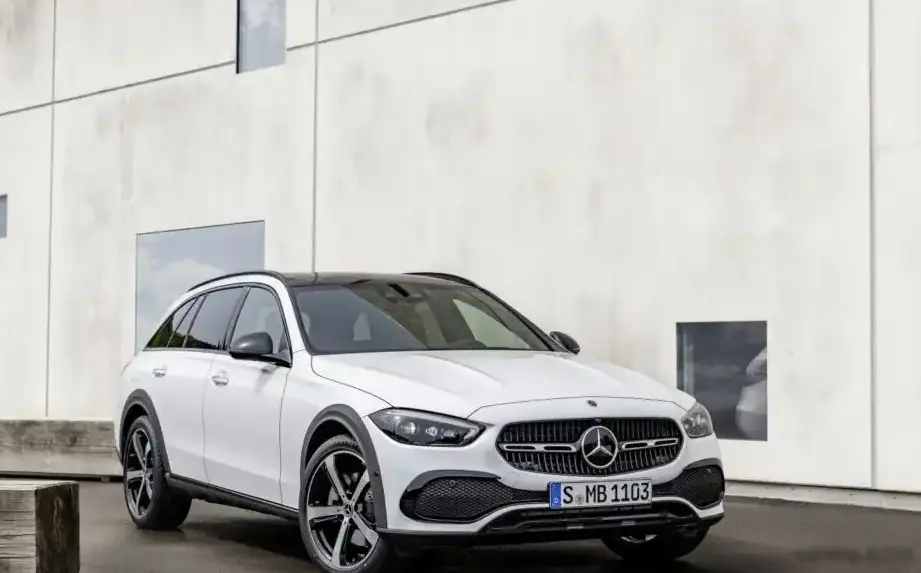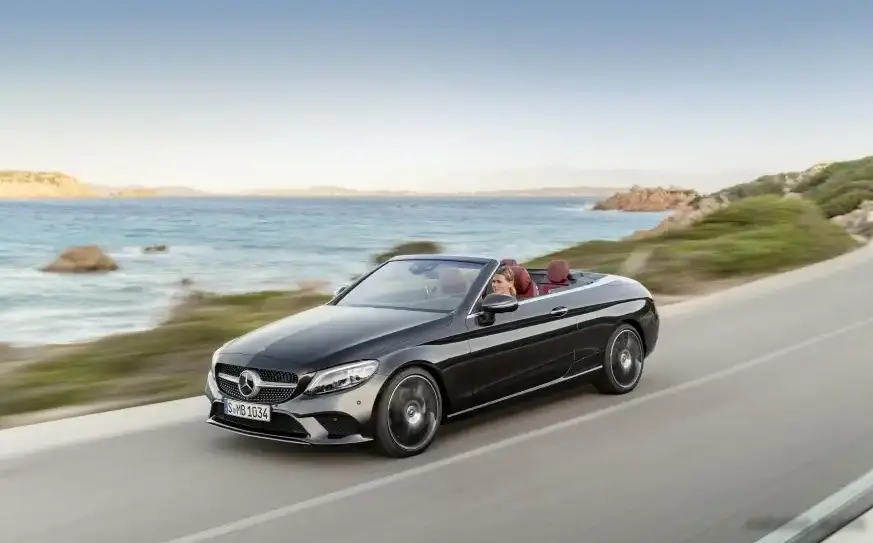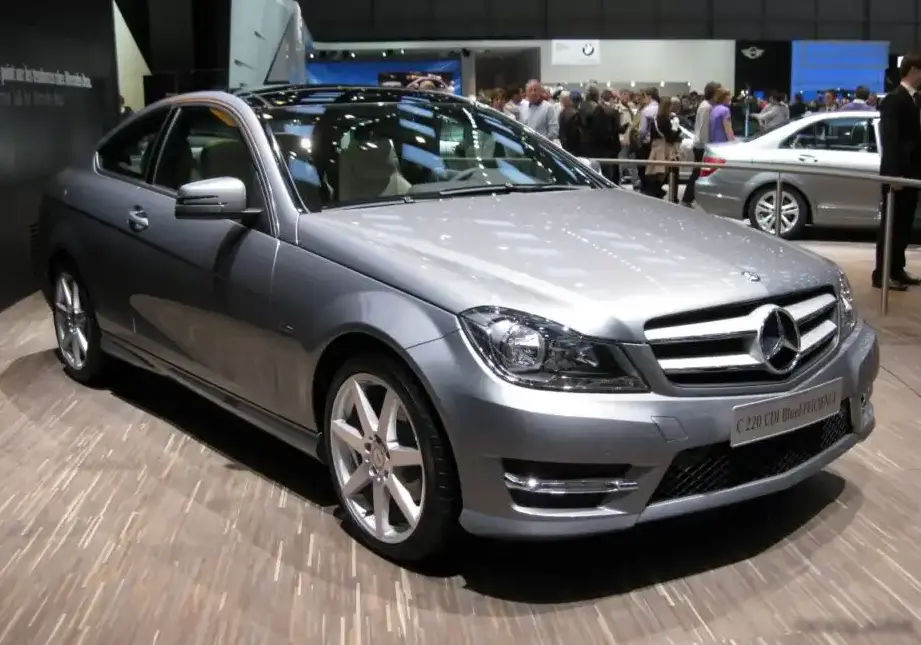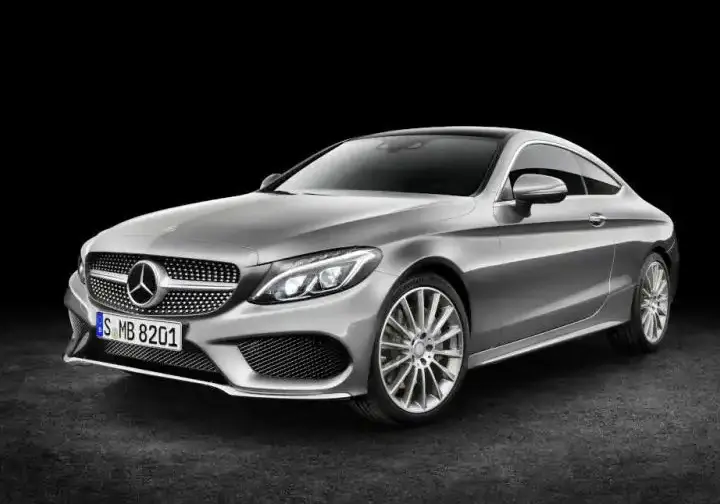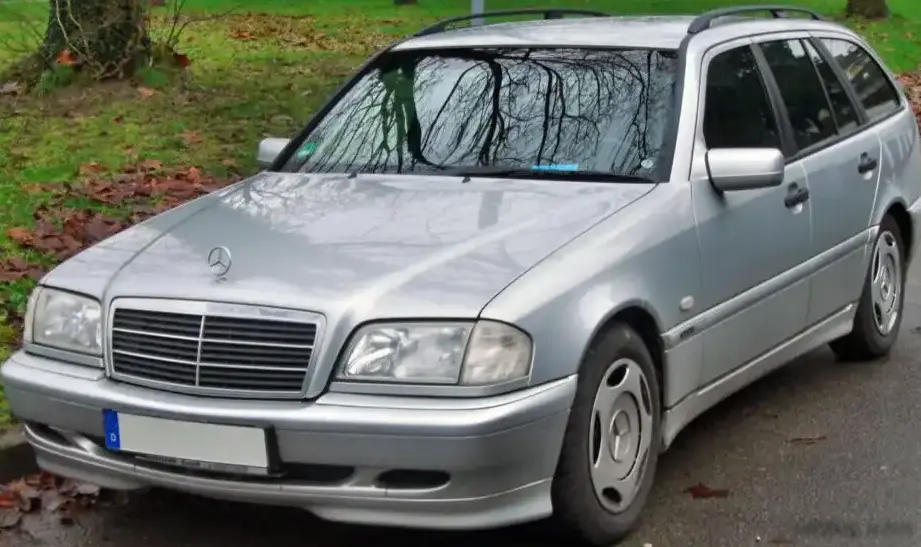
The Mercedes-Benz C-Class T-modell C 240, produced from November 1996 to June 2000, represents a significant iteration of the S202 series, specifically the facelifted version. This variant occupied a middle ground within the C-Class range, offering a balance between performance, practicality, and luxury. As a station wagon (estate) based on the W202 platform, it aimed to provide the comfort and refinement expected of a Mercedes-Benz, combined with the increased cargo capacity desired by families and those with active lifestyles. The C 240 was positioned above the base C 180 and C 220 models, but below the more powerful C 280 and C 36 AMG, offering a compelling alternative for buyers seeking a step up in performance without the higher price tag of the top-tier trims.
Technical Specifications
| Brand | Mercedes-Benz |
| Model | C-Class |
| Generation | C-Class T-modell (S202, facelift 1997) |
| Type (Engine) | C 240 (170 Hp) |
| Start of production | November, 1996 |
| End of production | June, 2000 |
| Powertrain Architecture | Internal Combustion engine |
| Body type | Station wagon (estate) |
| Seats | 5 |
| Doors | 5 |
| Fuel consumption (urban) | 12.1 l/100 km (19.4 US mpg) |
| Fuel consumption (extra urban) | 6.9 l/100 km (34.1 US mpg) |
| Fuel Type | Petrol (Gasoline) |
| Acceleration 0 – 100 km/h | 9.5 sec |
| Acceleration 0 – 62 mph | 9.5 sec |
| Acceleration 0 – 60 mph | 9 sec |
| Maximum speed | 216 km/h (134.22 mph) |
| Weight-to-power ratio | 8.6 kg/Hp |
| Weight-to-torque ratio | 6.5 kg/Nm |
| Power | 170 Hp @ 5900 rpm |
| Power per litre | 70.9 Hp/l |
| Torque | 225 Nm @ 3000-5000 rpm (165.95 lb.-ft. @ 3000-5000 rpm) |
| Engine layout | Front, Longitudinal |
| Engine Model/Code | M 112 E 24/112.910 |
| Engine displacement | 2398 cm3 (146.33 cu. in.) |
| Number of cylinders | 6 |
| Engine configuration | V-engine |
| Cylinder Bore | 83.2 mm (3.28 in.) |
| Piston Stroke | 73.5 mm (2.89 in.) |
| Compression ratio | 10:1 |
| Number of valves per cylinder | 3 |
| Fuel injection system | Multi-port manifold injection |
| Engine aspiration | Naturally aspirated engine |
| Valvetrain | SOHC |
| Engine oil capacity | 8 l (8.45 US qt | 7.04 UK qt) |
| Coolant | 9.5 l (10.04 US qt | 8.36 UK qt) |
| Kerb Weight | 1470 kg (3240.8 lbs.) |
| Max. weight | 1970 kg (4343.11 lbs.) |
| Max load | 500 kg (1102.31 lbs.) |
| Trunk (boot) space – minimum | 465 l (16.42 cu. ft.) |
| Trunk (boot) space – maximum | 1510 l (53.33 cu. ft.) |
| Fuel tank capacity | 62 l (16.38 US gal | 13.64 UK gal) |
| Length | 4516 mm (177.8 in.) |
| Width | 1723 mm (67.83 in.) |
| Height | 1460 mm (57.48 in.) |
| Wheelbase | 2690 mm (105.91 in.) |
| Front track | 1499 mm (59.02 in.) |
| Rear (Back) track | 1464 mm (57.64 in.) |
| Drivetrain Architecture | The Internal combustion engine (ICE) drives the rear wheels of the vehicle. |
| Drive wheel | Rear wheel drive |
| Number of gears and type of gearbox | 5 gears, manual transmission |
| Front suspension | Double wishbone |
| Rear suspension | Independent multi-link spring suspension with stabilizer |
| Front brakes | Ventilated discs |
| Rear brakes | Disc |
| Assisting systems | ABS (Anti-lock braking system) |
| Steering type | Cone worm with recirculation balls |
| Power steering | Hydraulic Steering |
| Tires size | 195/65 R15 |
| Wheel rims size | 6.5J x 15 |
Powertrain & Engine Architecture
The C 240 T-modell was powered by the M112 E 24 engine, a 2.4-liter naturally aspirated V6. This engine was a significant departure from the inline-six engines previously used in the C-Class. The M112 featured all-aluminum construction, a short-stroke design, and three valves per cylinder (two intake, one exhaust) operated by a single overhead camshaft (SOHC). Fuel delivery was handled by a multi-port fuel injection system, providing precise control over the air-fuel mixture. The engine produced 170 horsepower at 5900 rpm and 225 Nm (165.95 lb-ft) of torque between 3000 and 5000 rpm. The engine code 112.910 specifically identifies this variant. The five-speed manual transmission was standard, offering a direct connection between the engine and the rear wheels. While an automatic transmission was available, it impacted performance slightly.
Driving Characteristics
The C 240 with the manual transmission provided a reasonably engaging driving experience. Acceleration from 0 to 60 mph took approximately 9 seconds, and top speed was limited to 134.22 mph. The V6 engine delivered smooth and linear power delivery, making it well-suited for everyday driving. The five-speed manual gearbox allowed for precise control, although the shift linkage wasn’t as precise as some competitors. Compared to the C 220, the C 240 offered noticeably more power and responsiveness. However, it lacked the outright performance of the C 280. The rear-wheel-drive configuration provided a balanced feel, but traction could be limited in slippery conditions. The automatic transmission, while offering convenience, resulted in slightly slower acceleration and a less connected feel.
Equipment & Trim Levels
The C 240 T-modell came standard with a respectable level of equipment, including power windows, central locking, and an anti-lock braking system (ABS). Interior upholstery was typically cloth, although leather was available as an option. The dashboard featured a classic Mercedes-Benz design with wood trim accents. Optional extras included a sunroof, automatic climate control, heated seats, and a premium sound system. The estate body style itself was a key feature, offering a generous 465 liters (16.42 cu. ft.) of cargo space with the rear seats up, expanding to 1510 liters (53.33 cu. ft.) with the seats folded down.
Chassis & Braking
The C 240 T-modell utilized a double wishbone suspension at the front and an independent multi-link spring suspension with a stabilizer bar at the rear. This setup provided a comfortable ride and good handling characteristics. Brakes consisted of ventilated discs at the front and solid discs at the rear. The ABS system helped to maintain control during hard braking. The steering was a cone worm with recirculation balls, providing a reasonably direct feel, although it lacked the precision of more modern steering systems.
Market Reception & Comparison
The C 240 T-modell was generally well-received by automotive critics. It was praised for its comfortable ride, refined interior, and practical estate body style. However, some critics noted that the engine lacked the punch of its competitors, and the handling wasn’t as sporty as some other vehicles in its class. Compared to the C 220, the C 240 offered a significant performance upgrade for a relatively modest price increase. Fuel economy was reasonable for a vehicle of its size and class, averaging around 19.4 US mpg in urban driving and 34.1 US mpg on the highway. Reliability was generally good, although some owners reported issues with the electronic systems.
Legacy
The Mercedes-Benz C-Class T-modell C 240 (S202) has become a popular choice among enthusiasts and collectors. The M112 engine is known for its durability and relatively straightforward maintenance. While not as sought-after as the higher-performance C 280 or C 36 AMG models, the C 240 offers a compelling combination of practicality, comfort, and reliability. Well-maintained examples are still relatively common on the used car market, and prices vary depending on condition and mileage. The C 240 represents a significant step forward in Mercedes-Benz engineering, showcasing the brand’s commitment to quality and innovation.