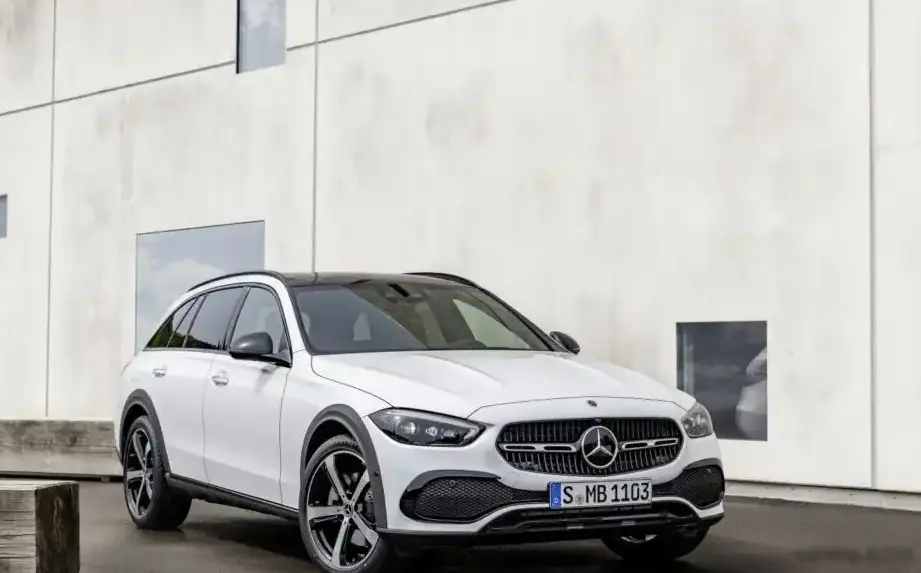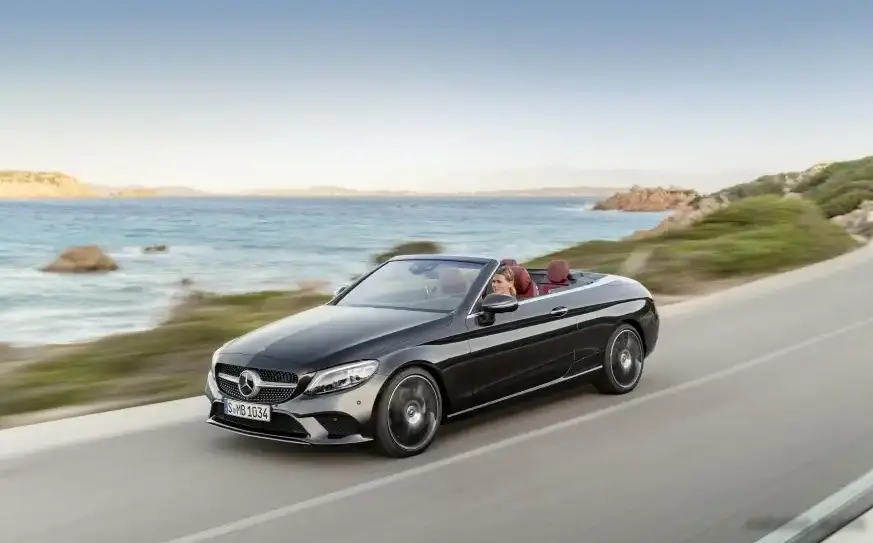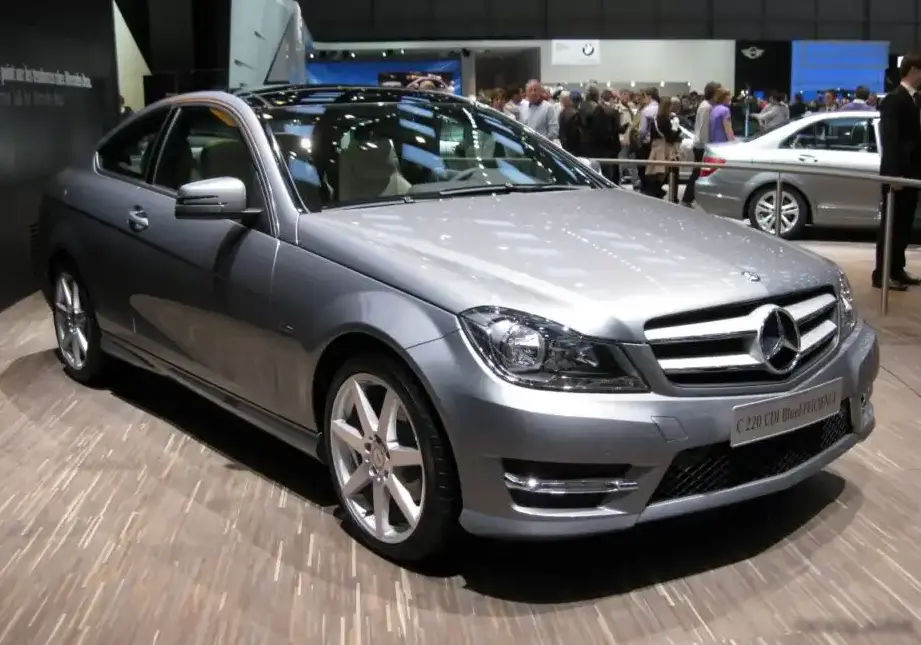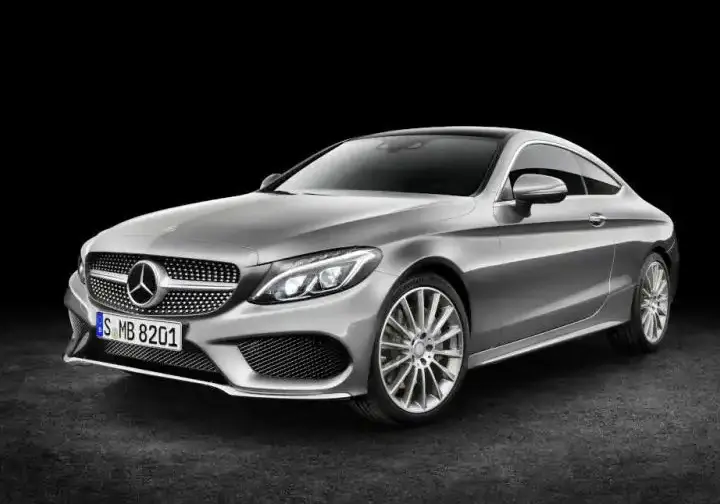
The Mercedes-Benz C-Class T-modell (S203) C 180 Kompressor Automatic, produced from May 2002 to March 2004, represented an entry-level offering within the second generation of the C-Class estate (wagon) range. Positioned below the C 200 Kompressor and significantly below the performance-oriented C 32 AMG, the C 180 Kompressor aimed to provide a balance of practicality, fuel efficiency, and Mercedes-Benz luxury to a broader customer base. It was part of the W203 platform family, known for its advancements in safety and refinement compared to its predecessor. This variant was primarily sold in Europe and other markets where station wagons held significant popularity.
Technical Specifications
| Brand | Mercedes-Benz |
| Model | C-Class |
| Generation | C-Class T-modell (S203) |
| Type (Engine) | C 180 Kompressor (143 Hp) Automatic |
| Start of production | May, 2002 |
| End of production | March, 2004 |
| Powertrain Architecture | Internal Combustion engine |
| Body type | Station wagon (estate) |
| Seats | 5 |
| Doors | 5 |
| Fuel consumption (economy) – urban (NEDC) | 12.1 l/100 km (19.4 US mpg, 23.3 UK mpg, 8.3 km/l) |
| Fuel consumption (economy) – extra urban (NEDC) | 6.1 l/100 km (38.6 US mpg, 46.3 UK mpg, 16.4 km/l) |
| Fuel consumption (economy) – combined (NEDC) | 8.4 l/100 km (28 US mpg, 33.6 UK mpg, 11.9 km/l) |
| CO2 emissions (NEDC) | 202 g/km |
| Fuel Type | Petrol (Gasoline) |
| Acceleration 0 – 100 km/h | 10.2 sec |
| Acceleration 0 – 62 mph | 10.2 sec |
| Acceleration 0 – 60 mph | 9.7 sec |
| Maximum speed | 211 km/h (131.11 mph) |
| Emission standard | Euro 4 |
| Weight-to-power ratio | 10.1 kg/Hp, 98.6 Hp/tonne |
| Weight-to-torque ratio | 6.6 kg/Nm, 151.7 Nm/tonne |
| Power | 143 Hp @ 5200 rpm |
| Power per litre | 79.6 Hp/l |
| Torque | 220 Nm @ 2500-4200 rpm (162.26 lb.-ft. @ 2500-4200 rpm) |
| Engine layout | Front, Longitudinal |
| Engine Model/Code | M 271.946 |
| Engine displacement | 1796 cm3 (109.6 cu. in.) |
| Number of cylinders | 4 |
| Engine configuration | Inline |
| Cylinder Bore | 82 mm (3.23 in.) |
| Piston Stroke | 85 mm (3.35 in.) |
| Compression ratio | 10.2:1 |
| Number of valves per cylinder | 4 |
| Fuel injection system | Multi-port manifold injection |
| Engine aspiration | Supercharger, Intercooler |
| Valvetrain | DOHC |
| Engine oil capacity | 5.5 l (5.81 US qt | 4.84 UK qt) |
| Coolant | 8 l (8.45 US qt | 7.04 UK qt) |
| Kerb Weight | 1450 kg (3196.7 lbs.) |
| Max. weight | 2050 kg (4519.48 lbs.) |
| Max load | 600 kg (1322.77 lbs.) |
| Trunk (boot) space – minimum | 470 l (16.6 cu. ft.) |
| Trunk (boot) space – maximum | 1384 l (48.88 cu. ft.) |
| Fuel tank capacity | 62 l (16.38 US gal | 13.64 UK gal) |
| Max. roof load | 100 kg (220.46 lbs.) |
| Permitted trailer load with brakes (12%) | 1500 kg (3306.93 lbs.) |
| Permitted trailer load without brakes | 750 kg (1653.47 lbs.) |
| Length | 4541 mm (178.78 in.) |
| Width | 1728 mm (68.03 in.) |
| Width including mirrors | 1980 mm (77.95 in.) |
| Height | 1465 mm (57.68 in.) |
| Wheelbase | 2715 mm (106.89 in.) |
| Front track | 1505 mm (59.25 in.) |
| Rear (Back) track | 1476 mm (58.11 in.) |
| Front overhang | 755 mm (29.72 in.) |
| Rear overhang | 1071 mm (42.17 in.) |
| Drag coefficient (Cd) | 0.31 |
| Minimum turning circle (turning diameter) | 10.76 m (35.3 ft.) |
| Drivetrain Architecture | The Internal combustion engine (ICE) drives the rear wheels of the vehicle. |
| Drive wheel | Rear wheel drive |
| Number of gears and type of gearbox | 5 gears, automatic transmission |
| Front suspension | Independent type McPherson, Transverse stabilizer |
| Rear suspension | Independent multi-link suspension, Transverse stabilizer |
| Front brakes | Ventilated discs |
| Rear brakes | Disc |
| Assisting systems | ABS (Anti-lock braking system) |
| Steering type | Steering rack and pinion |
| Power steering | Hydraulic Steering |
| Tires size | 195/65 R 15 91 V |
| Wheel rims size | 6 J x 15 H 2 |
INTRODUCTION
The S203 C-Class T-modell, introduced in 2001, brought a more contemporary and refined estate car option to the Mercedes-Benz lineup. The C 180 Kompressor Automatic, launched in 2002, served as the entry point to the range, offering a compelling blend of practicality and the brand’s established luxury. Its primary market was Europe, where the demand for wagons remained strong, but it was also available in other regions. The “Kompressor” designation indicated the presence of a mechanically driven supercharger, enhancing low-end torque and improving responsiveness compared to naturally aspirated engines.
Powertrain & Engine Architecture
The C 180 Kompressor utilized the M271.946 engine, a 1.8-liter (1796 cc) inline-four cylinder powerplant. This engine featured a belt-driven supercharger (Lysholm type) and intercooler, boosting power output to 143 horsepower at 5200 rpm and 220 Nm (162 lb-ft) of torque between 2500 and 4200 rpm. The engine employed multi-port fuel injection and a double overhead camshaft (DOHC) valvetrain with four valves per cylinder. The supercharger provided near-instant boost, mitigating turbo lag and delivering a more linear power delivery. Paired with this engine was a five-speed automatic transmission, offering smooth shifts but lacking the efficiency of more modern gearboxes. This transmission was a conventional torque converter automatic, prioritizing comfort over outright performance.
Driving Characteristics
The C 180 Kompressor Automatic offered a comfortable and refined driving experience, prioritizing ease of use over sporty handling. Acceleration from 0-100 km/h (0-62 mph) took approximately 10.2 seconds, making it adequately quick for everyday driving but noticeably slower than the C 200 Kompressor or the more powerful variants. The automatic transmission, while smooth, could feel somewhat hesitant during quick overtaking maneuvers. The supercharger did provide a useful boost in low and mid-range power, making city driving and merging onto highways less stressful. Compared to the manual transmission versions, the automatic sacrificed some responsiveness and fuel economy. The gear ratios were tuned for comfort and fuel efficiency, rather than maximizing performance.
Equipment & Trim Levels
The C 180 Kompressor Automatic typically came standard with features such as air conditioning, power windows, central locking, and an audio system. Interior upholstery was generally cloth, although leather options were available. Standard dashboard trim was typically wood or aluminum effect. Optional extras included sunroof, upgraded audio systems, automatic climate control, and parking sensors. The trim level was generally considered entry-level within the C-Class T-modell range, focusing on providing essential features and a comfortable driving experience without the added luxury of higher-spec models.
Chassis & Braking
The S203 C-Class T-modell featured an independent suspension system, with McPherson struts at the front and a multi-link setup at the rear. This provided a comfortable ride quality, absorbing bumps and imperfections in the road effectively. The C 180 Kompressor typically came equipped with ventilated disc brakes at the front and solid disc brakes at the rear. Anti-lock Braking System (ABS) was standard. Stabilizer bars were fitted to both the front and rear axles to reduce body roll during cornering. The suspension was tuned for comfort, prioritizing ride quality over sharp handling.
Market Reception & Comparison
The C 180 Kompressor Automatic was generally well-received as a practical and affordable entry point into the Mercedes-Benz C-Class range. Critics praised its comfortable ride, refined interior, and the added responsiveness provided by the supercharger. However, some reviewers noted its relatively modest performance compared to other engines in the lineup. Compared to the C 200 Kompressor, the C 180 offered lower running costs but sacrificed performance. The C 180 also offered better fuel economy than the larger-engined models, making it an attractive option for drivers prioritizing efficiency. Reliability was generally good, although the automatic transmission could be prone to occasional issues with age.
Legacy
The M271 engine, in its various forms, proved to be a relatively reliable powerplant. However, the five-speed automatic transmission is now considered dated and can be a source of maintenance issues in higher-mileage examples. Today, the C 180 Kompressor T-modell represents an affordable entry point into Mercedes-Benz ownership. While not a performance standout, it offers a comfortable, practical, and relatively reliable option for those seeking a used estate car. Parts availability is generally good, and the car’s relatively simple mechanicals make it a viable option for DIY mechanics. The C 180 Kompressor remains a popular choice for those seeking a classic Mercedes-Benz wagon without the high price tag of more desirable models.