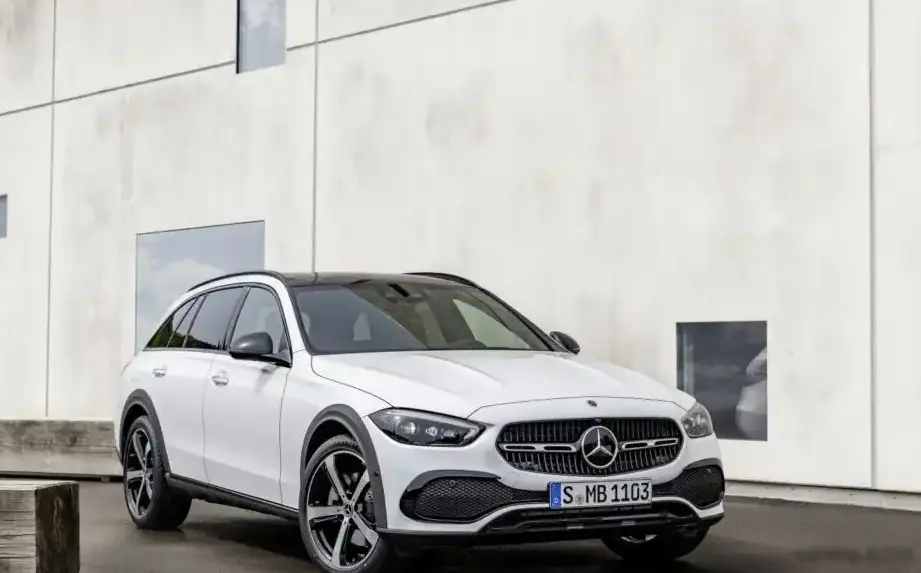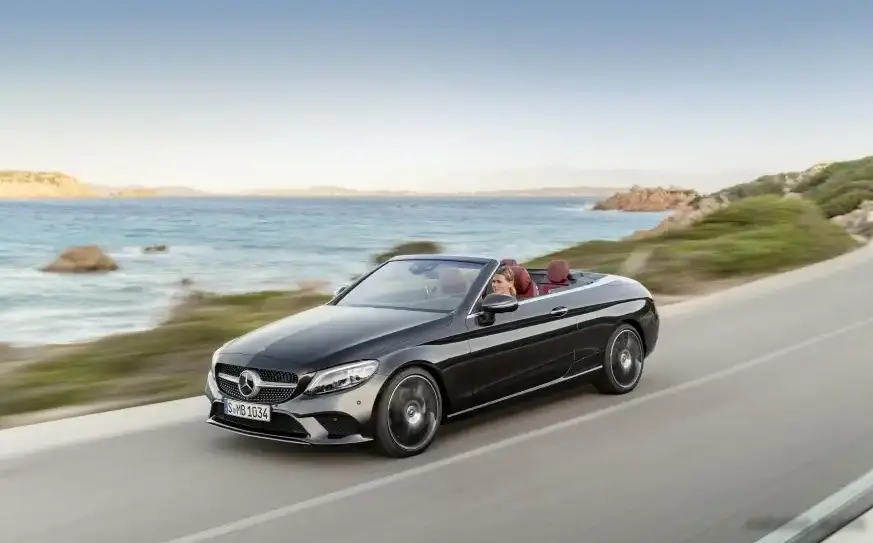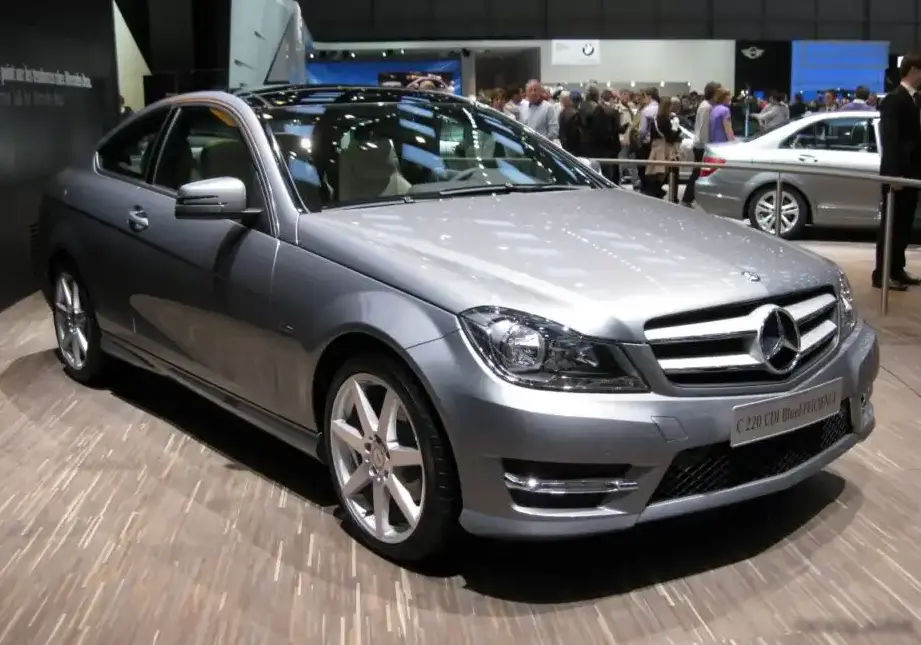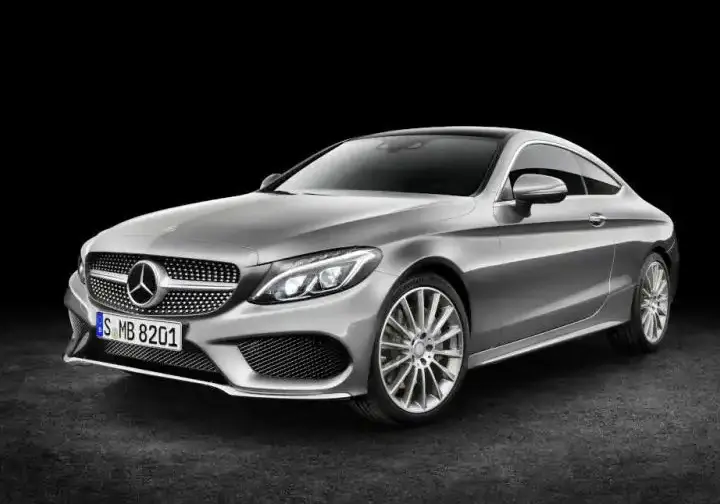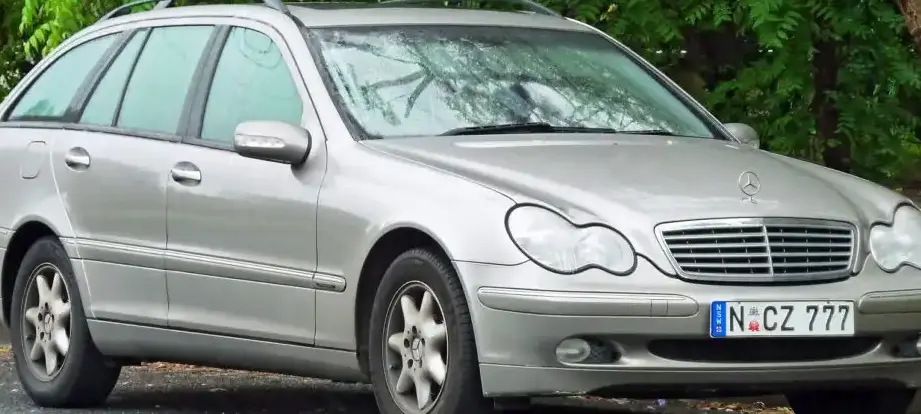
The Mercedes-Benz C-Class T-modell (S203) C 240 V6, produced from January 2001 to March 2004, represented a compelling blend of practicality and performance within the compact executive estate car segment. Positioned as a mid-range offering in the S203 series – the wagon variant of the W203 C-Class – the C 240 V6 aimed to provide a more refined and powerful alternative to the base 1.8L and 2.0L models, while remaining more accessible than the high-performance C32 AMG. It was primarily marketed in Europe and other regions where estate cars (known as “Touring” or “Avantgarde” in some markets) held significant popularity, offering a premium experience with a focus on comfort and a capable engine.
Technical Specifications
| Brand | Mercedes-Benz |
| Model | C-class |
| Generation | C-class T-modell (S203) |
| Type (Engine) | C 240 V6 (170 Hp) |
| Start of production | January, 2001 |
| End of production | March, 2004 |
| Powertrain Architecture | Internal Combustion engine |
| Body type | Station wagon (estate) |
| Seats | 5 |
| Doors | 5 |
| Fuel consumption (economy) – urban (NEDC) | 17.1 l/100 km (13.8 US mpg, 16.5 UK mpg, 5.8 km/l) |
| Fuel consumption (economy) – extra urban (NEDC) | 8.4 l/100 km (28 US mpg, 33.6 UK mpg, 11.9 km/l) |
| Fuel consumption (economy) – combined (NEDC) | 11.6 l/100 km (20.3 US mpg, 24.4 UK mpg, 8.6 km/l) |
| CO2 emissions (NEDC) | 278 g/km |
| Fuel Type | Petrol (Gasoline) |
| Acceleration 0 – 100 km/h | 9.5 sec |
| Acceleration 0 – 62 mph | 9.5 sec |
| Acceleration 0 – 60 mph | 9 sec (Calculated) |
| Maximum speed | 229 km/h (142.29 mph) |
| Emission standard | Euro 4 |
| Weight-to-power ratio | 8.9 kg/Hp, 112.6 Hp/tonne |
| Weight-to-torque ratio | 6.3 kg/Nm, 158.9 Nm/tonne |
| Power | 170 Hp @ 5500 rpm |
| Power per litre | 65.5 Hp/l |
| Torque | 240 Nm @ 4500 rpm (177.01 lb.-ft. @ 4500 rpm) |
| Engine layout | Front, Longitudinal |
| Engine Model/Code | M 112.912 |
| Engine displacement | 2597 cm3 (158.48 cu. in.) |
| Number of cylinders | 6 |
| Engine configuration | V-engine |
| Cylinder Bore | 89.9 mm (3.54 in.) |
| Piston Stroke | 68.2 mm (2.69 in.) |
| Compression ratio | 10.5:1 |
| Number of valves per cylinder | 3 |
| Fuel injection system | Multi-port manifold injection |
| Engine aspiration | Naturally aspirated engine |
| Valvetrain | SOHC |
| Engine oil capacity | 8 l (8.45 US qt, 7.04 UK qt) |
| Coolant | 10.5 l (11.1 US qt, 9.24 UK qt) |
| Kerb Weight | 1510 kg (3328.98 lbs.) |
| Max. weight | 2110 kg (4651.75 lbs.) |
| Max load | 600 kg (1322.77 lbs.) |
| Trunk (boot) space – minimum | 470 l (16.6 cu. ft.) |
| Trunk (boot) space – maximum | 1384 l (48.88 cu. ft.) |
| Fuel tank capacity | 62 l (16.38 US gal, 13.64 UK gal) |
| Max. roof load | 100 kg (220.46 lbs.) |
| Permitted trailer load with brakes (12%) | 1500 kg (3306.93 lbs.) |
| Permitted trailer load without brakes | 750 kg (1653.47 lbs.) |
| Length | 4541 mm (178.78 in.) |
| Width | 1728 mm (68.03 in.) |
| Width including mirrors | 1980 mm (77.95 in.) |
| Height | 1466 mm (57.72 in.) |
| Wheelbase | 2715 mm (106.89 in.) |
| Front track | 1493 mm (58.78 in.) |
| Rear (Back) track | 1464 mm (57.64 in.) |
| Front overhang | 755 mm (29.72 in.) |
| Rear overhang | 1071 mm (42.17 in.) |
| Drag coefficient (Cd) | 0.31 |
| Minimum turning circle | 10.76 m (35.3 ft.) |
| Drivetrain Architecture | Rear wheel drive |
| Drive wheel | Rear wheel drive |
| Number of gears and type of gearbox | 6 gears, manual transmission |
| Front suspension | Independent type McPherson, Transverse stabilizer |
| Rear suspension | Independent multi-link suspension, Transverse stabilizer |
| Front brakes | Ventilated discs |
| Rear brakes | Disc |
| Assisting systems | ABS (Anti-lock braking system) |
| Steering type | Steering rack and pinion |
| Power steering | Hydraulic Steering |
| Tires size | 205/55 R 16 91 V |
| Wheel rims size | 7 J x 16 H 2 |
Powertrain & Engine Architecture
The C 240 V6 was powered by the M112.912 engine, a 2.6-liter naturally aspirated V6. This engine was a significant departure from the inline-four engines offered in the lower trims. The M112 featured all-aluminum construction, three valves per cylinder (two intake, one exhaust), and a double overhead camshaft (DOHC) design. Fuel delivery was handled by a multi-port fuel injection system, providing precise fuel metering for optimal combustion. The engine produced 170 horsepower at 5500 rpm and 240 Nm (177 lb-ft) of torque at 4500 rpm. The engine’s longitudinal mounting and rear-wheel drive configuration were typical for Mercedes-Benz vehicles of this era, contributing to a balanced driving experience. The standard transmission was a 6-speed manual, though a 5-speed automatic transmission was also available, impacting acceleration and fuel economy.
Driving Characteristics
The C 240 V6 offered a noticeable step up in performance compared to the four-cylinder models. While not a sports car, the V6 provided smooth and responsive acceleration, making it well-suited for both city driving and highway cruising. The 0-60 mph time of around 9 seconds was respectable for the early 2000s. The manual transmission allowed for greater driver control, while the automatic offered convenience, albeit with a slight performance penalty. The rear-wheel drive layout contributed to balanced handling, though it could be less forgiving in slippery conditions compared to all-wheel drive systems found in some competitors. The suspension, tuned for comfort, provided a relatively smooth ride, absorbing bumps and imperfections in the road surface effectively.
Equipment & Trim Levels
The C 240 V6 typically came equipped with a generous array of standard features, reflecting Mercedes-Benz’s commitment to luxury and refinement. These included automatic climate control, power windows and locks, a multi-function steering wheel, and a high-quality audio system. Interior upholstery was typically cloth, with leather options available as an upgrade. Optional extras included a sunroof, navigation system, heated seats, and upgraded audio systems. Trim levels varied slightly depending on the market, but generally, the C 240 V6 occupied a mid-range position, offering a balance of features and price.
Chassis & Braking
The S203 C-Class featured an independent suspension system at all four wheels. The front suspension utilized McPherson struts with a transverse stabilizer bar, while the rear employed a multi-link setup, also with a stabilizer bar. This configuration provided a good balance of ride comfort and handling precision. Braking duties were handled by ventilated disc brakes at the front and solid disc brakes at the rear. Anti-lock Braking System (ABS) was standard, enhancing safety and control during emergency braking situations. The chassis was designed to provide a rigid and stable platform, contributing to the car’s overall handling characteristics.
Market Reception & Comparison
The C 240 V6 was generally well-received by automotive critics. It was praised for its smooth and refined engine, comfortable ride, and spacious interior. However, some critics noted that the fuel economy was relatively poor compared to the four-cylinder models. Compared to the C180 or C200 Kompressor, the C 240 V6 offered significantly more power and a more luxurious driving experience, but at a higher price point. Against competitors like the BMW 3 Series and Audi A4, the C 240 V6 offered a compelling alternative, particularly for buyers prioritizing comfort and refinement over outright sportiness.
Legacy
The M112 engine family, including the 2.6-liter variant found in the C 240 V6, proved to be relatively reliable. With proper maintenance, these engines can provide many years of service. However, like any older vehicle, the C 240 V6 is now susceptible to age-related issues, such as worn suspension components, electrical problems, and potential oil leaks. On the used car market, the C 240 V6 T-modell represents a relatively affordable entry point into Mercedes-Benz ownership, offering a blend of practicality, comfort, and a touch of luxury. Its enduring appeal lies in its well-rounded character and the reputation for durability associated with the Mercedes-Benz brand.