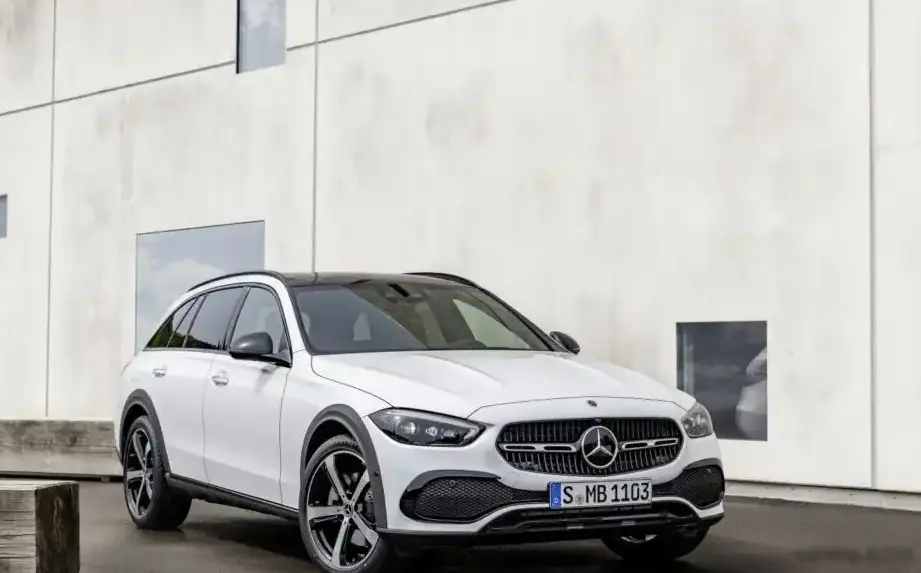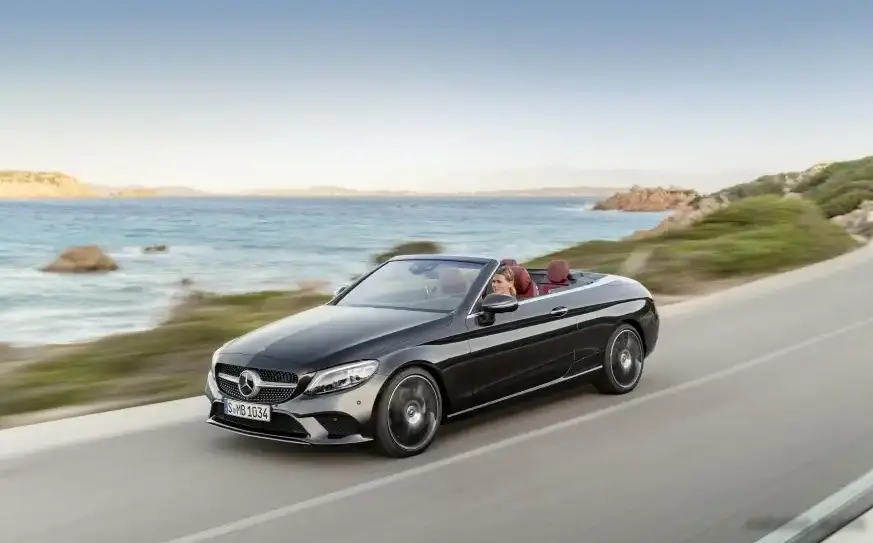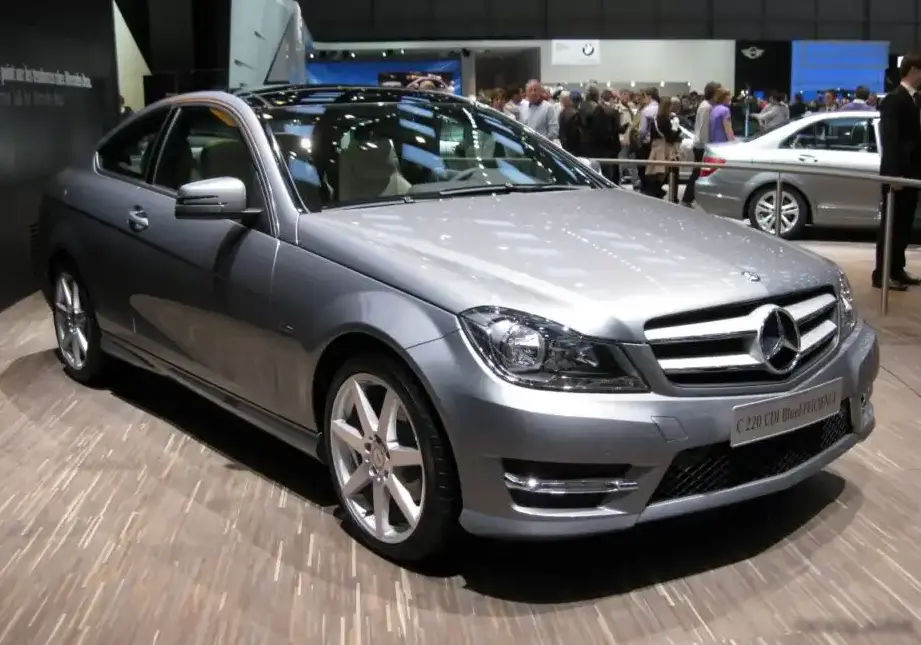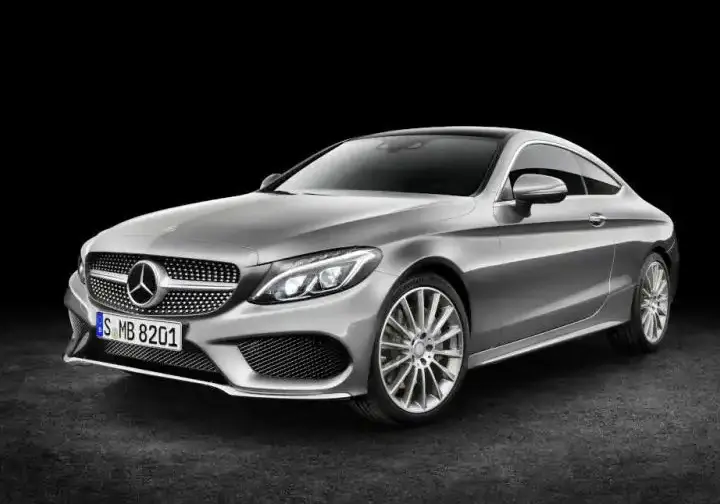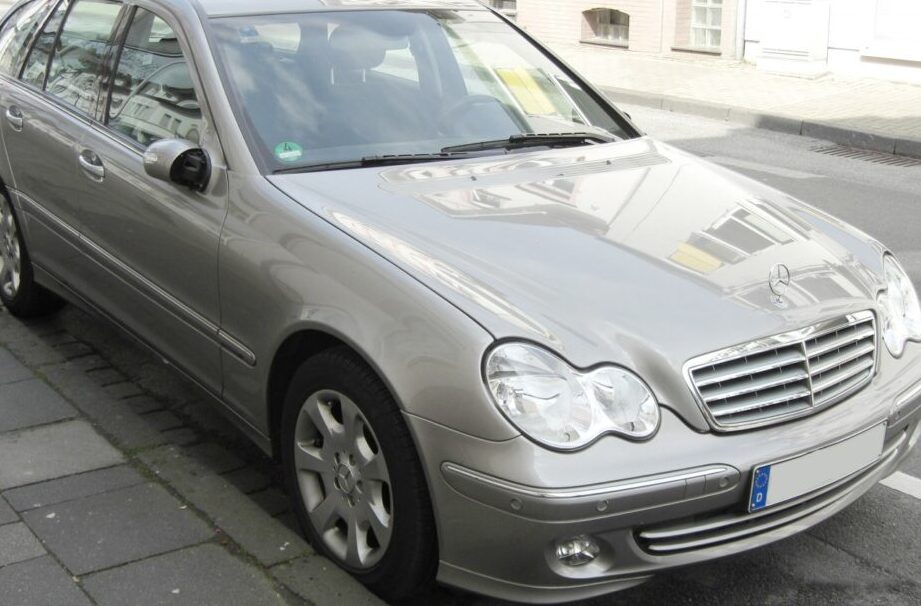
The Mercedes-Benz C-Class T-modell (S203) facelift, specifically the C 220 CDI variant with a 150 horsepower engine and automatic transmission, was produced from April 2004 to May 2007. This model represented a practical, diesel-powered option within the broader S203 estate range, appealing to buyers seeking fuel efficiency and cargo capacity combined with the Mercedes-Benz brand prestige. It sat in the mid-range of the T-modell lineup, offering a balance between the more affordable C 180 CDI and the higher-performance C 320 CDI.
Technical Specifications
| Brand | Mercedes-Benz |
| Model | C-Class |
| Generation | C-Class T-modell (S203, facelift 2004) |
| Type (Engine) | C 220 CDI (150 Hp) Automatic |
| Start of production | April, 2004 |
| End of production | May, 2007 |
| Powertrain Architecture | Internal Combustion engine |
| Body type | Station wagon (estate) |
| Seats | 5 |
| Doors | 5 |
| Fuel consumption (urban) | 8.9 l/100 km (26.4 US mpg, 31.7 UK mpg, 11.2 km/l) |
| Fuel consumption (extra urban) | 5.3 l/100 km (44.4 US mpg, 53.3 UK mpg, 18.9 km/l) |
| Fuel consumption (combined) | 6.5 l/100 km (36.2 US mpg, 43.5 UK mpg, 15.4 km/l) |
| CO2 emissions | 180 g/km |
| Fuel Type | Diesel |
| Acceleration 0 – 100 km/h | 10.9 sec |
| Acceleration 0 – 62 mph | 10.9 sec |
| Acceleration 0 – 60 mph | 10.4 sec |
| Maximum speed | 209 km/h (129.87 mph) |
| Emission standard | Euro 3 |
| Weight-to-power ratio | 10.2 kg/Hp, 97.7 Hp/tonne |
| Weight-to-torque ratio | 4.5 kg/Nm, 221.5 Nm/tonne |
| Power | 150 Hp @ 4200 rpm |
| Power per litre | 69.8 Hp/l |
| Torque | 340 Nm @ 2000 rpm (250.77 lb.-ft. @ 2000 rpm) |
| Engine layout | Front, Longitudinal |
| Engine Model/Code | OM 646.963 |
| Engine displacement | 2148 cm3 (131.08 cu. in.) |
| Number of cylinders | 4 |
| Engine configuration | Inline |
| Cylinder Bore | 88 mm (3.46 in.) |
| Piston Stroke | 88.3 mm (3.48 in.) |
| Compression ratio | 18:1 |
| Number of valves per cylinder | 4 |
| Fuel injection system | Diesel Commonrail |
| Engine aspiration | Turbocharger, Intercooler |
| Valvetrain | DOHC |
| Engine oil capacity | 6.5 l (6.87 US qt | 5.72 UK qt) |
| Coolant capacity | 8.5 l (8.98 US qt | 7.48 UK qt) |
| Kerb Weight | 1535 kg (3384.1 lbs.) |
| Max. weight | 2115 kg (4662.78 lbs.) |
| Max load | 580 kg (1278.68 lbs.) |
| Trunk (boot) space – minimum | 470 l (16.6 cu. ft.) |
| Trunk (boot) space – maximum | 1384 l (48.88 cu. ft.) |
| Fuel tank capacity | 62 l (16.38 US gal | 13.64 UK gal) |
| Max. roof load | 100 kg (220.46 lbs.) |
| Permitted trailer load (braked) | 1500 kg (3306.93 lbs.) |
| Permitted trailer load (unbraked) | 750 kg (1653.47 lbs.) |
| Length | 4541 mm (178.78 in.) |
| Width | 1728 mm (68.03 in.) |
| Width (with mirrors) | 1980 mm (77.95 in.) |
| Height | 1465 mm (57.68 in.) |
| Wheelbase | 2715 mm (106.89 in.) |
| Front track | 1505 mm (59.25 in.) |
| Rear track | 1476 mm (58.11 in.) |
| Front overhang | 755 mm (29.72 in.) |
| Rear overhang | 1071 mm (42.17 in.) |
| Drag coefficient (Cd) | 0.31 |
| Turning circle | 10.76 m (35.3 ft.) |
| Drivetrain | Rear wheel drive |
| Gearbox | 5 gears, automatic transmission |
| Front suspension | Independent type McPherson, Transverse stabilizer |
| Rear suspension | Independent multi-link suspension, Transverse stabilizer |
| Front brakes | Ventilated discs |
| Rear brakes | Disc |
| Safety systems | ABS (Anti-lock braking system) |
| Steering | Steering rack and pinion, Hydraulic Power Steering |
| Tires size | 205/55 R 16 V |
| Wheel rims size | 7 J x 16 H 2 |
Powertrain & Engine Architecture
The C 220 CDI T-modell utilized the OM 646.963, a 2.1-liter inline-four cylinder diesel engine. This engine was a mainstay of Mercedes-Benz’s mid-size offerings during the early 2000s. It featured common rail direct injection, a turbocharger with an intercooler, and a double overhead camshaft (DOHC) valvetrain with four valves per cylinder. The high compression ratio of 18:1 contributed to its efficiency and torque output. The automatic transmission was a five-speed unit, designed to provide smooth shifts and optimize fuel economy. This transmission was not known for particularly sporty performance, prioritizing comfort and ease of use.
Driving Characteristics
The 150 hp and 340 Nm (250 lb-ft) of torque delivered by the C 220 CDI provided adequate, though not exhilarating, performance. Acceleration from 0-60 mph took around 10.4 seconds, and the top speed was 129.87 mph. The automatic transmission, while smooth, did result in some power loss compared to the available manual transmission. The engine’s torque peak at 2000 rpm meant that it felt responsive in everyday driving situations, particularly for overtaking. However, it lacked the punch of the more powerful C 320 CDI. The rear-wheel drive configuration provided a balanced feel, but could become unsettled on slippery surfaces.
Equipment & Trim Levels
The C 220 CDI T-modell typically came equipped with features such as air conditioning, power windows, central locking, and an audio system. Standard upholstery was cloth, though leather options were available. The facelifted S203 models benefited from revised interior trim and updated dashboard designs compared to the pre-facelift versions. Optional extras included a sunroof, upgraded audio systems, navigation, and parking sensors. The estate body style itself was a key feature, offering a generous 470-1384 liter cargo capacity.
Chassis & Braking
The S203 C-Class featured an independent suspension setup, with McPherson struts at the front and a multi-link suspension at the rear. This provided a comfortable ride, although it wasn’t particularly sporty. The C 220 CDI was equipped with ventilated disc brakes at the front and solid discs at the rear. Anti-lock Braking System (ABS) was standard. Stabilizer bars were fitted to both the front and rear axles to reduce body roll during cornering.
Market Reception & Comparison
The C 220 CDI T-modell was well-received as a practical and economical estate car. Critics praised its fuel efficiency and spacious interior. Compared to the C 180 CDI, the C 220 CDI offered noticeably more power and performance. However, the C 320 CDI provided a significant step up in performance, albeit at a higher price point and with reduced fuel economy. The C 220 CDI represented a sweet spot for many buyers, balancing performance, economy, and practicality.
Legacy
The OM 646 engine family, including the 646.963 variant, is generally considered to be a reliable unit, although regular maintenance is crucial. Common issues can include injector problems and turbocharger wear, particularly on higher-mileage examples. The five-speed automatic transmission is also generally durable, but can be prone to occasional issues with the electronic control unit. Today, the C 220 CDI T-modell represents a relatively affordable entry point into Mercedes-Benz ownership, offering a comfortable and practical vehicle for those seeking a fuel-efficient estate car. Its relatively simple mechanicals make it a viable option for DIY mechanics, and parts availability remains good.