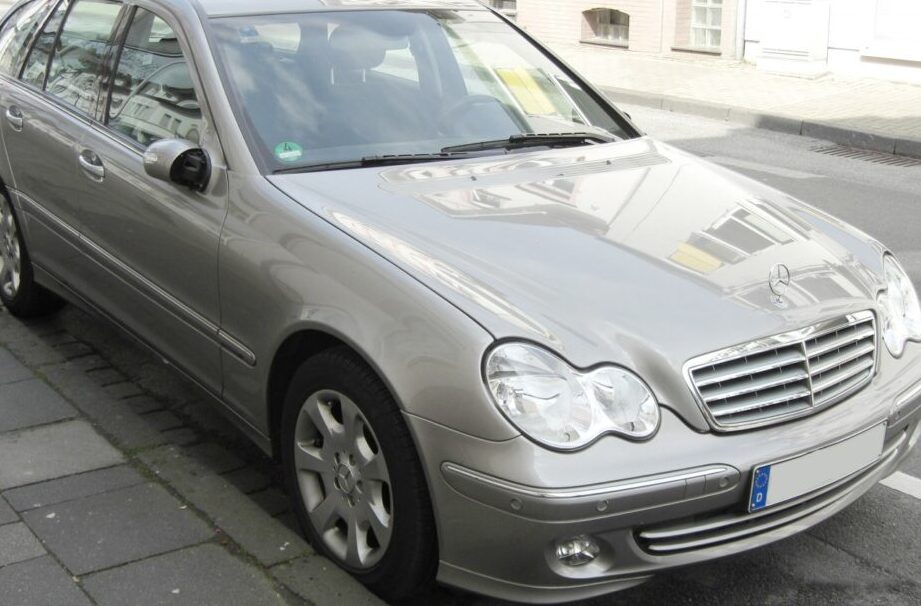
The Mercedes-Benz C-Class T-modell (S203) facelift, specifically the C 270 CDI with a 170 horsepower engine and automatic transmission, was produced from April 2004 to June 2005. This variant occupied a mid-range position within the S203 T-modell lineup, offering a balance between performance, fuel economy, and practicality for buyers seeking a diesel-powered wagon. It represented a refinement of the earlier C270 CDI models, benefiting from the styling and mechanical updates introduced with the 2004 facelift. The S203 generation, launched in 2000, was Mercedes-Benz’s entry into the compact executive estate market, aiming to compete with rivals like the BMW 3 Series Touring and Audi A4 Avant.
Technical Specifications
| Brand | Mercedes-Benz |
| Model | C-Class |
| Generation | C-Class T-modell (S203, facelift 2004) |
| Type (Engine) | C 270 CDI (170 Hp) Automatic |
| Start of production | April, 2004 |
| End of production | June, 2005 |
| Powertrain Architecture | Internal Combustion engine |
| Body type | Station wagon (estate) |
| Seats | 5 |
| Doors | 5 |
| Fuel consumption (urban) | 9.9 l/100 km (23.8 US mpg, 28.5 UK mpg, 10.1 km/l) |
| Fuel consumption (extra urban) | 6 l/100 km (39.2 US mpg, 47.1 UK mpg, 16.7 km/l) |
| Fuel consumption (combined) | 7.4 l/100 km (31.8 US mpg, 38.2 UK mpg, 13.5 km/l) |
| CO2 emissions | 198 g/km |
| Fuel Type | Diesel |
| Acceleration 0 – 100 km/h | 9.4 sec |
| Acceleration 0 – 62 mph | 9.4 sec |
| Acceleration 0 – 60 mph | 8.9 sec |
| Maximum speed | 220 km/h (136.7 mph) |
| Emission standard | Euro 3 |
| Weight-to-power ratio | 9.3 kg/Hp, 107.9 Hp/tonne |
| Weight-to-torque ratio | 3.9 kg/Nm, 254 Nm/tonne |
| Power | 170 Hp @ 4200 rpm |
| Power per litre | 63.3 Hp/l |
| Torque | 400 Nm @ 1600-2800 rpm (295.02 lb.-ft. @ 1600-2800 rpm) |
| Engine layout | Front, Longitudinal |
| Engine Model/Code | OM 612.962 |
| Engine displacement | 2685 cm3 (163.85 cu. in.) |
| Number of cylinders | 5 |
| Engine configuration | Inline |
| Cylinder Bore | 88 mm (3.46 in.) |
| Piston Stroke | 88.3 mm (3.48 in.) |
| Compression ratio | 18:1 |
| Number of valves per cylinder | 4 |
| Fuel injection system | Diesel Commonrail |
| Engine aspiration | Turbocharger, Intercooler |
| Valvetrain | DOHC |
| Engine oil capacity | 6.5 l (6.87 US qt | 5.72 UK qt) |
| Coolant capacity | 10.5 l (11.1 US qt | 9.24 UK qt) |
| Kerb Weight | 1575 kg (3472.28 lbs.) |
| Max. weight | 2175 kg (4795.05 lbs.) |
| Max load | 600 kg (1322.77 lbs.) |
| Trunk (boot) space – minimum | 470 l (16.6 cu. ft.) |
| Trunk (boot) space – maximum | 1384 l (48.88 cu. ft.) |
| Fuel tank capacity | 62 l (16.38 US gal | 13.64 UK gal) |
| Max. roof load | 100 kg (220.46 lbs.) |
| Permitted trailer load (braked) | 1500 kg (3306.93 lbs.) |
| Permitted trailer load (unbraked) | 750 kg (1653.47 lbs.) |
| Length | 4541 mm (178.78 in.) |
| Width | 1728 mm (68.03 in.) |
| Width (with mirrors) | 1980 mm (77.95 in.) |
| Height | 1466 mm (57.72 in.) |
| Wheelbase | 2715 mm (106.89 in.) |
| Front track | 1493 mm (58.78 in.) |
| Rear track | 1464 mm (57.64 in.) |
| Front overhang | 755 mm (29.72 in.) |
| Rear overhang | 1071 mm (42.17 in.) |
| Drag coefficient (Cd) | 0.31 |
| Turning circle | 10.76 m (35.3 ft.) |
| Drivetrain | Rear wheel drive |
| Gearbox | 5 gears, automatic transmission |
| Front suspension | Independent type McPherson, Transverse stabilizer |
| Rear suspension | Independent multi-link suspension, Transverse stabilizer |
| Front brakes | Ventilated discs |
| Rear brakes | Disc |
| Safety systems | ABS (Anti-lock braking system) |
| Steering | Steering rack and pinion, Hydraulic Power Steering |
| Tires size | 205/55 R 16 V |
| Wheel rims size | 7 J x 16 H 2 |
Powertrain & Engine Architecture
The C 270 CDI was powered by the OM 612.962, a 2.7-liter inline-five cylinder diesel engine. This engine was a key component of Mercedes-Benz’s diesel strategy in the early 2000s, known for its robust construction and relatively quiet operation for a diesel. The engine utilized a common rail direct injection system, delivering fuel at extremely high pressure for improved combustion efficiency and reduced emissions. A turbocharger with an intercooler further enhanced performance, boosting power and torque. The engine featured a double overhead camshaft (DOHC) valvetrain with four valves per cylinder. The five-speed automatic transmission, a standard feature on this variant, was designed to provide smooth and comfortable gear changes, prioritizing ease of driving over outright performance. The transmission was electronically controlled, adapting shift points based on driving conditions and throttle input.
Driving Characteristics
The C 270 CDI Automatic offered a comfortable and refined driving experience. While not particularly sporty, the engine delivered ample torque from low RPMs, making it well-suited for everyday driving and long-distance cruising. The automatic transmission, while smooth, did result in some power loss compared to the available manual transmission. Acceleration from 0-60 mph took approximately 8.9 seconds, which was respectable for a diesel wagon of its time. The gear ratios were optimized for fuel efficiency and relaxed cruising, rather than aggressive acceleration. The rear-wheel drive configuration provided balanced handling, although it could be less forgiving in slippery conditions compared to all-wheel drive alternatives.
Equipment & Trim Levels
The C 270 CDI Automatic typically came equipped with a reasonable level of standard features, including automatic climate control, power windows and mirrors, a multi-function steering wheel, and a basic audio system. Interior upholstery was usually a cloth or a combination of cloth and leatherette. Optional extras included leather seats, a sunroof, upgraded audio systems, and parking sensors. The facelifted S203 models also benefited from minor interior revisions, including updated switchgear and trim materials.
Chassis & Braking
The S203 C-Class T-modell featured an independent suspension system at all four wheels. The front suspension utilized McPherson struts with a transverse stabilizer bar, while the rear suspension employed a multi-link setup, also with a stabilizer bar. This configuration provided a good balance between ride comfort and handling. The C 270 CDI was equipped with ventilated disc brakes at the front and solid disc brakes at the rear. Anti-lock braking system (ABS) was standard, enhancing safety and stability during braking. The steering was a rack and pinion system with hydraulic power assistance, providing precise and responsive steering feel.
Market Reception & Comparison
The C 270 CDI Automatic was generally well-received by automotive critics as a practical and efficient estate car. It was praised for its comfortable ride, spacious interior, and fuel economy. However, some reviewers noted that the automatic transmission could feel somewhat sluggish, and the overall driving experience lacked the sportiness of some rivals. Compared to the C 200 CDI and C 320 CDI variants, the C 270 CDI offered a compromise between fuel efficiency and performance. The C 200 CDI was more economical but less powerful, while the C 320 CDI offered more performance but at the cost of increased fuel consumption and a higher price point.
Legacy
The OM 612 engine family, including the OM 612.962 found in the C 270 CDI, is known for its durability and longevity. With proper maintenance, these engines can reliably exceed 200,000 miles. However, potential issues include injector failures, turbocharger wear, and occasional problems with the glow plug system. In the used car market, the S203 C-Class T-modell C 270 CDI Automatic remains a relatively affordable option for buyers seeking a practical and fuel-efficient estate car. Its reputation for reliability and the availability of spare parts contribute to its continued appeal.