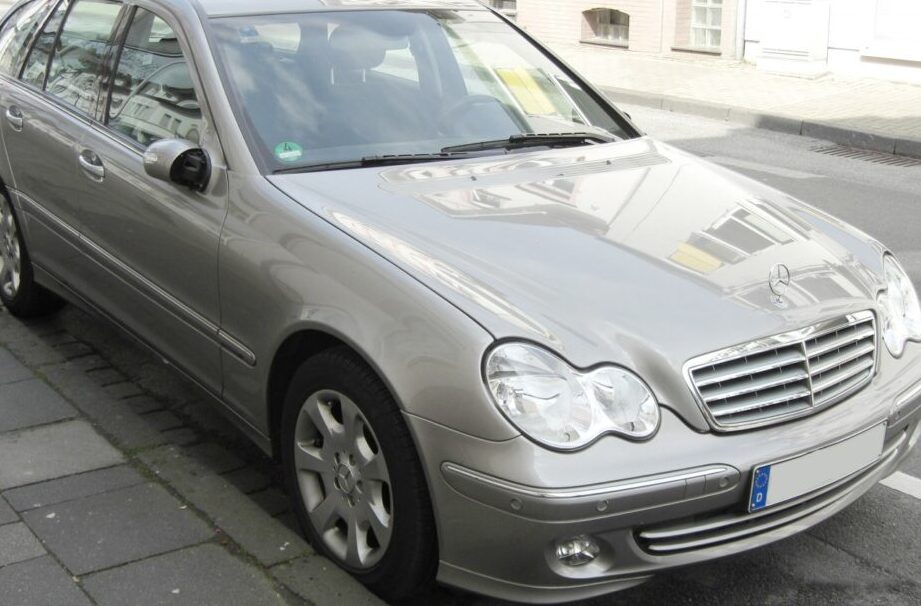
The Mercedes-Benz C-Class T-modell (S203) facelift, specifically the C 320 CDI V6 variant, was produced from December 2004 to May 2007. This model represents a significant offering within the S203 estate range, positioned as a premium, high-performance diesel option. The S203 generation, launched in 2000, aimed to provide a more contemporary and sporty alternative to the preceding W202 C-Class. The 2004 facelift brought revised styling, improved interior materials, and updated engine options, including the powerful C 320 CDI. This variant catered to buyers seeking a blend of practicality, luxury, and strong diesel performance, primarily in European markets where estate cars (T-modells) were highly popular.
Technical Specifications
| Brand | Mercedes-Benz |
| Model | C-Class |
| Generation | C-Class T-modell (S203, facelift 2004) |
| Type (Engine) | C 320 CDI V6 (224 Hp) |
| Start of production | December, 2004 |
| End of production | May, 2007 |
| Powertrain Architecture | Internal Combustion engine |
| Body type | Station wagon (estate) |
| Seats | 5 |
| Doors | 5 |
| Fuel consumption (urban) | 10-11.1 l/100 km (23.5 – 21.2 US mpg) |
| Fuel consumption (extra urban) | 5.8-6.4 l/100 km (40.6 – 36.8 US mpg) |
| Fuel consumption (combined) | 7.4-8.1 l/100 km (31.8 – 29 US mpg) |
| CO2 emissions | 193-214 g/km |
| Fuel Type | Diesel |
| Acceleration 0 – 100 km/h | 8.3 sec |
| Acceleration 0 – 62 mph | 8.3 sec |
| Acceleration 0 – 60 mph | 7.9 sec |
| Maximum speed | 244 km/h (151.61 mph) |
| Emission standard | Euro 4 |
| Weight-to-power ratio | 7.2 kg/Hp |
| Weight-to-torque ratio | 3.9 kg/Nm |
| Power | 224 Hp @ 3800 rpm |
| Torque | 415 Nm @ 1400-3800 rpm (306.09 lb.-ft. @ 1400-3800 rpm) |
| Engine layout | Front, Longitudinal |
| Engine Model/Code | OM 642.910 |
| Engine displacement | 2987 cm3 (182.28 cu. in.) |
| Number of cylinders | 6 |
| Engine configuration | V-engine |
| Cylinder Bore | 83 mm (3.27 in.) |
| Piston Stroke | 92 mm (3.62 in.) |
| Compression ratio | 17.7:1 |
| Number of valves per cylinder | 4 |
| Fuel injection system | Diesel Commonrail |
| Engine aspiration | Turbocharger, Intercooler |
| Valvetrain | SOHC |
| Engine oil capacity | 8.5 l (8.98 US qt | 7.48 UK qt) |
| Coolant capacity | 7.6 l (8.03 US qt | 6.69 UK qt) |
| Kerb Weight | 1605 kg (3538.42 lbs.) |
| Max. weight | 2205 kg (4861.19 lbs.) |
| Max load | 600 kg (1322.77 lbs.) |
| Trunk (boot) space – minimum | 470 l (16.6 cu. ft.) |
| Trunk (boot) space – maximum | 1384 l (48.88 cu. ft.) |
| Fuel tank capacity | 62 l (16.38 US gal | 13.64 UK gal) |
| Max. roof load | 100 kg (220.46 lbs.) |
| Permitted trailer load (braked) | 1500 kg (3306.93 lbs.) |
| Permitted trailer load (unbraked) | 750 kg (1653.47 lbs.) |
| Length | 4541 mm (178.78 in.) |
| Width | 1728 mm (68.03 in.) |
| Width (with mirrors) | 1980 mm (77.95 in.) |
| Height | 1465 mm (57.68 in.) |
| Wheelbase | 2715 mm (106.89 in.) |
| Front track | 1493 mm (58.78 in.) |
| Rear track | 1464 mm (57.64 in.) |
| Front overhang | 755 mm (29.72 in.) |
| Rear overhang | 1071 mm (42.17 in.) |
| Drag coefficient (Cd) | 0.31 |
| Turning circle | 10.76 m (35.3 ft.) |
| Drivetrain | Rear wheel drive |
| Number of gears | 6 |
| Gearbox type | Manual |
| Front suspension | Independent McPherson, Transverse stabilizer |
| Rear suspension | Independent multi-link, Transverse stabilizer |
| Front brakes | Ventilated discs |
| Rear brakes | Discs |
| Safety systems | ABS |
| Steering type | Steering rack and pinion |
| Power steering | Hydraulic |
| Tire size | 225/45 R 17 |
| Wheel rims size | 7.5 J x 17 H 2 |
Powertrain & Engine Architecture
The C 320 CDI T-modell is powered by the OM 642.910, a 3.0-liter V6 diesel engine. This engine is a cornerstone of Mercedes-Benz’s diesel technology of the period, featuring common-rail direct injection and a variable geometry turbocharger. The common-rail system, operating at extremely high pressures, allows for precise fuel metering and optimized combustion, contributing to both power and efficiency. The engine utilizes a single overhead camshaft (SOHC) valvetrain. The OM642 is known for its robust construction and relatively quiet operation for a diesel engine. The six-speed manual transmission was standard, providing a good balance between performance and fuel economy. The engine’s architecture is longitudinal, meaning it’s mounted lengthwise in the chassis, driving the rear wheels.
Driving Characteristics
The C 320 CDI T-modell offered a distinctly different driving experience compared to its gasoline-powered siblings or lower-output diesel variants. The 415 Nm (306 lb-ft) of torque, available from a low 1400 rpm, provided strong acceleration and effortless cruising. While not as overtly sporty as the C 320 petrol version, the CDI offered a more relaxed and refined driving experience, particularly on long journeys. The six-speed manual transmission allowed for precise control, but the gear ratios were tuned more for fuel efficiency than outright performance. Compared to the 1.8L petrol models, the C 320 CDI felt significantly more powerful and capable, especially when fully loaded. The rear-wheel drive configuration contributed to a balanced feel, although it could be less forgiving in slippery conditions than all-wheel drive options available on other C-Class models.
Equipment & Trim Levels
The C 320 CDI T-modell typically came well-equipped, reflecting its position as a premium variant. Standard features included automatic climate control, power windows and mirrors, a multi-function steering wheel, and a high-quality audio system. Upholstery was generally a combination of cloth and leatherette, with full leather options available as an upgrade. Optional extras included a sunroof, navigation system, heated seats, and parking sensors. The interior design was typical of Mercedes-Benz at the time, emphasizing quality materials and a functional layout. The T-modell benefitted from the estate car’s inherent practicality, with a spacious cargo area that could be expanded by folding down the rear seats.
Chassis & Braking
The S203 C-Class utilized an independent suspension system all around. The front featured a McPherson strut setup, while the rear employed a multi-link suspension. This configuration provided a good balance between ride comfort and handling. Stabilizer bars were fitted front and rear to reduce body roll. Braking duties were handled by ventilated discs at the front and solid discs at the rear, coupled with ABS (Anti-lock Braking System). The braking system was generally considered effective, providing ample stopping power for a vehicle of this weight class. The steering was a hydraulic power-assisted rack and pinion system, offering precise and responsive control.
Market Reception & Comparison
The C 320 CDI T-modell was generally well-received by automotive critics. It was praised for its powerful and efficient engine, comfortable ride, and spacious interior. However, some reviewers noted that the rear-wheel drive configuration could be a disadvantage in inclement weather. Compared to the C 320 petrol variant, the CDI offered superior fuel economy and a broader torque curve, making it a more practical choice for long-distance driving. Against competitors like the BMW 3 Series Touring and Audi A4 Avant, the C 320 CDI held its own, offering a compelling combination of luxury, performance, and practicality.
Legacy
The OM 642 engine family, including the 3.0-liter V6 used in the C 320 CDI, has proven to be remarkably durable and reliable. Well-maintained examples continue to provide dependable service today. However, like any diesel engine, they can be susceptible to issues with the fuel injection system and turbocharger if not properly maintained. On the used car market, the C 320 CDI T-modell represents a good value proposition for buyers seeking a spacious, comfortable, and fuel-efficient estate car with a touch of luxury. Its robust engine and relatively simple mechanicals make it a potentially reliable and affordable option, though prospective buyers should always have a thorough inspection performed before purchase.