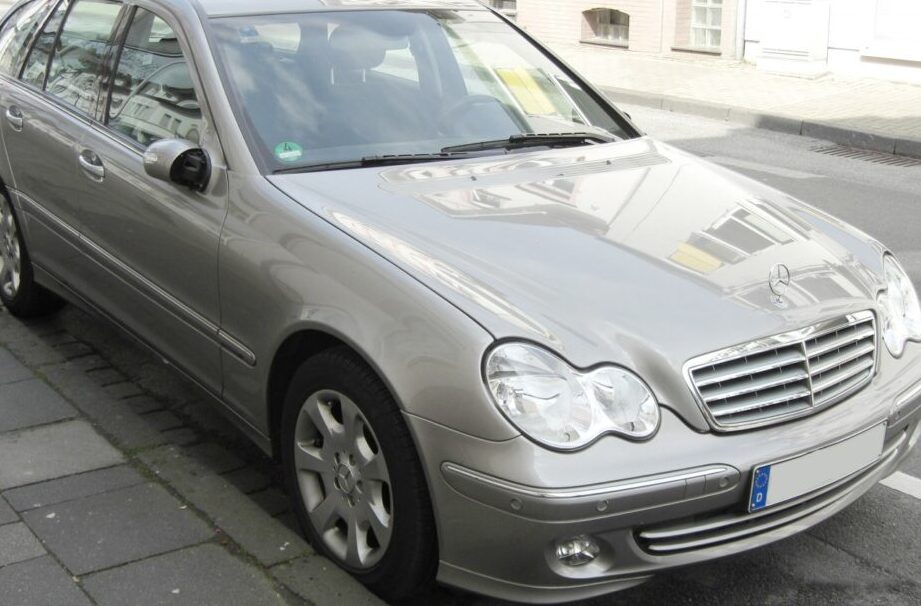
The Mercedes-Benz C-Class T-modell (S203) facelift, specifically the C 350 V6 variant equipped with the 7G-TRONIC automatic transmission, was produced from June 2005 to May 2007. This model represented a high-performance offering within the S203 estate range, positioned above the more fuel-efficient four-cylinder options and below the potential for aftermarket modifications. It aimed to combine the practicality of a wagon with the performance expected of a Mercedes-Benz, appealing to buyers seeking a versatile and capable vehicle. The S203 series, launched in 2000, was the first official “wagon” version of the C-Class, moving away from the earlier, more conservatively styled estate models.
Technical Specifications
| Brand | Mercedes-Benz |
| Model | C-Class |
| Generation | C-Class T-modell (S203, facelift 2004) |
| Type (Engine) | C 350 V6 (272 Hp) 7G-TRONIC |
| Start of production | June, 2005 |
| End of production | May, 2007 |
| Powertrain Architecture | Internal Combustion engine |
| Body type | Station wagon (estate) |
| Seats | 5 |
| Doors | 5 |
| Fuel consumption (urban) | 14.2-14.5 l/100 km (16.6 – 16.2 US mpg, 19.9 – 19.5 UK mpg, 7 – 6.9 km/l) |
| Fuel consumption (extra urban) | 7.8-8.1 l/100 km (30.2 – 29 US mpg, 36.2 – 34.9 UK mpg, 12.8 – 12.3 km/l) |
| Fuel consumption (combined) | 10.2-10.5 l/100 km (23.1 – 22.4 US mpg, 27.7 – 26.9 UK mpg, 9.8 – 9.5 km/l) |
| CO2 emissions | 245-252 g/km |
| Fuel Type | Petrol (Gasoline) |
| Acceleration 0 – 100 km/h | 6.5 sec |
| Acceleration 0 – 62 mph | 6.5 sec |
| Acceleration 0 – 60 mph | 6.2 sec |
| Maximum speed | 250 km/h (155.34 mph) – Electronically limited |
| Emission standard | Euro 4 |
| Weight-to-power ratio | 5.7 kg/Hp, 176.1 Hp/tonne |
| Weight-to-torque ratio | 4.4 kg/Nm, 226.5 Nm/tonne |
| Power | 272 Hp @ 6000 rpm |
| Torque | 350 Nm @ 2400-5000 rpm (258.15 lb.-ft. @ 2400-5000 rpm) |
| Engine layout | Front, Longitudinal |
| Engine Model/Code | M 272.960 |
| Engine displacement | 3498 cm3 (213.46 cu. in.) |
| Number of cylinders | 6 |
| Engine configuration | V-engine |
| Cylinder Bore | 92.9 mm (3.66 in.) |
| Piston Stroke | 86 mm (3.39 in.) |
| Compression ratio | 10.7:1 |
| Number of valves per cylinder | 4 |
| Fuel injection system | Multi-port manifold injection |
| Engine aspiration | Naturally aspirated engine |
| Valvetrain | DOHC |
| Engine oil capacity | 8 l (8.45 US qt | 7.04 UK qt) |
| Coolant capacity | 10 l (10.57 US qt | 8.8 UK qt) |
| Kerb Weight | 1545 kg (3406.14 lbs.) |
| Max. weight | 2125 kg (4684.82 lbs.) |
| Max load | 580 kg (1278.68 lbs.) |
| Trunk (boot) space – minimum | 470 l (16.6 cu. ft.) |
| Trunk (boot) space – maximum | 1384 l (48.88 cu. ft.) |
| Fuel tank capacity | 62 l (16.38 US gal | 13.64 UK gal) |
| Max. roof load | 100 kg (220.46 lbs.) |
| Permitted trailer load with brakes (12%) | 1800 kg (3968.32 lbs.) |
| Permitted trailer load without brakes | 750 kg (1653.47 lbs.) |
| Length | 4541 mm (178.78 in.) |
| Width | 1728 mm (68.03 in.) |
| Width including mirrors | 1980 mm (77.95 in.) |
| Height | 1470 mm (57.87 in.) |
| Wheelbase | 2715 mm (106.89 in.) |
| Front track | 1493 mm (58.78 in.) |
| Rear track | 1464 mm (57.64 in.) |
| Front overhang | 755 mm (29.72 in.) |
| Rear overhang | 1071 mm (42.17 in.) |
| Drag coefficient (Cd) | 0.31 |
| Minimum turning circle | 10.76 m (35.3 ft.) |
| Drivetrain Architecture | Rear wheel drive |
| Number of gears and type of gearbox | 7 gears, automatic transmission |
| Front suspension | Independent type McPherson, Transverse stabilizer |
| Rear suspension | Independent multi-link suspension, Transverse stabilizer |
| Front brakes | Ventilated discs |
| Rear brakes | Disc |
| Assisting systems | ABS (Anti-lock braking system) |
| Steering type | Steering rack and pinion |
| Power steering | Hydraulic Steering |
| Tires size | 225/45 R 17 |
| Wheel rims size | 7.5 J x 17 H 2 |
Powertrain & Engine Architecture
The C 350 T-modell utilized the M272.960 3.5-liter naturally aspirated V6 engine. This engine was a significant departure from the earlier inline-six engines traditionally found in Mercedes-Benz vehicles. The M272 featured all-aluminum construction, including the cylinder heads and block, contributing to a reduction in weight. It employed a three-valve per cylinder (two intake, one exhaust) design with double overhead camshafts (DOHC) and a variable valve timing system. Fuel delivery was handled by a multi-port fuel injection system. The 7G-TRONIC automatic transmission, a seven-speed unit, was a key component of this variant. It offered smoother shifts and improved fuel efficiency compared to the older five-speed automatic transmissions. The transmission featured a torque converter lock-up clutch to minimize slippage and enhance efficiency.
Driving Characteristics
The combination of the 272 horsepower V6 and the 7G-TRONIC transmission provided a refined and capable driving experience. Acceleration to 60 mph was achieved in approximately 6.2 seconds, making it a relatively quick wagon for its time. The 7G-TRONIC transmission offered smooth and responsive shifts, although some drivers noted a slight hesitation during kickdown maneuvers. Compared to the C 230 Kompressor models, the C 350 offered significantly more power and torque, resulting in stronger acceleration and more effortless cruising. While not as fuel-efficient as the four-cylinder options, the C 350 provided a compelling balance of performance and practicality. The rear-wheel-drive configuration contributed to a balanced feel, although it could be challenging in low-traction conditions.
Equipment & Trim Levels
The C 350 T-modell typically came well-equipped as a higher-end variant. Standard features included leather upholstery, automatic climate control, a premium audio system, and power-adjustable front seats. Optional extras included a sunroof, navigation system, and upgraded wheels. The interior trim was generally finished with wood or aluminum accents, reflecting the luxury positioning of the model. The facelifted S203 models also benefited from revised interior trim and updated infotainment systems compared to the pre-facelift versions.
Chassis & Braking
The S203 C-Class featured an independent suspension system at all four corners. The front suspension utilized a McPherson strut design, while the rear employed a multi-link setup. This configuration provided a comfortable ride and good handling characteristics. The C 350 T-modell was equipped with ventilated disc brakes at the front and solid disc brakes at the rear. Anti-lock braking system (ABS) was standard. The suspension was tuned to provide a balance between comfort and handling, leaning towards the comfort side given the car’s grand touring intentions.
Market Reception & Comparison
The C 350 T-modell was generally well-received by automotive critics, who praised its powerful engine, smooth transmission, and spacious interior. However, some reviewers noted that the fuel economy was relatively poor compared to its competitors. Compared to other wagons in its class, such as the BMW 3 Series Touring and Audi A4 Avant, the C 350 offered a more luxurious and refined experience, but at a higher price point. The C 350’s reliability was generally good, although some owners reported issues with the electronic systems and the occasional oil leak from the engine.
Legacy
The M272 engine, while generally reliable, can be prone to timing chain wear if maintenance is neglected. The 7G-TRONIC transmission is also known to require regular fluid changes to prevent issues. Today, the C 350 T-modell is a relatively sought-after used car, particularly among enthusiasts who appreciate its combination of performance, practicality, and luxury. Well-maintained examples command a premium price. The S203 C-Class T-modell, and the C 350 variant in particular, represents a significant step forward in the evolution of the Mercedes-Benz wagon, offering a compelling alternative to traditional sedans and SUVs.