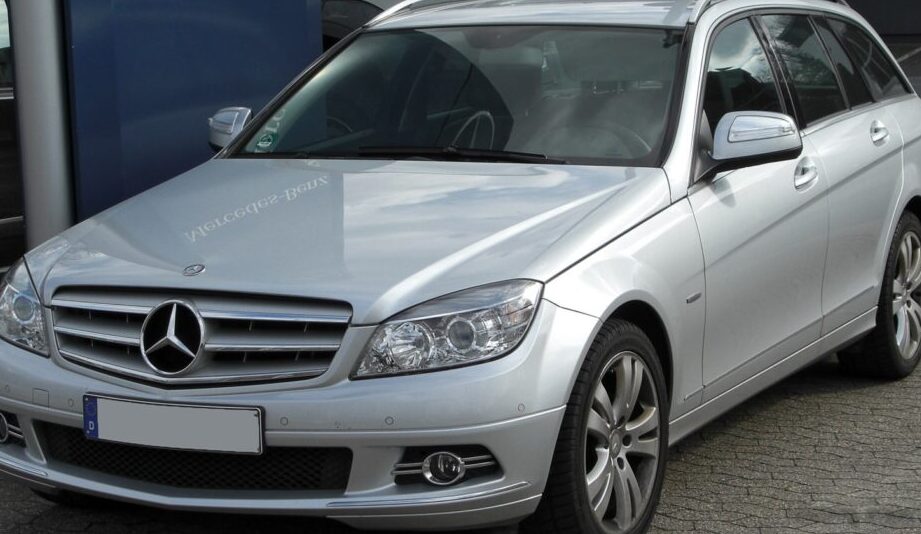
The Mercedes-Benz C-Class T-modell (S204) C 300 V6, produced from 2009 to 2011, represents a compelling blend of practicality and performance within the broader C-Class (W204) range. As the wagon (estate) variant of the popular C-Class, the T-modell offered increased cargo capacity without sacrificing the luxury and driving dynamics expected of the Mercedes-Benz brand. The C 300 V6, positioned as a mid-to-upper tier offering, provided a significant step up in power and refinement compared to the base models, appealing to buyers seeking a more engaging driving experience. This variant was primarily marketed in Europe and other regions where wagons maintain a strong market presence, offering a sophisticated alternative to SUVs.
Technical Specifications
| Brand | Mercedes-Benz |
| Model | C-class |
| Generation | C-class T-modell (S204) |
| Type (Engine) | C 300 V6 (231 Hp) |
| Start of production | 2009 |
| End of production | 2011 |
| Powertrain Architecture | Internal Combustion engine |
| Body type | Station wagon (estate) |
| Seats | 5 |
| Doors | 5 |
| Fuel consumption (economy) – urban (NEDC) | 13.9-14.1 l/100 km (16.9 – 16.7 US mpg, 20.3 – 20 UK mpg, 7.2 – 7.1 km/l) |
| Fuel consumption (economy) – extra urban (NEDC) | 7.1-7.3 l/100 km (33.1 – 32.2 US mpg, 39.8 – 38.7 UK mpg, 14.1 – 13.7 km/l) |
| Fuel consumption (economy) – combined (NEDC) | 9.6-9.8 l/100 km (24.5 – 24 US mpg, 29.4 – 28.8 UK mpg, 10.4 – 10.2 km/l) |
| CO2 emissions (NEDC) | 224-229 g/km |
| Fuel Type | Petrol (Gasoline) |
| Acceleration 0 – 100 km/h | 7.5 sec |
| Acceleration 0 – 62 mph | 7.5 sec |
| Acceleration 0 – 60 mph | 7.1 sec |
| Maximum speed | 242 km/h (150.37 mph) |
| Emission standard | Euro 5 |
| Weight-to-power ratio | 6.6 kg/Hp, 151.5 Hp/tonne |
| Weight-to-torque ratio | 5.1 kg/Nm, 196.7 Nm/tonne |
| Power | 231 Hp @ 6000 rpm |
| Power per litre | 77.1 Hp/l |
| Torque | 300 Nm @ 2500-5000 rpm (221.27 lb.-ft. @ 2500-5000 rpm) |
| Engine layout | Front, Longitudinal |
| Engine Model/Code | M 272.947 |
| Engine displacement | 2996 cm3 (182.83 cu. in.) |
| Number of cylinders | 6 |
| Engine configuration | V-engine |
| Cylinder Bore | 88 mm (3.46 in.) |
| Piston Stroke | 82.1 mm (3.23 in.) |
| Compression ratio | 11.3:1 |
| Number of valves per cylinder | 4 |
| Fuel injection system | Multi-port manifold injection |
| Engine aspiration | Naturally aspirated engine |
| Valvetrain | DOHC |
| Engine oil capacity | 8 l (8.45 US qt | 7.04 UK qt) |
| Kerb Weight | 1525 kg (3362.05 lbs.) |
| Max. weight | 2130 kg (4695.85 lbs.) |
| Max load | 605 kg (1333.8 lbs.) |
| Trunk (boot) space – minimum | 485 l (17.13 cu. ft.) |
| Trunk (boot) space – maximum | 1500 l (52.97 cu. ft.) |
| Fuel tank capacity | 66 l (17.44 US gal | 14.52 UK gal) |
| Permitted trailer load with brakes (12%) | 1800 kg (3968.32 lbs.) |
| Permitted trailer load without brakes | 750 kg (1653.47 lbs.) |
| Length | 4596 mm (180.94 in.) |
| Width | 1770 mm (69.69 in.) |
| Width including mirrors | 2009 mm (79.09 in.) |
| Height | 1459 mm (57.44 in.) |
| Wheelbase | 2760 mm (108.66 in.) |
| Front track | 1541 mm (60.67 in.) |
| Rear (Back) track | 1544 mm (60.79 in.) |
| Front overhang | 765 mm (30.12 in.) |
| Rear overhang | 1071 mm (42.17 in.) |
| Minimum turning circle (turning diameter) | 10.84 m (35.56 ft.) |
| Drivetrain Architecture | The Internal combustion engine (ICE) drives the rear wheels of the vehicle. |
| Drive wheel | Rear wheel drive |
| Number of gears and type of gearbox | 6 gears, manual transmission |
| Front suspension | Independent type McPherson, Transverse stabilizer |
| Rear suspension | Independent multi-link suspension, Transverse stabilizer |
| Front brakes | Ventilated discs |
| Rear brakes | Disc |
| Assisting systems | ABS (Anti-lock braking system) |
| Steering type | Steering rack and pinion |
| Power steering | Hydraulic Steering |
| Tires size | 205/55 R16 |
| Wheel rims size | 7J x 16 |
INTRODUCTION
The S204 C-Class T-modell, launched in 2007, brought the practicality of a station wagon to the popular C-Class lineup. The C 300 V6, introduced in 2009 and continuing through 2011, was a significant offering within this generation. It utilized the M272 engine family, known for its smooth operation and respectable power output. This variant aimed to bridge the gap between the more economical four-cylinder models and the high-performance AMG versions, offering a balanced package for drivers prioritizing both comfort and capability. The T-modell, in particular, catered to European tastes where wagons are favored for their versatility and cargo-carrying capacity.
Powertrain & Engine Architecture
At the heart of the C 300 V6 lies the M272.947 3.0-liter naturally aspirated V6 engine. This engine is a 60-degree V-configuration, featuring aluminum alloy construction for reduced weight. It employs multi-port fuel injection and a double overhead camshaft (DOHC) valvetrain with four valves per cylinder. The engine’s design prioritizes smooth power delivery and refinement over outright peak horsepower. The M272 engine is known for its relatively complex valvetrain, incorporating a balance shaft to minimize vibrations. The C 300 V6 was typically paired with a 6-speed manual transmission, although a 5-speed automatic transmission was also available. The automatic transmission, while providing convenience, was sometimes criticized for being less responsive than the manual option. The engine code M272.947 is crucial for identifying specific parts and maintenance requirements.
Driving Characteristics
The C 300 V6 T-modell offered a noticeably more spirited driving experience than the base C-Class models. The 231 horsepower and 300 Nm (221 lb-ft) of torque provided ample power for both everyday driving and longer journeys. Acceleration from 0-100 km/h (0-62 mph) took approximately 7.5 seconds, making it a competitive performer in its class. The rear-wheel-drive configuration contributed to a balanced feel, although it could be challenging in slippery conditions. The 6-speed manual transmission allowed for precise control, while the automatic, though less engaging, offered smooth shifts. Compared to the C 350, the C 300 V6 offered a slightly less aggressive power delivery, prioritizing refinement and fuel efficiency. The wagon body style did introduce a slight increase in weight compared to the sedan, but the added power of the V6 mitigated this effect.
Equipment & Trim Levels
The C 300 V6 T-modell typically came standard with a generous array of features, including automatic climate control, power windows and mirrors, a multi-function steering wheel, and a high-quality audio system. Upholstery was typically a combination of cloth and leatherette, with full leather options available as an upgrade. Optional extras included a sunroof, navigation system, premium sound system, and parking sensors. Trim levels varied depending on the market, but generally, the C 300 V6 was positioned as a well-equipped model, offering a step up in luxury and convenience compared to the entry-level C-Class variants. The interior design followed the classic Mercedes-Benz aesthetic, emphasizing quality materials and a comfortable, driver-focused layout.
Chassis & Braking
The S204 C-Class T-modell utilized a McPherson strut front suspension and a multi-link independent rear suspension. This setup provided a good balance between ride comfort and handling precision. Stabilizer bars were fitted to both axles to reduce body roll during cornering. The C 300 V6 was equipped with ventilated disc brakes at the front and solid disc brakes at the rear. Anti-lock braking system (ABS) was standard, enhancing safety and control. The suspension tuning was generally geared towards comfort, but the C 300 V6’s increased power necessitated slightly firmer dampers compared to the lower-powered models. The steering was hydraulic, providing a direct and responsive feel.
Market Reception & Comparison
The C 300 V6 T-modell was generally well-received by automotive critics. It was praised for its smooth engine, comfortable ride, and spacious interior. However, some reviewers noted that the automatic transmission could feel sluggish at times. Compared to the C 250 CDI (diesel) variant, the C 300 V6 offered more power but lower fuel economy. The C 350, with its larger engine, provided even more performance but at a higher price point. The C 300 V6 struck a good balance between performance, comfort, and cost, making it a popular choice for buyers seeking a versatile and refined wagon.
Legacy
The M272 engine family, including the M272.947 found in the C 300 V6, has proven to be relatively reliable, although regular maintenance is crucial. Common issues include oil leaks and occasional problems with the balance shaft. The S204 C-Class T-modell, and the C 300 V6 variant in particular, has maintained a reasonable level of popularity in the used car market. Its combination of practicality, luxury, and performance continues to appeal to buyers seeking a well-rounded and stylish wagon. Parts availability is generally good, and the car’s relatively straightforward mechanical design makes it accessible to independent mechanics. Today, these vehicles represent a good value proposition for those seeking a comfortable and capable European wagon.