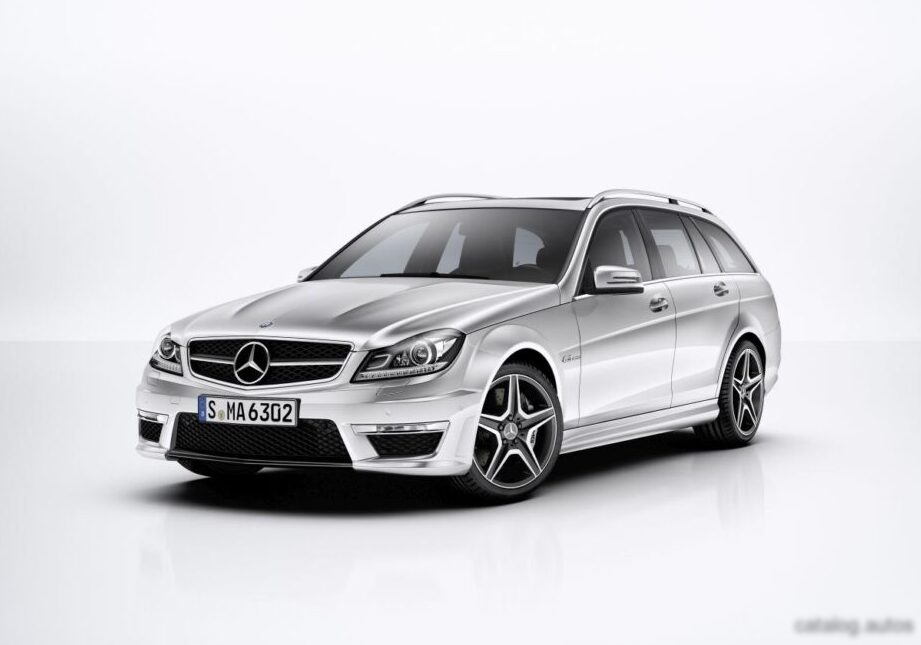
The Mercedes-Benz C-Class T-modell (S204) facelift, specifically the AMG C 63 V8 (457 hp) variant equipped with the AMG SPEEDSHIFT MCT transmission, represents the pinnacle of performance within the C-Class wagon lineup produced between 2011 and 2014. Positioned as the flagship model, it combined the practicality of a station wagon (estate) with the exhilarating power of Mercedes-AMG’s naturally aspirated V8 engine. This variant catered to enthusiasts seeking a high-performance vehicle capable of both spirited driving and everyday utility. It was a relatively short-lived iteration, bridging the gap between the pre-facelift S204 and the subsequent W205 generation.
Technical Specifications
| Brand | Mercedes-Benz |
| Model | C-Class |
| Generation | C-Class T-modell (S204, facelift 2011) |
| Type (Engine) | AMG C 63 V8 (457 Hp) AMG SPEEDSHIFT MCT |
| Start of production | 2011 |
| End of production | 2014 |
| Powertrain Architecture | Internal Combustion engine |
| Body type | Station wagon (estate) |
| Seats | 5 |
| Doors | 5 |
| Fuel consumption (urban) | 18.6 l/100 km (12.6 US mpg, 15.2 UK mpg, 5.4 km/l) |
| Fuel consumption (extra urban) | 8.7 l/100 km (27 US mpg, 32.5 UK mpg, 11.5 km/l) |
| Fuel consumption (combined) | 12.3 l/100 km (19.1 US mpg, 23 UK mpg, 8.1 km/l) |
| CO2 emissions | 288 g/km |
| Fuel Type | Petrol (Gasoline) |
| Acceleration 0 – 100 km/h | 4.6 sec |
| Acceleration 0 – 62 mph | 4.6 sec |
| Acceleration 0 – 60 mph | 4.4 sec |
| Maximum speed | 250 km/h (155.34 mph), Electronically limited |
| Emission standard | Euro 5 |
| Weight-to-power ratio | 3.8 kg/Hp, 265.7 Hp/tonne |
| Weight-to-torque ratio | 2.9 kg/Nm, 348.8 Nm/tonne |
| Power | 457 Hp @ 6800 rpm |
| Power per litre | 73.6 Hp/l |
| Torque | 600 Nm @ 5000 rpm (442.54 lb.-ft. @ 5000 rpm) |
| Maximum engine speed | 7200 rpm |
| Engine layout | Front, Longitudinal |
| Engine Model/Code | M 156.985 |
| Engine displacement | 6208 cm3 (378.84 cu. in.) |
| Number of cylinders | 8 |
| Engine configuration | V-engine |
| Cylinder Bore | 102.2 mm (4.02 in.) |
| Piston Stroke | 94.6 mm (3.72 in.) |
| Compression ratio | 11.3:1 |
| Number of valves per cylinder | 4 |
| Fuel injection system | Multi-port manifold injection |
| Engine aspiration | Naturally aspirated engine |
| Valvetrain | DOHC |
| Engine oil capacity | 8.5 l (8.98 US qt | 7.48 UK qt) |
| Kerb Weight | 1720 kg (3791.95 lbs.) |
| Max. weight | 2275 kg (5015.52 lbs.) |
| Max load | 555 kg (1223.57 lbs.) |
| Fuel tank capacity | 66 l (17.44 US gal | 14.52 UK gal) |
| Length | 4711 mm (185.47 in.) |
| Width | 1795 mm (70.67 in.) |
| Width including mirrors | 2008 mm (79.06 in.) |
| Height | 1448 mm (57.01 in.) |
| Wheelbase | 2765 mm (108.86 in.) |
| Minimum turning circle | 11.1 m (36.42 ft.) |
| Drivetrain Architecture | Rear wheel drive |
| Number of gears | 7 |
| Gearbox type | Automatic transmission AMG SPEEDSHIFT MCT |
| Front suspension | Independent type McPherson, Transverse stabilizer |
| Rear suspension | Independent multi-link suspension, Transverse stabilizer |
| Front brakes | Ventilated discs, 360 mm |
| Rear brakes | Ventilated discs, 330 mm |
| Assisting systems | ABS (Anti-lock braking system) |
| Steering type | Steering rack and pinion |
| Power steering | Hydraulic Steering |
| Tires size (Front) | 235/40 R18 |
| Tires size (Rear) | 255/35 R18 |
| Wheel rims size (Front) | 8J x 18 |
| Wheel rims size (Rear) | 9J x 18 |
INTRODUCTION
The S204 C-Class T-modell, introduced in 2007, brought a practical wagon body style to the popular C-Class range. The 2011 facelift brought updated styling, improved technology, and refined engine options. The AMG C 63 T-modell, with its 6.2-liter naturally aspirated V8, was the performance leader of the lineup. It offered a unique combination of blistering speed, luxurious appointments, and the versatility of a wagon. This model was primarily sold in Europe and other markets where wagons are highly favored, with limited availability in the United States.
Powertrain & Engine Architecture
At the heart of the AMG C 63 T-modell lies the M 156.985 6.2-liter naturally aspirated V8 engine. This engine, a hallmark of AMG’s engineering prowess, produced 457 horsepower at 6800 rpm and 600 Nm (442.54 lb-ft) of torque at 5000 rpm. The engine featured a multi-port fuel injection system and a double overhead camshaft (DOHC) valvetrain. The M156 engine is renowned for its robust construction and distinctive exhaust note. Paired with the engine was the AMG SPEEDSHIFT MCT 7-speed automatic transmission. Unlike a traditional torque converter automatic, the MCT utilizes a wet clutch pack, offering faster and more direct shifts. This transmission featured selectable drive modes – Comfort, Sport, Sport Plus, and Manual – allowing the driver to tailor the shift points and responsiveness to their preferences.
Driving Characteristics
The AMG C 63 T-modell delivered a truly exhilarating driving experience. The combination of the powerful V8 engine and the responsive MCT transmission resulted in a 0-60 mph time of approximately 4.4 seconds and a limited top speed of 155 mph. While the automatic transmission wasn’t as lightning-fast as some dual-clutch transmissions available at the time, it provided smooth and confident shifts, particularly in the more aggressive Sport and Sport Plus modes. The wagon’s weight distribution, while not ideal, was managed effectively by the AMG-tuned suspension. Compared to the standard C-Class wagons or even the C 63 sedan, the T-modell offered a slightly softer ride due to the longer wheelbase and increased mass, but it didn’t significantly compromise handling. The exhaust note was a defining characteristic, providing a visceral and engaging soundtrack.
Equipment & Trim Levels
The AMG C 63 T-modell came generously equipped as standard. Interior features included sport seats upholstered in leather, AMG-specific trim elements, and a multi-function steering wheel. Standard exterior features included AMG body styling, 18-inch alloy wheels, and a performance exhaust system. Optional extras included a panoramic sunroof, upgraded audio system, driver assistance packages (such as lane keeping assist and blind spot monitoring), and various interior customization options. The interior generally followed the C-Class facelift design, with improved materials and a more modern infotainment system compared to the pre-facelift models.
Chassis & Braking
The AMG C 63 T-modell featured a sport-tuned suspension with stiffer springs and dampers compared to the standard C-Class wagons. It utilized an independent McPherson strut front suspension and a multi-link rear suspension, both incorporating transverse stabilizers to reduce body roll. Braking duties were handled by ventilated discs on all four wheels, measuring 360mm at the front and 330mm at the rear. The braking system was enhanced by ABS (Anti-lock Braking System) and other electronic stability control systems. The suspension setup was designed to provide a balance between performance and comfort, allowing for confident handling on both the road and track.
Market Reception & Comparison
The AMG C 63 T-modell was generally well-received by automotive critics. It was praised for its powerful engine, engaging driving dynamics, and the practicality of the wagon body style. However, some critics noted the relatively high fuel consumption and the fact that the automatic transmission wasn’t quite as quick as some of its competitors. Compared to the standard C-Class wagons, the AMG C 63 T-modell offered a significant performance upgrade, but at a substantial price premium. Compared to other high-performance wagons, such as the Audi RS6 Avant or the BMW M5 Touring (not available in all markets), the C 63 T-modell offered a more raw and visceral driving experience, albeit with slightly less refinement.
Legacy
The AMG C 63 T-modell (S204) remains a desirable vehicle in the used car market. The M156 engine is known for its durability, although regular maintenance is crucial. Common issues include oil consumption and potential for electrical gremlins, as with many high-performance German cars of this era. The AMG SPEEDSHIFT MCT transmission is generally reliable, but clutch pack replacement may be required at higher mileages. Today, these wagons are sought after by enthusiasts who appreciate their unique combination of performance, practicality, and distinctive character. They represent a final chapter in the era of naturally aspirated AMG engines, making them particularly appealing to collectors and driving enthusiasts.