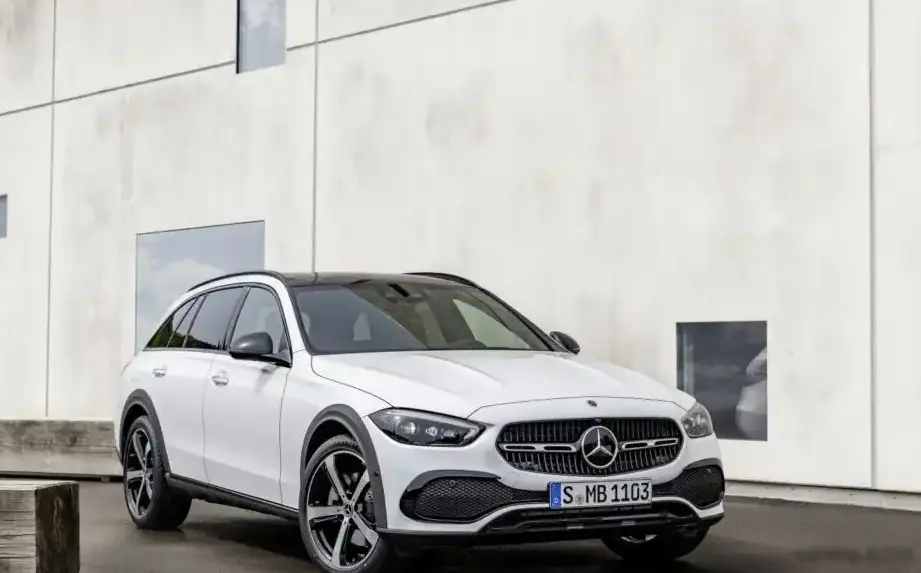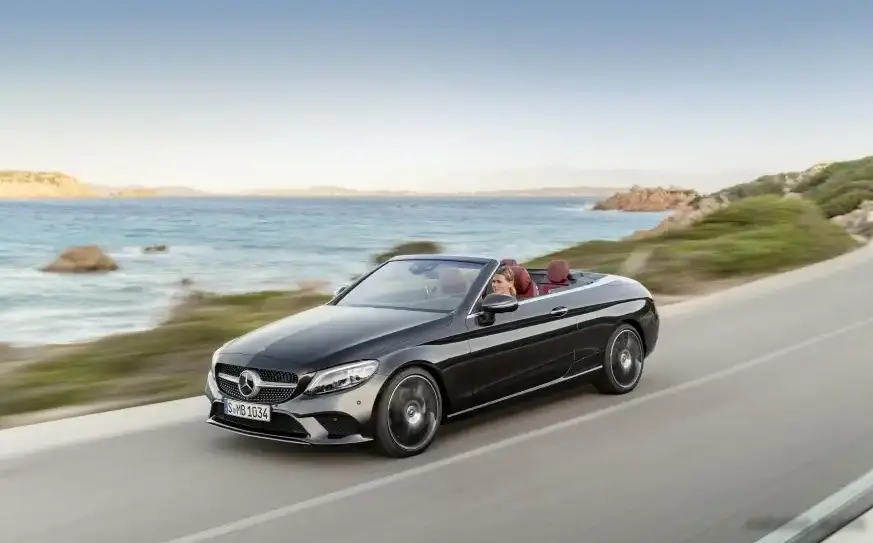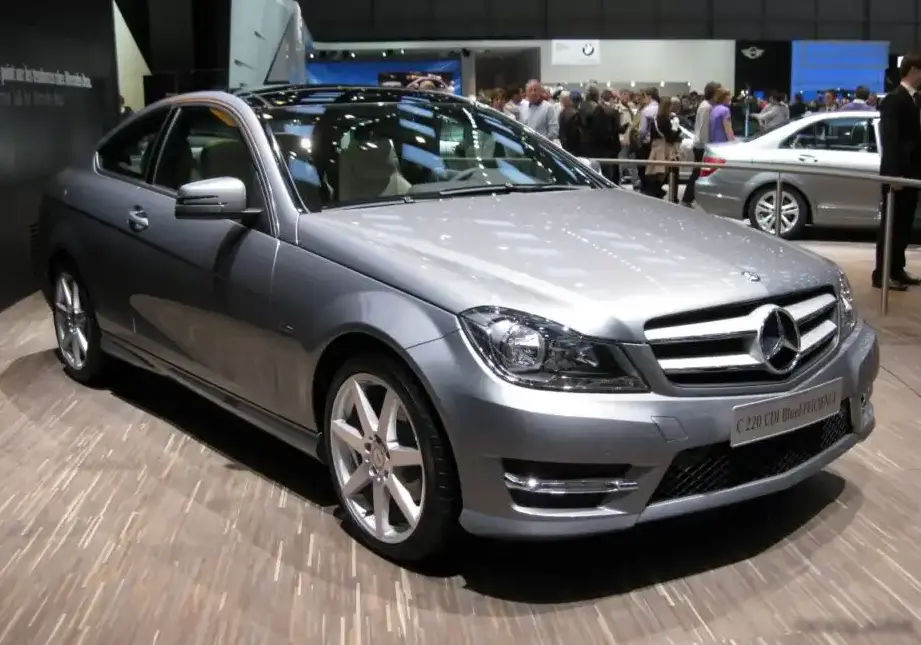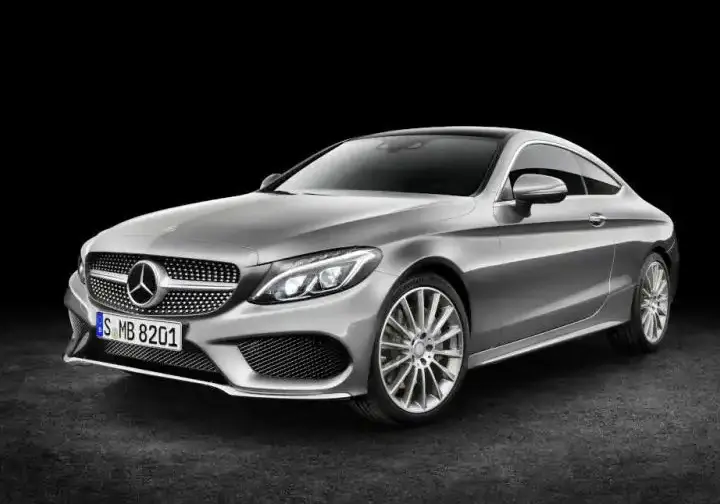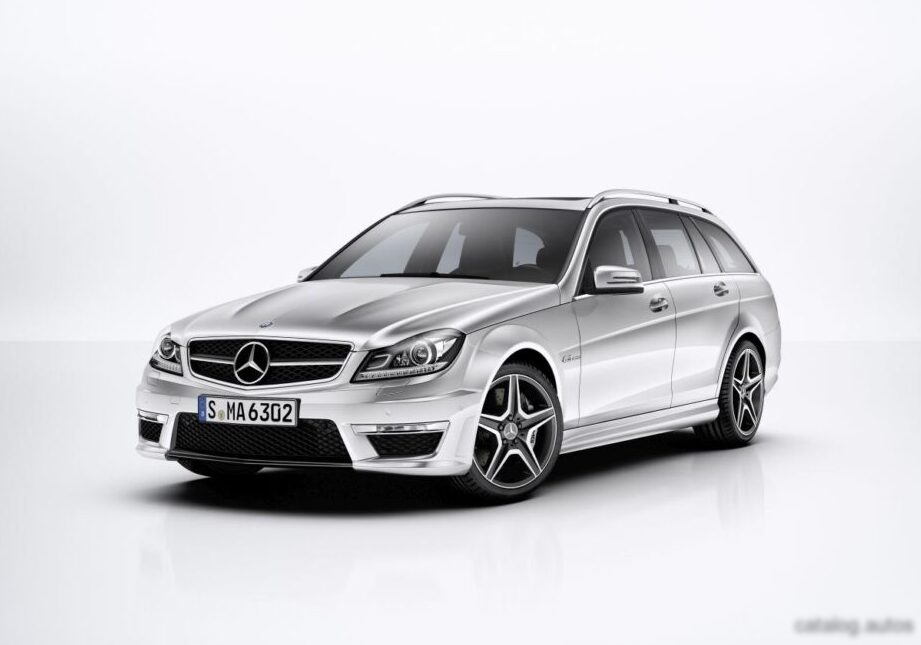
The Mercedes-Benz C-Class T-modell (S204), specifically the C 200 BlueEFFICIENCY variant produced from 2011 to 2014, represents a compelling blend of practicality, efficiency, and the renowned Mercedes-Benz driving experience. This model occupied a key position in the C-Class lineup as a mid-range offering, appealing to buyers seeking a balance between performance and fuel economy within the premium compact estate (wagon) segment. The “BlueEFFICIENCY” designation signified Mercedes-Benz’s efforts to improve fuel consumption and reduce emissions through a variety of technological enhancements.
Technical Specifications
| Brand | Mercedes-Benz |
| Model | C-Class |
| Generation | C-Class T-modell (S204, facelift 2011) |
| Type (Engine) | C 200 BlueEFFICIENCY (184 Hp) |
| Start of production | 2011 |
| End of production | 2014 |
| Powertrain Architecture | Internal Combustion engine |
| Body type | Station wagon (estate) |
| Seats | 5 |
| Doors | 5 |
| Fuel consumption (urban) | 9.6-10.2 l/100 km (24.5 – 23.1 US mpg) |
| Fuel consumption (extra urban) | 5.5-6.2 l/100 km (42.8 – 37.9 US mpg) |
| Fuel consumption (combined) | 6.9-7.6 l/100 km (34.1 – 30.9 US mpg) |
| CO2 emissions | 160-177 g/km |
| Fuel Type | Petrol (Gasoline) |
| Acceleration 0 – 100 km/h | 8.4 sec |
| Acceleration 0 – 60 mph | 8 sec |
| Maximum speed | 228 km/h (141.67 mph) |
| Emission standard | Euro 5 |
| Weight-to-power ratio | 8.1 kg/Hp |
| Weight-to-torque ratio | 5.5 kg/Nm |
| Power | 184 Hp @ 5250 rpm |
| Torque | 270 Nm @ 1800-4600 rpm (199.14 lb.-ft. @ 1800-4600 rpm) |
| Engine layout | Front, Longitudinal |
| Engine Model/Code | M 271.860 |
| Engine displacement | 1796 cm3 (109.6 cu. in.) |
| Number of cylinders | 4 |
| Engine configuration | Inline |
| Cylinder Bore | 82 mm (3.23 in.) |
| Piston Stroke | 85 mm (3.35 in.) |
| Compression ratio | 9.3:1 |
| Number of valves per cylinder | 4 |
| Fuel injection system | Direct injection |
| Engine aspiration | Turbocharger, Intercooler |
| Valvetrain | DOHC |
| Engine oil capacity | 5.5 l (5.81 US qt | 4.84 UK qt) |
| Kerb Weight | 1485 kg (3273.86 lbs.) |
| Max. weight | 2100 kg (4629.71 lbs.) |
| Max load | 615 kg (1355.84 lbs.) |
| Trunk (boot) space – minimum | 485 l (17.13 cu. ft.) |
| Trunk (boot) space – maximum | 1500 l (52.97 cu. ft.) |
| Fuel tank capacity | 59 l (15.59 US gal | 12.98 UK gal) |
| Max. roof load | 100 kg (220.46 lbs.) |
| Permitted trailer load with brakes (12%) | 1800 kg (3968.32 lbs.) |
| Permitted trailer load without brakes | 750 kg (1653.47 lbs.) |
| Length | 4606 mm (181.34 in.) |
| Width | 1770 mm (69.69 in.) |
| Width including mirrors | 2008 mm (79.06 in.) |
| Height | 1459 mm (57.44 in.) |
| Wheelbase | 2760 mm (108.66 in.) |
| Front track | 1541 mm (60.67 in.) |
| Rear track | 1544 mm (60.79 in.) |
| Front overhang | 775 mm (30.51 in.) |
| Rear overhang | 1071 mm (42.17 in.) |
| Drag coefficient (Cd) | 0.30 |
| Minimum turning circle | 10.84 m (35.56 ft.) |
| Drivetrain Architecture | Rear wheel drive |
| Number of gears and type of gearbox | 6 gears, manual transmission |
Overview and Market Positioning
The S204 C-Class T-modell, introduced in 2007 and facelifted in 2011, was Mercedes-Benz’s offering in the premium compact estate car segment. It competed directly with models like the Audi A4 Avant, BMW 3 Series Touring, and Volvo V60. The C 200 BlueEFFICIENCY trim served as a popular choice for buyers prioritizing fuel efficiency and reasonable performance. It sat below the more powerful C 250 and C 350 models, and above the entry-level C 180. The T-modell (Touring Model) body style was particularly popular in Europe, where estate cars hold a larger market share than in the United States.
Engine and Mechanicals
The heart of the C 200 BlueEFFICIENCY is the M 271.860 1.8-liter turbocharged inline-four cylinder engine. This engine produced 184 horsepower at 5250 rpm and 270 Nm (199 lb-ft) of torque between 1800 and 4600 rpm. The turbocharger and direct fuel injection were key technologies contributing to both power output and fuel economy. The engine featured a relatively high compression ratio of 9.3:1. The standard transmission was a 6-speed manual, although a 7-speed automatic transmission (7G-TRONIC) was also available as an option. The rear-wheel-drive configuration was standard, providing a traditional Mercedes-Benz driving feel. The suspension utilized an independent McPherson strut setup at the front and a multi-link suspension at the rear, offering a good balance of comfort and handling.
BlueEFFICIENCY Technology
The “BlueEFFICIENCY” label encompassed a range of technologies aimed at reducing fuel consumption and emissions. These included an engine start/stop system, which automatically shut off the engine when the vehicle was stationary (e.g., at traffic lights), and optimized aerodynamics. The engine management system was also tuned for efficiency, and low-rolling-resistance tires were often fitted. These measures contributed to the C 200 BlueEFFICIENCY’s combined fuel economy figures of 6.9-7.6 liters per 100 kilometers (34.1-30.9 US mpg).
Interior and Features
The interior of the C 200 BlueEFFICIENCY T-modell reflected Mercedes-Benz’s commitment to quality and refinement. Standard features typically included automatic climate control, a multi-function steering wheel, and a COMAND infotainment system. Higher trim levels offered options such as leather upholstery, navigation, and a premium sound system. The T-modell’s estate body style provided a generous 485 liters (17.13 cu ft) of cargo space with the rear seats up, expanding to 1500 liters (52.97 cu ft) with the seats folded down. This made it a practical choice for families and those needing to transport larger items.
Comparison with Other C-Class Variants
Compared to the C 250, the C 200 BlueEFFICIENCY offered less power and performance. The C 250’s larger 2.0-liter turbocharged engine produced significantly more horsepower and torque, resulting in quicker acceleration. However, the C 200 BlueEFFICIENCY was more fuel-efficient and generally less expensive to purchase and maintain. The diesel-powered C 220 CDI and C 250 CDI models offered even greater fuel economy and torque, but at the expense of some refinement and potential maintenance costs associated with diesel particulate filters. The C 200 BlueEFFICIENCY appealed to buyers who prioritized a balance of efficiency, comfort, and the Mercedes-Benz brand experience.
Legacy
The C 200 BlueEFFICIENCY T-modell (S204) represents a significant step in Mercedes-Benz’s efforts to improve fuel efficiency and reduce emissions without sacrificing driving pleasure. It showcased the effectiveness of technologies like turbocharging, direct injection, and start/stop systems. The S204 generation C-Class T-modell, and the C 200 BlueEFFICIENCY variant in particular, remains a popular choice in the used car market, offering a compelling combination of practicality, refinement, and value.