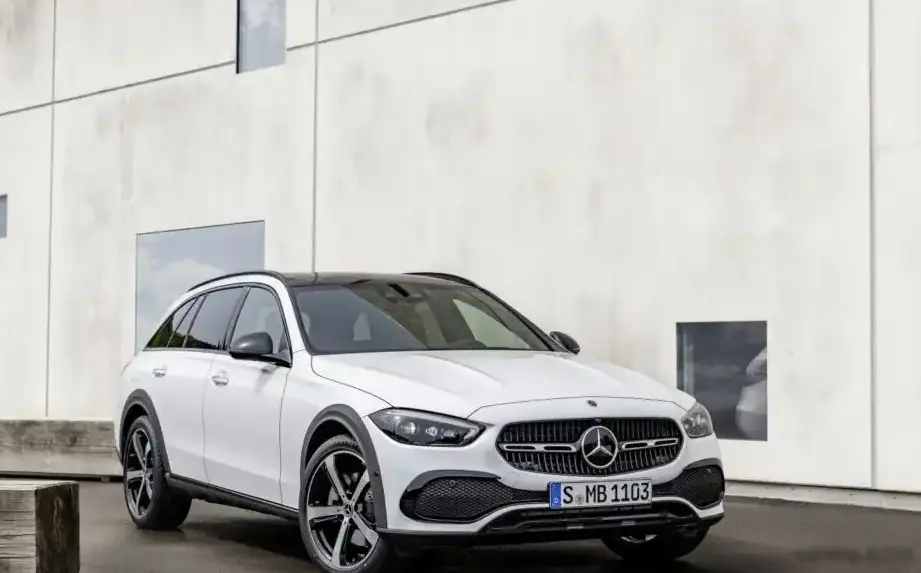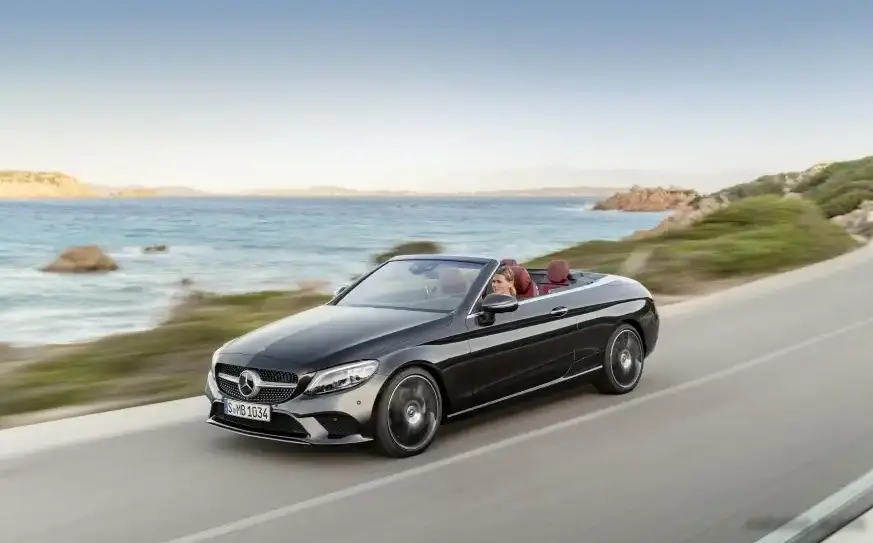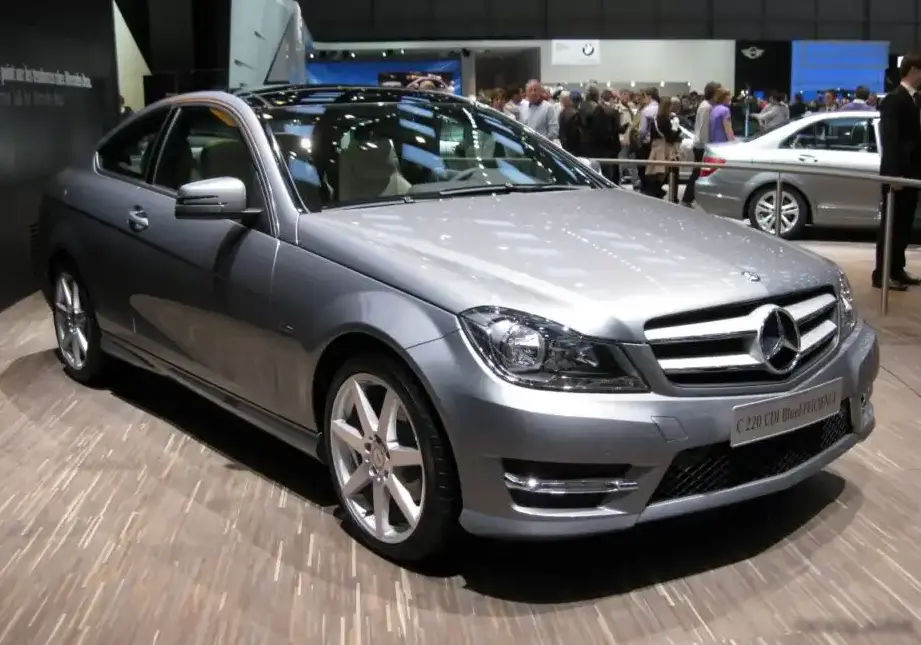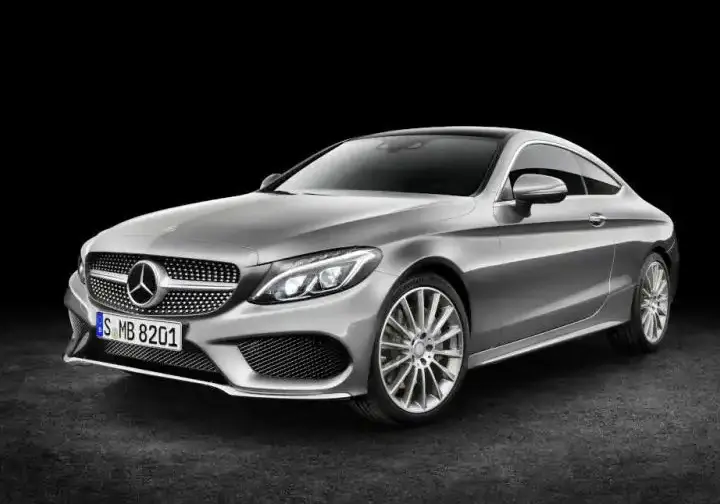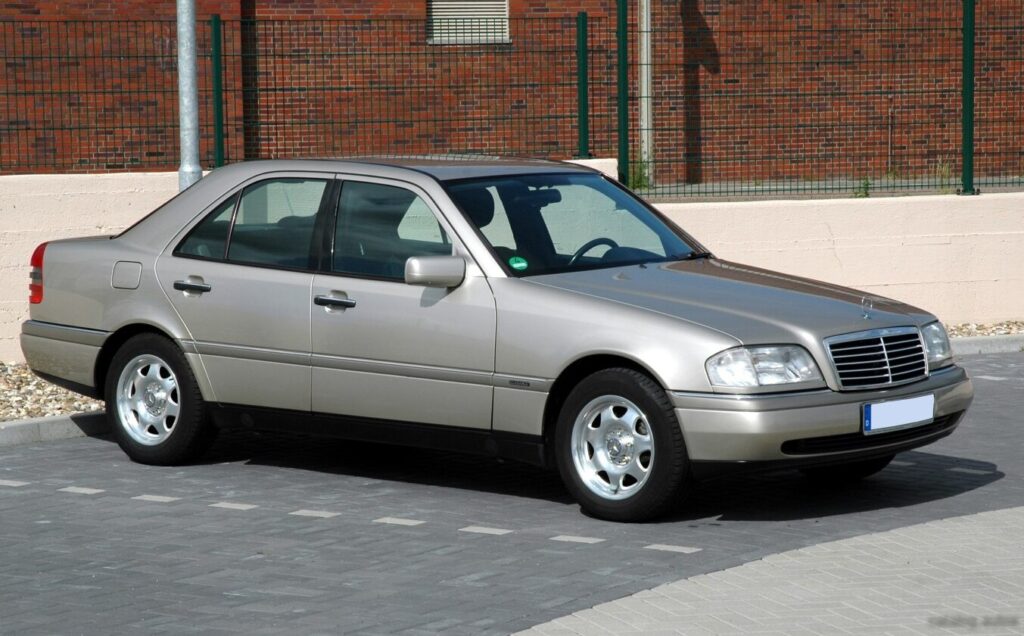
The Mercedes-Benz C 180, produced between September 1992 and June 1997, was an entry-level variant of the W202 C-Class. Positioned as the most accessible model in the lineup, it aimed to bring Mercedes-Benz ownership within reach of a broader customer base. The W202 represented a significant departure for Mercedes-Benz, being the first completely redesigned C-Class, and a move towards a more compact and modern design language. The C 180, with its 1.8-liter engine, served as the foundation for the range, offering a balance of fuel efficiency and the brand’s renowned build quality. It was a key model in establishing the W202’s presence in the highly competitive compact executive car segment.
Technical Specifications
| Brand | Mercedes-Benz |
| Model | C-class |
| Generation | C-class (W202) |
| Type (Engine) | C 180 (122 Hp) |
| Start of production | September, 1992 |
| End of production | June, 1997 |
| Powertrain Architecture | Internal Combustion engine |
| Body type | Sedan |
| Seats | 5 |
| Doors | 4 |
| Fuel consumption (urban) | 11 l/100 km (21.4 US mpg) |
| Fuel consumption (extra urban) | 6.4 l/100 km (36.8 US mpg) |
| Fuel Type | Petrol (Gasoline) |
| Acceleration 0 – 100 km/h | 12 sec |
| Acceleration 0 – 62 mph | 12 sec |
| Acceleration 0 – 60 mph | 11.4 sec |
| Maximum speed | 193 km/h (119.92 mph) |
| Weight-to-power ratio | 11.1 kg/Hp |
| Weight-to-torque ratio | 7.9 kg/Nm |
| Power | 122 Hp @ 5500 rpm |
| Power per litre | 67.8 Hp/l |
| Torque | 170 Nm @ 4200 rpm (125.39 lb.-ft. @ 4200 rpm) |
| Engine layout | Front, Longitudinal |
| Engine Model/Code | M 111 E 18/111.921 |
| Engine displacement | 1799 cm3 (109.78 cu. in.) |
| Number of cylinders | 4 |
| Engine configuration | Inline |
| Cylinder Bore | 85.3 mm (3.36 in.) |
| Piston Stroke | 78.7 mm (3.1 in.) |
| Compression ratio | 9.8:1 |
| Number of valves per cylinder | 4 |
| Fuel injection system | Multi-port manifold injection |
| Engine aspiration | Naturally aspirated engine |
| Valvetrain | DOHC |
| Engine oil capacity | 5.5 l (5.81 US qt | 4.84 UK qt) |
| Coolant | 8.5 l (8.98 US qt | 7.48 UK qt) |
| Kerb Weight | 1350 kg (2976.24 lbs.) |
| Max. weight | 1830 kg (4034.46 lbs.) |
| Max load | 480 kg (1058.22 lbs.) |
| Trunk (boot) space – minimum | 430 l (15.19 cu. ft.) |
| Fuel tank capacity | 62 l (16.38 US gal | 13.64 UK gal) |
| Length | 4487 mm (176.65 in.) |
| Width | 1720 mm (67.72 in.) |
| Height | 1414 mm (55.67 in.) |
| Wheelbase | 2690 mm (105.91 in.) |
| Front track | 1505 mm (59.25 in.) |
| Rear (Back) track | 1476 mm (58.11 in.) |
| Drivetrain Architecture | The Internal combustion engine (ICE) drives the rear wheels of the vehicle. |
| Drive wheel | Rear wheel drive |
| Number of gears and type of gearbox | 5 gears, manual transmission |
| Front suspension | Double wishbone |
| Rear suspension | Independent multi-link spring suspension with stabilizer |
| Front brakes | Disc |
| Rear brakes | Disc |
| Assisting systems | ABS (Anti-lock braking system) |
| Steering type | Worm-reduction unit |
| Power steering | Hydraulic Steering |
| Tires size | 195/65 R15 |
| Wheel rims size | 6.5J x 15 |
Powertrain & Engine Architecture
The C 180 was powered by the M111 E 18 engine, a 1.8-liter inline-four cylinder gasoline engine. This engine was a key component of Mercedes-Benz’s new modular engine family, designed for ease of maintenance and manufacturing. The M111 featured multi-port fuel injection and a double overhead camshaft (DOHC) valvetrain, contributing to its relatively smooth operation and decent power output for its displacement. The engine produced 122 horsepower at 5500 rpm and 170 Nm (125 lb-ft) of torque at 4200 rpm. The five-speed manual transmission was standard, providing a fairly conventional driving experience. While an automatic transmission was available, it impacted performance and fuel economy.
Driving Characteristics
The C 180, particularly with the manual transmission, offered a reasonably engaging driving experience for its class. However, with only 122 hp propelling a curb weight of around 1350 kg (2976 lbs), acceleration was not its strong suit. Zero to 60 mph took approximately 11.4 seconds, and top speed was around 119.92 mph. The gear ratios in the five-speed manual were well-spaced, allowing the engine to remain in its optimal power band during spirited driving. Compared to the more powerful C 220 or C 280 models, the C 180 felt noticeably slower, especially when fully loaded or tackling inclines. The automatic transmission further dulled performance, making the car feel sluggish in comparison. However, the C 180 excelled in providing a comfortable and refined ride, typical of Mercedes-Benz vehicles.
Equipment & Trim Levels
The C 180 typically came with a fairly basic level of equipment, reflecting its entry-level positioning. Standard features included power steering, central locking, and electric windows. Interior upholstery was typically cloth, although leather was available as an option. Dashboard design was functional and understated, in line with the W202’s overall aesthetic. Optional extras included air conditioning, a sunroof, and upgraded audio systems. Higher trim levels, often bundled as packages, added features like alloy wheels, wood trim, and more luxurious upholstery. The C 180 was often chosen by buyers prioritizing practicality and affordability over outright luxury.
Chassis & Braking
The W202 C-Class featured a double wishbone front suspension and an independent multi-link rear suspension, providing a comfortable and controlled ride. The C 180 utilized disc brakes on all four wheels, and came standard with ABS (Anti-lock Braking System) for enhanced safety. Stabilizer bars were fitted to both the front and rear axles to reduce body roll during cornering. The suspension setup was tuned for comfort rather than outright sportiness, prioritizing a smooth ride over sharp handling. The relatively light weight of the C 180, compared to its more powerful siblings, contributed to its balanced handling characteristics.
Market Reception & Comparison
The C 180 was generally well-received by critics as a sensible and well-built entry-level luxury car. However, its performance was often criticized as being underwhelming, particularly when compared to competitors like the BMW 318i and Audi A4. Fuel economy was a strong point, with the C 180 achieving around 36.8 US mpg on the extra-urban cycle. Reliability was generally good, although some owners reported issues with the electronic ignition system and cooling system components. Compared to the C 220 and C 280, the C 180 offered a lower purchase price and better fuel economy, but at the expense of performance and prestige.
Legacy
The M111 engine, found in the C 180, proved to be a durable and reliable powerplant. Many examples are still on the road today, testament to its robust construction. The W202 C-Class, as a whole, is regarded as a well-engineered and solid vehicle, and has gained a following among classic car enthusiasts. The C 180, while not the most desirable variant, remains an affordable entry point into Mercedes-Benz ownership. In the used car market, C 180s are typically valued for their practicality, reliability, and relatively low running costs. However, finding well-maintained examples can be challenging, as many have accumulated high mileage or suffered from neglect.