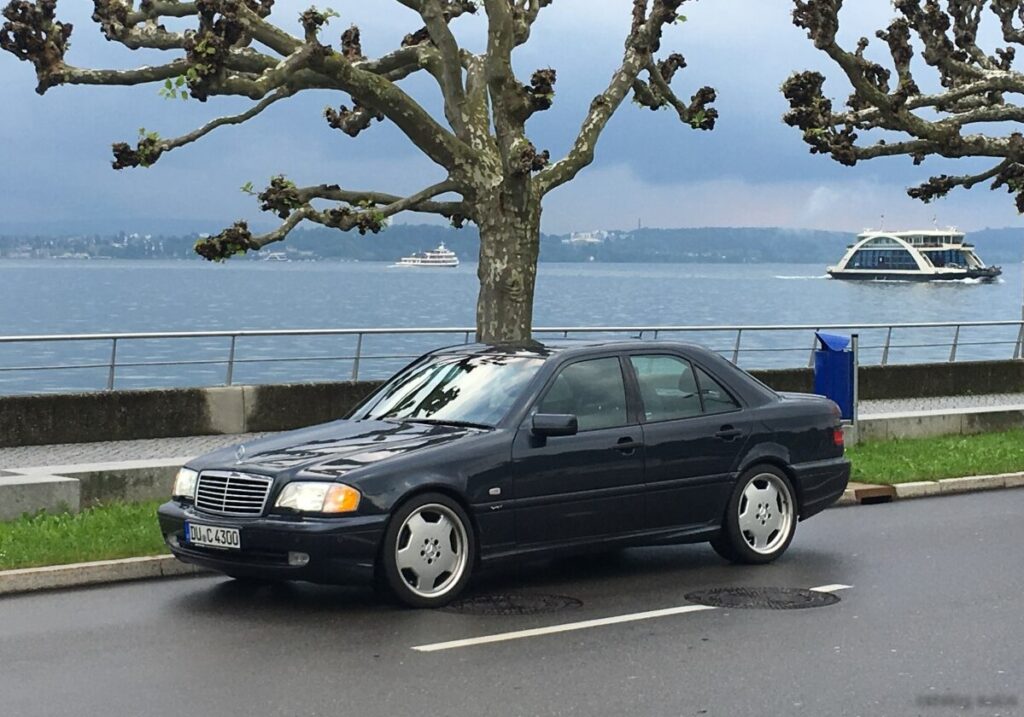
The Mercedes-Benz C 200, part of the W202 C-Class range produced from June 1997 to May 2000, represented a key entry point into the premium compact executive car segment for Mercedes-Benz in Europe and other international markets. This facelifted version of the W202, introduced in 1997, brought revised styling, improved refinement, and updated engine options. The C 200, powered by a 2.0-liter inline-four engine producing 136 horsepower, served as a balance between affordability and the more potent offerings within the C-Class lineup, such as the C 280 or the later C 36 AMG. It was primarily aimed at buyers seeking a comfortable, well-built sedan with the prestige of the Mercedes-Benz badge, but without the higher price tag of the larger-engined models.
Technical Specifications
| Brand | Mercedes-Benz |
| Model | C-class |
| Generation | C-class (W202, facelift 1997) |
| Type (Engine) | C 200 (136 Hp) |
| Start of production | June, 1997 |
| End of production | May, 2000 |
| Powertrain Architecture | Internal Combustion engine |
| Body type | Sedan |
| Seats | 5 |
| Doors | 4 |
| Fuel consumption (urban) | 11.1 l/100 km (21.2 US mpg) |
| Fuel consumption (extra urban) | 6.3 l/100 km (37.3 US mpg) |
| Fuel Type | Petrol (Gasoline) |
| Acceleration 0 – 100 km/h | 10.1 sec |
| Acceleration 0 – 62 mph | 10.1 sec |
| Acceleration 0 – 60 mph | 9.6 sec |
| Maximum speed | 203 km/h (126.14 mph) |
| Weight-to-power ratio | 10 kg/Hp |
| Weight-to-torque ratio | 7.2 kg/Nm |
| Power | 136 Hp @ 5500 rpm |
| Power per litre | 68.1 Hp/l |
| Torque | 190 Nm @ 3700-4500 rpm (140.14 lb.-ft.) |
| Engine layout | Front, Longitudinal |
| Engine Model/Code | M 111 E 20 / 111.945 |
| Engine displacement | 1998 cm3 (121.93 cu. in.) |
| Number of cylinders | 4 |
| Engine configuration | Inline |
| Cylinder Bore | 89.9 mm (3.54 in.) |
| Piston Stroke | 78.7 mm (3.1 in.) |
| Compression ratio | 10.4:1 |
| Number of valves per cylinder | 4 |
| Fuel injection system | Multi-port manifold injection |
| Engine aspiration | Naturally aspirated engine |
| Valvetrain | DOHC |
| Engine oil capacity | 5.5 l (5.81 US qt | 4.84 UK qt) |
| Coolant | 8.5 l (8.98 US qt | 7.48 UK qt) |
| Kerb Weight | 1365 kg (3009.31 lbs.) |
| Max. weight | 1845 kg (4067.53 lbs.) |
| Max load | 480 kg (1058.22 lbs.) |
| Fuel tank capacity | 62 l (16.38 US gal | 13.64 UK gal) |
| Length | 4516 mm (177.8 in.) |
| Width | 1723 mm (67.83 in.) |
| Height | 1427 mm (56.18 in.) |
| Wheelbase | 2690 mm (105.91 in.) |
| Front track | 1499 mm (59.02 in.) |
| Rear track | 1464 mm (57.64 in.) |
| Drag coefficient (Cd) | 0.32 |
| Drivetrain Architecture | Rear wheel drive |
| Drive wheel | Rear wheel drive |
| Number of gears | 5 |
| Front suspension | Double wishbone |
| Rear suspension | Independent multi-link spring suspension with stabilizer |
| Front brakes | Disc |
| Rear brakes | Disc |
| Assisting systems | ABS (Anti-lock braking system) |
| Steering type | Cone worm with recirculation balls |
| Power steering | Hydraulic Steering |
| Tires size | 195/65 R15 |
| Wheel rims size | 6.5J x 15 |
Powertrain & Engine Architecture
The C 200’s engine, designated the M 111 E 20 (internal code 111.945), was a 1998cc inline-four cylinder unit. This engine was a significant departure from the older CIS-E fuel injection systems used in earlier Mercedes-Benz models, employing a Bosch Motronic multi-port fuel injection system. This system, combined with a dual overhead camshaft (DOHC) valvetrain with four valves per cylinder, allowed for improved efficiency and power delivery. The engine featured a compression ratio of 10.4:1. The five-speed automatic transmission, a common option for the C 200, was a traditional torque converter type, prioritizing smooth shifts and ease of use over outright performance. While not particularly sporty, it was well-suited to the C 200’s intended role as a comfortable and refined cruiser.
Driving Characteristics
The C 200 Automatic offered a comfortable, if not exhilarating, driving experience. With 136 horsepower and 190 Nm (140 lb-ft) of torque, acceleration was adequate for everyday driving, but noticeably slower than the C 230 Kompressor or C 280 models. The automatic transmission, while smooth, did contribute to a slight loss of responsiveness compared to the available five-speed manual. Gear ratios were tuned for fuel efficiency and relaxed cruising, rather than aggressive acceleration. The rear-wheel-drive configuration provided a balanced feel, but the relatively narrow tires (typically 195/65 R15) limited grip during spirited driving. Overall, the C 200 Automatic was best suited for drivers prioritizing comfort and refinement over sporty handling.
Equipment & Trim Levels
The C 200 typically came standard with features such as power windows, central locking, and an AM/FM radio. Air conditioning was a common option, as were alloy wheels. Interior upholstery was generally cloth, with leather available as an upgrade. The dashboard layout was typical of Mercedes-Benz at the time, featuring a wood trim and a straightforward instrument cluster. Optional extras included a sunroof, upgraded audio systems, and heated seats. The C 200 occupied a mid-range position in the W202 lineup, offering a step up in features and refinement compared to the base C 180, but lacking the luxury appointments of the higher-end models.
Chassis & Braking
The W202 C-Class featured a double wishbone front suspension and an independent multi-link rear suspension, providing a comfortable ride and good handling characteristics. The C 200 typically came equipped with disc brakes on all four wheels, along with an Anti-lock Braking System (ABS) as standard. The suspension was tuned for comfort, with stabilizer bars helping to reduce body roll during cornering. The steering was a recirculating ball system with hydraulic power assistance, offering a relatively light and easy steering feel.
Market Reception & Comparison
The C 200 Automatic was generally well-received by critics as a sensible and well-built option within the C-Class range. It offered a good balance of price, performance, and features. However, some reviewers noted that the automatic transmission could feel sluggish, and that the engine lacked the punch of the more powerful alternatives. Fuel economy was considered reasonable for its class, but not exceptional. Compared to the manual transmission version, the automatic C 200 offered less driver engagement but greater convenience. Against competitors like the BMW 318i and Audi A4, the C 200 was often praised for its build quality and ride comfort, but criticized for its less sporty driving dynamics.
Legacy
The M 111 engine family, including the 2.0-liter unit found in the C 200, proved to be relatively reliable. With proper maintenance, these engines can last for many years. The W202 C-Class, as a whole, is now considered a classic Mercedes-Benz, and well-maintained examples are sought after by enthusiasts. The C 200 Automatic, while not the most desirable variant, remains a relatively affordable entry point into W202 ownership. Common issues with these vehicles include wear and tear on suspension components, corrosion, and occasional electrical gremlins. However, parts availability is generally good, and the C 200’s relatively simple mechanical design makes it a relatively straightforward car to maintain and repair.