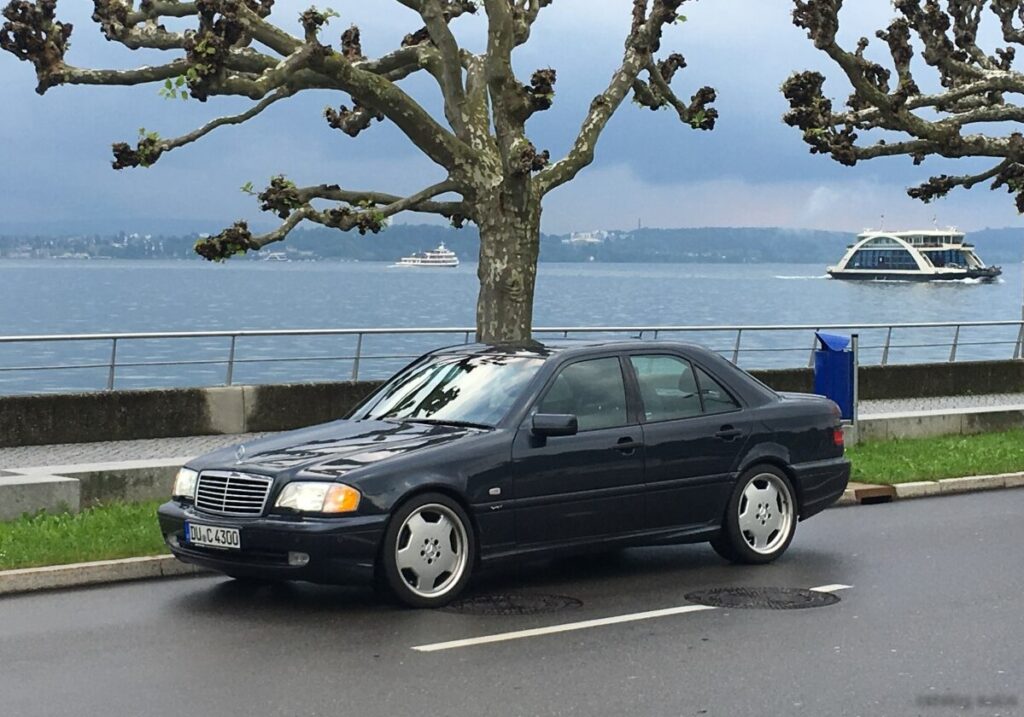
The Mercedes-Benz C 220 D, produced from June 1997 to May 1999, was a key variant within the W202 C-Class range, particularly following the 1997 facelift. This model represented a diesel-powered entry point into the C-Class lineup, aimed at buyers prioritizing fuel economy and reliability over outright performance. Positioned below the petrol-powered C 220 and C 280, and alongside other diesel options like the C 200 D, the C 220 D offered a balance of practicality and the prestige associated with the Mercedes-Benz brand. It was a significant offering in the European market, where diesel engines held a substantial share of the passenger car segment.
Technical Specifications
| Brand | Mercedes-Benz |
| Model | C-class |
| Generation | C-class (W202, facelift 1997) |
| Type (Engine) | C 220 D (95 Hp) |
| Start of production | June, 1997 |
| End of production | May, 1999 |
| Powertrain Architecture | Internal Combustion engine |
| Body type | Sedan |
| Seats | 5 |
| Doors | 4 |
| Fuel consumption (urban) | 8.5 l/100 km (27.7 US mpg) |
| Fuel consumption (extra urban) | 5.3 l/100 km (44.4 US mpg) |
| Fuel Type | Diesel |
| Acceleration 0 – 100 km/h | 16.3 sec |
| Acceleration 0 – 62 mph | 16.3 sec |
| Acceleration 0 – 60 mph | 15.5 sec |
| Maximum speed | 175 km/h (108.74 mph) |
| Weight-to-power ratio | 14.7 kg/Hp |
| Weight-to-torque ratio | 9.3 kg/Nm |
| Power | 95 Hp @ 5000 rpm |
| Power per litre | 44.1 Hp/l |
| Torque | 150 Nm @ 3100-4500 rpm (110.63 lb.-ft.) |
| Engine layout | Front, Longitudinal |
| Engine Model/Code | OM 604 D 22 / 604.910 |
| Engine displacement | 2155 cm3 (131.51 cu. in.) |
| Number of cylinders | 4 |
| Engine configuration | Inline |
| Cylinder Bore | 89 mm (3.5 in.) |
| Piston Stroke | 86.6 mm (3.41 in.) |
| Compression ratio | 22:1 |
| Number of valves per cylinder | 4 |
| Fuel injection system | Precombustion chamber injection |
| Engine aspiration | Naturally aspirated engine |
| Valvetrain | DOHC |
| Engine oil capacity | 6.5 l (6.87 US qt | 5.72 UK qt) |
| Coolant | 7 l (7.4 US qt | 6.16 UK qt) |
| Kerb Weight | 1400 kg (3086.47 lbs.) |
| Max. weight | 1880 kg (4144.69 lbs.) |
| Max load | 480 kg (1058.22 lbs.) |
| Fuel tank capacity | 62 l (16.38 US gal | 13.64 UK gal) |
| Length | 4516 mm (177.8 in.) |
| Width | 1723 mm (67.83 in.) |
| Height | 1427 mm (56.18 in.) |
| Wheelbase | 2690 mm (105.91 in.) |
| Front track | 1499 mm (59.02 in.) |
| Rear track | 1464 mm (57.64 in.) |
| Drivetrain Architecture | Rear wheel drive |
| Number of gears | 5 |
| Gearbox type | Manual transmission |
| Front suspension | Double wishbone |
| Rear suspension | Independent multi-link spring suspension with stabilizer |
| Front brakes | Disc |
| Rear brakes | Disc |
| Assisting systems | ABS (Anti-lock braking system) |
| Steering type | Cone worm with recirculation balls |
| Power steering | Hydraulic Steering |
| Tires size | 195/65 R15 |
| Wheel rims size | 6.5J x 15 |
Powertrain & Engine Architecture
The C 220 D was powered by the OM 604 D 22 engine, a 2.2-liter inline-four cylinder diesel. This engine was a mainstay of Mercedes-Benz’s diesel offerings during the 1990s, known for its durability and relatively refined operation for a diesel of its era. The ‘D 22’ designation indicated the engine’s displacement. The OM604 utilized a precombustion chamber injection system, a common technology at the time, where fuel was partially combusted in a small chamber before entering the main cylinder, aiding in smoother combustion and reduced noise. The engine featured a double overhead camshaft (DOHC) valvetrain, contributing to improved breathing and efficiency. The 95 horsepower output was achieved at 5000 rpm, while peak torque of 150 Nm (110.63 lb-ft) was available between 3100 and 4500 rpm. The engine was mounted longitudinally in the engine bay, driving the rear wheels. The five-speed manual transmission was the standard offering, providing a relatively long-legged gearing setup suited to the engine’s torque characteristics.
Driving Characteristics
The C 220 D with the manual transmission offered a practical, if not particularly exhilarating, driving experience. Acceleration was modest, with a 0-60 mph time of around 15.5 seconds. The focus was on fuel efficiency and relaxed cruising. The engine’s torque delivery was relatively flat, providing adequate pulling power for everyday driving situations, but lacking the punch of the higher-output petrol variants. The manual gearbox, while not sporty, was precise and well-weighted. Compared to the automatic transmission option, the manual offered slightly improved fuel economy and a more engaging driving experience. The long gearing emphasized fuel economy at highway speeds, but could feel strained when attempting quicker overtakes. The rear-wheel drive configuration provided a balanced feel, although traction could be limited on slippery surfaces.
Equipment & Trim Levels
The C 220 D typically came equipped with a reasonable level of standard features, reflecting its position as a mainstream model. This included power windows, central locking, and a basic audio system. Interior upholstery was typically cloth, although leather was available as an option. Dashboard trim was generally functional and understated, in keeping with the Mercedes-Benz ethos of the time. Optional extras included air conditioning, a sunroof, and upgraded audio systems. The C 220 D didn’t offer the same level of luxury appointments as the C 280 or higher-spec models, but provided a comfortable and well-equipped cabin for its price point.
Chassis & Braking
The W202 C-Class featured a double wishbone front suspension and an independent multi-link rear suspension, providing a comfortable ride and good handling characteristics. The C 220 D, being a more affordable variant, typically featured smaller diameter wheels and tires (195/65 R15) compared to the higher-spec models. Braking was handled by disc brakes on all four wheels, with ABS (Anti-lock Braking System) as standard. The braking system was adequate for the car’s performance, but lacked the stopping power of more modern systems. Stabilizer bars were fitted to both the front and rear axles to reduce body roll during cornering.
Market Reception & Comparison
The C 220 D was generally well-received by critics as a sensible and economical choice within the C-Class range. It was praised for its fuel efficiency, durability, and comfortable ride. However, it was often criticized for its lack of outright performance compared to the petrol-powered models. Compared to the C 200 D, the C 220 D offered a noticeable increase in power and torque, making it a more capable all-rounder. Against the C 220 and C 280, the C 220 D offered significantly better fuel economy, but at the expense of performance. The C 220 D appealed to buyers who prioritized practicality and running costs over driving excitement.
Legacy
The OM 604 engine, found in the C 220 D, has proven to be remarkably durable and reliable over the long term. Well-maintained examples can still be found on the road today, often with high mileage. The C 220 D has developed a reputation as a dependable and affordable classic car. In the used car market, these models are often sought after by those looking for a relatively inexpensive and reliable Mercedes-Benz. However, potential buyers should be aware of the age-related issues common to older vehicles, such as corrosion and wear and tear on suspension components. The C 220 D represents a significant chapter in Mercedes-Benz’s history, showcasing the brand’s commitment to diesel technology and its ability to produce durable and long-lasting vehicles.