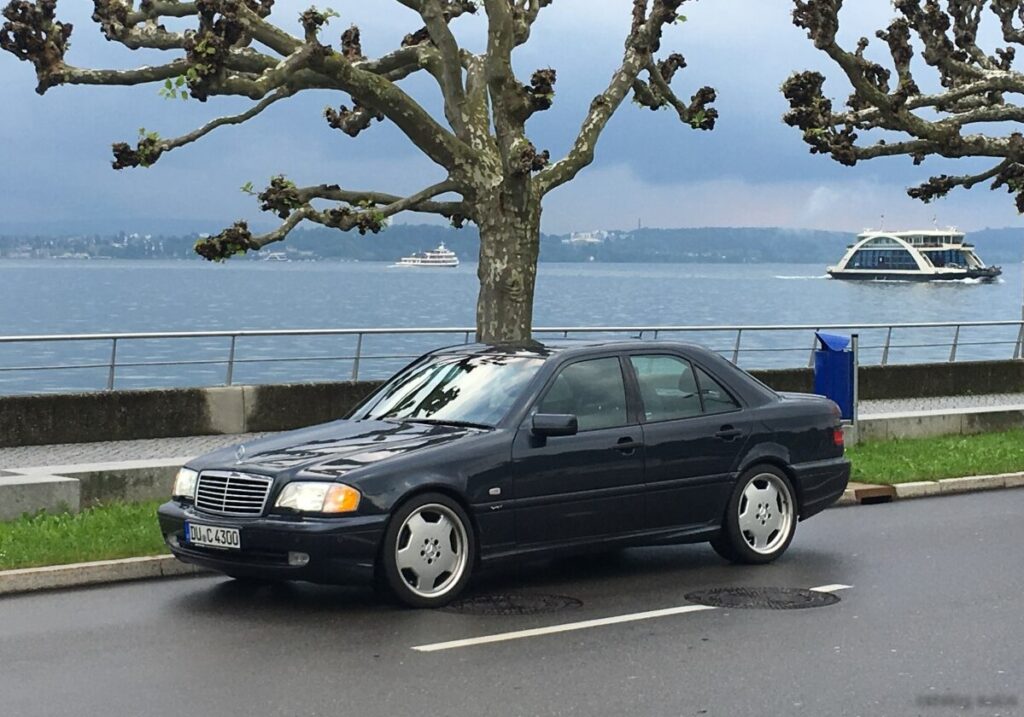
The Mercedes-Benz C 230, produced from July 1997 to June 1998, was a key variant within the W202 C-Class facelift range. Representing a mid-tier offering, it slotted between the base C 180 and the more powerful C 280 models. This generation of the C-Class was significant as it marked Mercedes-Benz’s entry into the compact executive car segment, aiming to attract a younger demographic while maintaining the brand’s reputation for quality and engineering. The C 230, with its 2.3-liter engine, offered a balance of performance and fuel efficiency, making it a popular choice in European and North American markets.
Technical Specifications
| Brand | Mercedes-Benz |
| Model | C-class |
| Generation | C-class (W202, facelift 1997) |
| Type (Engine) | C 230 (150 Hp) |
| Start of production | July, 1997 |
| End of production | June, 1998 |
| Powertrain Architecture | Internal Combustion engine |
| Body type | Sedan |
| Seats | 5 |
| Doors | 4 |
| Fuel consumption (urban) | 11.5 l/100 km (20.5 US mpg) |
| Fuel consumption (extra urban) | 6.5 l/100 km (36.2 US mpg) |
| Fuel Type | Petrol (Gasoline) |
| Acceleration 0 – 100 km/h | 10.5 sec |
| Acceleration 0 – 62 mph | 10.5 sec |
| Acceleration 0 – 60 mph | 10 sec |
| Maximum speed | 210 km/h (130.49 mph) |
| Weight-to-power ratio | 9.4 kg/Hp |
| Weight-to-torque ratio | 6.7 kg/Nm |
| Power | 150 Hp @ 5400 rpm |
| Torque | 210 Nm @ 3700-4500 rpm (154.89 lb.-ft.) |
| Engine layout | Front, Longitudinal |
| Engine Model/Code | M 111 E 23 / 111.974 |
| Engine displacement | 2295 cm3 (140.05 cu. in.) |
| Number of cylinders | 4 |
| Engine configuration | Inline |
| Cylinder Bore | 90.9 mm (3.58 in.) |
| Piston Stroke | 88.4 mm (3.48 in.) |
| Compression ratio | 10.4:1 |
| Number of valves per cylinder | 4 |
| Fuel injection system | Multi-port manifold injection |
| Engine aspiration | Naturally aspirated engine |
| Valvetrain | DOHC |
| Engine oil capacity | 5.5 l (5.81 US qt | 4.84 UK qt) |
| Coolant | 8.5 l (8.98 US qt | 7.48 UK qt) |
| Kerb Weight | 1410 kg (3108.52 lbs.) |
| Max. weight | 1890 kg (4166.74 lbs.) |
| Max load | 480 kg (1058.22 lbs.) |
| Fuel tank capacity | 62 l (16.38 US gal | 13.64 UK gal) |
| Length | 4516 mm (177.8 in.) |
| Width | 1723 mm (67.83 in.) |
| Height | 1427 mm (56.18 in.) |
| Wheelbase | 2690 mm (105.91 in.) |
| Front track | 1499 mm (59.02 in.) |
| Rear track | 1464 mm (57.64 in.) |
| Drivetrain Architecture | Rear wheel drive |
| Number of gears | 5 gears, manual transmission |
| Front suspension | Double wishbone |
| Rear suspension | Independent multi-link spring suspension with stabilizer |
| Front brakes | Ventilated discs |
| Rear brakes | Disc |
| Assisting systems | ABS (Anti-lock braking system) |
| Steering type | Cone worm with recirculation balls |
| Power steering | Hydraulic Steering |
| Tires size | 195/65 R15 |
| Wheel rims size | 6.5J x 15 |
Powertrain & Engine Architecture
The C 230 was powered by the M111 E 23 engine, a 2.3-liter inline-four cylinder powerplant. This engine was a significant departure from the older CIS (Continuous Injection System) engines used in previous Mercedes-Benz models, adopting a more modern multi-port fuel injection system. The M111 featured a double overhead camshaft (DOHC) valvetrain with four valves per cylinder, contributing to its relatively high specific output. The engine code, 111.974, identifies specific variations within the M111 family. The 150 horsepower peak was achieved at 5400 rpm, while the 210 Nm (155 lb-ft) of torque was available between 3700 and 4500 rpm. The engine’s longitudinal mounting and rear-wheel drive configuration were traditional for Mercedes-Benz at the time. The standard transmission for the C 230 was a five-speed manual, although a four-speed automatic transmission was also available, impacting performance and fuel economy.
Driving Characteristics
The C 230, particularly with the manual transmission, offered a reasonably engaging driving experience. Acceleration from 0 to 60 mph took around 10 seconds, which was competitive for its class in the late 1990s. The automatic transmission, while providing convenience, noticeably dulled acceleration and reduced fuel efficiency. The engine’s torque curve provided adequate power for everyday driving, but it lacked the punch of the larger C 280. Steering was precise, typical of Mercedes-Benz, and the suspension provided a comfortable ride, although it wasn’t particularly sporty. Compared to the C 180, the C 230 offered a noticeable performance upgrade, while remaining more affordable and fuel-efficient than the C 280.
Equipment & Trim Levels
The C 230 typically came standard with features such as power windows, central locking, and an AM/FM radio. Interior upholstery was generally cloth, although leather was available as an option. Air conditioning was a common option, as were features like a sunroof and upgraded audio systems. The dashboard layout was typical of the W202, with a functional and understated design. Trim levels were relatively simple, with options packages adding features like alloy wheels, wood trim, and more advanced audio systems. The C 230 aimed for a balance between luxury and affordability, offering a comfortable and well-equipped interior without the premium price tag of the higher-end models.
Chassis & Braking
The W202 C-Class utilized a double wishbone front suspension and an independent multi-link rear suspension, providing a good balance of ride comfort and handling. The C 230, being a mid-range model, typically featured ventilated disc brakes on the front wheels and solid disc brakes on the rear. Anti-lock braking system (ABS) was standard, enhancing safety. Stabilizer bars were fitted to both the front and rear axles to reduce body roll during cornering. The chassis was designed to provide a stable and predictable driving experience, prioritizing comfort and safety over outright sportiness.
Market Reception & Comparison
The C 230 was generally well-received by automotive critics. It was praised for its build quality, comfortable ride, and relatively strong engine. However, some critics noted that the interior design was somewhat dated compared to its rivals, and the handling wasn’t as sharp as some other compact executive cars. Compared to the C 180, the C 230 offered a significant performance improvement, making it a more appealing option for drivers who wanted more power. Against the C 280, the C 230 offered a better balance of performance and fuel economy, making it a more practical choice for everyday use. Fuel economy figures were respectable for the time, averaging around 20.5 mpg in the city and 36.2 mpg on the highway.
Legacy
The M111 engine family, including the 2.3-liter version found in the C 230, proved to be relatively reliable. While not immune to age-related issues, these engines are generally known for their durability and longevity. Today, the W202 C 230 is considered a classic Mercedes-Benz, and well-maintained examples are sought after by enthusiasts. Common issues include wear and tear on suspension components, corrosion, and potential problems with the automatic transmission. However, parts availability is generally good, and the C 230 remains a relatively affordable entry point into Mercedes-Benz ownership. Its blend of classic styling, solid engineering, and reasonable running costs ensures its continued appeal in the used car market.