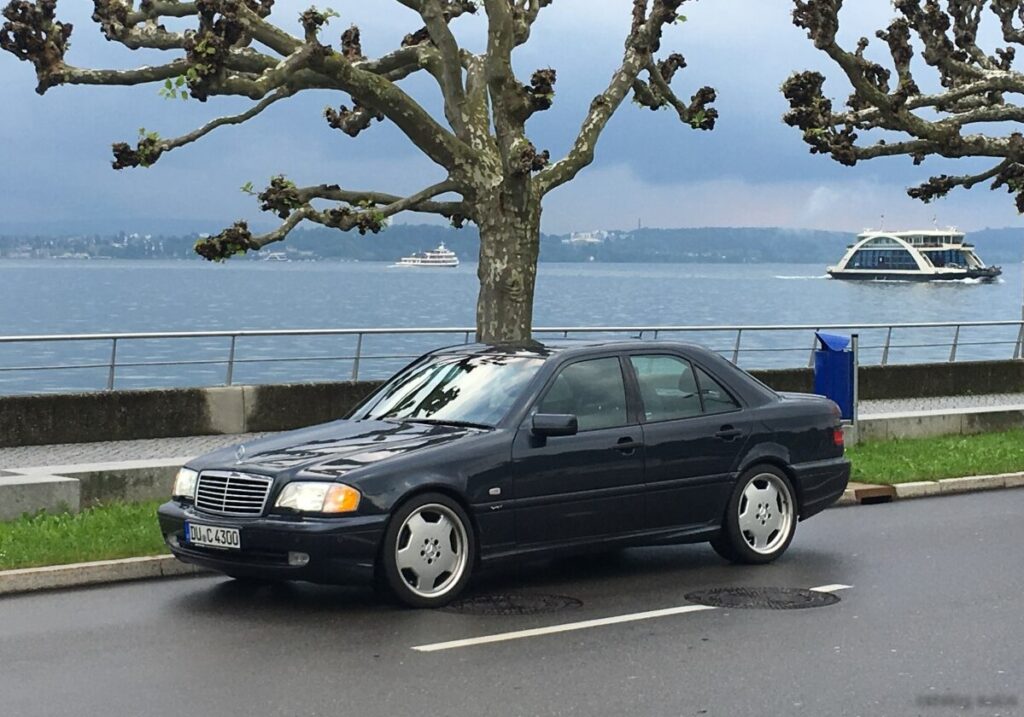
The Mercedes-Benz C 250 Turbodiesel, produced from June 1997 to May 2000, was a significant variant within the W202 C-Class range, particularly following the 1997 facelift. This model aimed to offer a blend of fuel efficiency and respectable performance, appealing to buyers seeking a comfortable and economical luxury sedan. Positioned as a mid-range offering, it slotted between the lower-powered C 220 Diesel and the more potent C 36 AMG. The C 250 Turbodiesel represented a key part of Mercedes-Benz’s strategy to provide diesel options in a market increasingly focused on fuel economy and reduced emissions, especially in Europe where diesel engines held a strong preference.
Technical Specifications
| Brand | Mercedes-Benz |
| Model | C-class |
| Generation | C-class (W202, facelift 1997) |
| Type (Engine) | C 250 Turbodiesel (150 Hp) |
| Start of production | June, 1997 |
| End of production | May, 2000 |
| Powertrain Architecture | Internal Combustion engine |
| Body type | Sedan |
| Seats | 5 |
| Doors | 4 |
| Fuel consumption (urban) | 9.4 l/100 km (25 US mpg, 30.1 UK mpg, 10.6 km/l) |
| Fuel consumption (extra urban) | 5.3 l/100 km (44.4 US mpg, 53.3 UK mpg, 18.9 km/l) |
| Fuel Type | Diesel |
| Acceleration 0 – 100 km/h | 10.2 sec |
| Acceleration 0 – 62 mph | 10.2 sec |
| Acceleration 0 – 60 mph | 9.7 sec |
| Maximum speed | 203 km/h (126.14 mph) |
| Weight-to-power ratio | 9.9 kg/Hp, 101.4 Hp/tonne |
| Weight-to-torque ratio | 5.3 kg/Nm, 189.2 Nm/tonne |
| Power | 150 Hp @ 4400 rpm |
| Power per litre | 60.1 Hp/l |
| Torque | 280 Nm @ 1800-3600 rpm (206.52 lb.-ft. @ 1800-3600 rpm) |
| Engine layout | Front, Longitudinal |
| Engine Model/Code | OM 605 D 25 LA / 605.960 |
| Engine displacement | 2497 cm3 (152.38 cu. in.) |
| Number of cylinders | 5 |
| Engine configuration | Inline |
| Cylinder Bore | 87 mm (3.43 in.) |
| Piston Stroke | 84 mm (3.31 in.) |
| Compression ratio | 22:1 |
| Number of valves per cylinder | 4 |
| Fuel injection system | Precombustion chamber injection |
| Engine aspiration | Turbocharger, Intercooler |
| Valvetrain | DOHC |
| Engine oil capacity | 7 l (7.4 US qt | 6.16 UK qt) |
| Coolant | 7.5 l (7.93 US qt | 6.6 UK qt) |
| Kerb Weight | 1480 kg (3262.84 lbs.) |
| Max. weight | 1960 kg (4321.06 lbs.) |
| Max load | 480 kg (1058.22 lbs.) |
| Fuel tank capacity | 62 l (16.38 US gal | 13.64 UK gal) |
| Length | 4516 mm (177.8 in.) |
| Width | 1723 mm (67.83 in.) |
| Height | 1427 mm (56.18 in.) |
| Wheelbase | 2690 mm (105.91 in.) |
| Front track | 1499 mm (59.02 in.) |
| Rear track | 1464 mm (57.64 in.) |
| Drivetrain Architecture | The Internal combustion engine (ICE) drives the rear wheels of the vehicle. |
| Drive wheel | Rear wheel drive |
| Number of gears | 5 |
| Gearbox type | Manual transmission |
| Front suspension | Double wishbone |
| Rear suspension | Independent multi-link spring suspension with stabilizer |
| Front brakes | Ventilated discs |
| Rear brakes | Disc |
| Assisting systems | ABS (Anti-lock braking system) |
| Steering type | Cone worm with recirculation balls |
| Power steering | Hydraulic Steering |
| Tires size | 195/65 R15 |
| Wheel rims size | 6.5J x 15 |
Powertrain & Engine Architecture
The heart of the C 250 Turbodiesel was the OM 605 D 25 LA engine, a 2.5-liter inline five-cylinder diesel. This engine utilized precombustion chamber injection, a system common in Mercedes-Benz diesels of the era, known for its relatively quiet operation and good combustion efficiency. The addition of a turbocharger and intercooler significantly boosted power output to 150 horsepower and 280 Nm (206.52 lb-ft) of torque. The engine featured a double overhead camshaft (DOHC) valvetrain, contributing to improved breathing and overall performance. The five-speed manual transmission was standard, providing a good balance between fuel economy and driver control. While an automatic transmission was available, it was often criticized for slightly diminishing the engine’s responsiveness.
Driving Characteristics
The C 250 Turbodiesel offered a distinctly different driving experience compared to its gasoline-powered siblings. The high torque output of the diesel engine, available from a low 1800 rpm, provided strong acceleration in everyday driving situations. While not a sports car, the C 250 Turbodiesel could achieve a 0-60 mph time of around 9.7 seconds, respectable for the period. The manual transmission allowed for precise gear selection, maximizing the engine’s efficiency. Compared to the C 220 Diesel, the C 250 offered a noticeable performance increase, while remaining more fuel-efficient than the higher-powered gasoline models. The gear ratios were tuned for a balance of acceleration and highway cruising, making it a comfortable long-distance vehicle.
Equipment & Trim Levels
The C 250 Turbodiesel typically came equipped with a reasonable level of standard features, reflecting its mid-range positioning. These included power windows, central locking, and an anti-lock braking system (ABS). Interior upholstery was generally cloth, although leather options were available. Optional extras included a sunroof, upgraded audio systems, and automatic climate control. The dashboard layout was typical of the W202 C-Class, characterized by a functional and understated design. The trim level could vary depending on the market, with some regions offering more comprehensive packages.
Chassis & Braking
The C 250 Turbodiesel utilized a double wishbone front suspension and an independent multi-link rear suspension, providing a comfortable and controlled ride. The suspension was tuned to balance handling with ride quality, making it suitable for both city driving and highway cruising. Braking duties were handled by ventilated discs at the front and solid discs at the rear. The ABS system enhanced braking performance and stability, particularly in adverse conditions. The stabilizer bars helped to reduce body roll during cornering.
Market Reception & Comparison
The C 250 Turbodiesel was generally well-received by automotive critics, who praised its fuel efficiency, strong torque, and comfortable ride. However, some reviewers noted that the engine could be somewhat noisy compared to gasoline engines. Compared to the C 220 Diesel, the C 250 offered a significant performance upgrade, justifying its higher price. Against the gasoline-powered C 180 or C 200, the C 250 Turbodiesel provided superior fuel economy and comparable performance, making it an attractive option for drivers prioritizing efficiency. Its reliability was also a strong point, typical of Mercedes-Benz engineering.
Legacy
The OM 605 engine family, including the D 25 LA variant found in the C 250 Turbodiesel, is renowned for its durability and longevity. These engines are known to withstand high mileage with proper maintenance. Today, the C 250 Turbodiesel remains a relatively common sight in the used car market, particularly in Europe. While age and mileage can present challenges, well-maintained examples continue to offer a reliable and economical driving experience. The C 250 Turbodiesel represents a significant chapter in Mercedes-Benz’s diesel engine history, showcasing the brand’s commitment to fuel efficiency and engineering excellence.