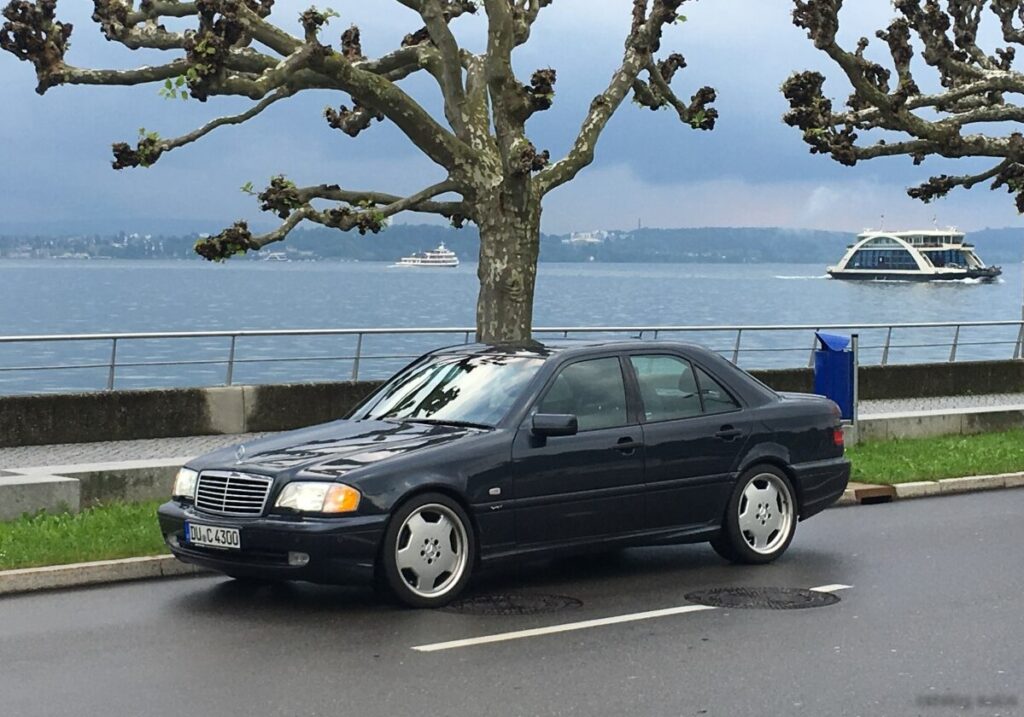
The Mercedes-Benz C 250 Turbodiesel, produced from June 1997 to May 2000, was a significant variant within the W202 C-Class range, particularly after the 1997 facelift. This model aimed to offer a blend of fuel efficiency and respectable performance, appealing to buyers seeking a comfortable and economical luxury sedan. Positioned as a mid-range offering, it slotted between the lower-powered C 220 Diesel and the more potent C 36 AMG. The C 250 Turbodiesel represented a key part of Mercedes-Benz’s strategy to provide diesel options in a market increasingly focused on fuel economy and reduced emissions, while still maintaining the brand’s reputation for quality and refinement.
Technical Specifications
| Brand | Mercedes-Benz |
| Model | C-class |
| Generation | C-class (W202, facelift 1997) |
| Type (Engine) | C 250 Turbodiesel (150 Hp) 5G-TRONIC |
| Start of production | June, 1997 |
| End of production | May, 2000 |
| Powertrain Architecture | Internal Combustion engine |
| Body type | Sedan |
| Seats | 5 |
| Doors | 4 |
| Fuel consumption (urban) | 8.8 l/100 km (26.7 US mpg) |
| Fuel consumption (extra urban) | 5.2 l/100 km (45.2 US mpg) |
| Fuel Type | Diesel |
| Acceleration 0 – 100 km/h | 9.9 sec |
| Acceleration 0 – 62 mph | 9.9 sec |
| Acceleration 0 – 60 mph | 9.4 sec |
| Maximum speed | 200 km/h (124.27 mph) |
| Weight-to-power ratio | 9.9 kg/Hp |
| Weight-to-torque ratio | 5.3 kg/Nm |
| Power | 150 Hp @ 4400 rpm |
| Torque | 280 Nm @ 1800-3600 rpm (206.52 lb.-ft.) |
| Engine layout | Front, Longitudinal |
| Engine Model/Code | OM 605 D 25 LA / 605.960 |
| Engine displacement | 2497 cm3 (152.38 cu. in.) |
| Number of cylinders | 5 |
| Engine configuration | Inline |
| Cylinder Bore | 87 mm (3.43 in.) |
| Piston Stroke | 84 mm (3.31 in.) |
| Compression ratio | 22:1 |
| Number of valves per cylinder | 4 |
| Fuel injection system | Precombustion chamber injection |
| Engine aspiration | Turbocharger, Intercooler |
| Valvetrain | DOHC |
| Engine oil capacity | 7 l (7.4 US qt | 6.16 UK qt) |
| Coolant | 7.5 l (7.93 US qt | 6.6 UK qt) |
| Kerb Weight | 1480 kg (3262.84 lbs.) |
| Max. weight | 1960 kg (4321.06 lbs.) |
| Max load | 480 kg (1058.22 lbs.) |
| Fuel tank capacity | 62 l (16.38 US gal | 13.64 UK gal) |
| Length | 4516 mm (177.8 in.) |
| Width | 1723 mm (67.83 in.) |
| Height | 1427 mm (56.18 in.) |
| Wheelbase | 2690 mm (105.91 in.) |
| Front track | 1499 mm (59.02 in.) |
| Rear track | 1464 mm (57.64 in.) |
| Drivetrain Architecture | Rear wheel drive |
| Number of gears | 5 |
| Gearbox type | Automatic transmission 5G-TRONIC |
| Front suspension | Double wishbone |
| Rear suspension | Independent multi-link spring suspension with stabilizer |
| Front brakes | Ventilated discs |
| Rear brakes | Disc |
| Assisting systems | ABS (Anti-lock braking system) |
| Steering type | Cone worm with recirculation balls |
| Power steering | Hydraulic |
| Tires size | 195/65 R15 |
| Wheel rims size | 6.5J x 15 |
Powertrain & Engine Architecture
The heart of the C 250 Turbodiesel was the OM 605 D 25 LA engine, a 2.5-liter inline five-cylinder diesel. This engine utilized precombustion chamber injection, a system common in Mercedes-Benz diesels of the era, known for its relatively quiet operation and good combustion efficiency. The addition of a turbocharger and intercooler significantly boosted power output to 150 horsepower and 280 Nm (206.52 lb.-ft.) of torque. The 5G-TRONIC automatic transmission, a five-speed unit, was the sole transmission option. This transmission was designed for smooth shifts and optimized fuel economy, but wasn’t known for particularly sporty performance. The engine’s longitudinal mounting and rear-wheel-drive configuration were typical for Mercedes-Benz sedans of this period.
Driving Characteristics
The C 250 Turbodiesel offered a comfortable and refined driving experience, prioritizing smoothness over outright speed. Acceleration to 60 mph took around 9.4 seconds, which was adequate for everyday driving but not particularly brisk. The 5G-TRONIC transmission, while smooth, could feel somewhat hesitant during quick overtaking maneuvers. The engine’s strong low-end torque made it well-suited for cruising on highways and provided effortless acceleration in most situations. Compared to the manual transmission versions of the C 250 Diesel, the automatic offered less driver engagement but greater convenience. Compared to the higher-output C 36 AMG, the C 250 Turbodiesel was significantly slower, but offered substantially better fuel economy.
Equipment & Trim Levels
The C 250 Turbodiesel typically came equipped with features such as power windows, central locking, and air conditioning. Interior upholstery was generally cloth, although leather was available as an option. Standard dashboard configuration included wood trim and analog gauges. Optional extras included a sunroof, upgraded audio system, and automatic climate control. The trim level was generally considered a step above the base C 220 Diesel, offering a more comprehensive list of standard features and a more luxurious interior.
Chassis & Braking
The W202 C-Class featured a double wishbone front suspension and an independent multi-link rear suspension, providing a comfortable ride and good handling characteristics. The C 250 Turbodiesel, due to its weight, utilized slightly stiffer spring rates compared to the lighter models. Braking consisted of ventilated discs at the front and solid discs at the rear, with ABS as standard. The steering was a recirculating ball system with hydraulic power assistance, offering a reasonably direct feel.
Market Reception & Comparison
The C 250 Turbodiesel was generally well-received by automotive critics, who praised its fuel efficiency, comfortable ride, and refined engine. However, some criticized the automatic transmission for its lack of responsiveness. Compared to the C 220 Diesel, the C 250 offered a noticeable performance improvement, while maintaining excellent fuel economy. Against the petrol-powered C 180 or C 200, the C 250 Turbodiesel offered significantly better fuel economy, but at the expense of some performance. Reliability was generally good, although the precombustion chamber injection system could require occasional maintenance.
Legacy
The OM 605 engine family, including the D 25 LA variant, is known for its durability and longevity. Well-maintained C 250 Turbodiesel models can still be found on the road today, testament to the engine’s robust construction. In the used car market, these models are often sought after by enthusiasts looking for a classic Mercedes-Benz diesel that offers a blend of comfort, reliability, and fuel efficiency. While not a performance icon, the C 250 Turbodiesel represents a significant chapter in Mercedes-Benz’s history, showcasing the brand’s commitment to diesel technology and its ability to deliver a refined driving experience in a practical and economical package.