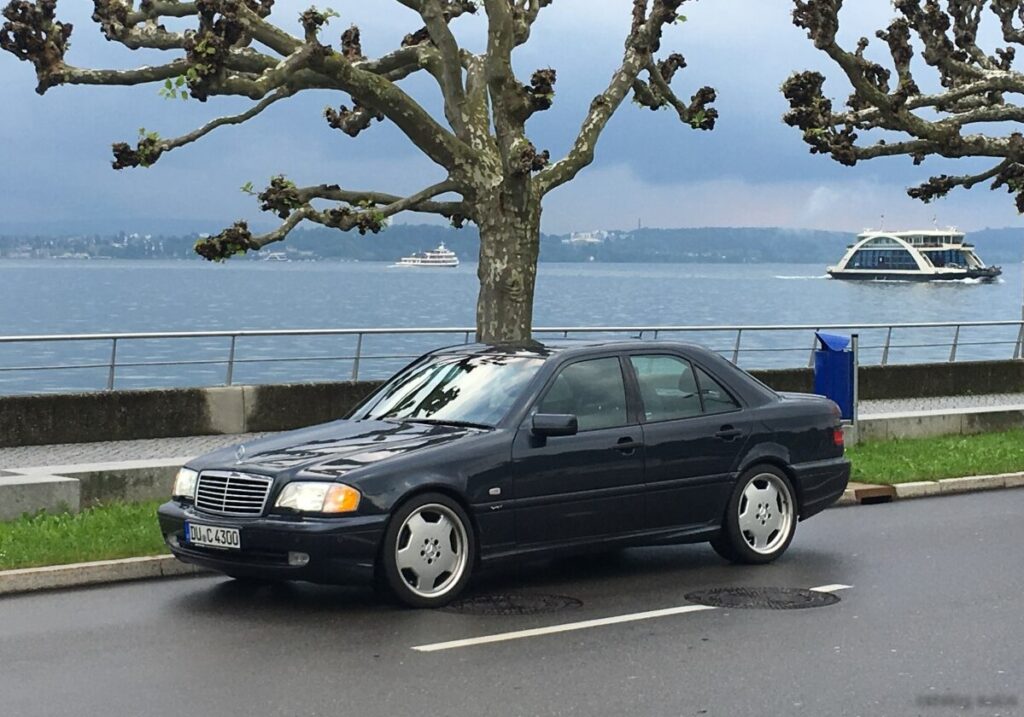
The Mercedes-Benz C 280 V6, part of the W202 C-Class range following the 1997 facelift, represented a significant step up in performance and refinement for the compact executive segment. Produced from November 1996 to May 2000, this variant offered a compelling blend of luxury and power, positioning itself as a premium offering within the C-Class lineup. It was primarily marketed in Europe and other international markets, offering a more powerful alternative to the four-cylinder models and a more accessible entry point into the six-cylinder Mercedes-Benz experience compared to larger models like the E-Class.
Technical Specifications
| Brand | Mercedes-Benz |
| Model | C-class |
| Generation | C-class (W202, facelift 1997) |
| Type (Engine) | C 280 V6 (197 Hp) 5G-TRONIC |
| Start of production | November, 1996 |
| End of production | May, 2000 |
| Powertrain Architecture | Internal Combustion engine |
| Body type | Sedan |
| Seats | 5 |
| Doors | 4 |
| Fuel consumption (urban) | 14.6 l/100 km (16.1 US mpg, 19.3 UK mpg, 6.8 km/l) |
| Fuel consumption (extra urban) | 7.3 l/100 km (32.2 US mpg, 38.7 UK mpg, 13.7 km/l) |
| Fuel consumption (combined) | 10 l/100 km (23.5 US mpg, 28.2 UK mpg, 10 km/l) |
| CO2 emissions | 238 g/km |
| Fuel Type | Petrol (Gasoline) |
| Acceleration 0 – 100 km/h | 8.5 sec |
| Acceleration 0 – 62 mph | 8.5 sec |
| Acceleration 0 – 60 mph | 8.1 sec |
| Maximum speed | 228 km/h (141.67 mph) |
| Emission standard | Euro 3 |
| Weight-to-power ratio | 7.3 kg/Hp, 137.8 Hp/tonne |
| Weight-to-torque ratio | 5.4 kg/Nm, 185.3 Nm/tonne |
| Power | 197 Hp @ 5800 rpm |
| Power per litre | 70.4 Hp/l |
| Torque | 265 Nm @ 3000-4800 rpm (195.45 lb.-ft. @ 3000-4800 rpm) |
| Engine layout | Front, Longitudinal |
| Engine Model/Code | M 112 E 28 / 112.920 |
| Engine displacement | 2799 cm3 (170.81 cu. in.) |
| Number of cylinders | 6 |
| Engine configuration | V-engine |
| Cylinder Bore | 89.9 mm (3.54 in.) |
| Piston Stroke | 73.5 mm (2.89 in.) |
| Compression ratio | 10:1 |
| Number of valves per cylinder | 3 |
| Fuel injection system | Multi-port manifold injection |
| Engine aspiration | Naturally aspirated engine |
| Valvetrain | SOHC |
| Engine oil capacity | 8 l (8.45 US qt | 7.04 UK qt) |
| Coolant | 9.5 l (10.04 US qt | 8.36 UK qt) |
| Kerb Weight | 1430 kg (3152.61 lbs.) |
| Max. weight | 1910 kg (4210.83 lbs.) |
| Max load | 480 kg (1058.22 lbs.) |
| Trunk (boot) space – minimum | 430 l (15.19 cu. ft.) |
| Fuel tank capacity | 62 l (16.38 US gal | 13.64 UK gal) |
| Max. roof load | 100 kg (220.46 lbs.) |
| Permitted trailer load with brakes (12%) | 1500 kg (3306.93 lbs.) |
| Permitted trailer load without brakes | 715 kg (1576.31 lbs.) |
| Length | 4516 mm (177.8 in.) |
| Width | 1723 mm (67.83 in.) |
| Height | 1427 mm (56.18 in.) |
| Wheelbase | 2690 mm (105.91 in.) |
| Front track | 1499 mm (59.02 in.) |
| Rear (Back) track | 1464 mm (57.64 in.) |
| Drag coefficient (Cd) | 0.31 |
| Minimum turning circle | 10.74 m (35.24 ft.) |
| Drivetrain Architecture | The Internal combustion engine (ICE) drives the rear wheels of the vehicle. |
| Drive wheel | Rear wheel drive |
| Number of gears and type of gearbox | 5 gears, automatic transmission G-TRONIC |
| Front suspension | Double wishbone, Transverse stabilizer |
| Rear suspension | Independent multi-link spring suspension with stabilizer |
| Front brakes | Ventilated discs |
| Rear brakes | Disc |
| Assisting systems | ABS (Anti-lock braking system) |
| Steering type | Cone worm with recirculation balls |
| Power steering | Hydraulic Steering |
| Tires size | 195/65 R15; 205/60 R15 |
| Wheel rims size | 6.5J x 15; 7J x 15 |
INTRODUCTION
The C 280 V6, introduced after the W202’s 1997 facelift, was a key component of Mercedes-Benz’s strategy to broaden the appeal of the C-Class. The facelift brought revised styling, improved safety features, and importantly, the introduction of the new M112 V6 engine. This engine, replacing the older inline-six, offered a smoother, more refined driving experience. The C 280 V6 occupied a mid-to-upper position in the C-Class range, sitting above the 1.8 and 2.0-liter four-cylinder models and below the high-performance C 36 AMG. It was designed to appeal to buyers seeking a comfortable, well-equipped, and relatively powerful sedan.
Powertrain & Engine Architecture
The heart of the C 280 V6 is the M112 E 28 engine, a 2.8-liter naturally aspirated V6. This engine, designated with the code 112.920, represented a significant advancement in Mercedes-Benz engine technology. It featured a 60-degree V-angle, all-aluminum construction, and a single overhead camshaft (SOHC) per cylinder bank operating three valves per cylinder (two intake, one exhaust). The engine utilized a multi-port fuel injection system, delivering fuel directly into the intake ports. The M112 was known for its smooth operation and relatively high specific output. Paired with the engine was the 5G-TRONIC automatic transmission, a five-speed unit that provided smooth and refined gear changes. This transmission was designed to complement the V6’s power delivery, offering both comfort and responsiveness.
Driving Characteristics
The C 280 V6 offered a noticeably more relaxed and refined driving experience compared to the four-cylinder C-Class models. The 197 horsepower and 265 Nm (195 lb-ft) of torque provided ample power for both city driving and highway cruising. Acceleration from 0 to 60 mph took approximately 8.1 seconds, and the car could reach a top speed of 141.67 mph. The 5G-TRONIC transmission contributed to a smooth and seamless driving experience, although it wasn’t designed for particularly aggressive shifting. Compared to the manual transmission options available on other C-Class models, the automatic prioritized comfort and ease of use over outright performance. The rear-wheel drive configuration provided a balanced feel, although it wasn’t as engaging as some of its competitors with front-wheel drive or all-wheel drive systems.
Equipment & Trim Levels
The C 280 V6 typically came well-equipped, reflecting its position as a premium model. Standard features included automatic climate control, power windows and locks, a multi-function steering wheel, and a high-quality audio system. Interior upholstery was typically cloth or leather, with wood trim accents available as an option. Optional extras included a sunroof, heated seats, a navigation system, and upgraded audio systems. The level of equipment could vary depending on the specific market and individual customer preferences. The overall interior design emphasized luxury and comfort, with a focus on high-quality materials and a refined aesthetic.
Chassis & Braking
The C 280 V6 utilized a double wishbone front suspension and an independent multi-link rear suspension, providing a comfortable and controlled ride. Stabilizer bars were fitted to both the front and rear axles to reduce body roll during cornering. Braking duties were handled by ventilated discs at the front and solid discs at the rear, with ABS (Anti-lock Braking System) as standard. The suspension was tuned to prioritize comfort, but it also provided adequate handling for spirited driving. The chassis was designed to provide a stable and predictable driving experience, even under challenging conditions.
Market Reception & Comparison
The C 280 V6 was generally well-received by automotive critics. It was praised for its smooth engine, refined transmission, and comfortable ride. However, some critics noted that the car wasn’t as sporty or engaging to drive as some of its competitors, such as the BMW 3 Series. Compared to the C 220 and C 230 models, the C 280 V6 offered significantly more power and a more refined driving experience, but at a higher price point. Fuel economy was reasonable for a V6 engine of this era, but it wasn’t as efficient as the four-cylinder models. Reliability was generally good, although the M112 engine was known to be susceptible to oil leaks as it aged.
Legacy
The C 280 V6, and the M112 engine it featured, represents a significant step forward in Mercedes-Benz’s engineering. The M112 engine proved to be a durable and reliable powerplant, and many examples are still on the road today. In the used car market, the C 280 V6 is often sought after by enthusiasts who appreciate its smooth engine, comfortable ride, and classic Mercedes-Benz styling. While maintenance costs can be higher than for the four-cylinder models, the C 280 V6 offers a compelling combination of luxury, performance, and reliability that continues to appeal to buyers today. The 5G-TRONIC transmission, while generally reliable, may require servicing as it ages, and finding qualified technicians familiar with these older Mercedes-Benz systems can sometimes be a challenge.