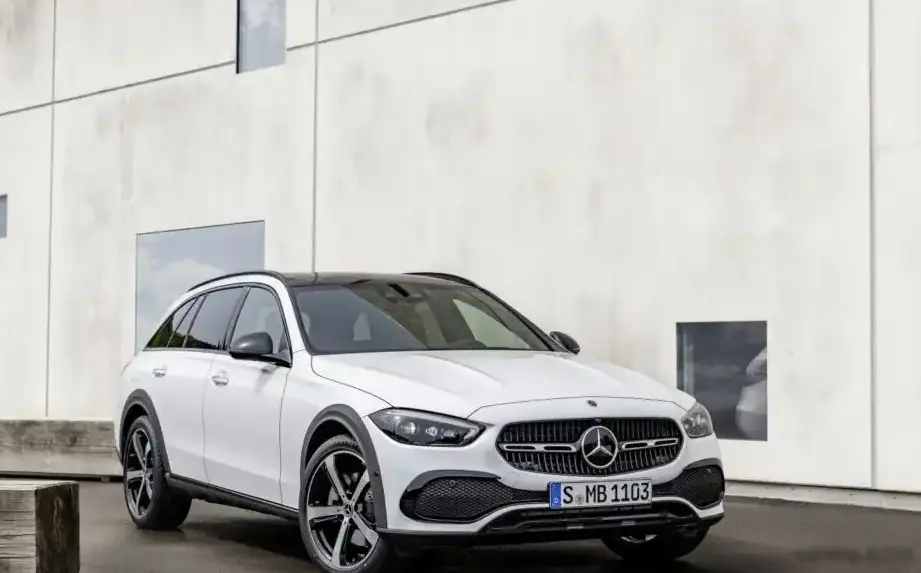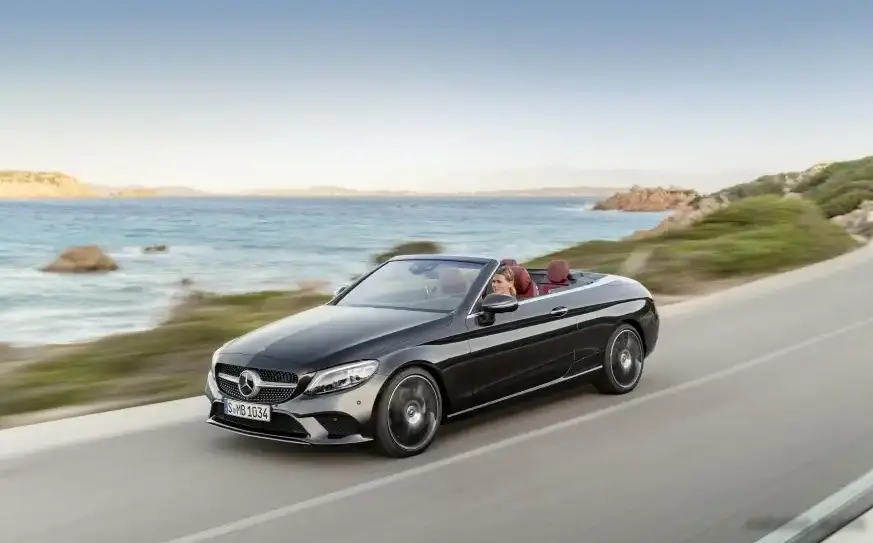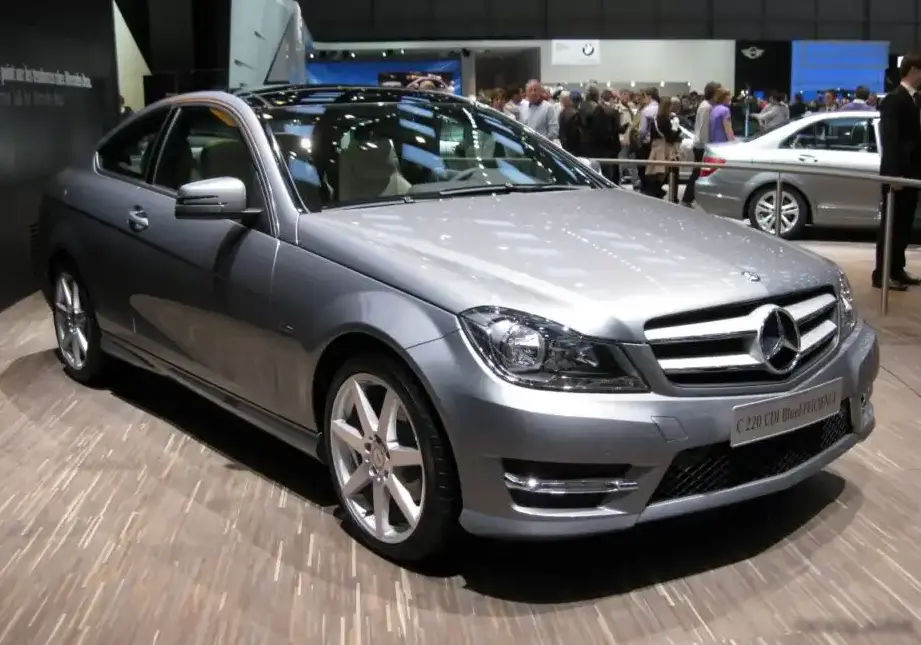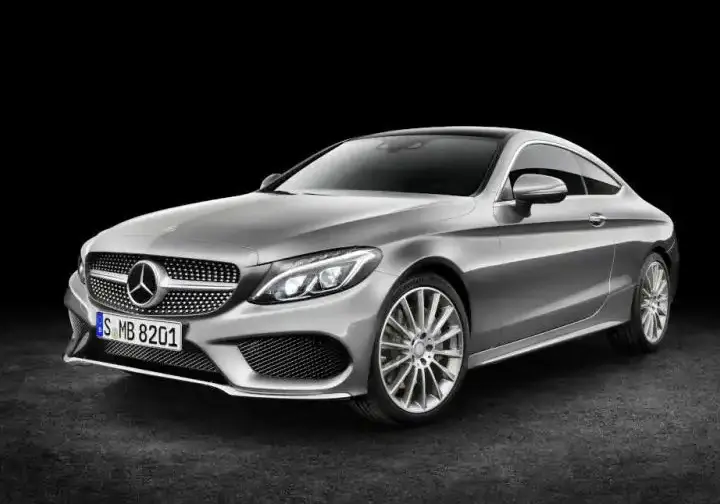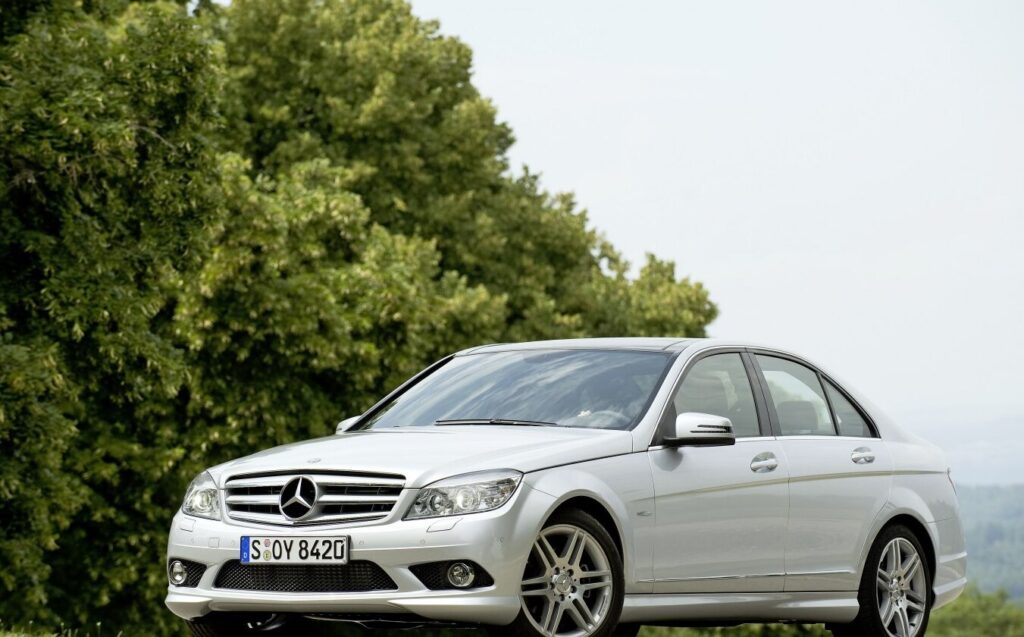
The Mercedes-Benz C 200 CDI BlueEFFICIENCY, produced between 2009 and 2011, was a key variant within the W204 C-Class range. Positioned as a fuel-efficient diesel option, it aimed to balance practicality, comfort, and running costs for European buyers. This model represented Mercedes-Benz’s commitment to improving fuel economy and reducing emissions within its popular compact executive car line. It served as a more economical alternative to the petrol-powered C 200 Kompressor and a slightly less powerful, yet more affordable, entry point into the C-Class range compared to the C 220 CDI and C 250 CDI models.
Technical Specifications
| Brand | Mercedes-Benz |
| Model | C-class |
| Generation | C-class (W204) |
| Type (Engine) | C 200 CDI BlueEFFICIENCY (136 Hp) |
| Start of production | 2009 |
| End of production | 2011 |
| Powertrain Architecture | Internal Combustion engine |
| Body type | Sedan |
| Seats | 5 |
| Doors | 4 |
| Fuel consumption (urban) | 6.5-7.1 l/100 km (36.2 – 33.1 US mpg, 43.5 – 39.8 UK mpg, 15.4 – 14.1 km/l) |
| Fuel consumption (extra urban) | 4.1-4.8 l/100 km (57.4 – 49 US mpg, 68.9 – 58.9 UK mpg, 24.4 – 20.8 km/l) |
| Fuel consumption (combined) | 5-5.7 l/100 km (47 – 41.3 US mpg, 56.5 – 49.6 UK mpg, 20 – 17.5 km/l) |
| CO2 emissions | 130-148 g/km |
| Fuel Type | Diesel |
| Acceleration 0 – 100 km/h | 9.2 sec |
| Acceleration 0 – 62 mph | 9.2 sec |
| Acceleration 0 – 60 mph | 8.7 sec |
| Maximum speed | 218 km/h (135.46 mph) |
| Emission standard | Euro 5 |
| Weight-to-power ratio | 11 kg/Hp, 90.7 Hp/tonne |
| Weight-to-torque ratio | 4.2 kg/Nm, 240 Nm/tonne |
| Power | 136 Hp @ 2800-4600 rpm |
| Power per litre | 63.5 Hp/l |
| Torque | 360 Nm @ 1600-2600 rpm (265.52 lb.-ft. @ 1600-2600 rpm) |
| Engine layout | Front, Longitudinal |
| Engine Model/Code | OM 651.913 |
| Engine displacement | 2143 cm3 (130.77 cu. in.) |
| Number of cylinders | 4 |
| Engine configuration | Inline |
| Cylinder Bore | 83 mm (3.27 in.) |
| Piston Stroke | 99 mm (3.9 in.) |
| Compression ratio | 17.5:1 |
| Number of valves per cylinder | 4 |
| Fuel injection system | Diesel Commonrail |
| Engine aspiration | Turbocharger, Intercooler |
| Valvetrain | DOHC |
| Engine oil capacity | 6.5 l (6.87 US qt | 5.72 UK qt) |
| Coolant | 10 l (10.57 US qt | 8.8 UK qt) |
| Kerb Weight | 1500 kg (3306.93 lbs.) |
| Max. weight | 2080 kg (4585.62 lbs.) |
| Max load | 580 kg (1278.68 lbs.) |
| Trunk (boot) space (minimum) | 475 l (16.77 cu. ft.) |
| Fuel tank capacity | 59 l (15.59 US gal | 12.98 UK gal) |
| Permitted trailer load (with brakes) | 1800 kg (3968.32 lbs.) |
| Permitted trailer load (without brakes) | 750 kg (1653.47 lbs.) |
| Length | 4581 mm (180.35 in.) |
| Width | 1770 mm (69.69 in.) |
| Width including mirrors | 2009 mm (79.09 in.) |
| Height | 1447 mm (56.97 in.) |
| Wheelbase | 2760 mm (108.66 in.) |
| Front track | 1549 mm (60.98 in.) |
| Rear track | 1552 mm (61.1 in.) |
| Front overhang | 765 mm (30.12 in.) |
| Rear overhang | 1056 mm (41.57 in.) |
| Minimum turning circle | 10.84 m (35.56 ft.) |
| Drivetrain | Rear wheel drive |
| Number of gears | 6 |
| Gearbox type | Manual transmission |
| Front suspension | Independent type McPherson, Transverse stabilizer |
| Rear suspension | Independent multi-link suspension, Transverse stabilizer |
| Front brakes | Ventilated discs |
| Rear brakes | Disc |
| Assisting systems | ABS (Anti-lock braking system) |
| Steering type | Steering rack and pinion |
| Power steering | Hydraulic Steering |
| Tires size | 195/60 R16 |
| Wheel rims size | 6J x 16 |
INTRODUCTION
The C 200 CDI BlueEFFICIENCY, launched in 2009 as part of the W204 C-Class facelift, represented a significant step towards improved fuel efficiency for the model range. Built on the 1HX0/A3 platform, this variant was specifically designed to appeal to European drivers prioritizing low running costs and reduced emissions. It offered a compelling alternative to petrol engines, capitalizing on the growing popularity of diesel technology in that market. The “BlueEFFICIENCY” designation signified a suite of fuel-saving technologies implemented by Mercedes-Benz.
Powertrain & Engine Architecture
At the heart of the C 200 CDI BlueEFFICIENCY lies the OM 651.913 2.1-liter inline-four cylinder diesel engine. This engine is a highly refined unit, featuring common-rail direct injection and a variable geometry turbocharger with an intercooler. The common-rail system, operating at extremely high pressures, ensures precise fuel delivery and optimized combustion. The engine utilizes a double overhead camshaft (DOHC) valvetrain with four valves per cylinder, enhancing breathing and contributing to its power output. The high compression ratio of 17.5:1 is typical for diesel engines, maximizing thermal efficiency. The six-speed manual transmission was standard, providing a balance between fuel economy and driver engagement. While an automatic transmission was available as an option, the manual was favored by those seeking the best possible fuel consumption.
Driving Characteristics
The C 200 CDI BlueEFFICIENCY offered a comfortable and refined driving experience, albeit not a particularly sporty one. With 136 horsepower and 360 Nm (265 lb-ft) of torque, acceleration from 0 to 100 km/h (0-62 mph) took around 9.2 seconds. The engine’s peak torque was available from a low 1600 rpm, providing ample pulling power for everyday driving and overtaking maneuvers. Compared to the more powerful C 220 CDI, the C 200 CDI felt noticeably less responsive, particularly at higher speeds. However, the manual transmission allowed drivers to make the most of the available power, while the long gearing contributed to excellent fuel economy on the highway. The steering was precise and well-weighted, typical of Mercedes-Benz vehicles, and the suspension provided a comfortable ride, absorbing bumps and imperfections in the road surface effectively.
Equipment & Trim Levels
The C 200 CDI BlueEFFICIENCY typically came equipped with a respectable level of standard features. These included automatic climate control, a multi-function steering wheel, electric windows, and a basic audio system. Interior upholstery was generally cloth, although leather options were available at extra cost. Optional extras included a sunroof, upgraded audio systems, navigation, and parking sensors. The “BlueEFFICIENCY” package itself included features like low rolling resistance tires and optimized aerodynamics to further improve fuel economy. Trim levels varied slightly depending on the market, but generally followed a progressive structure with increasing levels of luxury and technology.
Chassis & Braking
The W204 C-Class featured a sophisticated chassis design. The front suspension utilized a McPherson strut setup with a transverse stabilizer bar, while the rear employed a multi-link independent suspension, also with a stabilizer bar. This configuration provided a good balance between ride comfort and handling. The C 200 CDI was equipped with ventilated disc brakes at the front and solid discs at the rear. Anti-lock Braking System (ABS) was standard, enhancing safety and stability during braking. The suspension was tuned to prioritize comfort, resulting in a slightly softer ride compared to the sportier C-Class variants.
Market Reception & Comparison
The C 200 CDI BlueEFFICIENCY was generally well-received by automotive critics, who praised its fuel efficiency and comfortable ride. It was seen as a practical and sensible choice for drivers covering long distances or prioritizing low running costs. Compared to the C 220 CDI, the C 200 CDI offered a lower purchase price and slightly better fuel economy, but at the expense of performance. Against competitors like the BMW 320d EfficientDynamics and Audi A4 2.0 TDI, the C 200 CDI held its own in terms of fuel economy and refinement, although some reviewers noted that its interior design was starting to feel dated compared to its rivals.
Legacy
The OM 651 engine family, including the 2.1-liter unit found in the C 200 CDI BlueEFFICIENCY, proved to be remarkably durable and reliable. These engines are known for their longevity and relatively low maintenance costs. On the used car market today, the C 200 CDI BlueEFFICIENCY represents a good value proposition for buyers seeking a comfortable, fuel-efficient, and reliable compact executive car. However, potential buyers should be aware of the potential for diesel particulate filter (DPF) issues, particularly on vehicles that have primarily been used for short journeys. Regular servicing and the use of high-quality diesel fuel are essential to maintaining the long-term health of this powertrain.