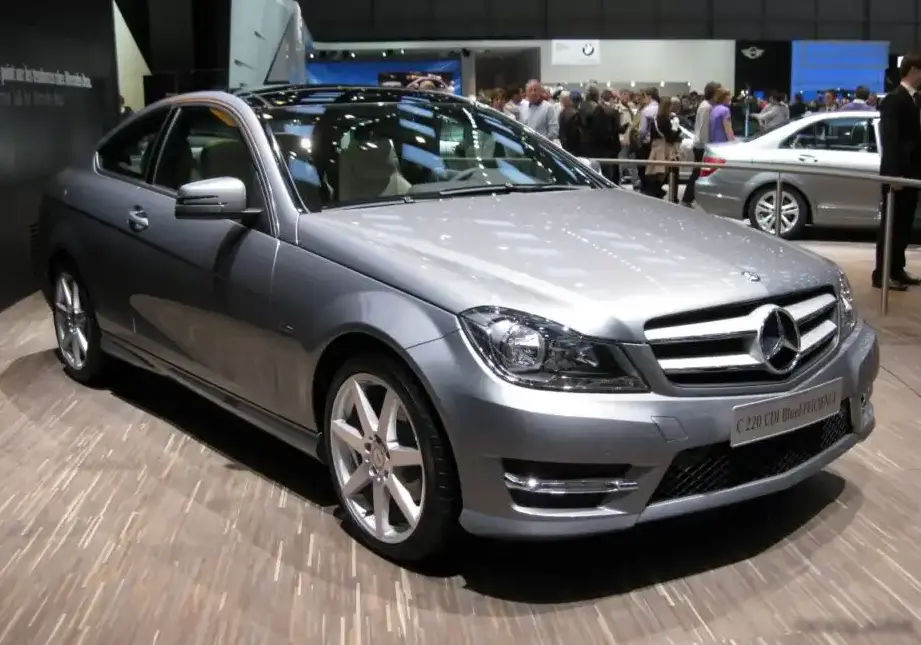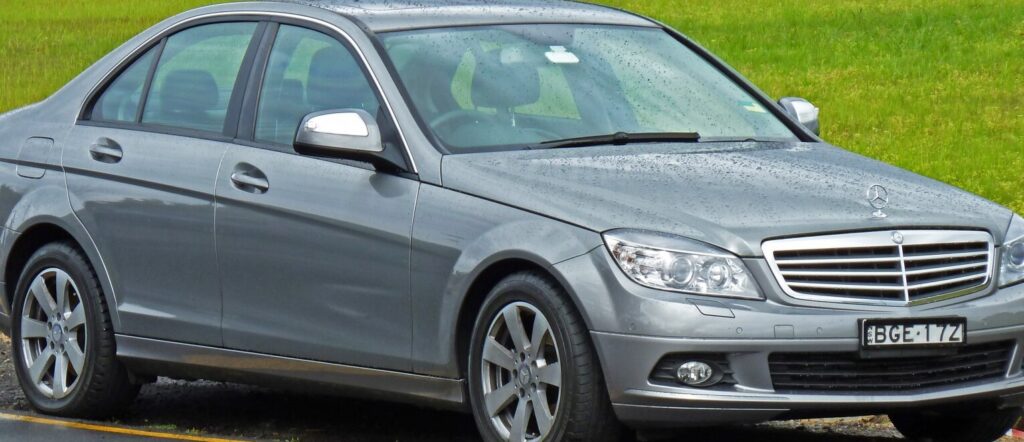
The Mercedes-Benz C-Class (W204) C 200 Kompressor, produced from 2007 to 2010, represented a key entry point into the premium compact executive car segment for Mercedes-Benz. Positioned as a more accessible alternative to the higher-performance C 350 and diesel-powered C 220 CDI models, the C 200 Kompressor aimed to balance fuel efficiency with a respectable level of performance and luxury. It was a significant model within the W204 generation, which itself was a crucial update for the C-Class, introducing a more sophisticated chassis, improved interior quality, and a wider range of technology features. This variant primarily targeted buyers seeking a comfortable, well-equipped sedan with the prestige of the Mercedes-Benz badge, without the higher price tag of the range-topping models.
Technical Specifications
| Brand | Mercedes-Benz |
| Model | C-class |
| Generation | C-class (W204) |
| Type (Engine) | C 200 Kompressor (184 Hp) |
| Start of production | 2007 year |
| End of production | 2010 year |
| Powertrain Architecture | Internal Combustion engine |
| Body type | Sedan |
| Seats | 5 |
| Doors | 4 |
| Fuel consumption (economy) – urban (NEDC) | 10.5-10.7 l/100 km (22.4 – 22 US mpg, 26.9 – 26.4 UK mpg, 9.5 – 9.3 km/l) |
| Fuel consumption (economy) – extra urban (NEDC) | 5.8-6 l/100 km (40.6 – 39.2 US mpg, 48.7 – 47.1 UK mpg, 17.2 – 16.7 km/l) |
| Fuel consumption (economy) – combined (NEDC) | 7.6-7.8 l/100 km (30.9 – 30.2 US mpg, 37.2 – 36.2 UK mpg, 13.2 – 12.8 km/l) |
| CO2 emissions (NEDC) | 180 g/km |
| Fuel Type | Petrol (Gasoline) |
| Acceleration 0 – 100 km/h | 8.6 sec |
| Acceleration 0 – 62 mph | 8.6 sec |
| Acceleration 0 – 60 mph | 8.2 sec |
| Maximum speed | 235 km/h (146.02 mph) |
| Emission standard | Euro 4 |
| Weight-to-power ratio | 7.7 kg/Hp, 130 Hp/tonne |
| Weight-to-torque ratio | 5.7 kg/Nm, 176.7 Nm/tonne |
| Power | 184 Hp @ 5500 rpm |
| Power per litre | 102.4 Hp/l |
| Torque | 250 Nm @ 2800-5000 rpm (184.39 lb.-ft. @ 2800-5000 rpm) |
| Engine layout | Front, Longitudinal |
| Engine Model/Code | M 271.950 |
| Engine displacement | 1796 cm3 (109.6 cu. in.) |
| Number of cylinders | 4 |
| Engine configuration | Inline |
| Cylinder Bore | 82 mm (3.23 in.) |
| Piston Stroke | 85 mm (3.35 in.) |
| Compression ratio | 8.5:1 |
| Number of valves per cylinder | 4 |
| Fuel injection system | Multi-port manifold injection |
| Engine aspiration | Supercharger, Intercooler |
| Valvetrain | DOHC |
| Engine oil capacity | 5.5 l (5.81 US qt | 4.84 UK qt) |
| Kerb Weight | 1415 kg (3119.54 lbs.) |
| Max. weight | 1975 kg (4354.13 lbs.) |
| Max load | 560 kg (1234.59 lbs.) |
| Trunk (boot) space – minimum | 475 l (16.77 cu. ft.) |
| Fuel tank capacity | 66 l (17.44 US gal | 14.52 UK gal) |
| Max. roof load | 100 kg (220.46 lbs.) |
| Permitted trailer load with brakes (12%) | 1800 kg (3968.32 lbs.) |
| Permitted trailer load without brakes | 745 kg (1642.44 lbs.) |
| Permitted towbar download | 75 kg (165.35 lbs.) |
| Length | 4581 mm (180.35 in.) |
| Width | 1770 mm (69.69 in.) |
| Width including mirrors | 2020 mm (79.53 in.) |
| Height | 1447 mm (56.97 in.) |
| Wheelbase | 2760 mm (108.66 in.) |
| Front track | 1549 mm (60.98 in.) |
| Rear (Back) track | 1552 mm (61.1 in.) |
| Front overhang | 765 mm (30.12 in.) |
| Rear overhang | 1056 mm (41.57 in.) |
| Drag coefficient (Cd) | 0.29 |
| Minimum turning circle (turning diameter) | 10.84 m (35.56 ft.) |
| Drivetrain Architecture | The Internal combustion engine (ICE) drives the rear wheels of the vehicle. |
| Drive wheel | Rear wheel drive |
| Number of gears and type of gearbox | 6 gears, manual transmission |
| Front suspension | Independent type McPherson, Transverse stabilizer |
| Rear suspension | Independent multi-link suspension, Transverse stabilizer |
| Front brakes | Ventilated discs, 295 mm |
| Rear brakes | Disc, 300 mm |
| Assisting systems | ABS (Anti-lock braking system) |
| Steering type | Steering rack and pinion |
| Power steering | Hydraulic Steering |
| Tires size | 205/55 R16; 225/45 R17 |
| Wheel rims size | 7J x 16; 7.5J x 17 |
INTRODUCTION
The C 200 Kompressor, launched in 2007 as part of the W204 C-Class range, filled a crucial gap in Mercedes-Benz’s lineup. The W204 represented a significant leap forward in terms of interior quality and overall refinement compared to its W203 predecessor. The C 200 Kompressor was designed to appeal to buyers who desired the prestige and comfort of a Mercedes-Benz, but didn’t require the higher performance or cost associated with the C 350 or the more expensive options. It was available primarily as a four-door sedan, with limited availability in other body styles depending on the market. The “Kompressor” designation indicated the presence of a supercharger, a key feature of the M271 engine family.
Powertrain & Engine Architecture
At the heart of the C 200 Kompressor lies the M271.950 1.8-liter inline-four cylinder engine. This engine is characterized by its supercharging system, which provides a noticeable boost in power and torque compared to naturally aspirated engines of similar displacement. The supercharger, an Eaton Roots-type unit, is belt-driven and provides near-instantaneous boost, improving throttle response and low-end acceleration. The engine utilizes multi-port fuel injection and a double overhead camshaft (DOHC) valvetrain with four valves per cylinder. The M271 engine family was known for its relatively compact design and lightweight construction, contributing to the C-Class’s balanced handling. The engine paired with a 6-speed manual transmission as standard, with an optional 5-speed automatic transmission available. The automatic transmission, while smooth, was sometimes criticized for being less responsive than the manual and for contributing to slightly higher fuel consumption.
Driving Characteristics
The C 200 Kompressor offered a comfortable and refined driving experience. While not a sports car, the supercharged engine provided adequate power for everyday driving and overtaking maneuvers. The 0-60 mph time of around 8.2 seconds was respectable for its class. The supercharger’s instant boost meant that the engine felt responsive at lower RPMs, making it easy to navigate city traffic. Compared to the more powerful C 350, the C 200 Kompressor felt less urgent in its acceleration, but it offered a more relaxed and fuel-efficient driving experience. The automatic transmission, while smooth, could sometimes feel hesitant during quick downshifts. The rear-wheel-drive configuration provided a balanced feel, although it lacked the all-weather capability of all-wheel-drive variants.
Equipment & Trim Levels
The C 200 Kompressor typically came standard with a generous array of features, including automatic climate control, power windows and locks, a multi-function steering wheel, and a basic audio system. Upholstery was typically cloth, with leather options available as an upgrade. Optional extras included a premium sound system, navigation system, sunroof, and parking sensors. Trim levels varied depending on the market, but generally offered packages that bundled together popular options. The interior design was a significant improvement over the W203, with higher-quality materials and a more modern aesthetic.
Chassis & Braking
The W204 C-Class featured a fully independent suspension system, with a McPherson strut setup at the front and a multi-link suspension at the rear. This configuration provided a comfortable ride and good handling characteristics. The C 200 Kompressor typically came equipped with ventilated disc brakes at the front and solid disc brakes at the rear. Anti-lock braking system (ABS) was standard. The suspension was tuned to prioritize comfort over outright sportiness, but it still offered a secure and predictable feel in corners. Stabilizer bars were fitted front and rear to reduce body roll.
Market Reception & Comparison
The C 200 Kompressor was generally well-received by automotive critics. It was praised for its comfortable ride, refined interior, and fuel-efficient engine. However, some critics noted that the automatic transmission could be slow to respond and that the engine lacked the outright performance of some of its rivals. Compared to the C 220 CDI, the C 200 Kompressor offered slightly less fuel economy but a more responsive engine. Against the C 350, it provided a more affordable entry point into the C-Class range, albeit with less power. The C 200 Kompressor’s main competitors included the BMW 320i and the Audi A4 1.8 TFSI.
Legacy
The M271 engine, while generally reliable, is known to require regular maintenance, particularly regarding the supercharger’s electromagnetic clutch and the balance shaft. Oil leaks can also occur with age. However, with proper care, the engine can provide many years of reliable service. Today, the W204 C 200 Kompressor represents a relatively affordable entry point into the Mercedes-Benz ownership experience. It’s a popular choice among buyers seeking a comfortable, well-equipped, and relatively reliable used car. The W204 generation as a whole is considered a significant improvement over its predecessor, and the C 200 Kompressor remains a desirable variant for those who prioritize comfort and fuel efficiency over outright performance.