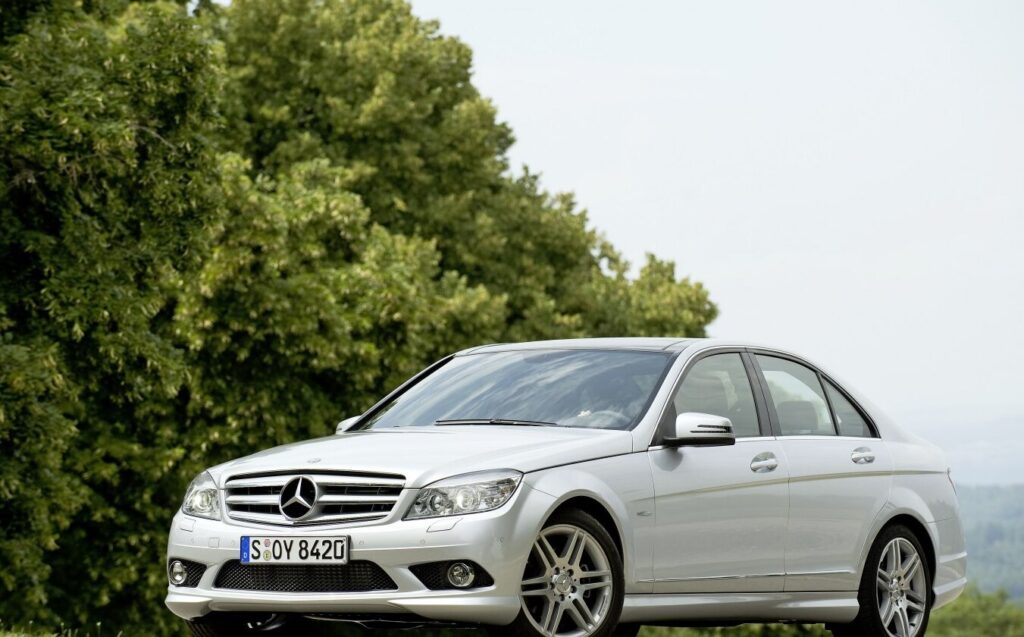
The Mercedes-Benz C-Class (W204) C 230 V6, produced from 2007 to 2009, represented a compelling entry point into the premium compact executive car segment. Positioned within the broader W204 C-Class range – which included variants like the C350 and the diesel-powered C320 CDI – the C 230 V6 offered a balance of performance, luxury, and relative affordability. It served as a step up from the base C230 models, appealing to buyers seeking a more refined driving experience without the higher price tag of the top-tier trims. This model was primarily marketed in North America and Europe, offering a gasoline-powered alternative in a market increasingly focused on fuel efficiency.
Technical Specifications
| Brand | Mercedes-Benz |
| Model | C-class |
| Generation | C-class (W204) |
| Type (Engine) | C 230 V6 (204 Hp) 7G-TRONIC |
| Start of production | 2007 |
| End of production | 2009 |
| Powertrain Architecture | Internal Combustion engine |
| Body type | Sedan |
| Seats | 5 |
| Doors | 4 |
| Fuel consumption (urban) | 13.1-13.3 l/100 km (18-17.7 US mpg, 21.6-21.2 UK mpg, 7.6-7.5 km/l) |
| Fuel consumption (extra urban) | 6.8-7 l/100 km (34.6-33.6 US mpg, 41.5-40.4 UK mpg, 14.7-14.3 km/l) |
| Fuel consumption (combined) | 9.1-9.3 l/100 km (25.8-25.3 US mpg, 31-30.4 UK mpg, 11-10.8 km/l) |
| CO2 emissions | 217 g/km |
| Fuel Type | Petrol (Gasoline) |
| Acceleration 0 – 100 km/h | 8.6 sec |
| Acceleration 0 – 62 mph | 8.6 sec |
| Acceleration 0 – 60 mph | 8.2 sec |
| Maximum speed | 233 km/h (144.78 mph) |
| Emission standard | Euro 4 |
| Weight-to-power ratio | 7.3 kg/Hp, 137.4 Hp/tonne |
| Weight-to-torque ratio | 6.1 kg/Nm, 165 Nm/tonne |
| Power | 204 Hp @ 6100 rpm |
| Torque | 245 Nm @ 2900-5500 rpm (180.7 lb.-ft. @ 2900-5500 rpm) |
| Engine layout | Front, Longitudinal |
| Engine Model/Code | M 272.921 |
| Engine displacement | 2496 cm3 (152.32 cu. in.) |
| Number of cylinders | 6 |
| Engine configuration | V-engine |
| Cylinder Bore | 88 mm (3.46 in.) |
| Piston Stroke | 68.4 mm (2.69 in.) |
| Compression ratio | 11.4:1 |
| Number of valves per cylinder | 4 |
| Fuel injection system | Multi-port manifold injection |
| Engine aspiration | Naturally aspirated engine |
| Valvetrain | DOHC |
| Engine oil capacity | 8 l (8.45 US qt | 7.04 UK qt) |
| Kerb Weight | 1485 kg (3273.86 lbs.) |
| Max. weight | 2045 kg (4508.45 lbs.) |
| Max load | 560 kg (1234.59 lbs.) |
| Trunk (boot) space (minimum) | 475 l (16.77 cu. ft.) |
| Fuel tank capacity | 66 l (17.44 US gal | 14.52 UK gal) |
| Max. roof load | 100 kg (220.46 lbs.) |
| Permitted trailer load (with brakes) | 1800 kg (3968.32 lbs.) |
| Permitted trailer load (without brakes) | 750 kg (1653.47 lbs.) |
| Permitted towbar download | 75 kg (165.35 lbs.) |
| Length | 4581 mm (180.35 in.) |
| Width | 1770 mm (69.69 in.) |
| Width including mirrors | 2020 mm (79.53 in.) |
| Height | 1447 mm (56.97 in.) |
| Wheelbase | 2760 mm (108.66 in.) |
| Front track | 1549 mm (60.98 in.) |
| Rear track | 1552 mm (61.1 in.) |
| Front overhang | 765 mm (30.12 in.) |
| Rear overhang | 1056 mm (41.57 in.) |
| Drag coefficient (Cd) | 0.29 |
| Minimum turning circle | 10.84 m (35.56 ft.) |
| Drivetrain | Rear wheel drive |
| Number of gears | 7 |
| Gearbox type | Automatic transmission G-TRONIC |
| Front suspension | Independent type McPherson, Transverse stabilizer |
| Rear suspension | Independent multi-link suspension, Transverse stabilizer |
| Front brakes | Ventilated discs |
| Rear brakes | Disc |
| Assisting systems | ABS (Anti-lock braking system) |
| Steering type | Steering rack and pinion |
| Power steering | Hydraulic Steering |
| Tires size | 205/55 R16 |
| Wheel rims size | 7J x 16 |
Powertrain & Engine Architecture
The C 230 V6 was powered by the M272.921 engine, a 2.5-liter naturally aspirated V6. This engine, a cornerstone of Mercedes-Benz’s mid-2000s lineup, featured a 60-degree V-angle and utilized a multi-port fuel injection system. The engine produced 204 horsepower at 6100 rpm and 245 Nm (180.7 lb-ft) of torque between 2900 and 5500 rpm. The engine employed a double overhead camshaft (DOHC) valvetrain with four valves per cylinder, contributing to its relatively high power output for its displacement. The engine’s longitudinal mounting and rear-wheel-drive configuration were typical for Mercedes-Benz sedans of this era. Paired with the engine was the 7G-TRONIC automatic transmission, a seven-speed unit known for its smooth shifting and efficiency. This transmission offered a wide range of gear ratios, optimizing both acceleration and fuel economy.
Driving Characteristics
The C 230 V6 with the 7G-TRONIC transmission offered a comfortable and refined driving experience. While not overtly sporty, the engine provided adequate power for everyday driving and highway cruising. Acceleration from 0 to 60 mph took approximately 8.2 seconds, and the car had a top speed of 144.78 mph. The 7G-TRONIC transmission contributed to smooth gear changes, minimizing disruptions during acceleration. Compared to the manual transmission options available on other C-Class models, the automatic prioritized comfort and ease of use over outright performance. The gear ratios were tuned for fuel efficiency and relaxed cruising, rather than aggressive acceleration. Compared to the more powerful C350, the C 230 V6 felt less urgent, but it offered a more balanced driving experience for those prioritizing comfort and fuel economy.
Equipment & Trim Levels
The C 230 V6 typically came standard with features such as automatic climate control, power windows and locks, a multi-function steering wheel, and an audio system with CD player. Interior upholstery was typically MB-Tex (synthetic leather), with optional upgrades to genuine leather available. Common optional extras included a sunroof, navigation system, premium sound system, and heated seats. The dashboard layout was typical of the W204 C-Class, featuring a symmetrical design with metallic accents. Trim levels varied slightly depending on the market, but generally, the C 230 V6 represented a mid-range offering, bridging the gap between the base models and the more luxurious trims.
Chassis & Braking
The W204 C-Class featured an independent suspension system at all four wheels. The front suspension utilized a McPherson strut design, while the rear employed a multi-link setup. Both ends of the suspension were equipped with a transverse stabilizer bar to reduce body roll during cornering. Braking duties were handled by ventilated discs at the front and solid discs at the rear. The C 230 V6’s braking system was equipped with ABS (Anti-lock Braking System) as standard. The suspension tuning was geared towards comfort and ride quality, providing a relatively smooth ride over various road surfaces. The chassis was designed to provide a stable and predictable handling experience, although it wasn’t as focused on sporty handling as some of its competitors.
Market Reception & Comparison
The C 230 V6 was generally well-received by automotive critics as a competent and comfortable entry-level luxury sedan. However, some reviewers noted that its performance was not as exhilarating as that of its more powerful siblings. Fuel economy was considered reasonable for its class, averaging around 25.8-25.3 US mpg in combined driving. Compared to the C320 CDI diesel, the C 230 V6 offered less fuel efficiency but a smoother and quieter engine. Compared to the C350, it provided a more affordable entry point into the C-Class range, albeit with less power and performance. Reliability was generally good, although some owners reported issues with the electronic systems and occasional oil leaks.
Legacy
The M272 engine family, including the 2.5-liter V6 used in the C 230 V6, has proven to be relatively durable and reliable over the long term, provided it receives regular maintenance. The 7G-TRONIC transmission is also known for its longevity. In the used car market, the C 230 V6 represents a relatively affordable way to experience Mercedes-Benz luxury. However, potential buyers should be aware of the potential for age-related issues, such as worn suspension components and electronic malfunctions. The C 230 V6 remains a popular choice for those seeking a comfortable, reliable, and relatively fuel-efficient luxury sedan.