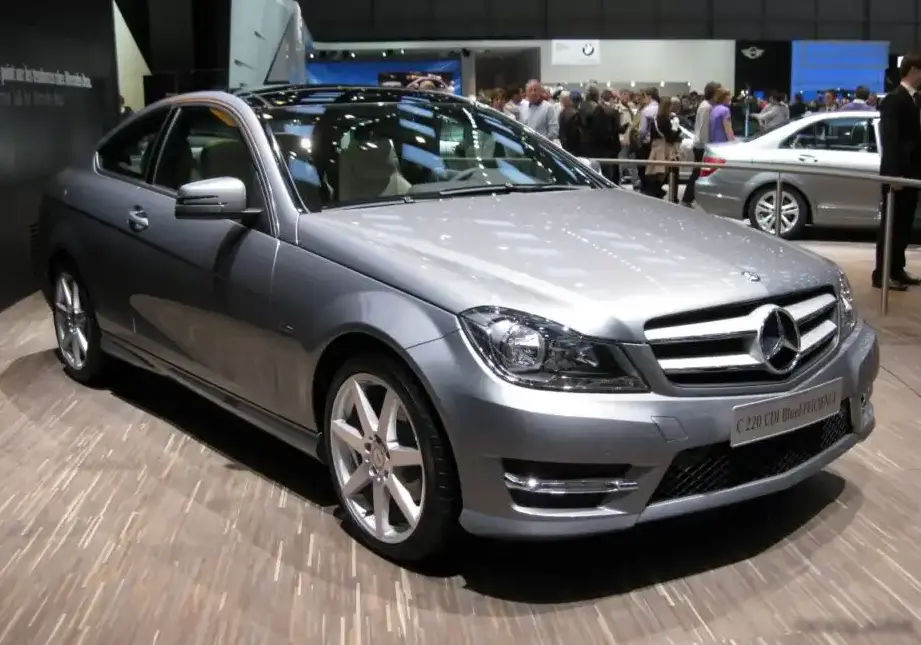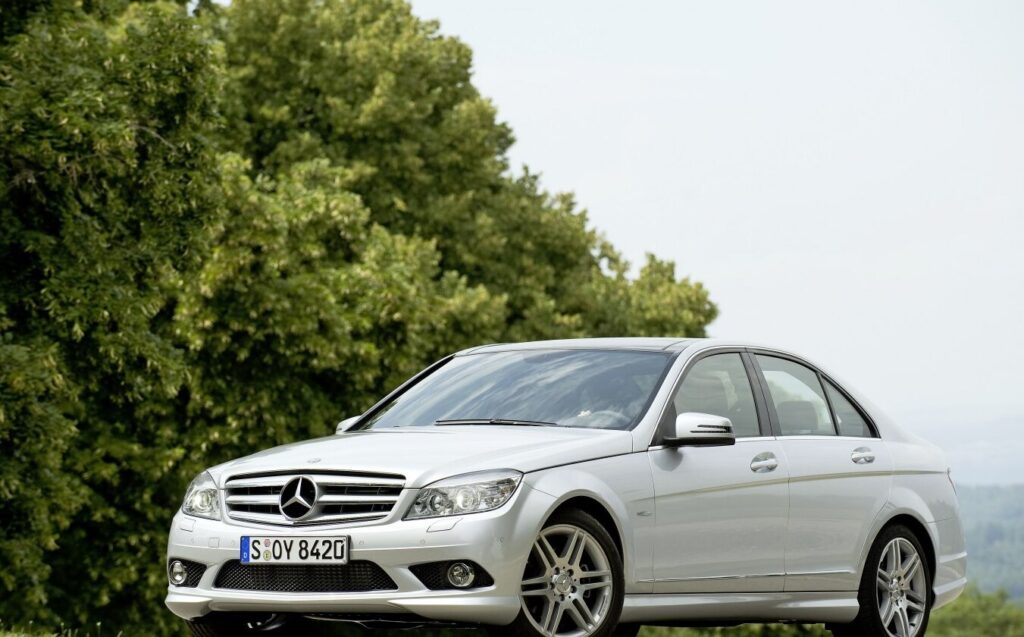
The Mercedes-Benz C-Class (W204) C 250 CDI BlueEFFICIENCY was a diesel-powered variant of the popular C-Class sedan, produced between 2009 and 2011. Positioned as a mid-range offering within the W204 lineup, it aimed to balance fuel efficiency with respectable performance. This model was primarily marketed in Europe and other regions where diesel engines were favored, offering a compelling alternative to gasoline-powered C-Class models. The “BlueEFFICIENCY” designation denoted Mercedes-Benz’s efforts to improve fuel economy and reduce emissions through various technological enhancements. It represented a key part of Mercedes’ strategy to offer more environmentally conscious vehicles without sacrificing the brand’s reputation for luxury and driving experience.
Technical Specifications
| Brand | Mercedes-Benz |
| Model | C-class |
| Generation | C-class (W204) |
| Type (Engine) | C 250 CDI BlueEFFICIENCY (204 Hp) |
| Start of production | 2009 |
| End of production | 2011 |
| Powertrain Architecture | Internal Combustion engine |
| Body type | Sedan |
| Seats | 5 |
| Doors | 4 |
| Fuel consumption (urban) | 6.6-7.1 l/100 km (35.6 – 33.1 US mpg, 42.8 – 39.8 UK mpg, 15.2 – 14.1 km/l) |
| Fuel consumption (extra urban) | 4.2-4.8 l/100 km (56 – 49 US mpg, 67.3 – 58.9 UK mpg, 23.8 – 20.8 km/l) |
| Fuel consumption (combined) | 5.1-5.6 l/100 km (46.1 – 42 US mpg, 55.4 – 50.4 UK mpg, 19.6 – 17.9 km/l) |
| CO2 emissions | 134-147 g/km |
| Fuel Type | Diesel |
| Acceleration 0 – 100 km/h | 7 sec |
| Acceleration 0 – 62 mph | 7 sec |
| Acceleration 0 – 60 mph | 6.7 sec |
| Maximum speed | 240 km/h (149.13 mph) |
| Emission standard | Euro 5 |
| Weight-to-power ratio | 7.5 kg/Hp, 132.5 Hp/tonne |
| Weight-to-torque ratio | 3.1 kg/Nm, 324.7 Nm/tonne |
| Power | 204 Hp @ 4200 rpm |
| Power per litre | 95.2 Hp/l |
| Torque | 500 Nm @ 1600-1800 rpm (368.78 lb.-ft. @ 1600-1800 rpm) |
| Engine layout | Front, Longitudinal |
| Engine Model/Code | OM 651.911 |
| Engine displacement | 2143 cm3 (130.77 cu. in.) |
| Number of cylinders | 4 |
| Engine configuration | Inline |
| Cylinder Bore | 83 mm (3.27 in.) |
| Piston Stroke | 99 mm (3.9 in.) |
| Compression ratio | 16.2:1 |
| Number of valves per cylinder | 4 |
| Fuel injection system | Diesel Commonrail |
| Engine aspiration | Twin-Turbo, Intercooler |
| Valvetrain | DOHC |
| Engine oil capacity | 6.5 l (6.87 US qt | 5.72 UK qt) |
| Kerb Weight | 1540 kg (3395.12 lbs.) |
| Max. weight | 2120 kg (4673.8 lbs.) |
| Max load | 580 kg (1278.68 lbs.) |
| Trunk (boot) space (minimum) | 475 l (16.77 cu. ft.) |
| Fuel tank capacity | 59 l (15.59 US gal | 12.98 UK gal) |
| Max. roof load | 100 kg (220.46 lbs.) |
| Permitted trailer load (with brakes) | 1800 kg (3968.32 lbs.) |
| Permitted trailer load (without brakes) | 750 kg (1653.47 lbs.) |
| Permitted towbar download | 75 kg (165.35 lbs.) |
| Length | 4581 mm (180.35 in.) |
| Width | 1770 mm (69.69 in.) |
| Width including mirrors | 2009 mm (79.09 in.) |
| Height | 1447 mm (56.97 in.) |
| Wheelbase | 2760 mm (108.66 in.) |
| Front track | 1549 mm (60.98 in.) |
| Rear track | 1552 mm (61.1 in.) |
| Front overhang | 765 mm (30.12 in.) |
| Rear overhang | 1056 mm (41.57 in.) |
| Minimum turning circle | 10.84 m (35.56 ft.) |
| Drivetrain Architecture | Rear wheel drive |
| Number of gears | 6 gears, manual transmission |
| Front suspension | Independent type McPherson, Transverse stabilizer |
| Rear suspension | Independent multi-link suspension, Transverse stabilizer |
| Front brakes | Ventilated discs |
| Rear brakes | Disc |
| Assisting systems | ABS (Anti-lock braking system) |
| Steering type | Steering rack and pinion |
| Power steering | Hydraulic Steering |
| Tires size | 205/55 R16 |
| Wheel rims size | 7J x 16 |
Powertrain & Engine Architecture
The C 250 CDI BlueEFFICIENCY was powered by the OM 651.911, a 2.1-liter inline-four diesel engine. This engine was a cornerstone of Mercedes-Benz’s diesel offerings during this period, known for its robust construction and efficiency. The OM 651 featured a common rail direct injection system, delivering fuel at extremely high pressures for optimized combustion. A key feature was its twin-turbocharger setup – a smaller turbo for quick response at low engine speeds and a larger turbo for increased power at higher RPMs. This configuration helped to mitigate turbo lag and provide a broad torque curve. The engine also incorporated an intercooler to further enhance performance by cooling the intake air. The valvetrain employed a double overhead camshaft (DOHC) design with four valves per cylinder, contributing to efficient gas exchange. The engine’s 16.2:1 compression ratio was typical for a diesel engine, maximizing thermal efficiency.
Driving Characteristics
The C 250 CDI BlueEFFICIENCY offered a distinctly different driving experience compared to its gasoline-powered counterparts. While not as outright quick as the C 350, the diesel engine’s substantial 500 Nm (368 lb-ft) of torque, available from a low 1600-1800 rpm, provided strong acceleration and effortless cruising. The 7-second 0-62 mph acceleration time was respectable for a diesel sedan of this era. The manual transmission, with its six forward gears, allowed drivers to keep the engine in its optimal power band. Compared to the higher-output C 350, the C 250 CDI prioritized fuel economy and relaxed driving. It wasn’t designed for spirited performance, but rather for comfortable and efficient transportation. The torque delivery made overtaking maneuvers easy, even with a full load of passengers or cargo.
Equipment & Trim Levels
The C 250 CDI BlueEFFICIENCY typically came equipped with a solid base level of features. Standard equipment included automatic climate control, a multi-function steering wheel, power windows and mirrors, and an audio system with CD player. Interior upholstery was generally cloth, with leather options available as an upgrade. Optional extras included a sunroof, navigation system, premium sound system, and parking sensors. The “BlueEFFICIENCY” package itself included features aimed at reducing fuel consumption, such as optimized aerodynamics and low-rolling-resistance tires. Trim levels varied slightly depending on the market, but generally, the C 250 CDI sat in the middle of the C-Class range, offering a good balance of features and price.
Chassis & Braking
The W204 C-Class featured a well-engineered chassis designed for both comfort and handling. The C 250 CDI utilized an independent McPherson strut suspension at the front and an independent multi-link suspension at the rear, providing a smooth ride and predictable handling. Stabilizer bars were fitted to both axles to reduce body roll during cornering. Braking duties were handled by ventilated discs at the front and solid discs at the rear, equipped with ABS (Anti-lock Braking System) as standard. The braking system provided adequate stopping power for the vehicle’s weight and performance. The steering was a rack-and-pinion system with hydraulic power assistance, offering precise and responsive steering feel.
Market Reception & Comparison
The C 250 CDI BlueEFFICIENCY was generally well-received by automotive critics, particularly for its fuel efficiency and strong torque output. It was praised as a practical and economical choice for drivers who prioritized fuel savings over outright performance. Compared to the gasoline-powered C 350, the C 250 CDI offered significantly better fuel economy, making it a more attractive option for those covering long distances. However, some critics noted that the diesel engine was slightly noisier and less refined than the gasoline engines. Reliability was generally good, although diesel engines can be more susceptible to issues with the fuel injection system and particulate filter over time.
Legacy
The OM 651 engine family, including the version used in the C 250 CDI BlueEFFICIENCY, proved to be a durable and reliable powerplant. These engines are still found in many used Mercedes-Benz vehicles today, and with proper maintenance, they can provide many years of service. The C 250 CDI BlueEFFICIENCY remains a popular choice in the used car market, particularly for those seeking a fuel-efficient and comfortable sedan. The model represents a significant step in Mercedes-Benz’s efforts to improve the fuel economy and reduce the emissions of its vehicles, paving the way for future generations of more environmentally friendly automobiles.