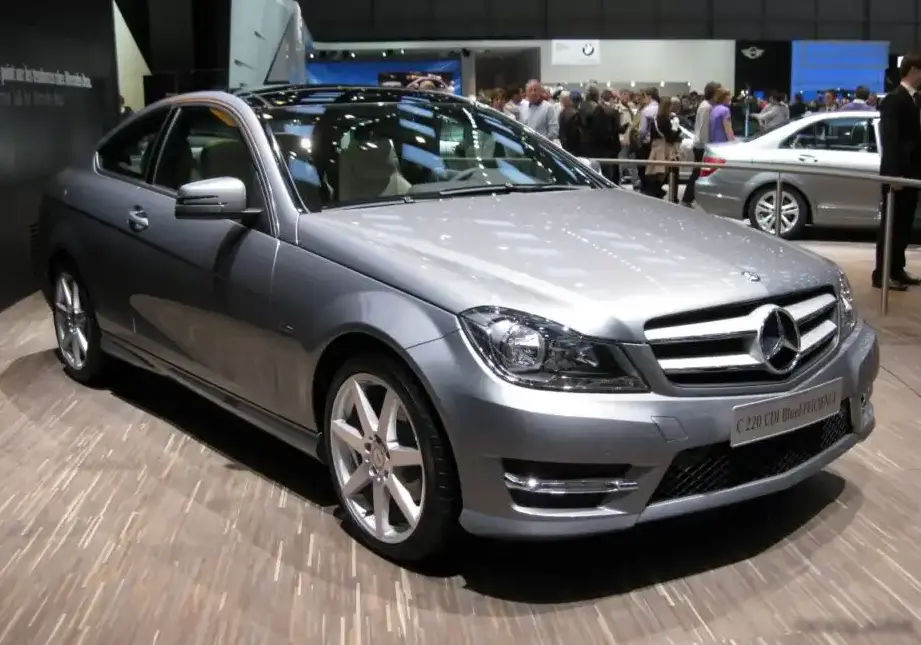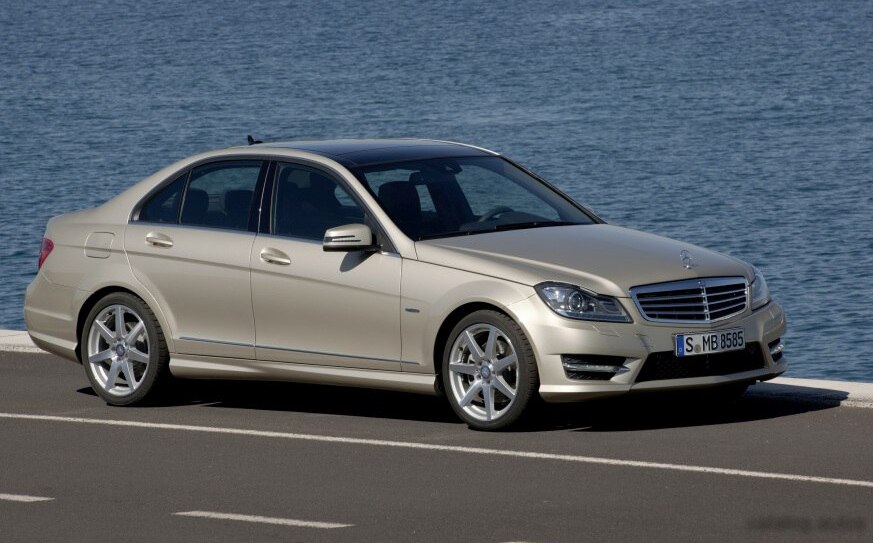
The Mercedes-Benz C 180 BlueEFFICIENCY, produced from 2012 to 2014 as part of the W204 facelift generation, represented an entry point into the C-Class range for many European buyers. Positioned below the C 200 and C 250 models, it offered a balance of fuel efficiency and reasonable performance, appealing to those prioritizing economy and comfort over outright speed. This variant utilized a downsized 1.6-liter turbocharged engine paired with an automatic transmission, a configuration designed to meet increasingly stringent European emissions standards and consumer demand for lower running costs. The W204 facelift, introduced in 2011, brought styling revisions and technological updates to the C-Class, enhancing its appeal in a competitive segment.
Technical Specifications
| Brand | Mercedes-Benz |
| Model | C-class |
| Generation | C-class (W204, facelift 2011) |
| Type (Engine) | C 180 1.6 BlueEFFICIENCY (156 Hp) |
| Start of production | April, 2012 |
| End of production | 2014 |
| Powertrain Architecture | Internal Combustion engine |
| Body type | Sedan |
| Seats | 5 |
| Doors | 4 |
| Fuel consumption (urban) | 7.7-8.1 l/100 km (30.5 – 29 US mpg, 36.7 – 34.9 UK mpg, 13 – 12.3 km/l) |
| Fuel consumption (extra urban) | 4.7-5.4 l/100 km (50 – 43.6 US mpg, 60.1 – 52.3 UK mpg, 21.3 – 18.5 km/l) |
| Fuel consumption (combined) | 5.8-6.4 l/100 km (40.6 – 36.8 US mpg, 48.7 – 44.1 UK mpg, 17.2 – 15.6 km/l) |
| CO2 emissions | 136-149 g/km |
| Fuel Type | Petrol (Gasoline) |
| Acceleration 0 – 100 km/h | 8.5 sec |
| Acceleration 0 – 62 mph | 8.5 sec |
| Acceleration 0 – 60 mph | 8.1 sec |
| Maximum speed | 225 km/h (139.81 mph) |
| Emission standard | Euro 5 |
| Weight-to-power ratio | 8.9 kg/Hp, 111.8 Hp/tonne |
| Weight-to-torque ratio | 5.6 kg/Nm, 179.2 Nm/tonne |
| Power | 156 Hp @ 5300 rpm |
| Torque | 250 Nm @ 1250-4000 rpm (184.39 lb.-ft. @ 1250-4000 rpm) |
| Engine layout | Front, Longitudinal |
| Engine Model/Code | M 274.910 |
| Engine displacement | 1595 cm3 (97.33 cu. in.) |
| Number of cylinders | 4 |
| Engine configuration | Inline |
| Cylinder Bore | 83 mm (3.27 in.) |
| Piston Stroke | 73.7 mm (2.9 in.) |
| Compression ratio | 10.3:1 |
| Number of valves per cylinder | 4 |
| Fuel injection system | Direct injection |
| Engine aspiration | Turbocharger, Intercooler |
| Valvetrain | DOHC |
| Engine oil capacity | 6 l (6.34 US qt | 5.28 UK qt) |
| Kerb Weight | 1395 kg (3075.45 lbs.) |
| Max. weight | 1985 kg (4376.18 lbs.) |
| Max load | 590 kg (1300.73 lbs.) |
| Trunk (boot) space (minimum) | 475 l (16.77 cu. ft.) |
| Fuel tank capacity | 59 l (15.59 US gal | 12.98 UK gal) |
| Max. roof load | 100 kg (220.46 lbs.) |
| Permitted trailer load (with brakes) | 1800 kg (3968.32 lbs.) |
| Permitted trailer load (without brakes) | 735 kg (1620.4 lbs.) |
| Length | 4591 mm (180.75 in.) |
| Width | 1770 mm (69.69 in.) |
| Width including mirrors | 2008 mm (79.06 in.) |
| Height | 1447 mm (56.97 in.) |
| Wheelbase | 2760 mm (108.66 in.) |
| Front track | 1549 mm (60.98 in.) |
| Rear track | 1552 mm (61.1 in.) |
| Front overhang | 775 mm (30.51 in.) |
| Rear overhang | 1056 mm (41.57 in.) |
| Drag coefficient (Cd) | 0.27 |
| Minimum turning circle | 10.84 m (35.56 ft.) |
| Drivetrain Architecture | Rear wheel drive |
| Drive wheel | Rear wheel drive |
| Number of gears | 6 |
| Type of gearbox | Automatic transmission |
| Front suspension | Independent type McPherson, Transverse stabilizer |
| Rear suspension | Independent multi-link suspension, Transverse stabilizer |
| Front brakes | Ventilated discs, 288 mm |
| Rear brakes | Disc, 278 mm |
| Assisting systems | ABS (Anti-lock braking system) |
| Steering type | Steering rack and pinion |
| Power steering | Hydraulic Steering |
| Tires size | 195/60 R16; 205/55 R16; 225/45 R17 |
| Wheel rims size | 6J x 16; 7J x 16; 7.5J x 17 |
Powertrain & Engine Architecture
The heart of the C 180 BlueEFFICIENCY is the M274.910 1.6-liter inline-four cylinder engine. This engine is a member of Mercedes-Benz’s modular engine family, designed for flexibility and efficiency. It features direct fuel injection, a single turbocharger with an intercooler, and a double overhead camshaft (DOHC) valvetrain with four valves per cylinder. The engine’s design prioritizes low-end torque, delivering 250 Nm (184 lb-ft) between 1250 and 4000 rpm. This broad torque band, combined with the automatic transmission, aimed to provide effortless drivability in everyday conditions. The ‘BlueEFFICIENCY’ designation indicates the inclusion of fuel-saving technologies, including start-stop functionality, which automatically shuts off the engine when the vehicle is stationary to reduce fuel consumption and emissions. The automatic transmission used was typically a 7G-TRONIC, a seven-speed automatic gearbox known for its smooth shifting and efficiency.
Driving Characteristics
The C 180 Automatic offered a comfortable and refined driving experience, but wasn’t designed for sporty performance. Acceleration from 0 to 100 km/h (0-62 mph) took around 8.5 seconds. The automatic transmission, while smooth, could feel somewhat hesitant during quick overtaking maneuvers. Compared to the C 200 or C 250 models, the C 180 lacked the punch for more spirited driving. However, the engine’s strong low-end torque made it well-suited for urban driving and cruising on the highway. The 7G-TRONIC transmission’s gear ratios were optimized for fuel efficiency, resulting in lower engine speeds at highway speeds. The rear-wheel-drive configuration provided a balanced feel, although it didn’t offer the all-weather capability of all-wheel-drive variants.
Equipment & Trim Levels
The C 180 BlueEFFICIENCY typically came standard with features such as air conditioning, a multi-function steering wheel, power windows, and an audio system. Upholstery was generally cloth, although leather options were available. Optional extras included a sunroof, navigation system, upgraded audio systems, parking sensors, and heated seats. Trim levels varied depending on the market, but generally offered packages that bundled popular options together. The interior design followed the W204 facelift’s revised dashboard layout, with improved materials and a more modern aesthetic.
Chassis & Braking
The C 180 utilized the standard W204 chassis, featuring an independent McPherson strut front suspension and an independent multi-link rear suspension. Stabilizer bars were fitted to both axles to reduce body roll. Braking systems consisted of ventilated discs at the front and solid discs at the rear. Anti-lock Braking System (ABS) was standard. The suspension tuning was geared towards comfort, providing a smooth ride over most road surfaces. The weight distribution was reasonably balanced, contributing to predictable handling.
Market Reception & Comparison
The C 180 BlueEFFICIENCY was generally well-received by critics as a sensible and economical option within the C-Class range. Its fuel economy figures were competitive, and its lower price point made it an attractive alternative to the more powerful models. However, some reviewers noted its lack of outright performance. Compared to the C 200, the C 180 offered lower running costs but sacrificed some acceleration. Against the C 250, the performance difference was even more significant. The C 180’s reliability was generally good, although like all modern vehicles, it was susceptible to issues with sensors and electronic components.
Legacy
The C 180 BlueEFFICIENCY, while not the most sought-after variant of the W204 C-Class, remains a relatively affordable and practical used car option. The 1.6-liter turbocharged engine, while not known for exceptional longevity, has proven reasonably durable with regular maintenance. The 7G-TRONIC transmission is generally reliable, but requires fluid changes at the recommended intervals. Today, these cars represent a good value for those seeking a comfortable and fuel-efficient compact executive sedan. The W204 C-Class, as a whole, is remembered for its solid build quality and refined driving experience, and the C 180 BlueEFFICIENCY offers a taste of that experience at a more accessible price point.