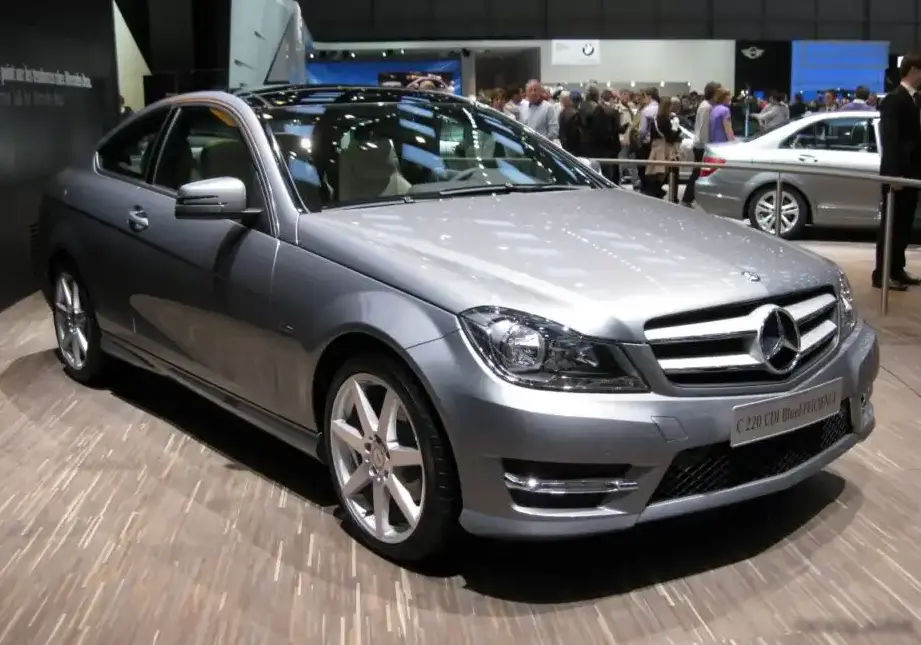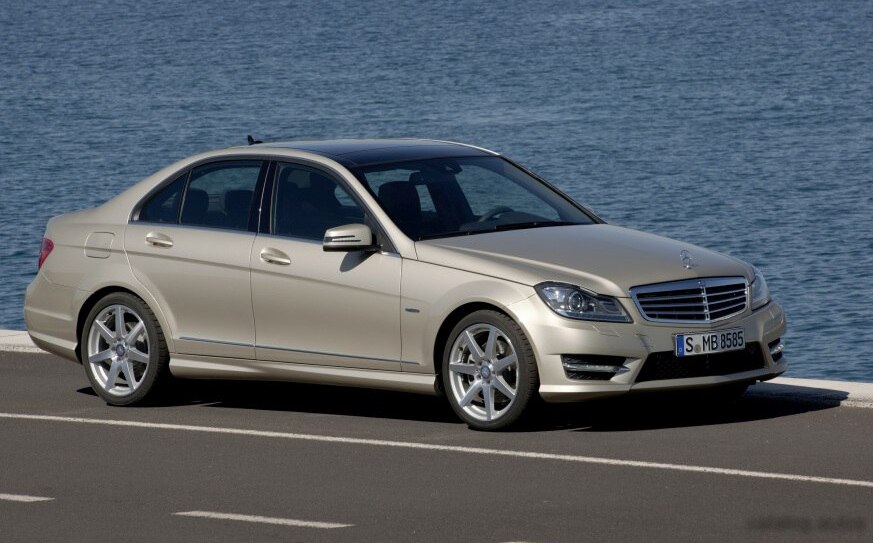
The Mercedes-Benz C 200 BlueEFFICIENCY, produced from 2011 to 2014, was a key variant within the W204 facelifted C-Class range. Positioned as a mid-range offering, it aimed to balance performance and fuel economy, appealing to buyers seeking a premium compact executive car. This iteration of the C-Class, internally designated as the W204, represented a significant refresh of the third-generation C-Class, introducing updated styling, improved technology, and more efficient engine options. The C 200 BlueEFFICIENCY specifically targeted markets where fuel costs were a concern, offering a more economical alternative to the higher-performance C 250 and C 350 models.
Technical Specifications
| Brand | Mercedes-Benz |
| Model | C-class |
| Generation | C-class (W204, facelift 2011) |
| Type (Engine) | C 200 BlueEFFICIENCY (184 Hp) |
| Start of production | 2011 |
| End of production | 2014 |
| Powertrain Architecture | Internal Combustion engine |
| Body type | Sedan |
| Seats | 5 |
| Doors | 4 |
| Fuel consumption (urban) | 9.3-9.8 l/100 km (25.3 – 24 US mpg) |
| Fuel consumption (extra urban) | 5.2-5.8 l/100 km (45.2 – 40.6 US mpg) |
| Fuel consumption (combined) | 6.6-7.2 l/100 km (35.6 – 32.7 US mpg) |
| CO2 emissions | 154-168 g/km |
| Fuel Type | Petrol (Gasoline) |
| Acceleration 0 – 100 km/h | 8.2 sec |
| Acceleration 0 – 62 mph | 8.2 sec |
| Acceleration 0 – 60 mph | 7.8 sec |
| Maximum speed | 237 km/h (147.26 mph) |
| Emission standard | Euro 5 |
| Weight-to-power ratio | 7.7 kg/Hp |
| Weight-to-torque ratio | 5.3 kg/Nm |
| Power | 184 Hp @ 5250 rpm |
| Torque | 270 Nm @ 1800-4600 rpm (199.14 lb.-ft.) |
| Engine layout | Front, Longitudinal |
| Engine Model/Code | M 271.860 |
| Engine displacement | 1796 cm3 (109.6 cu. in.) |
| Number of cylinders | 4 |
| Engine configuration | Inline |
| Cylinder Bore | 82 mm (3.23 in.) |
| Piston Stroke | 85 mm (3.35 in.) |
| Compression ratio | 9.3:1 |
| Number of valves per cylinder | 4 |
| Fuel injection system | Direct injection |
| Engine aspiration | Turbocharger, Intercooler |
| Valvetrain | DOHC |
| Engine oil capacity | 5.5 l (5.81 US qt | 4.84 UK qt) |
| Kerb Weight | 1425 kg (3141.59 lbs.) |
| Max. weight | 2015 kg (4442.31 lbs.) |
| Max load | 590 kg (1300.73 lbs.) |
| Trunk (boot) space | 475 l (16.77 cu. ft.) |
| Fuel tank capacity | 59 l (15.59 US gal | 12.98 UK gal) |
| Length | 4591 mm (180.75 in.) |
| Width | 1770 mm (69.69 in.) |
| Height | 1447 mm (56.97 in.) |
| Wheelbase | 2760 mm (108.66 in.) |
| Front track | 1549 mm (60.98 in.) |
| Rear track | 1552 mm (61.1 in.) |
| Drag coefficient (Cd) | 0.27 |
| Minimum turning circle | 10.84 m (35.56 ft.) |
| Drivetrain Architecture | Rear wheel drive |
| Number of gears | 6 gears, manual transmission |
Powertrain & Engine Architecture
The C 200 BlueEFFICIENCY was powered by the M271.860 1.8-liter inline-four cylinder engine. This engine featured direct fuel injection and a turbocharger with an intercooler, technologies aimed at improving both power output and fuel efficiency. The engine code, M271.860, signifies its place within Mercedes-Benz’s engine family. The direct injection system allowed for precise fuel delivery, optimizing combustion and reducing emissions. The turbocharger boosted power output, compensating for the relatively small displacement. The engine produced 184 horsepower at 5250 rpm and 270 Nm (199 lb-ft) of torque between 1800 and 4600 rpm. The engine was paired with a 6-speed manual transmission as standard, although a 5-speed automatic transmission was also available as an option. The automatic transmission, while offering convenience, did slightly impact acceleration and fuel economy compared to the manual.
Driving Characteristics
The C 200 BlueEFFICIENCY with the manual transmission offered a reasonably engaging driving experience. Acceleration from 0 to 60 mph took approximately 7.8 seconds, making it competitive within its class. The turbocharger provided a noticeable boost in power, but the engine didn’t feel particularly powerful at lower RPMs. The automatic transmission, while smooth, resulted in a slightly slower 0-60 mph time of around 8.2 seconds. Gear ratios were tuned for fuel efficiency, meaning the engine often operated at lower RPMs during cruising. Compared to the C 250, which featured a larger 2.0-liter engine, the C 200 felt less responsive. However, it offered a better balance of performance and fuel economy than the diesel-powered C 220 CDI.
Equipment & Trim Levels
The C 200 BlueEFFICIENCY came standard with a respectable level of equipment, including automatic climate control, a multi-function steering wheel, and a basic audio system. Interior upholstery was typically cloth, although leather options were available. Optional extras included a sunroof, upgraded audio systems (often from Harman Kardon), navigation system, and parking sensors. The “BlueEFFICIENCY” designation indicated the inclusion of fuel-saving technologies such as start-stop functionality, which automatically shut off the engine when the vehicle was stationary to reduce fuel consumption and emissions. Trim levels varied by market, but generally offered packages that bundled popular options together.
Chassis & Braking
The W204 C-Class featured an independent suspension system, with a McPherson strut setup at the front and a multi-link suspension at the rear. This configuration provided a comfortable ride and good handling characteristics. The C 200 BlueEFFICIENCY typically came equipped with ventilated disc brakes at the front and solid disc brakes at the rear. Anti-lock Braking System (ABS) was standard. Stabilizer bars were fitted to both the front and rear axles to reduce body roll during cornering. The steering system was a hydraulic power steering setup, providing a direct and responsive feel.
Market Reception & Comparison
The C 200 BlueEFFICIENCY was generally well-received by automotive critics as a sensible and economical option within the C-Class range. It was praised for its fuel efficiency and comfortable ride. However, some reviewers noted that the engine lacked the outright performance of its larger siblings. Compared to the C 250, the C 200 offered lower running costs but less excitement. Against competitors like the BMW 320i and Audi A4 1.8 TFSI, the C 200 BlueEFFICIENCY held its own in terms of fuel economy and refinement, but often lagged slightly in terms of driving dynamics.
Legacy
The M271 engine family, including the M271.860 found in the C 200 BlueEFFICIENCY, has proven to be relatively reliable, although preventative maintenance is crucial. Common issues include oil leaks and occasional turbocharger problems. The 5-speed automatic transmission, while generally durable, can sometimes exhibit harsh shifting as it ages. Today, the W204 C 200 BlueEFFICIENCY represents a relatively affordable entry point into the Mercedes-Benz brand. Well-maintained examples are still common on the used car market, offering a blend of luxury, comfort, and reasonable running costs. Its fuel efficiency and relatively simple mechanicals make it a practical choice for those seeking a dependable and economical compact executive car.