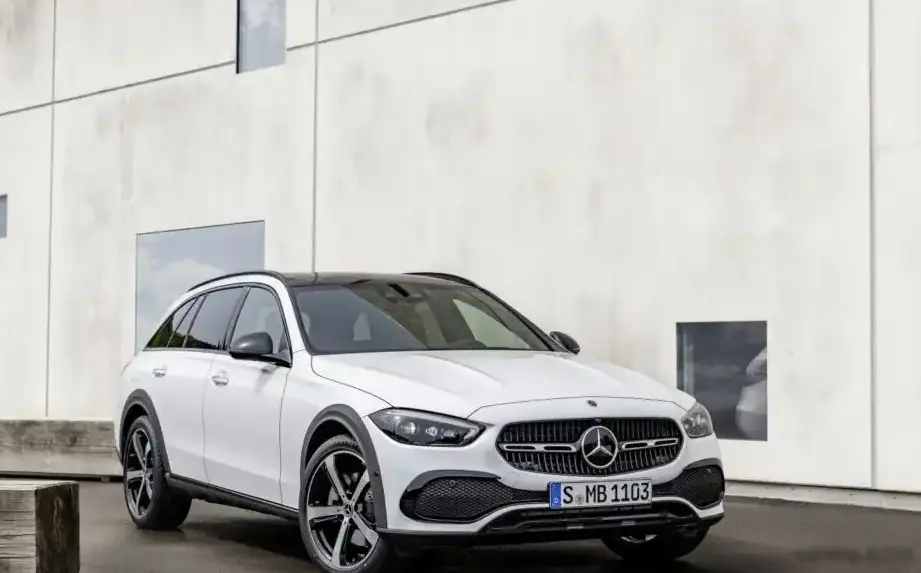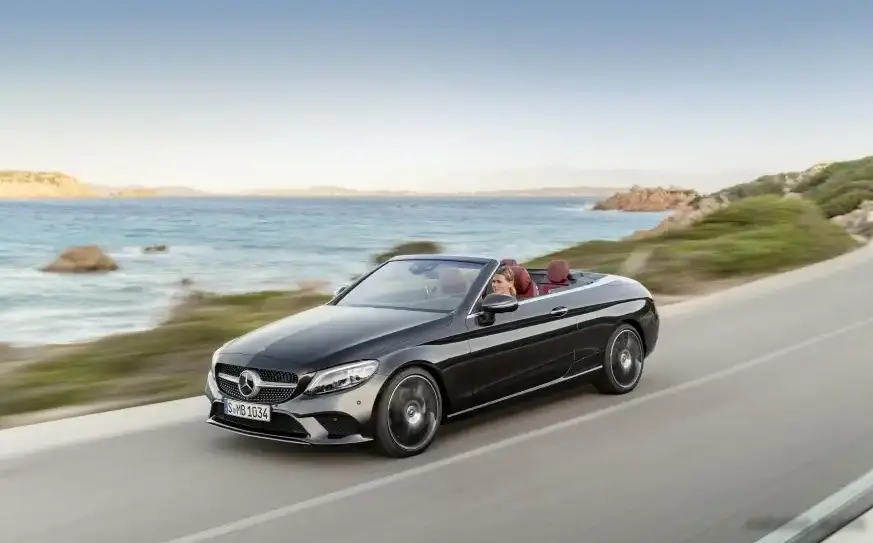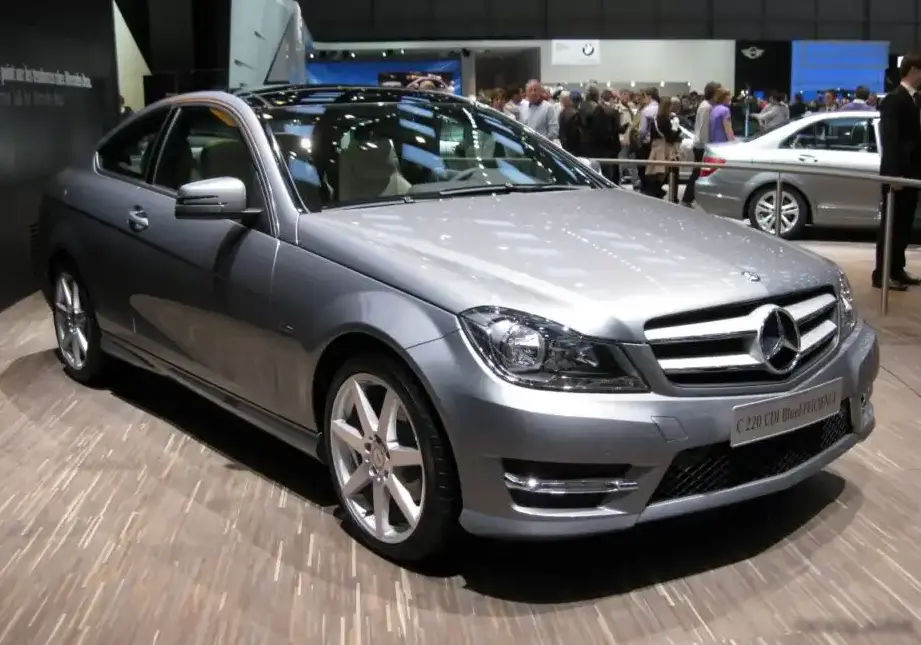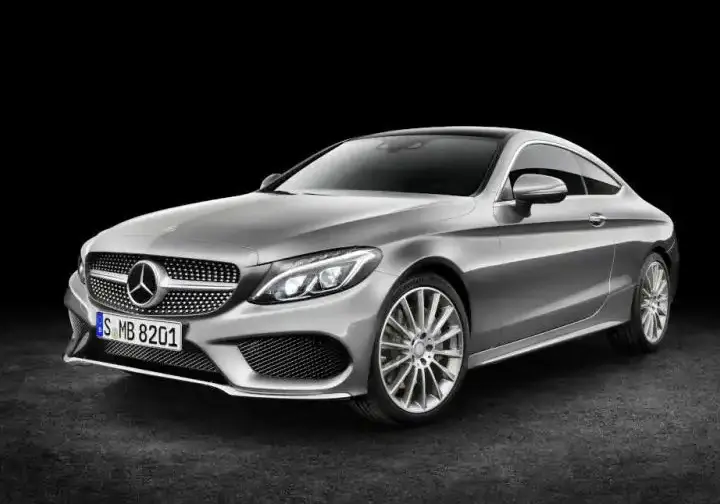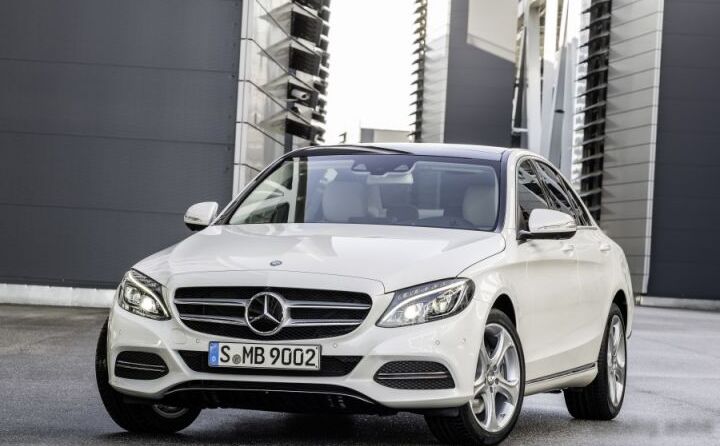
The Mercedes-Benz C 160, produced between 2015 and 2018, was an entry-level variant of the fourth-generation C-Class (W205). Positioned as the most accessible option in the W205 lineup, it aimed to bring the C-Class experience to a wider audience. It served as the gateway into the premium compact executive car segment, competing with models like the Audi A4 and BMW 3 Series. The C 160 was primarily marketed in Europe and other regions where smaller displacement engines were favored due to taxation and fuel efficiency considerations. While not available in the North American market, it represents a significant part of the W205’s global sales volume.
Technical Specifications
| Brand | Mercedes-Benz |
| Model | C-class |
| Generation | C-class (W205) |
| Type (Engine) | C 160 (129 Hp) |
| Start of production | 2015 year |
| End of production | 2018 year |
| Powertrain Architecture | Internal Combustion engine |
| Body type | Sedan |
| Seats | 5 |
| Doors | 4 |
| Fuel consumption (urban) | 7.1-6.7 l/100 km (33.1 – 35.1 US mpg, 39.8 – 42.2 UK mpg, 14.1 – 14.9 km/l) |
| Fuel consumption (extra urban) | 4.9-4.3 l/100 km (48 – 54.7 US mpg, 57.6 – 65.7 UK mpg, 20.4 – 23.3 km/l) |
| Fuel consumption (combined) | 5.7-5.2 l/100 km (41.3 – 45.2 US mpg, 49.6 – 54.3 UK mpg, 17.5 – 19.2 km/l) |
| CO2 emissions | 133-120 g/km |
| Fuel Type | Petrol (Gasoline) |
| Acceleration 0 – 100 km/h | 9.6 sec |
| Acceleration 0 – 62 mph | 9.6 sec |
| Acceleration 0 – 60 mph | 9.1 sec |
| Maximum speed | 216 km/h (134.22 mph) |
| Emission standard | Euro 6 |
| Weight-to-power ratio | 10.2 kg/Hp, 97.7 Hp/tonne |
| Weight-to-torque ratio | 6.3 kg/Nm, 159.1 Nm/tonne |
| Power | 129 Hp @ 5000-6000 rpm |
| Power per litre | 80.9 Hp/l |
| Torque | 210 Nm @ 1200-4000 rpm (154.89 lb.-ft. @ 1200-4000 rpm) |
| Engine layout | Front, Longitudinal |
| Engine Model/Code | M 274.910 |
| Engine displacement | 1595 cm3 (97.33 cu. in.) |
| Number of cylinders | 4 |
| Engine configuration | Inline |
| Compression ratio | 10.3:1 |
| Fuel injection system | Direct injection |
| Engine aspiration | Turbocharger, Intercooler |
| Engine oil capacity | 7 l (7.4 US qt | 6.16 UK qt) |
| Coolant | 8 l (8.45 US qt | 7.04 UK qt) |
| Kerb Weight | 1320 kg (2910.1 lbs.) |
| Max. weight | 1960 kg (4321.06 lbs.) |
| Max load | 640 kg (1410.96 lbs.) |
| Trunk (boot) space – minimum | 480 l (16.95 cu. ft.) |
| Fuel tank capacity | 41 l (10.83 US gal | 9.02 UK gal) |
| Max. roof load | 75 kg (165.35 lbs.) |
| Permitted trailer load with brakes (12%) | 1400 kg (3086.47 lbs.) |
| Permitted trailer load without brakes | 695 kg (1532.21 lbs.) |
| Length | 4686 mm (184.49 in.) |
| Width | 1810 mm (71.26 in.) |
| Width including mirrors | 2020 mm (79.53 in.) |
| Height | 1442 mm (56.77 in.) |
| Wheelbase | 2840 mm (111.81 in.) |
| Front track | 1588 mm (62.52 in.) |
| Rear (Back) track | 1570 mm (61.81 in.) |
| Front overhang | 790 mm (31.1 in.) |
| Rear overhang | 1056 mm (41.57 in.) |
| Drag coefficient (Cd) | 0.27 |
| Minimum turning circle (turning diameter) | 11.22 m (36.81 ft.) |
| Drivetrain Architecture | The Internal combustion engine (ICE) drives the rear wheels of the vehicle. |
| Drive wheel | Rear wheel drive |
| Number of gears and type of gearbox | 6 gears, manual transmission |
| Front suspension | Independent multi-link suspension |
| Rear suspension | Independent multi-link suspension |
| Front brakes | Ventilated discs |
| Rear brakes | Disc |
| Assisting systems | ABS (Anti-lock braking system) |
| Steering type | Steering rack and pinion |
| Power steering | Electric Steering |
| Tires size | 205/60 R16 |
| Wheel rims size | 16 |
INTRODUCTION
The Mercedes-Benz C 160, introduced in 2015 as part of the W205 C-Class range, represented a strategic move by Mercedes-Benz to offer a more affordable entry point into their popular compact executive sedan. Built on the MRA (Modular Rear-wheel-drive Architecture) platform – also known as 1HX0 – shared with other Mercedes-Benz models, the C 160 aimed to attract buyers seeking the prestige of the three-pointed star without the higher price tag of more powerful variants like the C 200 or C 300. Production continued until 2018, with the model primarily serving European markets and regions with favorable tax structures for smaller engine capacities. The C 160 was typically equipped with a six-speed manual transmission, though an optional automatic was available.
Powertrain & Engine Architecture
The heart of the C 160 is the M 274.910 1.6-liter inline-four cylinder gasoline engine. This engine utilizes direct fuel injection and is equipped with a single turbocharger and intercooler to boost power and efficiency. The engine code signifies its place within Mercedes-Benz’s modular engine family. The direct injection system, operating at pressures up to 200 bar, ensures precise fuel delivery for optimal combustion. The turbocharger provides increased air intake, enhancing both power and torque. The engine’s valvetrain features variable valve timing on both the intake and exhaust sides, further optimizing performance and fuel economy. The standard transmission was a six-speed manual, but a 7G-TRONIC PLUS seven-speed automatic transmission was offered as an option. This automatic transmission is known for its smooth shifting and responsiveness, contributing to a more comfortable driving experience.
Driving Characteristics
The C 160, with its 129 horsepower and 210 Nm (155 lb-ft) of torque, offered adequate performance for everyday driving. Acceleration from 0 to 100 km/h (0-62 mph) took approximately 9.6 seconds. While not particularly sporty, the engine provided sufficient power for overtaking and highway cruising. Compared to the more powerful C 200 or C 300 models, the C 160 felt noticeably less responsive, particularly during acceleration. The manual transmission offered a more engaging driving experience, allowing drivers to better control the engine’s power band. The automatic transmission, while smoother, could sometimes feel hesitant during quick acceleration. The rear-wheel-drive configuration provided a balanced handling feel, though it wasn’t as dynamic as some of its competitors with all-wheel-drive systems. The gear ratios were tuned for fuel efficiency rather than outright performance.
Equipment & Trim Levels
The C 160 typically came with a respectable level of standard equipment, though it was less lavish than higher-trim models. Standard features generally included air conditioning, power windows, power mirrors, a basic audio system, and alloy wheels. Interior upholstery was typically cloth, though leather options were available at an extra cost. The dashboard layout was consistent across the W205 range, featuring a central infotainment screen and a three-spoke steering wheel. Optional extras included a more advanced infotainment system with navigation, a sunroof, parking sensors, and upgraded audio systems. Safety features such as ABS, ESP, and multiple airbags were standard across the range.
Chassis & Braking
The C 160 utilized an independent multi-link suspension system at both the front and rear, providing a comfortable and controlled ride. The suspension was tuned to prioritize comfort over sporty handling. The front brakes were ventilated discs, while the rear brakes were solid discs. ABS (Anti-lock Braking System) was standard, ensuring safe and effective braking in various conditions. The C 160’s chassis was designed to accommodate the smaller engine and provide a balanced driving experience. Stabilizer bars were fitted to both the front and rear axles to reduce body roll during cornering. The weight distribution was optimized for rear-wheel drive, contributing to predictable handling.
Market Reception & Comparison
The C 160 was generally well-received as an affordable entry point into the C-Class range. Critics praised its comfortable ride, fuel efficiency, and the prestige of the Mercedes-Benz brand. However, some reviewers noted that the engine lacked the punch of more powerful alternatives. Compared to the C 200, which featured a larger 1.8-liter engine, the C 160 offered lower running costs but less performance. The C 160’s fuel economy was a key selling point, with combined fuel consumption figures ranging from 5.2 to 5.7 liters per 100 kilometers (41.3 to 45.2 US mpg). Reliability was generally good, though some owners reported minor issues with the turbocharger and fuel injection system.
Legacy
The C 160, while not the most powerful or sought-after variant of the W205 C-Class, played an important role in expanding the model’s appeal to a wider audience. On the used car market, the C 160 represents a relatively affordable way to own a Mercedes-Benz C-Class. The 1.6-liter engine, while not known for its exceptional durability, has proven to be reasonably reliable with proper maintenance. The availability of spare parts is good, and the C 160’s relatively simple mechanicals make it a relatively easy car to maintain. Its enduring appeal lies in its combination of Mercedes-Benz luxury, reasonable running costs, and a comfortable driving experience.