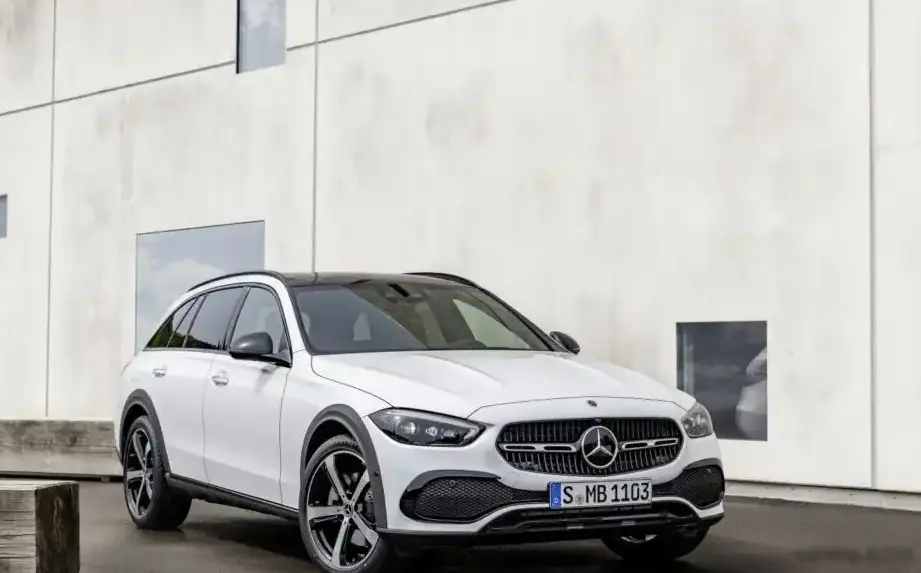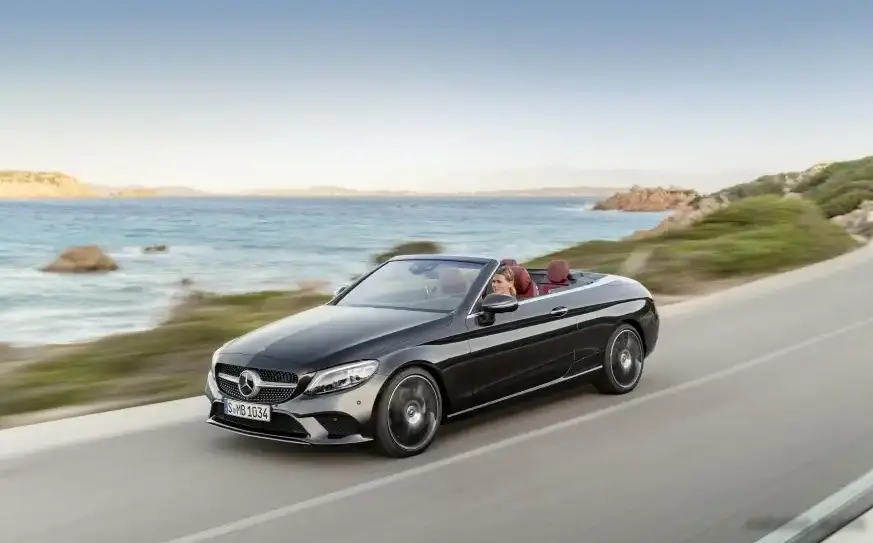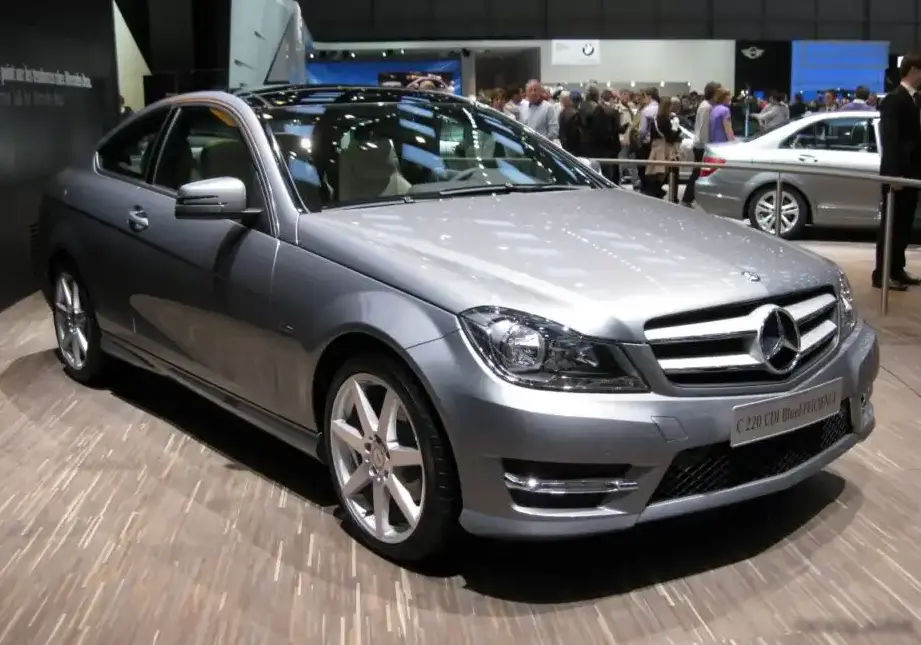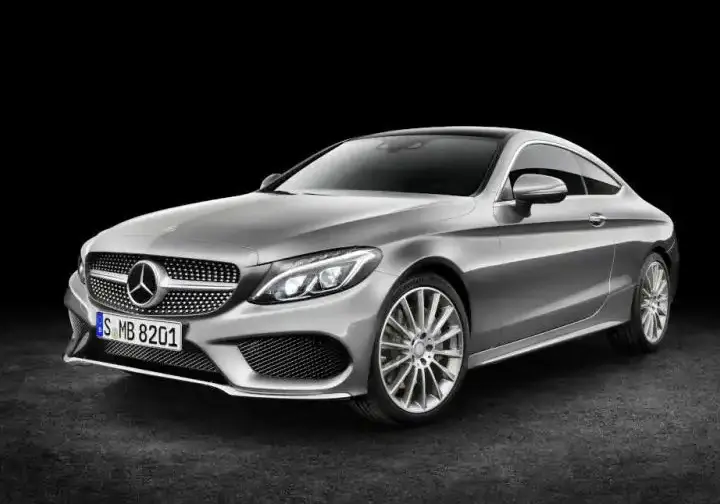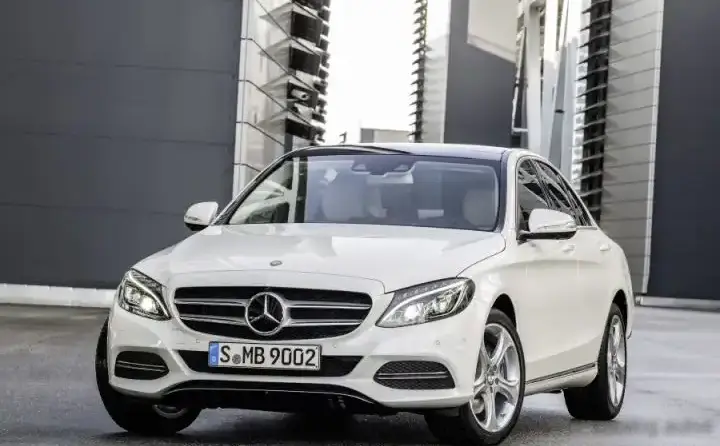
The Mercedes-Benz C 160, equipped with the 9G-TRONIC automatic transmission, was a variant of the W205 C-Class produced from October 2016 to April 2018. Positioned as an entry-level offering within the W205 range, it aimed to provide access to the C-Class’s luxury and technology at a more affordable price point, particularly in European markets where smaller displacement engines were favored. This model represented a key part of Mercedes-Benz’s strategy to broaden the appeal of the C-Class and compete effectively against rivals like the Audi A4 and BMW 3 Series.
Technical Specifications
| Brand | Mercedes-Benz |
| Model | C-class |
| Generation | C-class (W205) |
| Type (Engine) | C 160 (129 Hp) 9G-TRONIC |
| Start of production | October, 2016 |
| End of production | April, 2018 |
| Powertrain Architecture | Internal Combustion engine |
| Body type | Sedan |
| Seats | 5 |
| Doors | 4 |
| Fuel consumption (economy) – urban (NEDC) | 7.5-7.8 l/100 km (31.4 – 30.2 US mpg, 37.7 – 36.2 UK mpg, 13.3 – 12.8 km/l) |
| Fuel consumption (economy) – extra urban (NEDC) | 4.9-5.4 l/100 km (48 – 43.6 US mpg, 57.6 – 52.3 UK mpg, 20.4 – 18.5 km/l) |
| Fuel consumption (economy) – combined (NEDC) | 5.9-6.3 l/100 km (39.9 – 37.3 US mpg, 47.9 – 44.8 UK mpg, 16.9 – 15.9 km/l) |
| CO2 emissions (NEDC) | 132-142 g/km |
| Fuel Type | Petrol (Gasoline) |
| Acceleration 0 – 100 km/h | 9.8 sec |
| Acceleration 0 – 62 mph | 9.8 sec |
| Acceleration 0 – 60 mph | 9.3 sec |
| Maximum speed | 214 km/h (132.97 mph) |
| Emission standard | Euro 6 |
| Weight-to-power ratio | 10.5 kg/Hp, 95.6 Hp/tonne |
| Weight-to-torque ratio | 6.4 kg/Nm, 155.6 Nm/tonne |
| Power | 129 Hp @ 5000-6000 rpm |
| Power per litre | 80.9 Hp/l |
| Torque | 210 Nm @ 1200-4000 rpm (154.89 lb.-ft. @ 1200-4000 rpm) |
| Engine layout | Front, Longitudinal |
| Engine Model/Code | M 274.910 |
| Engine displacement | 1595 cm3 (97.33 cu. in.) |
| Number of cylinders | 4 |
| Engine configuration | Inline |
| Cylinder Bore | 83 mm (3.27 in.) |
| Piston Stroke | 73.7 mm (2.9 in.) |
| Compression ratio | 10.3:1 |
| Number of valves per cylinder | 4 |
| Fuel injection system | Direct injection |
| Engine aspiration | Turbocharger, Intercooler |
| Valvetrain | DOHC |
| Engine oil capacity | 7 l (7.4 US qt | 6.16 UK qt) |
| Coolant | 8 l (8.45 US qt | 7.04 UK qt) |
| Kerb Weight | 1350 kg (2976.24 lbs.) |
| Max. weight | 1990 kg (4387.2 lbs.) |
| Max load | 640 kg (1410.96 lbs.) |
| Trunk (boot) space – minimum | 480 l (16.95 cu. ft.) |
| Fuel tank capacity | 41 l (10.83 US gal | 9.02 UK gal) |
| Max. roof load | 75 kg (165.35 lbs.) |
| Permitted trailer load with brakes (12%) | 1800 kg (3968.32 lbs.) |
| Permitted trailer load without brakes | 710 kg (1565.28 lbs.) |
| Permitted towbar download | 75 kg (165.35 lbs.) |
| Length | 4686 mm (184.49 in.) |
| Width | 1810 mm (71.26 in.) |
| Width including mirrors | 2020 mm (79.53 in.) |
| Height | 1442 mm (56.77 in.) |
| Wheelbase | 2840 mm (111.81 in.) |
| Front track | 1588 mm (62.52 in.) |
| Rear (Back) track | 1570 mm (61.81 in.) |
| Front overhang | 790 mm (31.1 in.) |
| Rear overhang | 1056 mm (41.57 in.) |
| Minimum turning circle (turning diameter) | 11.22 m (36.81 ft.) |
| Drivetrain Architecture | The Internal combustion engine (ICE) drives the rear wheels of the vehicle. |
| Drive wheel | Rear wheel drive |
| Number of gears and type of gearbox | 9 gears, automatic transmission G-TRONIC |
Powertrain & Engine Architecture
The C 160 utilized the M274.910 1.6-liter inline-four cylinder engine. This engine was part of Mercedes-Benz’s modular engine family, designed for efficiency and scalability. It featured direct fuel injection and a single turbocharger with an intercooler, allowing for a reasonable balance of power and fuel economy. The engine’s output of 129 horsepower and 210 Nm (155 lb-ft) of torque was delivered between 1200 and 4000 rpm, prioritizing usability over outright performance. The engine was longitudinally mounted, a traditional layout for rear-wheel-drive Mercedes-Benz vehicles. Paired with the engine was the 9G-TRONIC nine-speed automatic transmission. This transmission was a key feature, offering a wide range of gear ratios to optimize fuel efficiency and provide smooth shifts. The 9G-TRONIC allowed the engine to operate within its optimal efficiency range more frequently, contributing to the C 160’s relatively low fuel consumption figures.
Driving Characteristics
The C 160 9G-TRONIC offered a comfortable and refined driving experience, but it wasn’t designed for sporty performance. Acceleration from 0 to 100 km/h (0-62 mph) took approximately 9.8 seconds. The 9G-TRONIC transmission, while smooth, could sometimes feel hesitant during quick overtaking maneuvers, requiring a downshift or two to access sufficient power. Compared to the more powerful C 200 or C 250 models, the C 160 felt noticeably slower. However, the wide gear spread of the 9G-TRONIC helped to keep the engine operating efficiently at highway speeds, resulting in a quiet and relaxed cruising experience. The emphasis was on fuel economy and ease of driving rather than spirited performance.
Equipment & Trim Levels
The C 160 typically came standard with features such as automatic climate control, a multi-function steering wheel, and the Mercedes-Benz infotainment system with a central display screen. Interior upholstery was generally cloth, although leather options were available as upgrades. Standard safety equipment included ABS, ESP, and a suite of airbags. Optional extras included features like a sunroof, upgraded audio system, parking assist, and various driver assistance systems. The trim level was generally considered entry-level, focusing on providing essential comfort and convenience features without the premium appointments found in higher-spec C-Class models.
Chassis & Braking
The C 160 utilized a coil spring, independent multi-link suspension at both the front and rear. This suspension setup provided a good balance of ride comfort and handling. While not as sporty as the suspension found on the AMG-tuned C-Class models, it offered a composed and stable ride. The braking system consisted of ventilated discs at the front and solid discs at the rear. ABS (Anti-lock Braking System) was standard. The C 160’s relatively lower weight compared to its more powerful siblings contributed to its adequate braking performance.
Market Reception & Comparison
The C 160 was generally well-received as an affordable entry point into the C-Class range. Critics praised its fuel efficiency and comfortable ride, but noted its lack of outright performance. Compared to the C 200, which featured a larger 1.8-liter engine, the C 160 offered lower running costs but significantly less power. The C 200 was often considered a more well-rounded option for drivers who wanted a balance of performance and efficiency. The C 160’s fuel economy figures were competitive with other entry-level luxury sedans in its class.
Legacy
The M274 engine, while generally reliable, has been known to exhibit some issues with oil consumption in certain instances. The 9G-TRONIC transmission has also had reports of occasional software glitches, but these are typically addressed with software updates. In the used car market, the C 160 represents a relatively affordable way to experience the Mercedes-Benz C-Class. Its lower purchase price and good fuel economy make it an attractive option for budget-conscious buyers. However, potential buyers should be aware of the potential for oil consumption issues and ensure that the transmission software is up to date.