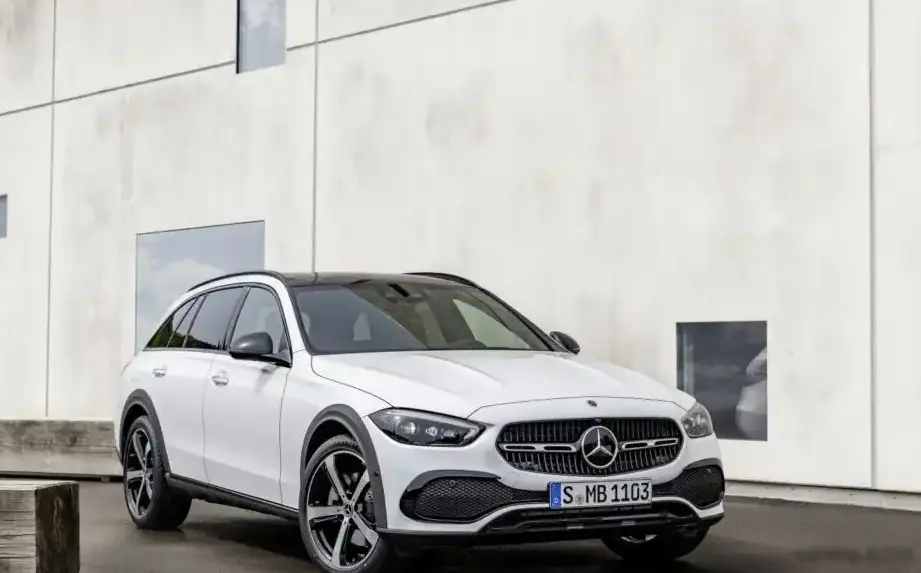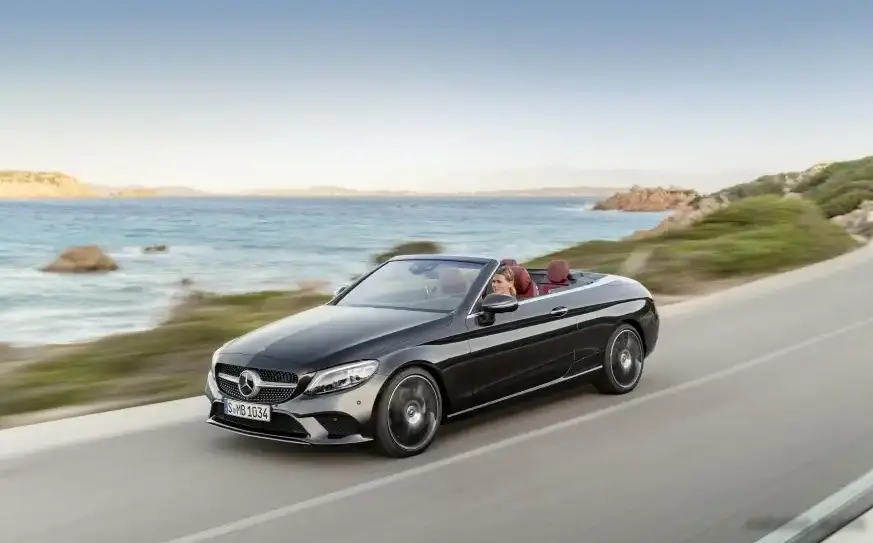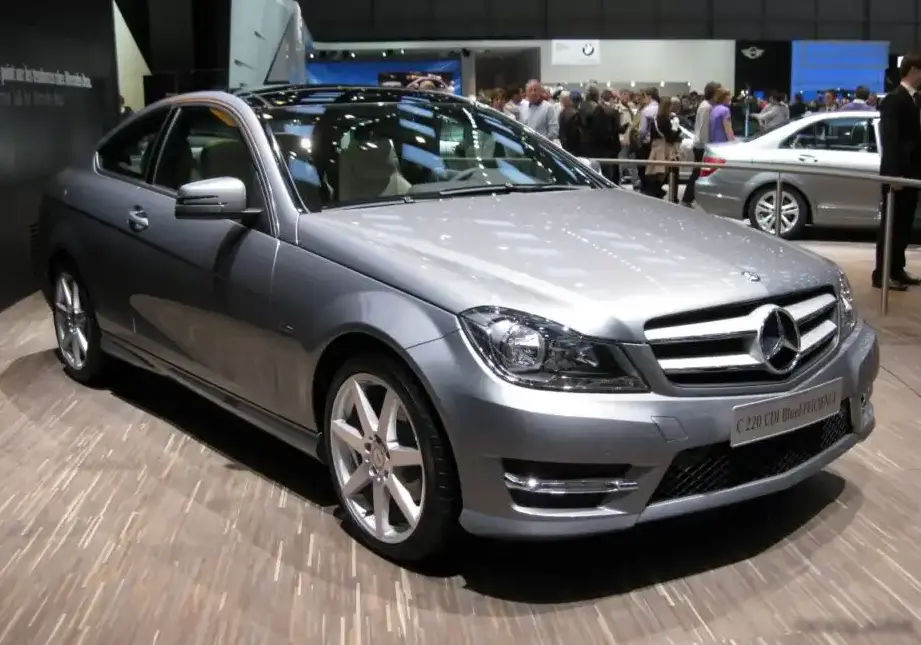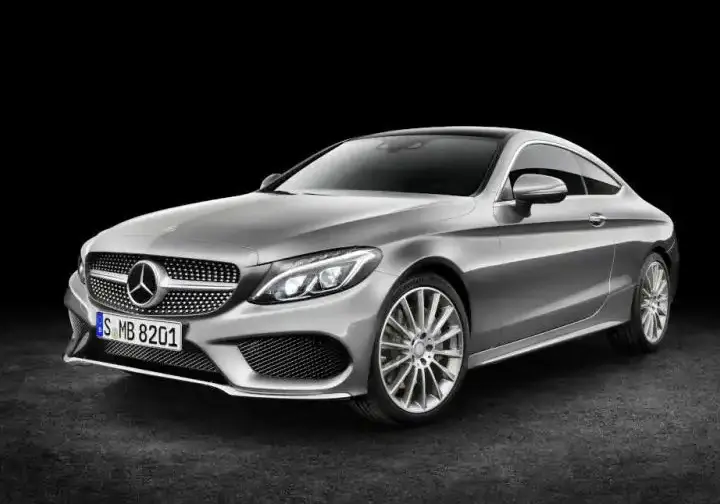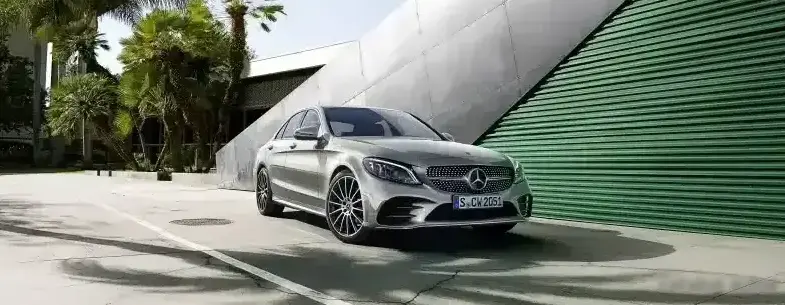
The Mercedes-Benz C 160, equipped with a 1.5-liter turbocharged engine and a 9G-TRONIC automatic transmission, was a key variant within the W205 C-Class facelift range, introduced in 2019 and briefly produced until November of the same year. Positioned as an entry-level offering in many European markets, the C 160 aimed to provide access to the C-Class’s premium experience with a focus on fuel efficiency and comfortable cruising. It represented a downsized engine option within a lineup that also included more powerful variants like the C 200 and C 300, as well as diesel alternatives. This model was primarily targeted towards buyers prioritizing economy and refinement over outright performance.
Technical Specifications
| Brand | Mercedes-Benz |
| Model | C-class |
| Generation | C-class (W205, facelift 2018) |
| Type (Engine) | C 160 (129 Hp) 9G-TRONIC |
| Start of production | 2019 |
| End of production | November, 2019 |
| Powertrain Architecture | Internal Combustion engine |
| Body type | Sedan |
| Seats | 5 |
| Doors | 4 |
| Fuel consumption (economy) – urban (NEDC) | 8-8.4 l/100 km (29.4 – 28 US mpg, 35.3 – 33.6 UK mpg, 12.5 – 11.9 km/l) |
| Fuel consumption (economy) – extra urban (NEDC) | 5.1-5.4 l/100 km (46.1 – 43.6 US mpg, 55.4 – 52.3 UK mpg, 19.6 – 18.5 km/l) |
| Fuel consumption (economy) – combined (NEDC) | 6.2-6.5 l/100 km (37.9 – 36.2 US mpg, 45.6 – 43.5 UK mpg, 16.1 – 15.4 km/l) |
| CO2 emissions (NEDC) | 140-147 g/km |
| Fuel Type | Petrol (Gasoline) |
| Acceleration 0 – 100 km/h | 10.3 sec |
| Acceleration 0 – 62 mph | 10.3 sec |
| Acceleration 0 – 60 mph | 9.8 sec |
| Maximum speed | 208 km/h (129.25 mph) |
| Emission standard | Euro 6d-TEMP-EVAP-ISC |
| Weight-to-power ratio | 10.9 kg/Hp, 92.1 Hp/tonne |
| Weight-to-torque ratio | 6.7 kg/Nm, 150 Nm/tonne |
| Power | 129 Hp |
| Power per litre | 86.2 Hp/l |
| Torque | 210 Nm @ 1400-4000 rpm (154.89 lb.-ft. @ 1400-4000 rpm) |
| Engine layout | Front, Longitudinal |
| Engine Model/Code | M 264.915 |
| Engine displacement | 1497 cm3 (91.35 cu. in.) |
| Number of cylinders | 4 |
| Engine configuration | Inline |
| Cylinder Bore | 80.4 mm (3.17 in.) |
| Piston Stroke | 73.7 mm (2.9 in.) |
| Compression ratio | 10.5:1 |
| Number of valves per cylinder | 4 |
| Fuel injection system | Direct injection |
| Engine aspiration | Twin-scroll turbo, Intercooler |
| Valvetrain | DOHC |
| Engine oil capacity | 6.6 l (6.97 US qt | 5.81 UK qt) |
| Coolant | 8.6 l (9.09 US qt | 7.57 UK qt) |
| Kerb Weight | 1400 kg (3086.47 lbs.) |
| Max. weight | 2055 kg (4530.5 lbs.) |
| Max load | 655 kg (1444.03 lbs.) |
| Trunk (boot) space – minimum | 455 l (16.07 cu. ft.) |
| Fuel tank capacity | 41 l (10.83 US gal | 9.02 UK gal) |
| Max. roof load | 75 kg (165.35 lbs.) |
| Permitted trailer load with brakes (12%) | 1800 kg (3968.32 lbs.) |
| Permitted trailer load without brakes | 735 kg (1620.4 lbs.) |
| Permitted towbar download | 75 kg (165.35 lbs.) |
| Length | 4686 mm (184.49 in.) |
| Width | 1810 mm (71.26 in.) |
| Width including mirrors | 2020 mm (79.53 in.) |
| Height | 1442 mm (56.77 in.) |
| Wheelbase | 2840 mm (111.81 in.) |
| Front track | 1588 mm (62.52 in.) |
| Rear (Back) track | 1570 mm (61.81 in.) |
| Front overhang | 790 mm (31.1 in.) |
| Rear overhang | 1056 mm (41.57 in.) |
| Minimum turning circle (turning diameter) | 11.22 m (36.81 ft.) |
| Drivetrain Architecture | The Internal combustion engine (ICE) drives the rear wheels of the vehicle. |
| Drive wheel | Rear wheel drive |
| Number of gears and type of gearbox | 9 gears, automatic transmission G-TRONIC |
INTRODUCTION
The C 160, launched as part of the W205 C-Class facelift in 2019, represented a strategic move by Mercedes-Benz to offer a more accessible entry point into its popular compact executive sedan. The W205 generation, produced from 2014 to 2021, underwent a significant refresh in 2018, incorporating updated styling, enhanced technology, and revised engine options. The C 160, utilizing a downsized 1.5-liter turbocharged engine, was primarily aimed at European markets where taxation and fuel economy are significant purchasing factors. Its brief production run (ending in November 2019) suggests it was a transitional model, paving the way for further powertrain refinements in subsequent model years.
Powertrain & Engine Architecture
At the heart of the C 160 lies the M 264.915 engine, a 1.5-liter inline-four cylinder gasoline engine. This engine is a member of Mercedes-Benz’s modular engine family, designed for efficiency and scalability. It features direct fuel injection, a twin-scroll turbocharger, and an intercooler to maximize power output and minimize turbo lag. The engine produces 129 horsepower and 210 Nm (154.89 lb.-ft.) of torque between 1400 and 4000 rpm. The 9G-TRONIC automatic transmission, a nine-speed unit, is a key component of the powertrain. This transmission is known for its smooth shifting and wide gear ratio spread, contributing to both fuel efficiency and comfortable driving. The transmission’s programming is tuned for relaxed cruising, prioritizing fuel economy over aggressive acceleration. The engine also incorporates a Start & Stop system and a particulate filter to reduce emissions, meeting stringent Euro 6d-TEMP-EVAP-ISC standards.
Driving Characteristics
The C 160’s driving experience is characterized by smoothness and refinement rather than outright performance. The 9.8-second 0-60 mph acceleration time and a top speed of 129.25 mph reflect its focus on efficiency. The 9G-TRONIC transmission contributes to a relaxed driving style, with gear changes being almost imperceptible. Compared to the more powerful C 200 or C 300 variants, the C 160 feels noticeably less responsive, particularly during overtaking maneuvers. The gear ratios are optimized for fuel economy, meaning the engine can feel somewhat strained when pushed hard. However, for everyday commuting and long-distance cruising, the C 160 provides a comfortable and quiet ride. The rear-wheel-drive configuration offers a balanced handling feel, although it doesn’t provide the dynamic agility of the optional 4MATIC all-wheel-drive system.
Equipment & Trim Levels
The C 160 typically came equipped with a respectable level of standard features, reflecting its position within the C-Class range. Standard equipment generally included automatic climate control, a 7-inch infotainment display with Mercedes-Benz’s MBUX system (though larger screens were often optional), fabric upholstery, and a leather-wrapped steering wheel. Safety features such as ABS, electronic stability control, and multiple airbags were also standard. Optional extras included features like leather seats, a panoramic sunroof, upgraded audio systems, and advanced driver-assistance systems such as lane keeping assist and adaptive cruise control. Trim levels were often market-specific, but generally offered packages that bundled popular options together.
Chassis & Braking
The C 160 utilized a sophisticated chassis setup common to the W205 C-Class. The front suspension featured a coil spring, independent multi-link design with a transverse stabilizer. The rear suspension employed an independent multi-link spring suspension, also with a stabilizer. While air suspension was available as an option on higher-spec models, it was not typically fitted to the C 160. The braking system consisted of ventilated discs at the front and solid discs at the rear. ABS (Anti-lock braking system) was standard, providing enhanced braking performance and stability. The suspension tuning prioritized comfort and ride quality, making the C 160 well-suited for everyday driving conditions.
Market Reception & Comparison
The C 160 received mixed reviews from automotive critics. While praised for its fuel efficiency and comfortable ride, it was often criticized for its lack of outright performance. Compared to the C 200, which offered a more powerful engine and quicker acceleration, the C 160 felt underpowered, particularly when fully loaded. However, the C 160’s lower price point and improved fuel economy made it an attractive option for buyers prioritizing value and efficiency. In terms of reliability, the M 264 engine family has generally proven to be robust, although some reports of minor oil leaks have surfaced. Fuel economy figures of 37.9 – 36.2 US mpg combined were competitive within its segment.
Legacy
The C 160, despite its short production run, represents an interesting chapter in the W205 C-Class’s history. It demonstrated Mercedes-Benz’s commitment to offering a wider range of powertrain options to cater to diverse customer needs. On the used car market, the C 160 represents a relatively affordable entry point into Mercedes-Benz ownership. Its 1.5-liter engine and 9G-TRONIC transmission have proven to be generally reliable, making it a sensible choice for buyers seeking a comfortable and fuel-efficient compact executive sedan. However, potential buyers should be aware of its limited performance compared to higher-spec variants and ensure regular maintenance is performed to address any potential oil leaks.