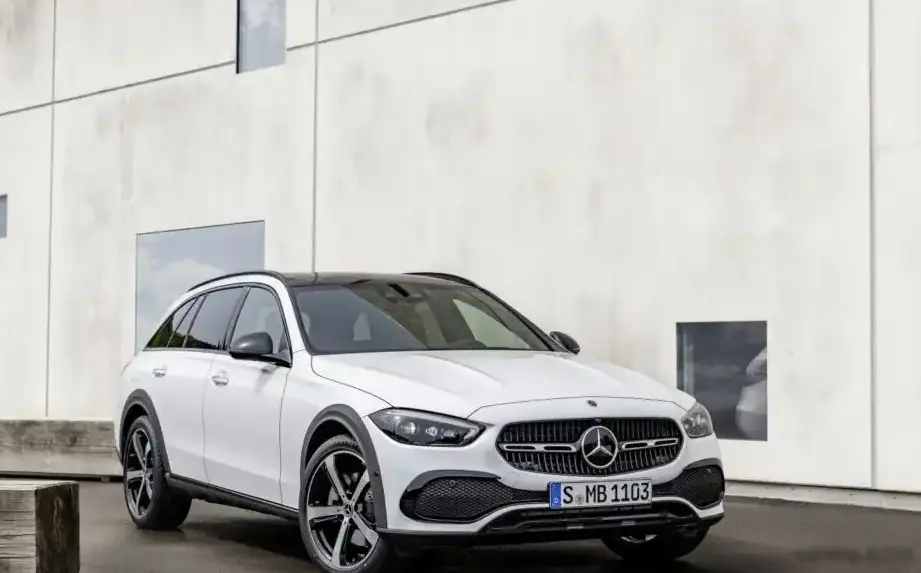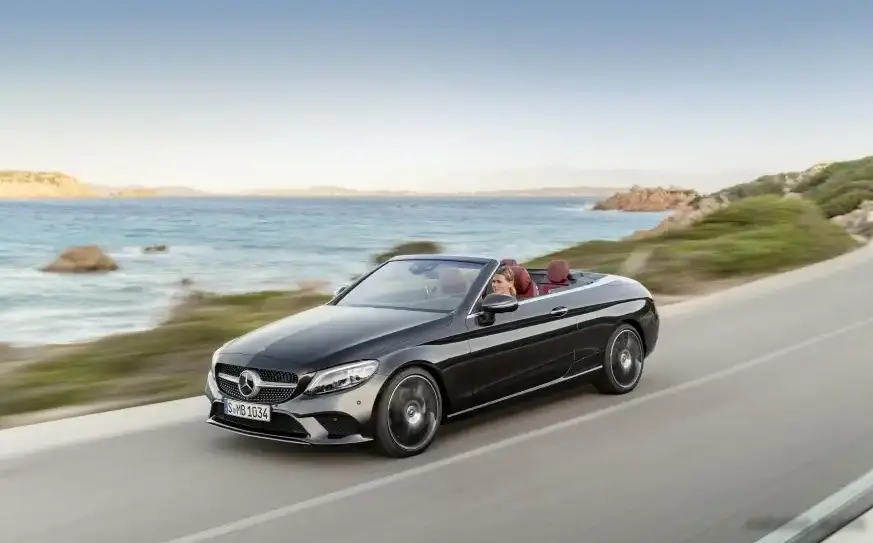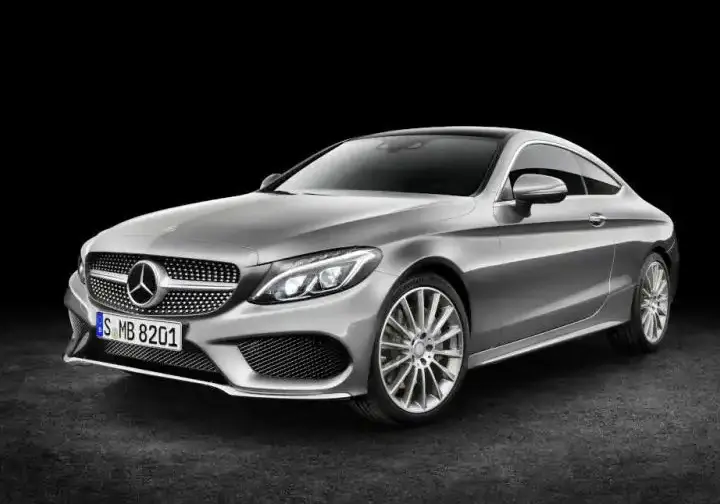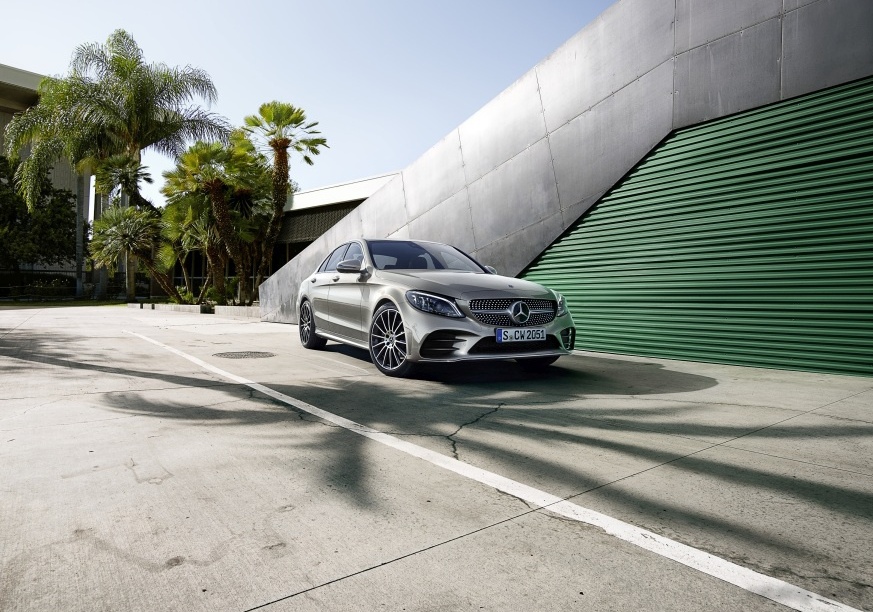
The Mercedes-Benz C 300e (320 hp) EQ Power 4MATIC, part of the W205 C-Class facelift introduced in 2018, represents a significant step in the brand’s push towards electrification. Produced from 2019 to 2021, this plug-in hybrid variant combined a 2.0-liter turbocharged gasoline engine with an electric motor, offering a blend of performance and efficiency. It was positioned as a premium offering within the C-Class range, appealing to buyers seeking a more environmentally conscious luxury sedan without sacrificing driving pleasure. The C 300e was primarily marketed in Europe and other regions with established charging infrastructure, serving as a bridge between traditional internal combustion engine vehicles and fully electric models.
Technical Specifications
| Brand | Mercedes-Benz |
| Model | C-class |
| Generation | C-class (W205, facelift 2018) |
| Type (Engine) | C 300e (320 Hp) EQ Power 4MATIC 9G-TRONIC |
| Start of production | 2019 |
| End of production | 2021 |
| Powertrain Architecture | PHEV (Plug-in Hybrid Electric Vehicle) |
| Body type | Sedan |
| Seats | 5 |
| Doors | 4 |
| Fuel consumption (combined) | 1.9-2.3 l/100 km (123.8 – 102.3 US mpg, 148.7 – 122.8 UK mpg, 52.6 – 43.5 km/l) |
| CO2 emissions | 43-52 g/km |
| Fuel Type | Petrol / electricity |
| Acceleration 0 – 100 km/h | 5.4 sec |
| Acceleration 0 – 62 mph | 5.4 sec |
| Acceleration 0 – 60 mph | 5.1 sec |
| Maximum speed | 250 km/h (155.34 mph) |
| Emission standard | Euro 6d-TEMP-EVAP-ISC |
| Weight-to-power ratio | 5.7 kg/Hp, 175.8 Hp/tonne |
| Weight-to-torque ratio | 2.6 kg/Nm, 384.6 Nm/tonne |
| Gross battery capacity | 13.5 kWh |
| Battery technology | Lithium-ion (Li-Ion) |
| Battery location | Inside the trunk |
| All-electric range | 51-58 km (31.69 – 36.04 mi) |
| Average Energy consumption | 14.5-16.2 kWh/100 km (23.34 – 26.07 kWh/100 mi, 144 – 129 MPGe, 6.9 – 6.2 km/kWh, 4.3 – 3.8 mi/kWh) |
| Max speed (electric) | 130 km/h (80.78 mph) |
| Electric motor power | 122 Hp @ 2500 rpm (440 Nm @ 0-2000 rpm / 324.53 lb.-ft. @ 0-2000 rpm) |
| System power | 320 Hp |
| System torque | 700 Nm (516.29 lb.-ft.) |
| Engine Power | 211 Hp @ 5500 rpm (350 Nm @ 1200-4000 rpm / 258.15 lb.-ft. @ 1200-4000 rpm) |
| Engine Model/Code | M 274.920 |
| Engine displacement | 1991 cm3 (121.5 cu. in.) |
| Number of cylinders | 4 |
| Engine configuration | Inline |
| Cylinder Bore | 83 mm (3.27 in.) |
| Piston Stroke | 92 mm (3.62 in.) |
| Compression ratio | 9.8:1 |
| Number of valves per cylinder | 4 |
| Fuel injection system | Direct injection |
| Engine aspiration | Turbocharger, Intercooler |
| Valvetrain | DOHC |
| Engine oil capacity | 6.5 l (6.87 US qt | 5.72 UK qt) |
| Coolant | 10.6 l (11.2 US qt | 9.33 UK qt) |
| Kerb Weight | 1820 kg (4012.41 lbs.) |
| Max. weight | 2430 kg (5357.23 lbs.) |
| Max load | 610 kg (1344.82 lbs.) |
| Trunk (boot) space (minimum) | 300 l (10.59 cu. ft.) |
| Fuel tank capacity | 50 l (13.21 US gal | 11 UK gal) |
| Permitted trailer load (with brakes) | 1800 kg (3968.32 lbs.) |
| Permitted trailer load (without brakes) | 750 kg (1653.47 lbs.) |
| Length | 4686 mm (184.49 in.) |
| Width | 1810 mm (71.26 in.) |
| Width including mirrors | 2020 mm (79.53 in.) |
| Height | 1442 mm (56.77 in.) |
| Wheelbase | 2840 mm (111.81 in.) |
| Front track | 1588 mm (62.52 in.) |
| Rear track | 1570 mm (61.81 in.) |
| Front overhang | 790 mm (31.1 in.) |
| Rear overhang | 1056 mm (41.57 in.) |
| Drivetrain Architecture | ICE and electric motor drive all four wheels, operating in full electric or mixed mode. |
| Drive wheel | All wheel drive (4×4) |
| Number of gears | 9 |
| Gearbox type | Automatic transmission G-TRONIC |
| Front suspension | Double wishbone, Transverse stabilizer |
| Rear suspension | Independent multi-link suspension, Transverse stabilizer |
| Front brakes | Ventilated discs |
| Rear brakes | Ventilated discs |
| Steering type | Steering rack and pinion |
| Power steering | Electric |
| Front tires | 225/50 R17; 225/45 R18; 225/40 R19 |
| Rear tires | 245/45 R17; 245/40 R18; 245/35 R19 |
| Front wheel rims | 7J x 17; 7.5J x 18; 7.5J x 19 |
| Rear wheel rims | 8J x 17; 8.5J x 18; 8.5J x 19 |
Powertrain & Engine Architecture
The C 300e’s powertrain centers around the M 274.920 2.0-liter inline-four cylinder gasoline engine, turbocharged for increased power output. This engine produces 211 hp and 350 Nm (258 lb-ft) of torque. Direct fuel injection and a sophisticated turbocharger system contribute to its efficiency and responsiveness. Coupled with this is a 122 hp electric motor, delivering 440 Nm (324 lb-ft) of torque, integrated between the engine and the 9G-TRONIC nine-speed automatic transmission. The electric motor draws power from a 13.5 kWh lithium-ion battery pack located under the trunk floor, slightly reducing cargo capacity. The 9G-TRONIC transmission is specifically calibrated to work seamlessly with the electric motor, providing smooth and efficient gear changes. The system intelligently manages the interplay between the gasoline engine and electric motor, allowing for all-electric driving, hybrid operation, and combined power for maximum performance.
Driving Characteristics
The C 300e offers a unique driving experience. In electric mode, it provides near-silent acceleration and a range of 51-58 km (32-36 miles) on the NEDC cycle. Switching to hybrid mode allows the car to utilize both power sources, resulting in a combined output of 320 hp and 700 Nm (516 lb-ft) of torque. This translates to a 0-60 mph time of around 5.1 seconds and a top speed of 250 km/h (155 mph). The 9G-TRONIC transmission’s wide gear ratios help to optimize efficiency and performance, providing ample torque at low speeds and comfortable cruising at highway speeds. Compared to the C 300 with only the gasoline engine, the C 300e offers significantly improved fuel economy and a more refined driving experience, particularly in urban environments. It doesn’t possess the outright sporting character of the C 43 or AMG models, but provides a compelling balance of performance and efficiency.
Equipment & Trim Levels
The C 300e typically came well-equipped, reflecting its premium positioning. Standard features included Mercedes-Benz’s MBUX infotainment system with a touchscreen display, leather upholstery, automatic climate control, and a suite of safety features such as automatic emergency braking and lane-keeping assist. Optional extras included a panoramic sunroof, premium sound system, and advanced driver-assistance systems like adaptive cruise control. Interior trim options varied, allowing buyers to personalize the cabin with different wood or aluminum accents. The dashboard configuration was similar to other W205 C-Class models, but with specific displays showing hybrid system information and energy flow.
Chassis & Braking
The C 300e utilizes a double-wishbone front suspension and an independent multi-link rear suspension, providing a comfortable and controlled ride. Stabilizer bars are fitted to both axles to reduce body roll during cornering. The braking system consists of ventilated discs on all four wheels, offering strong stopping power. ABS (Anti-lock Braking System) and electronic stability control are standard features. Due to the added weight of the battery pack, the suspension was often tuned slightly differently compared to non-hybrid C-Class models to maintain optimal handling characteristics.
Market Reception & Comparison
The C 300e was generally well-received by automotive critics, who praised its fuel efficiency, smooth ride, and refined driving experience. However, some reviewers noted the reduced trunk space due to the battery pack. Compared to the C 300 with the gasoline engine alone, the C 300e offered significantly better fuel economy, particularly in city driving. Against other plug-in hybrid rivals, such as the BMW 330e, the C 300e offered a competitive combination of performance, luxury, and range. Its reliability has been generally good, although, as with any complex hybrid system, potential issues could arise with the electric motor or battery pack over the long term.
Legacy
The Mercedes-Benz C 300e (W205) played a crucial role in establishing Mercedes-Benz’s EQ Power brand and demonstrating the company’s commitment to electrification. While production ended in 2021, the C 300e remains a popular choice in the used car market, particularly for buyers seeking a fuel-efficient and technologically advanced luxury sedan. The powertrain, while not without its complexities, has proven to be relatively reliable, and parts availability remains good. The C 300e paved the way for the fully electric C-Class models that followed, solidifying Mercedes-Benz’s position as a leader in the automotive industry’s transition to sustainable mobility.