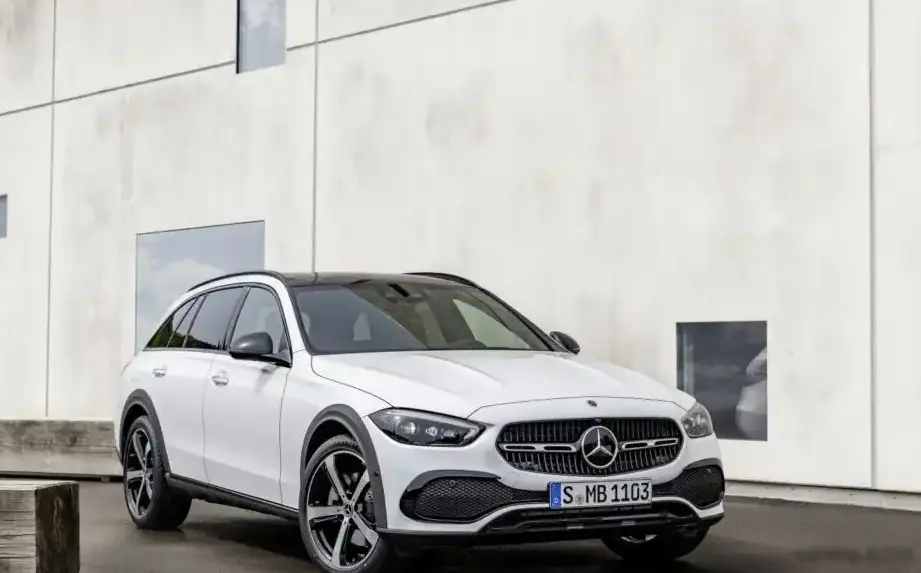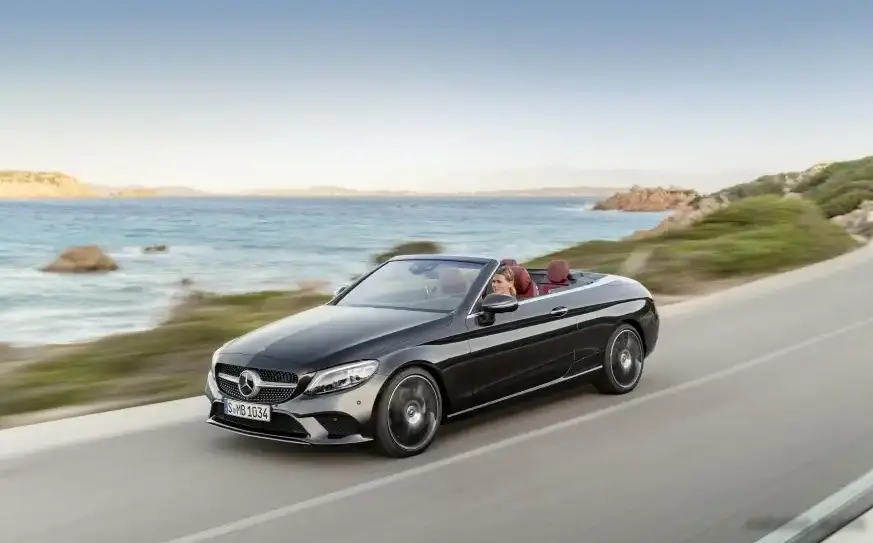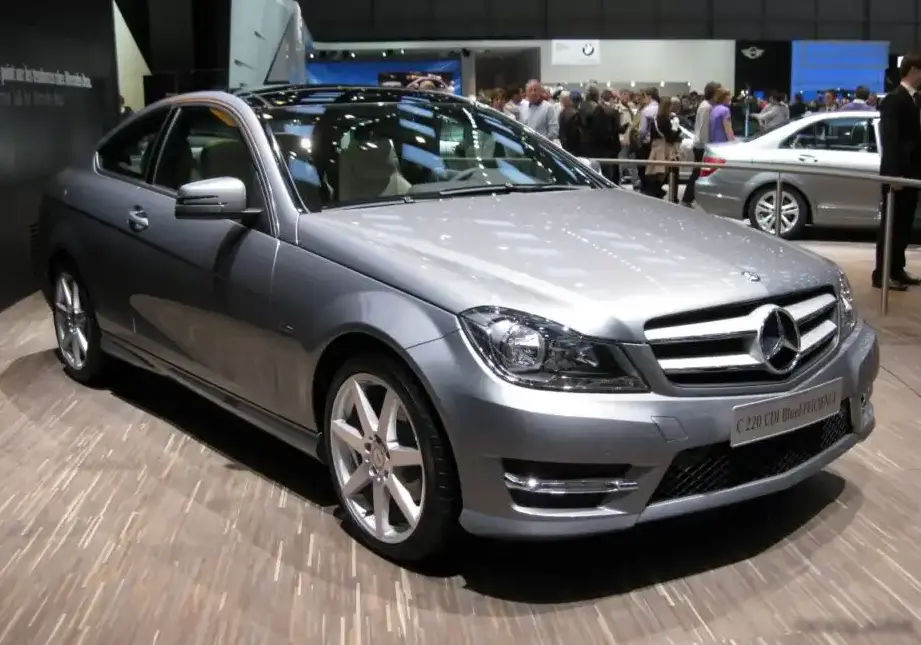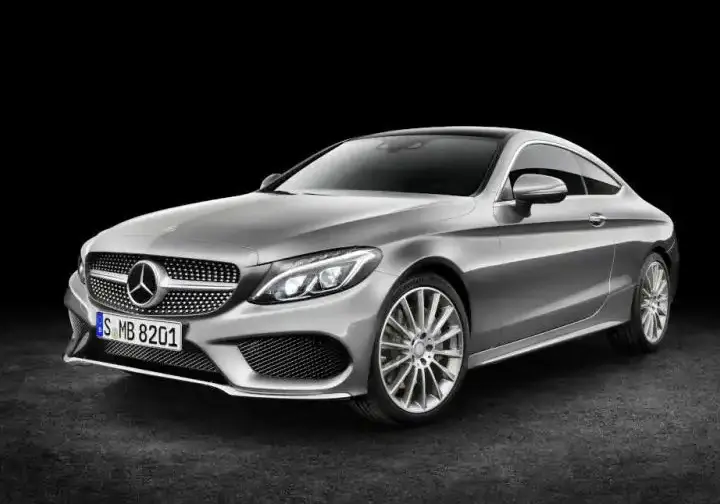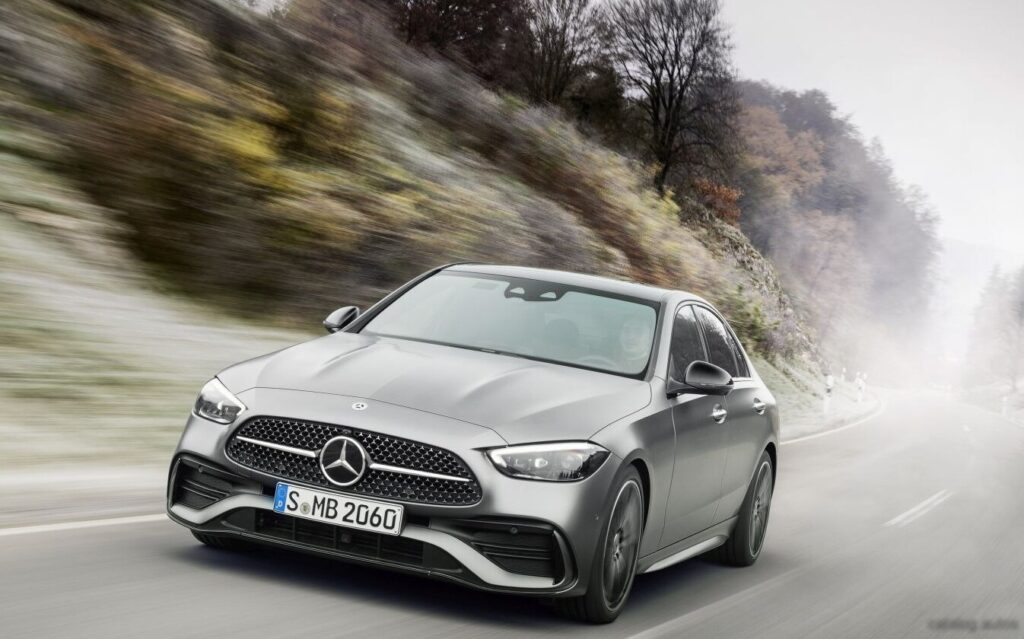
The Mercedes-Benz C-Class (W206) C 180, equipped with a 170 horsepower engine and EQ Boost mild-hybrid technology paired with a 9G-TRONIC automatic transmission, represents the entry point into the fifth generation of Mercedes-Benz’s popular compact executive car. Introduced in 2021, this variant is positioned as a fuel-efficient and technologically advanced option within the W206 lineup, catering to buyers prioritizing comfort and efficiency over outright performance. It builds upon the legacy of the C-Class as a benchmark in its segment, now incorporating modern hybrid technology and a more sophisticated interior.
Technical Specifications
| Brand | Mercedes-Benz |
| Model | C-class |
| Generation | C-class (W206) |
| Type (Engine) | C 180 (170 Hp) EQ Boost 9G-TRONIC |
| Start of production | 2021 |
| Powertrain Architecture | MHEV (Mild Hybrid Electric Vehicle) |
| Body type | Sedan |
| Seats | 5 |
| Doors | 4 |
| Combined fuel consumption (WLTP) | 6.2-7.2 l/100 km (37.9 – 32.7 US mpg, 45.6 – 39.2 UK mpg, 16.1 – 13.9 km/l) |
| CO2 emissions (WLTP) | 141-163 g/km |
| Fuel consumption (urban – NEDC) | 8.7-9.1 l/100 km (27 – 25.8 US mpg, 32.5 – 31 UK mpg, 11.5 – 11 km/l) |
| Fuel consumption (extra urban – NEDC) | 4.7-5.1 l/100 km (50 – 46.1 US mpg, 60.1 – 55.4 UK mpg, 21.3 – 19.6 km/l) |
| Fuel consumption (combined – NEDC) | 6.2-6.5 l/100 km (37.9 – 36.2 US mpg, 45.6 – 43.5 UK mpg, 16.1 – 15.4 km/l) |
| CO2 emissions (NEDC) | 141-149 g/km |
| Fuel Type | Petrol (Gasoline) |
| Acceleration 0 – 100 km/h | 8.6 sec |
| Acceleration 0 – 62 mph | 8.6 sec |
| Acceleration 0 – 60 mph | 8.2 sec |
| Maximum speed | 231 km/h (143.54 mph) |
| Emission standard | Euro 6d-ISC-FCM |
| Weight-to-power ratio | 9.1 kg/Hp, 109.7 Hp/tonne |
| Weight-to-torque ratio | 6.2 kg/Nm, 161.3 Nm/tonne |
| Gross battery capacity | 0.9 kWh |
| Battery voltage | 48 V |
| Battery technology | Lithium-ion (Li-Ion) |
| Electric motor power | 20 Hp |
| Electric motor Torque | 200 Nm (147.51 lb.-ft.) |
| Engine Power | 170 Hp @ 5500-6100 rpm |
| Engine Torque | 250 Nm @ 1800-4000 rpm (184.39 lb.-ft. @ 1800-4000 rpm) |
| Engine Displacement | 1496 cm3 (91.29 cu. in.) |
| Number of cylinders | 4 |
| Engine Configuration | Inline |
| Cylinder Bore | 80.4 mm (3.17 in.) |
| Piston Stroke | 73.7 mm (2.9 in.) |
| Compression ratio | 10:1 |
| Fuel injection system | Direct injection |
| Engine aspiration | Twin-scroll turbo, Intercooler |
| Valvetrain | DOHC |
| Engine oil capacity | 6 l (6.34 US qt | 5.28 UK qt) |
| Kerb Weight | 1550 kg (3417.17 lbs.) |
| Max. weight | 2250 kg (4960.4 lbs.) |
| Max load | 700 kg (1543.24 lbs.) |
| Trunk (boot) space – minimum | 455 l (16.07 cu. ft.) |
| Fuel tank capacity | 40 l (10.57 US gal | 8.8 UK gal) |
| Max. roof load | 100 kg (220.46 lbs.) |
| Permitted trailer load with brakes (12%) | 1800 kg (3968.32 lbs.) |
| Permitted trailer load without brakes | 750 kg (1653.47 lbs.) |
| Permitted towbar download | 75 kg (165.35 lbs.) |
| Length | 4751 mm (187.05 in.) |
| Width | 1820 mm (71.65 in.) |
| Width including mirrors | 2033 mm (80.04 in.) |
| Height | 1437 mm (56.57 in.) |
| Wheelbase | 2865 mm (112.8 in.) |
| Front track | 1582-1601 mm (62.28 – 63.03 in.) |
| Rear track | 1594-1613 mm (62.76 – 63.5 in.) |
| Front overhang | 800 mm (31.5 in.) |
| Rear overhang | 1086 mm (42.76 in.) |
| Drag coefficient (Cd) | 0.24 |
| Minimum turning circle | 10.64 m (34.91 ft.) |
| Front brakes | Ventilated discs |
| Rear brakes | Ventilated discs |
| Number of gears | 9 |
| Gearbox type | Automatic transmission G-TRONIC |
INTRODUCTION
The W206 C 180, launched in 2021, represents a significant step forward for Mercedes-Benz’s compact executive sedan. Built on the MRA II platform (shared with other contemporary Mercedes-Benz models), it offers a blend of luxury, technology, and efficiency. The C 180 variant serves as the entry-level model, designed to attract buyers seeking a premium experience without the higher price tag of more powerful trims. Its introduction marked a shift towards greater electrification, even in base models, with the inclusion of a 48-volt mild-hybrid system.
Powertrain & Engine Architecture
At the heart of the C 180 lies the M 254.915 1.5-liter inline-four cylinder engine. This engine utilizes direct fuel injection and a twin-scroll turbocharger to deliver 170 horsepower and 250 Nm (184 lb-ft) of torque. Crucially, it’s paired with a 48-volt mild-hybrid system (EQ Boost), adding an additional 20 horsepower and 200 Nm (147 lb-ft) of torque temporarily. This system allows for features like smoother start/stop operation, coasting with engine shut-off, and a small boost in acceleration. The engine’s architecture is designed for efficiency, featuring an intercooler to reduce intake air temperature and a DOHC valvetrain for optimized valve control. Power is delivered to the rear wheels via a 9G-TRONIC nine-speed automatic transmission, known for its smooth shifting and wide gear ratios.
Driving Characteristics
The C 180’s driving experience is characterized by comfort and refinement rather than outright sportiness. The 9G-TRONIC transmission is programmed for smooth, almost imperceptible gear changes, prioritizing fuel efficiency and a relaxed driving experience. While the 170 hp engine provides adequate power for everyday driving, acceleration is not particularly brisk, taking approximately 8.6 seconds to reach 62 mph (100 km/h). The EQ Boost system does provide a noticeable, albeit subtle, improvement in responsiveness during acceleration. Compared to higher-output C-Class variants like the C 300, the C 180 feels less eager to rev and requires more planning when overtaking. The rear-wheel drive configuration contributes to balanced handling, but the focus remains on providing a comfortable and composed ride.
Equipment & Trim Levels
The C 180 comes standard with a generous array of features, reflecting Mercedes-Benz’s commitment to luxury. Standard equipment typically includes a large touchscreen infotainment system (Mercedes-Benz User Experience – MBUX), a digital instrument cluster, automatic climate control, and a suite of driver-assistance systems such as automatic emergency braking and lane-keeping assist. Interior upholstery is typically Artico leather (a high-quality synthetic leather), and trim options include wood or aluminum accents. Optional extras include a panoramic sunroof, premium sound system, heated and ventilated seats, and more advanced driver-assistance features like adaptive cruise control.
Chassis & Braking
The W206 C-Class utilizes a sophisticated chassis design featuring a four-link front suspension and a multi-link rear suspension. This setup provides a comfortable ride while maintaining good handling characteristics. The C 180 typically features ventilated disc brakes on all four wheels, providing ample stopping power. ABS (Anti-lock Braking System) is standard, along with electronic stability control. The suspension is tuned for comfort, with stabilizer bars to minimize body roll during cornering. The steering is electric power-assisted, offering a precise and responsive feel.
Market Reception & Comparison
The C 180 EQ Boost has been generally well-received by automotive critics as a sensible and efficient entry point into the C-Class range. Reviewers have praised its comfortable ride, refined interior, and fuel economy. However, some have noted that the engine can feel underpowered, particularly when fully loaded or driving uphill. Compared to the C 300, the C 180 offers significantly lower running costs but sacrifices performance. Against competitors like the BMW 318i and Audi A4 35 TFSI, the C 180 holds its own in terms of luxury and technology, offering a compelling alternative for buyers prioritizing comfort and efficiency.
Legacy
The W206 C 180 EQ Boost represents a key step in Mercedes-Benz’s transition towards greater electrification. The mild-hybrid system, while not a full hybrid, provides a tangible improvement in fuel economy and reduces emissions. The 1.5-liter engine, while relatively small, has proven to be reliable and efficient. As the W206 C-Class ages, the C 180 variant is likely to become an increasingly attractive option in the used car market, offering a blend of luxury, technology, and affordability. Its relatively simple powertrain, compared to more complex hybrid or plug-in hybrid variants, may also contribute to lower long-term maintenance costs.