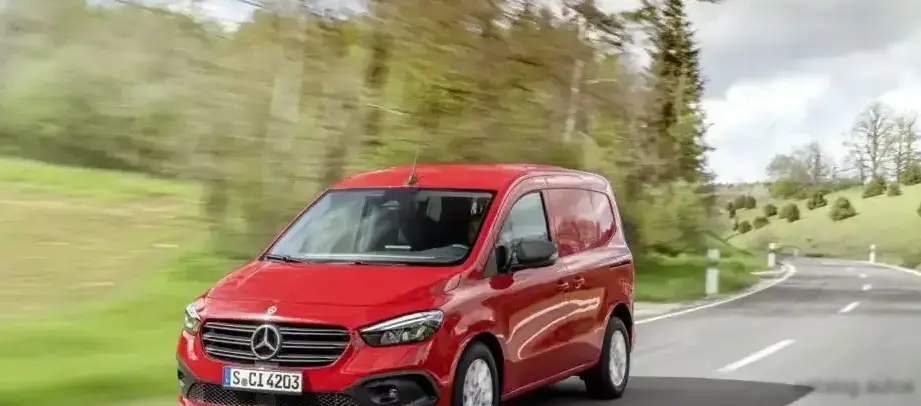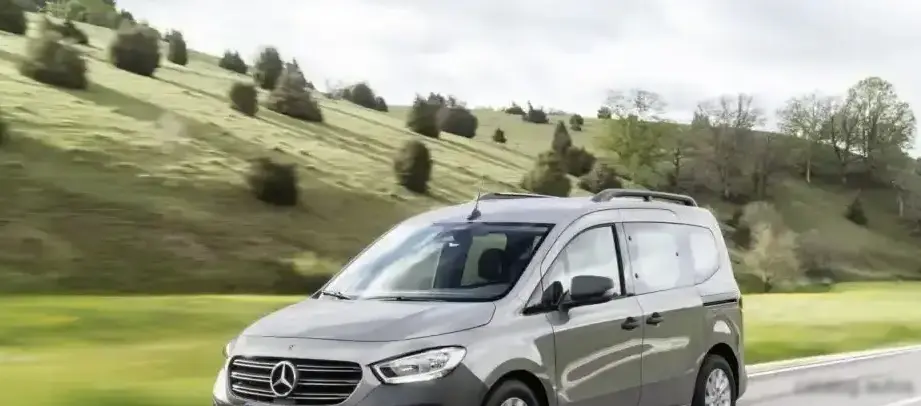
The Mercedes-Benz Citan Tourer Long 112, produced from 2015 to 2018, represents a key variant within the W415 generation of the Citan compact van. Positioned as a mid-range offering, this model combined a 1.2-liter turbocharged gasoline engine with a dual-clutch transmission (DCT) to deliver a balance of practicality, fuel efficiency, and reasonable performance for commercial and family use. The “Long” designation indicates an extended wheelbase, providing increased cargo capacity and passenger space compared to the standard Citan Tourer. This vehicle was primarily marketed in Europe, where compact vans are a popular choice for businesses and individuals needing versatile transportation.
Technical Specifications
| Brand | Mercedes-Benz |
| Model | Citan |
| Generation | Citan Tourer Long (W415) |
| Type (Engine) | 112 (114 Hp) DCT |
| Start of production | 2015 |
| End of production | 2018 |
| Powertrain Architecture | Internal Combustion engine |
| Body type | Minivan |
| Seats | 5 |
| Doors | 5 |
| Fuel consumption (economy) – urban (NEDC) | 7.9 l/100 km (29.8 US mpg, 35.8 UK mpg, 12.7 km/l) |
| Fuel consumption (economy) – extra urban (NEDC) | 5.5 l/100 km (42.8 US mpg, 51.4 UK mpg, 18.2 km/l) |
| Fuel consumption (economy) – combined (NEDC) | 6.4 l/100 km (36.8 US mpg, 44.1 UK mpg, 15.6 km/l) |
| CO2 emissions (NEDC) | 144 g/km |
| Fuel Type | Petrol (Gasoline) |
| Emission standard | Euro 6 |
| Weight-to-power ratio | 11.6 kg/Hp, 86.4 Hp/tonne |
| Weight-to-torque ratio | 6.9 kg/Nm, 143.9 Nm/tonne |
| Power | 114 Hp @ 4500 rpm |
| Power per litre | 95.6 Hp/l |
| Torque | 190 Nm @ 2000-4000 rpm (140.14 lb.-ft. @ 2000-4000 rpm) |
| Engine layout | Front, Transverse |
| Engine Model/Code | M 200.711 |
| Engine displacement | 1192 cm3 (72.74 cu. in.) |
| Number of cylinders | 4 |
| Engine configuration | Inline |
| Cylinder Bore | 72 mm (2.83 in.) |
| Piston Stroke | 73.2 mm (2.88 in.) |
| Compression ratio | 10:1 |
| Number of valves per cylinder | 4 |
| Fuel injection system | Direct injection |
| Engine aspiration | Turbocharger, Intercooler |
| Valvetrain | DOHC |
| Engine oil capacity | 4.8 l (5.07 US qt | 4.22 UK qt) |
| Coolant | 10.3 l (10.88 US qt | 9.06 UK qt) |
| Kerb Weight | 1320 kg (2910.1 lbs.) |
| Max. weight | 1920 kg (4232.88 lbs.) |
| Max load | 600 kg (1322.77 lbs.) |
| Trunk (boot) space – minimum | 685 l (24.19 cu. ft.) |
| Trunk (boot) space – maximum | 3000 l (105.94 cu. ft.) |
| Fuel tank capacity | 60 l (15.85 US gal | 13.2 UK gal) |
| Max. roof load | 100 kg (220.46 lbs.) |
| Permitted trailer load with brakes (12%) | 1350 kg (2976.24 lbs.) |
| Permitted trailer load without brakes | 695 kg (1532.21 lbs.) |
| Permitted towbar download | 75 kg (165.35 lbs.) |
| Length | 4321 mm (170.12 in.) |
| Width | 1829 mm (72.01 in.) |
| Width including mirrors | 2138 mm (84.17 in.) |
| Height | 1809 mm (71.22 in.) |
| Wheelbase | 2697 mm (106.18 in.) |
| Minimum turning circle (turning diameter) | 11.2 m (36.75 ft.) |
| Drivetrain Architecture | The Internal combustion engine (ICE) drives the front wheels of the vehicle. |
| Drive wheel | Front wheel drive |
| Number of gears and type of gearbox | 6 gears, automatic transmission DCT |
| Front suspension | Independent type McPherson |
| Rear suspension | Torsion |
| Front brakes | Ventilated discs |
| Rear brakes | Disc |
| Assisting systems | ABS (Anti-lock braking system) |
| Steering type | Steering rack and pinion |
| Power steering | Electric Steering |
| Tires size | 195/65 R15 |
| Wheel rims size | 6.5J x 15 |
Powertrain & Engine Architecture
The Citan 112 utilizes the Mercedes-Benz M 200.711 engine, a 1.2-liter inline-four cylinder gasoline engine. This engine is part of the Renault-Nissan-Mercedes-Benz cooperative engine program, sharing significant design elements with engines found in Renault and Nissan vehicles. The engine features direct fuel injection and a turbocharger with an intercooler, enabling it to produce 114 horsepower at 4500 rpm and 190 Nm (140 lb-ft) of torque between 2000 and 4000 rpm. The dual-clutch transmission (DCT), a six-speed unit, provides quick and smooth gear changes, contributing to improved fuel efficiency and a more engaging driving experience compared to a traditional automatic transmission. The DCT’s programming prioritizes fuel economy, with taller gear ratios in the upper gears.
Driving Characteristics
The 1.8L Automatic Citan Tourer Long offers adequate performance for everyday driving. While not particularly sporty, the turbocharger provides a noticeable boost in power when needed, making overtaking and merging onto highways manageable. The DCT transmission contributes to a responsive feel, although some drivers may notice slight hesitation at low speeds. The extended wheelbase of the Long version does impact handling somewhat, making it less agile than the standard Citan. However, the trade-off is a more comfortable ride and significantly increased cargo space. Compared to the diesel-powered Citan variants, the 112 offers a quieter and smoother driving experience, but sacrifices fuel economy.
Equipment & Trim Levels
The Citan Tourer Long 112 typically came equipped with features such as air conditioning, a basic audio system with USB connectivity, power windows, and central locking. Safety features included ABS, electronic stability control, and driver and passenger airbags. Optional extras included a touchscreen infotainment system with navigation, rear parking sensors, cruise control, and upgraded interior trim. Interior upholstery was typically cloth, with durable and practical materials used throughout the cabin. The dashboard layout was functional and straightforward, prioritizing usability over aesthetics.
Chassis & Braking
The Citan Tourer Long utilizes a McPherson strut front suspension and a torsion beam rear suspension. This setup provides a reasonable balance between ride comfort and handling. The front brakes are ventilated discs, while the rear brakes are solid discs. ABS (Anti-lock Braking System) is standard, enhancing braking performance and stability, particularly on slippery surfaces. The steering is electrically assisted, providing light and precise control.
Market Reception & Comparison
The Citan Tourer Long 112 was generally well-received by critics as a practical and versatile van. Its fuel economy was considered competitive within its class, although the diesel variants offered significantly better mileage. Reliability was generally good, benefiting from Mercedes-Benz’s reputation for build quality. Compared to the more powerful diesel versions, the 112 was seen as a more affordable and accessible option for those who didn’t require maximum performance or towing capacity. It competed with other compact vans such as the Volkswagen Caddy, Fiat Doblo, and Citroën Berlingo.
Legacy
The Mercedes-Benz Citan Tourer Long 112 remains a relatively common sight on European roads. The M 200.711 engine, while not known for being exceptionally durable, has proven to be reasonably reliable with proper maintenance. On the used car market, these vans are often sought after for their practicality, affordability, and relatively low running costs. The DCT transmission, if properly maintained, is generally reliable, but can be expensive to repair if issues arise. The Citan’s blend of Mercedes-Benz engineering and Renault-Nissan components has made it a popular choice for both commercial and private buyers.