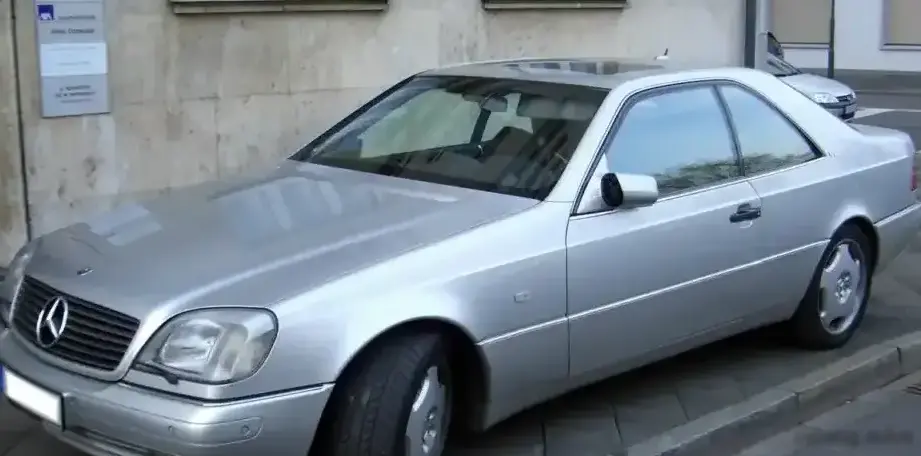
The Mercedes-Benz CL 500, specifically the C215 facelift model produced from 2003 to 2006, represents a high point in grand touring luxury and performance for the German automaker. Positioned as a flagship coupe, the CL 500 occupied the upper echelon of the CL-Class range, offering a blend of sophisticated technology, powerful V8 engine, and a supremely comfortable driving experience. This iteration of the CL-Class, benefitting from the 2002 facelift, addressed some criticisms of the initial C215 launch and solidified its reputation as a desirable and technologically advanced vehicle. It was primarily marketed towards affluent buyers seeking a luxurious and capable grand tourer.
Technical Specifications
| Brand | Mercedes-Benz |
| Model | CL |
| Generation | CL (C215, facelift 2002) |
| Type (Engine) | CL 500 V8 (306 Hp) 7G-TRONIC |
| Start of production | September, 2003 |
| End of production | February, 2006 |
| Powertrain Architecture | Internal Combustion engine |
| Body type | Coupe |
| Seats | 4 |
| Doors | 2 |
| Fuel consumption (urban) | 17.3-18.2 l/100 km (13.6 – 12.9 US mpg, 16.3 – 15.5 UK mpg, 5.8 – 5.5 km/l) |
| Fuel consumption (extra urban) | 8-8.6 l/100 km (29.4 – 27.4 US mpg, 35.3 – 32.8 UK mpg, 12.5 – 11.6 km/l) |
| Fuel consumption (combined) | 11.4-12.1 l/100 km (20.6 – 19.4 US mpg, 24.8 – 23.3 UK mpg, 8.8 – 8.3 km/l) |
| CO2 emissions | 270-290 g/km |
| Fuel Type | Petrol (Gasoline) |
| Acceleration 0 – 100 km/h | 6.3 sec |
| Acceleration 0 – 62 mph | 6.3 sec |
| Acceleration 0 – 60 mph | 6 sec |
| Maximum speed | 250 km/h (155.34 mph) – Electronically limited |
| Emission standard | Euro 4 |
| Weight-to-power ratio | 5.9 kg/Hp, 169.1 Hp/tonne |
| Weight-to-torque ratio | 3.9 kg/Nm, 254.1 Nm/tonne |
| Power | 306 Hp @ 5600 rpm |
| Torque | 460 Nm @ 2700-4250 rpm (339.28 lb.-ft. @ 2700-4250 rpm) |
| Maximum engine speed | 6000 rpm |
| Engine layout | Front, Longitudinal |
| Engine Model/Code | M 113.960 |
| Engine displacement | 4966 cm3 (303.04 cu. in.) |
| Number of cylinders | 8 |
| Engine configuration | V-engine |
| Cylinder Bore | 97 mm (3.82 in.) |
| Piston Stroke | 84 mm (3.31 in.) |
| Compression ratio | 10:1 |
| Number of valves per cylinder | 3 |
| Fuel injection system | Multi-port manifold injection |
| Engine aspiration | Naturally aspirated engine |
| Valvetrain | SOHC |
| Engine oil capacity | 8 l (8.45 US qt | 7.04 UK qt) |
| Coolant capacity | 11.5 l (12.15 US qt | 10.12 UK qt) |
| Kerb Weight | 1810 kg (3990.37 lbs.) |
| Max. weight | 2340 kg (5158.82 lbs.) |
| Max load | 530 kg (1168.45 lbs.) |
| Trunk (boot) space (minimum) | 450 l (15.89 cu. ft.) |
| Fuel tank capacity | 88 l (23.25 US gal | 19.36 UK gal) |
| Max. roof load | 100 kg (220.46 lbs.) |
| Length | 4993 mm (196.57 in.) |
| Width | 1857 mm (73.11 in.) |
| Width including mirrors | 2104 mm (82.83 in.) |
| Height | 1398 mm (55.04 in.) |
| Wheelbase | 2885 mm (113.58 in.) |
| Front track | 1577 mm (62.09 in.) |
| Rear track | 1578 mm (62.13 in.) |
| Front overhang | 922 mm (36.3 in.) |
| Rear overhang | 1186 mm (46.69 in.) |
| Drag coefficient (Cd) | 0.28 |
| Minimum turning circle | 11.5 m (37.73 ft.) |
| Drivetrain Architecture | Rear wheel drive |
| Number of gears | 7 |
| Gearbox type | Automatic transmission |
| Front suspension | Hydraulic elements, Double wishbone, Transverse stabilizer |
| Rear suspension | Hydraulic elements, Independent multi-link suspension, Transverse stabilizer |
| Front brakes | Ventilated discs, 330 mm |
| Rear brakes | Ventilated discs, 300 mm |
| Assisting systems | ABS (Anti-lock braking system) |
| Steering type | Steering rack and pinion |
| Power steering | Hydraulic Steering |
| Tires size | 225/55 R17 |
| Wheel rims size | 7.5J x 17 |
Powertrain & Engine Architecture
The CL 500 was powered by the M113.960 5.0-liter naturally aspirated V8 engine. This engine, a cornerstone of Mercedes-Benz’s performance lineup in the early 2000s, featured a three-valve-per-cylinder (two intake, one exhaust) SOHC design and multi-port fuel injection. The engine produced 306 horsepower at 5600 rpm and 460 Nm (339 lb-ft) of torque between 2700 and 4250 rpm. The engine’s architecture prioritized smooth power delivery and refinement over outright peak power, aligning with the CL-Class’s grand touring character. Paired with the engine was the 7G-TRONIC seven-speed automatic transmission, a significant advancement over previous Mercedes-Benz automatics. This transmission offered smoother shifts, improved fuel efficiency, and a wider range of gear ratios for optimized performance and comfort. The 7G-TRONIC also featured a manual shift mode, allowing drivers some control over gear selection.
Driving Characteristics
The CL 500’s driving experience was defined by its effortless power and luxurious ride. The 7G-TRONIC transmission, while not as sporty as some contemporary dual-clutch transmissions, provided smooth and almost imperceptible gear changes. Acceleration to 60 mph took approximately 6 seconds, and the electronically limited top speed of 155 mph was more than sufficient for most drivers. Compared to the CL 600 with its V12 engine, the CL 500 offered a more manageable power delivery and slightly better fuel economy. Against the diesel-powered CL 500 CDI, the gasoline version lacked the low-end torque of the diesel but offered a more refined and responsive engine character. The suspension, utilizing Mercedes-Benz’s Active Body Control (ABC) system, provided a remarkably smooth and stable ride, minimizing body roll in corners.
Equipment & Trim Levels
The CL 500 came standard with a comprehensive array of luxury features, including leather upholstery, wood trim, dual-zone automatic climate control, a premium sound system, and power-adjustable seats with memory function. The facelifted models (2002 onwards) also benefited from updated infotainment systems and improved interior materials. Optional extras included features like Distronic adaptive cruise control, Parktronic parking assistance, massaging seats, and a panoramic sunroof. Interior color combinations were extensive, allowing buyers to personalize their vehicles to a high degree. The standard upholstery was typically a high-quality leather, with options for different colors and stitching patterns.
Chassis & Braking
The CL 500’s chassis was designed for both comfort and handling. The Active Body Control (ABC) suspension system, a sophisticated hydraulic suspension, actively adjusted damping and ride height to maintain a level ride even during spirited driving. The braking system consisted of ventilated disc brakes on all four wheels, providing ample stopping power. Anti-lock braking system (ABS) and electronic stability control (ESP) were standard features, enhancing safety and control. The CL 500 featured a robust build quality and a relatively heavy curb weight of around 3990 lbs, contributing to its stable and planted feel on the road.
Market Reception & Comparison
The CL 500 was generally well-received by automotive critics, who praised its luxurious interior, smooth ride, and powerful engine. However, some reviewers noted that the car’s size and weight could make it feel cumbersome in tight spaces. Compared to its rivals, such as the BMW 7 Series Coupe and the Aston Martin DB9, the CL 500 offered a unique blend of luxury, technology, and performance. Fuel economy, while not a priority for most buyers in this segment, was reasonable for a V8-powered coupe of its size. Reliability was generally good, although the complex ABC suspension system could be prone to expensive repairs if not properly maintained.
Legacy
Today, the Mercedes-Benz CL 500 (C215 facelift) remains a desirable grand tourer for enthusiasts. Its combination of luxury, performance, and advanced technology has ensured its continued appeal. While maintenance costs can be higher than for more mainstream vehicles, particularly due to the ABC suspension, well-maintained examples command respectable prices in the used car market. The M113 V8 engine is known for its durability and relatively straightforward maintenance, making it a popular choice among Mercedes-Benz enthusiasts. The CL 500 represents a high watermark in Mercedes-Benz coupe design and engineering, and it continues to be appreciated for its timeless elegance and refined driving experience.