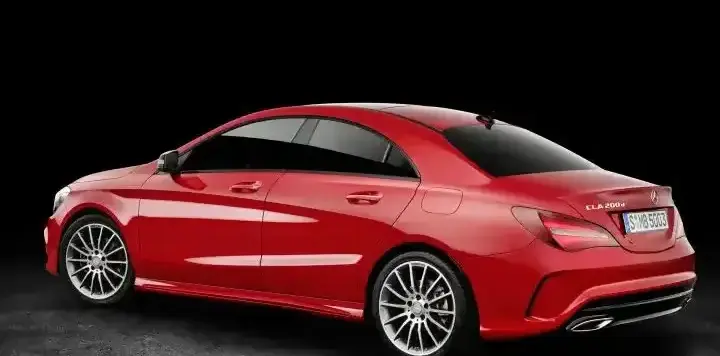
The Mercedes-Benz CLA 200, specifically the facelifted version produced from April 2016 to May 2018 (C117 chassis), represented the entry point into the CLA Coupe range. Positioned as a stylish and relatively affordable option within the compact luxury segment, the CLA 200 aimed to attract younger buyers and those new to the Mercedes-Benz brand. It formed part of the W176 A-Class and X117 GLA family, all built on the MFA (Modular Front-wheel Drive Architecture) platform. This variant offered a balance between fuel efficiency, reasonable performance, and the premium features expected of a Mercedes-Benz.
Technical Specifications
| Brand | Mercedes-Benz |
| Model | CLA |
| Generation | CLA Coupe (C117, facelift 2016) |
| Type (Engine) | CLA 200 (156 Hp) |
| Start of production | April, 2016 |
| End of production | May, 2018 |
| Powertrain Architecture | Internal Combustion engine |
| Body type | Coupe |
| Seats | 5 |
| Doors | 4 |
| Fuel consumption (urban) | 7.7-7.5 l/100 km (30.5 – 31.4 US mpg) |
| Fuel consumption (extra urban) | 4.6-4.3 l/100 km (51.1 – 54.7 US mpg) |
| Fuel consumption (combined) | 5.7-5.5 l/100 km (41.3 – 42.8 US mpg) |
| CO2 emissions | 133-126 g/km |
| Fuel Type | Petrol (Gasoline) |
| Acceleration 0 – 100 km/h | 8.2 sec |
| Acceleration 0 – 62 mph | 8.2 sec |
| Acceleration 0 – 60 mph | 7.8 sec |
| Maximum speed | 230 km/h (142.92 mph) |
| Emission standard | Euro 6 |
| Weight-to-power ratio | 8.5 kg/Hp, 118.2 Hp/tonne |
| Weight-to-torque ratio | 5.3 kg/Nm, 189.4 Nm/tonne |
| Power | 156 Hp @ 5300 rpm |
| Torque | 250 Nm @ 1250-4000 rpm (184.39 lb.-ft. @ 1250-4000 rpm) |
| Engine layout | Front, Transverse |
| Engine Model/Code | M 270.910 |
| Engine displacement | 1595 cm3 (97.33 cu. in.) |
| Number of cylinders | 4 |
| Engine configuration | Inline |
| Compression ratio | 10.3:1 |
| Number of valves per cylinder | 4 |
| Fuel injection system | Direct injection |
| Engine aspiration | Turbocharger, Intercooler |
| Engine oil capacity | 5.8 l (6.13 US qt | 5.1 UK qt) |
| Coolant capacity | 7 l (7.4 US qt | 6.16 UK qt) |
| Kerb Weight | 1320 kg (2910.1 lbs) |
| Max. weight | 1920 kg (4232.88 lbs) |
| Max load | 600 kg (1322.77 lbs) |
| Trunk (boot) space – minimum | 470 l (16.6 cu. ft) |
| Fuel tank capacity | 50 l (13.21 US gal | 11 UK gal) |
| Max. roof load | 100 kg (220.46 lbs) |
| Permitted trailer load with brakes (12%) | 1400 kg (3086.47 lbs) |
| Permitted trailer load without brakes | 695 kg (1532.21 lbs) |
| Length | 4640 mm (182.68 in) |
| Width | 1777 mm (69.96 in) |
| Width including mirrors | 2032 mm (80 in) |
| Height | 1432 mm (56.38 in) |
| Wheelbase | 2699 mm (106.26 in) |
| Front track | 1549 mm (60.98 in) |
| Rear track | 1547 mm (60.91 in) |
| Drag coefficient (Cd) | 0.26 |
| Minimum turning circle | 11.00 m (36.09 ft) |
| Drivetrain Architecture | Front wheel drive |
| Number of gears and type of gearbox | 6 gears, manual transmission |
| Front suspension | Independent type McPherson |
| Rear suspension | Independent multi-link suspension |
| Front brakes | Ventilated discs |
| Rear brakes | Disc |
| Assisting systems | ABS (Anti-lock braking system) |
| Steering type | Steering rack and pinion |
| Power steering | Electric Steering |
| Tires size | 205/55 R16 |
| Wheel rims size | 16 |
Powertrain & Engine Architecture
The CLA 200 facelift utilized the M 270.910 1.6-liter inline-four cylinder engine. This engine was a key component of Mercedes-Benz’s modular engine family, known for its compact size and efficiency. It featured direct fuel injection, a single turbocharger with an intercooler, and variable valve timing on both the intake and exhaust sides. The engine produced 156 horsepower at 5300 rpm and 250 Nm (184 lb-ft) of torque between 1250 and 4000 rpm. The engine’s relatively low compression ratio of 10.3:1 helped to broaden its operating range and improve fuel economy. The engine was transversely mounted in the front of the vehicle, driving the front wheels. The standard transmission for this variant was a 6-speed manual, although a 7-speed dual-clutch automatic (7G-DCT) was a popular optional upgrade.
Driving Characteristics
The CLA 200 with the 1.6-liter engine and manual transmission offered adequate, but not exhilarating, performance. Acceleration from 0 to 60 mph took around 7.8 seconds, and the top speed was electronically limited to 142.92 mph. The engine’s turbocharger provided a noticeable boost in power at lower rpm, making it reasonably responsive in everyday driving situations. However, compared to higher-spec CLA models like the CLA 250 or CLA 45 AMG, the 200 felt noticeably less powerful. The 6-speed manual transmission was well-matched to the engine’s torque curve, offering smooth shifts and a decent level of driver engagement. The automatic transmission, while providing convenience, could sometimes feel hesitant during quick acceleration. The front-wheel-drive configuration provided good traction in most conditions, but could exhibit some torque steer under hard acceleration.
Equipment & Trim Levels
The CLA 200 typically came standard with features such as automatic climate control, a multimedia system with a 5.5-inch display screen, Bluetooth connectivity, and a suite of safety features including ABS, ESP, and multiple airbags. Interior upholstery was typically Artico leatherette, with options for genuine leather upgrades. Common optional extras included a larger multimedia display screen, navigation system, panoramic sunroof, and various driver assistance systems like lane keeping assist and blind spot monitoring. Trim levels were relatively simple, with most customization options available as individual add-ons rather than distinct packages.
Chassis & Braking
The CLA 200 utilized an independent McPherson strut suspension at the front and an independent multi-link suspension at the rear. This setup provided a good balance between ride comfort and handling. The suspension was tuned to prioritize comfort over outright sportiness, resulting in a relatively smooth ride quality. Brakes consisted of ventilated discs at the front and solid discs at the rear. ABS (Anti-lock Braking System) and ESP (Electronic Stability Program) were standard features, providing enhanced safety and control. The steering was electrically assisted, offering a light and precise feel.
Market Reception & Comparison
The CLA 200 was generally well-received by critics as an attractive and affordable entry point into the Mercedes-Benz lineup. However, some reviewers noted that the engine lacked the refinement and power of its competitors, particularly those from Audi and BMW. Fuel economy was a strong point, with the CLA 200 achieving combined fuel consumption figures of around 41.3-42.8 US mpg. Compared to the CLA 250, the 200 offered significantly lower performance but also a lower price tag and slightly better fuel economy. The CLA 200 targeted buyers who prioritized style and brand prestige over outright performance.
Legacy
The M 270 engine family, including the 1.6-liter unit found in the CLA 200, has proven to be generally reliable, although some owners have reported issues with the timing chain and oil leaks over the long term. The CLA 200 remains a popular choice in the used car market, particularly among those seeking a stylish and relatively affordable luxury coupe. Its combination of fuel efficiency, comfort, and brand appeal continues to make it an attractive option for budget-conscious buyers.