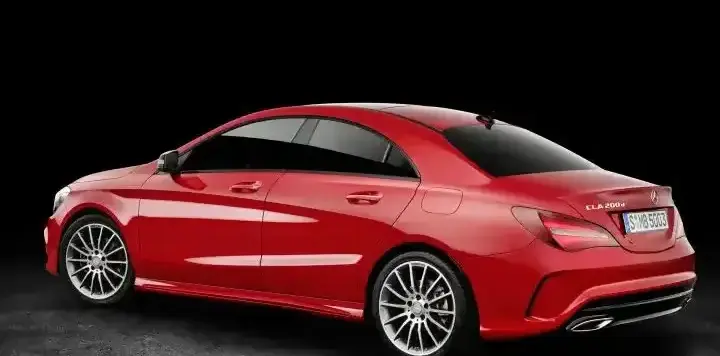
The Mercedes-Benz CLA 250 Sport DCT, produced from April 2016 to May 2018, represents a compelling entry point into the premium compact coupe market. Part of the C117 CLA Coupe facelift generation, this variant occupied a mid-range position within the CLA lineup, offering a balance of performance, technology, and relative affordability. It aimed to attract buyers seeking a stylish and sporty vehicle with the convenience of an automatic transmission. The CLA, in general, was Mercedes-Benz’s attempt to capture a younger demographic with a more accessible price point than their traditional sedan offerings, and the 250 Sport DCT was a key component of that strategy.
Technical Specifications
| Brand | Mercedes-Benz |
| Model | CLA |
| Generation | CLA Coupe (C117, facelift 2016) |
| Type (Engine) | CLA 250 (218 Hp) Sport DCT |
| Start of production | April, 2016 |
| End of production | May, 2018 |
| Powertrain Architecture | Internal Combustion engine |
| Body type | Coupe |
| Seats | 5 |
| Doors | 4 |
| Fuel consumption (urban) | 8.1 l/100 km (29 US mpg, 34.9 UK mpg, 12.3 km/l) |
| Fuel consumption (extra urban) | 5 l/100 km (47 US mpg, 56.5 UK mpg, 20 km/l) |
| Fuel consumption (combined) | 6.2 l/100 km (37.9 US mpg, 45.6 UK mpg, 16.1 km/l) |
| CO2 emissions | 143 g/km |
| Fuel Type | Petrol (Gasoline) |
| Acceleration 0 – 100 km/h | 6.4 sec |
| Acceleration 0 – 62 mph | 6.4 sec |
| Acceleration 0 – 60 mph | 6.1 sec |
| Maximum speed | 250 km/h (155.34 mph) |
| Emission standard | Euro 6 |
| Weight-to-power ratio | 6.5 kg/Hp, 154.1 Hp/tonne |
| Weight-to-torque ratio | 4 kg/Nm, 247.3 Nm/tonne |
| Power | 218 Hp @ 5500 rpm |
| Power per litre | 109.5 Hp/l |
| Torque | 350 Nm @ 1200-4000 rpm (258.15 lb.-ft. @ 1200-4000 rpm) |
| Engine layout | Front, Transverse |
| Engine Model/Code | M 270.920 |
| Engine displacement | 1991 cm3 (121.5 cu. in.) |
| Number of cylinders | 4 |
| Engine configuration | Inline |
| Compression ratio | 9.8:1 |
| Number of valves per cylinder | 4 |
| Fuel injection system | Direct injection |
| Engine aspiration | Turbocharger, Intercooler |
| Engine oil capacity | 5.6 l (5.92 US qt | 4.93 UK qt) |
| Coolant | 7.8 l (8.24 US qt | 6.86 UK qt) |
| Kerb Weight | 1415 kg (3119.54 lbs.) |
| Max. weight | 1965 kg (4332.08 lbs.) |
| Max load | 550 kg (1212.54 lbs.) |
| Trunk (boot) space – minimum | 470 l (16.6 cu. ft.) |
| Fuel tank capacity | 56 l (14.79 US gal | 12.32 UK gal) |
| Max. roof load | 100 kg (220.46 lbs.) |
| Length | 4640 mm (182.68 in.) |
| Width | 1777 mm (69.96 in.) |
| Width including mirrors | 2032 mm (80 in.) |
| Height | 1432 mm (56.38 in.) |
| Wheelbase | 2699 mm (106.26 in.) |
| Front track | 1549 mm (60.98 in.) |
| Rear (Back) track | 1547 mm (60.91 in.) |
| Drag coefficient (Cd) | 0.28 |
| Minimum turning circle | 11.00 m (36.09 ft.) |
| Drivetrain Architecture | Front wheel drive |
| Number of gears and type of gearbox | 7 gears, automatic transmission G-DCT |
| Front suspension | Independent type McPherson |
| Rear suspension | Independent multi-link suspension |
| Front brakes | Ventilated discs |
| Rear brakes | Disc |
| Assisting systems | ABS (Anti-lock braking system) |
| Steering type | Steering rack and pinion |
| Power steering | Electric Steering |
| Tires size | 235/40 R18 |
| Wheel rims size | 18 |
Powertrain & Engine Architecture
The CLA 250 Sport DCT is powered by the M270.920 2.0-liter inline-four cylinder engine. This engine is a key member of Mercedes-Benz’s modular engine family, known for its efficiency and relatively compact size. It utilizes direct fuel injection and a single turbocharger with an intercooler to produce 218 horsepower at 5500 rpm and 350 Nm (258 lb-ft) of torque available from a low 1200 rpm all the way to 4000 rpm. The engine’s aluminum block and head contribute to weight savings. The 7G-DCT (7-speed dual-clutch transmission) is a crucial component of this variant. This transmission offers quick and smooth gear changes, enhancing both performance and fuel economy. The dual-clutch design allows for pre-selection of the next gear, minimizing interruption in power delivery.
Driving Characteristics
The CLA 250 Sport DCT delivers a responsive driving experience, particularly when compared to lower-powered CLA variants. The readily available torque from the turbocharged engine provides brisk acceleration, with 0-60 mph times around 6.1 seconds. While not a dedicated performance model, the 250 offers ample power for everyday driving and highway merging. The 7G-DCT transmission contributes to a seamless driving experience, although some drivers may find the shift logic slightly conservative in certain situations. Compared to the manual transmission option, the DCT provides greater convenience, especially in urban traffic. It doesn’t quite match the raw acceleration of the CLA 45 AMG, but it offers a more refined and comfortable ride.
Equipment & Trim Levels
The “Sport” designation in the CLA 250 Sport DCT indicated a higher level of standard equipment. This typically included features like sport seats, a sport steering wheel, and unique exterior styling elements such as a rear spoiler and chrome exhaust tips. Standard interior features included automatic climate control, a multimedia system with a 7-inch display screen, and Bluetooth connectivity. Optional extras included a larger 8.4-inch display screen, navigation, a panoramic sunroof, and a premium sound system. Leather upholstery was also available as an upgrade. The interior design aimed for a modern and sophisticated aesthetic, with a focus on quality materials and intuitive controls.
Chassis & Braking
The CLA 250 Sport DCT utilizes an independent McPherson strut front suspension and a multi-link rear suspension. This setup provides a good balance between ride comfort and handling precision. The suspension is tuned to be slightly firmer than in base CLA models, reflecting the “Sport” designation. Braking duties are handled by ventilated discs at the front and solid discs at the rear. Anti-lock braking system (ABS) is standard. The steering is electrically assisted, providing a light and responsive feel. The chassis is designed to minimize weight and maximize rigidity, contributing to improved handling and stability.
Market Reception & Comparison
The CLA 250 Sport DCT was generally well-received by automotive critics. It was praised for its stylish design, comfortable interior, and responsive powertrain. However, some reviewers noted that the rear seat space was somewhat limited due to the coupe-like roofline. Compared to the CLA 200, the 250 offered a significant performance upgrade. Against competitors like the Audi A3 and BMW 2 Series, the CLA 250 offered a compelling combination of features and value. Fuel economy was competitive for its class, averaging around 38 mpg combined. Reliability reports have been generally positive, although some owners have reported minor issues with the infotainment system.
Legacy
The Mercedes-Benz CLA 250 Sport DCT has proven to be a relatively reliable vehicle in the used car market. The M270 engine, while not without its potential issues (such as carbon buildup with infrequent oil changes), is generally considered durable. The 7G-DCT transmission has also proven to be robust when properly maintained. Today, these vehicles represent an affordable entry point into the Mercedes-Benz brand, offering a stylish and well-equipped package. Their continued popularity in the used car market is a testament to their enduring appeal and overall quality.