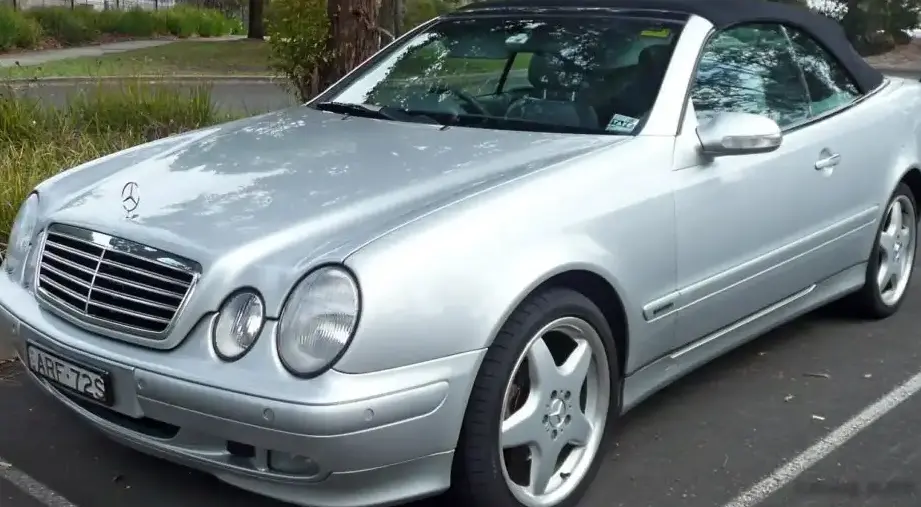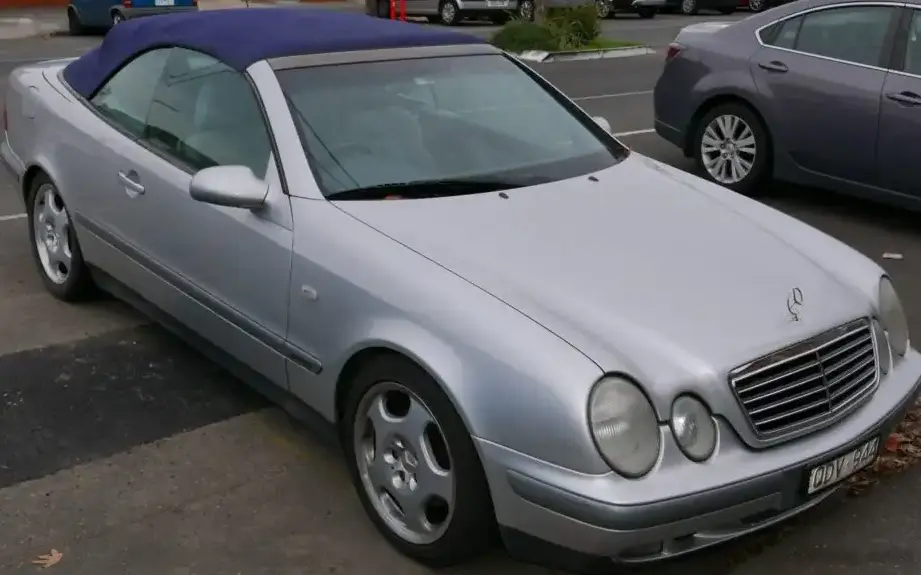
The Mercedes-Benz CLK 200 Kompressor, produced between May 1998 and August 1999, was a key variant within the A208 CLK series. Positioned as a mid-range offering in the lineup, it aimed to provide a balance between performance and affordability within the stylish CLK convertible and coupe body styles. This model represented Mercedes-Benz’s attempt to broaden the appeal of the CLK platform, offering a more accessible entry point compared to the more powerful CLK 320 and CLK 430 models. The CLK 200 Kompressor utilized a supercharged four-cylinder engine paired with a five-speed automatic transmission, a combination designed for comfortable cruising and reasonable fuel efficiency.
Technical Specifications
| Brand | Mercedes-Benz |
| Model | CLK |
| Generation | CLK (A208) |
| Type (Engine) | CLK 200 Kompressor (192 Hp) 5G-TRONIC |
| Start of production | May, 1998 |
| End of production | August, 1999 |
| Powertrain Architecture | Internal Combustion engine |
| Body type | Cabriolet |
| Seats | 4 |
| Doors | 2 |
| Fuel consumption (urban) | 14.6 l/100 km (16.1 US mpg, 19.3 UK mpg) |
| Fuel consumption (extra urban) | 7.8 l/100 km (30.2 US mpg, 36.2 UK mpg) |
| Fuel consumption (combined) | 10.3 l/100 km (22.8 US mpg, 27.4 UK mpg) |
| Fuel Type | Petrol (Gasoline) |
| Acceleration 0 – 100 km/h | 9.2 sec |
| Acceleration 0 – 62 mph | 9.2 sec |
| Acceleration 0 – 60 mph | 8.7 sec |
| Maximum speed | 225 km/h (139.81 mph) |
| Emission standard | Euro 3 |
| Weight-to-power ratio | 7.9 kg/Hp |
| Weight-to-torque ratio | 5.6 kg/Nm |
| Power | 192 Hp @ 5300 rpm |
| Torque | 270 Nm @ 2500-4800 rpm (199.14 lb.-ft. @ 2500-4800 rpm) |
| Engine layout | Front, Longitudinal |
| Engine Model/Code | M 111.944 |
| Engine displacement | 1998 cm3 (121.93 cu. in.) |
| Number of cylinders | 4 |
| Engine configuration | Inline |
| Cylinder Bore | 89.9 mm (3.54 in.) |
| Piston Stroke | 78.7 mm (3.1 in.) |
| Compression ratio | 8.5:1 |
| Number of valves per cylinder | 4 |
| Fuel injection system | Multi-port manifold injection |
| Engine aspiration | Supercharger, Intercooler |
| Valvetrain | DOHC |
| Engine oil capacity | 5.5 l (5.81 US qt | 4.84 UK qt) |
| Coolant capacity | 8 l (8.45 US qt | 7.04 UK qt) |
| Kerb Weight | 1520 kg (3351.03 lbs.) |
| Max. weight | 2000 kg (4409.25 lbs.) |
| Max load | 480 kg (1058.22 lbs.) |
| Trunk (boot) space – minimum | 237 l (8.37 cu. ft.) |
| Trunk (boot) space – maximum | 350 l (12.36 cu. ft.) |
| Fuel tank capacity | 62 l (16.38 US gal | 13.64 UK gal) |
| Length | 4567 mm (179.8 in.) |
| Width | 1722 mm (67.8 in.) |
| Width including mirrors | 1960 mm (77.17 in.) |
| Height | 1380 mm (54.33 in.) |
| Wheelbase | 2690 mm (105.91 in.) |
| Front track | 1505 mm (59.25 in.) |
| Rear track | 1474 mm (58.03 in.) |
| Front overhang | 860 mm (33.86 in.) |
| Rear overhang | 1017 mm (40.04 in.) |
| Minimum turning circle | 10.7 m (35.1 ft.) |
| Drivetrain | Rear wheel drive |
| Number of gears | 5 |
| Gearbox type | Automatic transmission G-TRONIC |
| Front suspension | Coil spring, Double wishbone, Transverse stabilizer |
| Rear suspension | Independent multi-link suspension, Transverse stabilizer, Coil spring |
| Front brakes | Ventilated discs |
| Rear brakes | Disc |
| Assisting systems | ABS (Anti-lock braking system) |
| Steering type | Cone worm with recirculation balls |
| Power steering | Hydraulic |
| Tires size | 205/55 R 16 |
| Wheel rims size | 7 J x 16 |
Powertrain & Engine Architecture
The heart of the CLK 200 Kompressor was the M111.944 1.998-liter inline-four cylinder engine. This engine was notable for its use of a Lysholm-type mechanical supercharger, providing increased power output compared to naturally aspirated engines of similar displacement. The supercharger, along with an intercooler, boosted the engine’s output to 192 horsepower at 5300 rpm and 270 Nm (199 lb-ft) of torque between 2500 and 4800 rpm. Fuel delivery was managed by a multi-port fuel injection system. The engine featured a double overhead camshaft (DOHC) valvetrain with four valves per cylinder, contributing to its relatively high specific output. The engine was mounted longitudinally in the front of the vehicle. The 5G-TRONIC automatic transmission, a five-speed unit, was specifically chosen for its smooth shifting characteristics and suitability for comfortable grand touring.
Driving Characteristics
The CLK 200 Kompressor offered a distinctly different driving experience compared to its more powerful siblings. While lacking the outright acceleration of the CLK 320 or CLK 430, the supercharged four-cylinder provided adequate performance for everyday driving and spirited cruising. The 5G-TRONIC transmission, while smooth, was geared more towards comfort than aggressive performance. The gear ratios were optimized for fuel efficiency and relaxed highway driving. Compared to the manual transmission options available on other CLK models, the automatic version felt less engaging but more accessible to a wider range of drivers. The supercharger provided a noticeable boost in power at lower and mid-range engine speeds, making it feel responsive in typical driving situations.
Equipment & Trim Levels
The CLK 200 Kompressor typically came equipped with a respectable level of standard features. These included automatic climate control, power windows and locks, a multi-function steering wheel, and a basic audio system. Interior upholstery was generally cloth, although leather options were available as upgrades. The dashboard layout was typical of Mercedes-Benz at the time, featuring a clean and functional design. Optional extras included a premium audio system, heated seats, sunroof, and various cosmetic enhancements. The trim level was generally considered a step above the base models, offering a more refined interior and a slightly more comprehensive feature set.
Chassis & Braking
The CLK 200 Kompressor utilized a coil spring and double wishbone suspension setup at the front, with an independent multi-link suspension at the rear. Both ends featured a transverse stabilizer bar to reduce body roll. The braking system consisted of ventilated discs at the front and solid discs at the rear. Anti-lock braking system (ABS) was standard. The suspension was tuned for a balance between comfort and handling, providing a relatively smooth ride without sacrificing too much stability in corners. The chassis was designed to accommodate the weight of the engine and transmission while maintaining a reasonable level of agility.
Market Reception & Comparison
The CLK 200 Kompressor was generally well-received by automotive critics as a sensible and stylish entry point into the CLK range. It was praised for its comfortable ride, refined interior, and the added performance provided by the supercharger. However, some critics noted that the automatic transmission could feel somewhat sluggish compared to the manual options. In terms of fuel economy, the CLK 200 Kompressor offered a reasonable compromise between performance and efficiency, although it wasn’t the most economical option in the CLK lineup. Compared to the CLK 320, the 200 Kompressor offered less power and performance but was significantly more affordable. Compared to the diesel-powered CLK 220 CDI, the 200 Kompressor offered a more refined driving experience but lower fuel economy.
Legacy
The M111 engine, in general, has proven to be a relatively reliable powerplant, and the CLK 200 Kompressor is no exception. While superchargers can sometimes require maintenance, the Lysholm unit used in this engine is known for its durability. Common issues include occasional oil leaks and wear on the supercharger clutch. Today, the CLK 200 Kompressor represents an affordable entry point into Mercedes-Benz ownership. It’s a stylish and comfortable coupe or convertible that offers a unique blend of performance and practicality. The car’s relatively simple mechanicals make it easier and less expensive to maintain compared to more complex modern vehicles, making it a popular choice among enthusiasts and collectors.