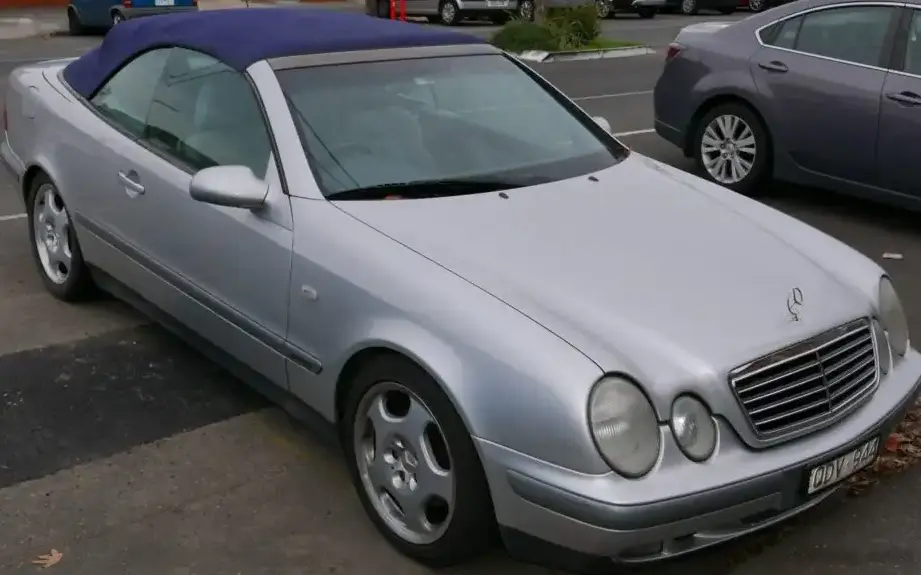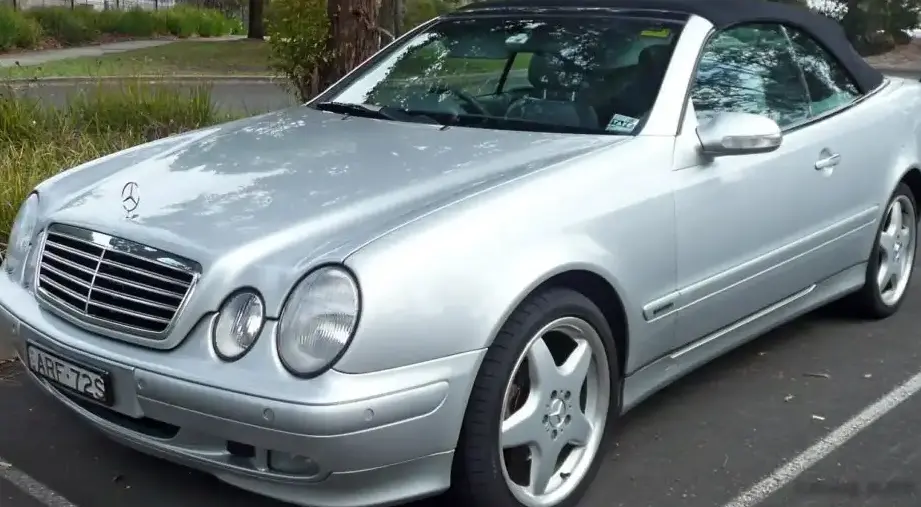
The Mercedes-Benz CLK 320, produced from August 1999 to March 2003, represents a compelling blend of performance and luxury within the W208 CLK series, specifically the facelifted models. Positioned as a mid-range offering, it slotted between the entry-level CLK 200 Kompressor and the higher-performance CLK 430 and CLK 55 AMG. Available exclusively as a two-door coupe or convertible (cabriolet), the CLK 320 aimed to provide a more refined driving experience than its turbocharged four-cylinder sibling, while remaining more accessible than the V8-powered flagships. It was a key model for Mercedes-Benz in the North American and European markets, appealing to buyers seeking a stylish and comfortable grand tourer.
Technical Specifications
| Brand | Mercedes-Benz |
| Model | CLK |
| Generation | CLK (A208, facelift 1999) |
| Type (Engine) | CLK 320 (218 Hp) 5G-TRONIC |
| Start of production | August, 1999 |
| End of production | March, 2003 |
| Powertrain Architecture | Internal Combustion engine |
| Body type | Cabriolet |
| Seats | 4 |
| Doors | 2 |
| Fuel consumption (urban) | 15.7 l/100 km (15 US mpg, 18 UK mpg, 6.4 km/l) |
| Fuel consumption (extra urban) | 8.2 l/100 km (28.7 US mpg, 34.4 UK mpg, 12.2 km/l) |
| Fuel consumption (combined) | 10.9 l/100 km (21.6 US mpg, 25.9 UK mpg, 9.2 km/l) |
| Fuel Type | Petrol (Gasoline) |
| Acceleration 0 – 100 km/h | 8.3 sec |
| Acceleration 0 – 62 mph | 8.3 sec |
| Acceleration 0 – 60 mph | 7.9 sec |
| Maximum speed | 236 km/h (146.64 mph) |
| Weight-to-power ratio | 7.8 kg/Hp, 128.6 Hp/tonne |
| Weight-to-torque ratio | 5.5 kg/Nm, 182.9 Nm/tonne |
| Power | 218 Hp @ 5700 rpm |
| Power per litre | 68.1 Hp/l |
| Torque | 310 Nm @ 3000-4600 rpm (228.64 lb.-ft. @ 3000-4600 rpm) |
| Engine layout | Front, Longitudinal |
| Engine Model/Code | M 112.940 |
| Engine displacement | 3199 cm3 (195.21 cu. in.) |
| Number of cylinders | 6 |
| Engine configuration | V-engine |
| Cylinder Bore | 89.9 mm (3.54 in.) |
| Piston Stroke | 84 mm (3.31 in.) |
| Compression ratio | 10:1 |
| Number of valves per cylinder | 4 |
| Fuel injection system | Multi-port manifold injection |
| Engine aspiration | Naturally aspirated engine |
| Valvetrain | SOHC |
| Engine oil capacity | 8 l (8.45 US qt | 7.04 UK qt) |
| Coolant | 9 l (9.51 US qt | 7.92 UK qt) |
| Kerb Weight | 1695 kg (3736.84 lbs.) |
| Max. weight | 2070 kg (4563.57 lbs.) |
| Max load | 375 kg (826.73 lbs.) |
| Fuel tank capacity | 62 l (16.38 US gal | 13.64 UK gal) |
| Permitted trailer load with brakes (12%) | 1500 kg (3306.93 lbs.) |
| Permitted trailer load without brakes | 750 kg (1653.47 lbs.) |
| Length | 4567 mm (179.8 in.) |
| Width | 1722 mm (67.8 in.) |
| Height | 1380 mm (54.33 in.) |
| Wheelbase | 2690 mm (105.91 in.) |
| Front track | 1505 mm (59.25 in.) |
| Rear (Back) track | 1474 mm (58.03 in.) |
| Drag coefficient (Cd) | 0.32 |
| Minimum turning circle (turning diameter) | 10.70 m (35.1 ft.) |
| Drivetrain Architecture | The Internal combustion engine (ICE) drives the rear wheels of the vehicle. |
| Drive wheel | Rear wheel drive |
| Number of gears and type of gearbox | 5 gears, automatic transmission G-TRONIC |
| Front suspension | Double wishbone, Transverse stabilizer |
| Rear suspension | Independent multi-link spring suspension with stabilizer |
| Front brakes | Ventilated discs |
| Rear brakes | Disc |
| Assisting systems | ABS (Anti-lock braking system) |
| Steering type | Cone worm with recirculation balls |
| Power steering | Hydraulic Steering |
| Tires size | 205/55 R16 |
| Wheel rims size | 7J x 16 |
Powertrain & Engine Architecture
The CLK 320 is powered by the M112.940 3.2-liter naturally aspirated V6 engine. This engine, a cornerstone of Mercedes-Benz’s mid-size offerings at the time, features a 60-degree V-angle and utilizes a single overhead camshaft (SOHC) design per cylinder bank. The engine employs multi-port fuel injection, delivering fuel directly into the intake ports. The M112 engine family was known for its smooth operation and relatively high specific output. Paired with the engine is the 5G-TRONIC automatic transmission, a five-speed unit that offered smooth and refined gear changes. This transmission was designed to enhance the grand touring character of the CLK 320, prioritizing comfort over outright performance. The 5G-TRONIC featured adaptive shift programming, adjusting shift points based on driving style and road conditions.
Driving Characteristics
The CLK 320 with the 5G-TRONIC transmission delivers a comfortable and refined driving experience. While not as overtly sporty as the manual-transmission equipped models or the higher-output CLK 430, it provides ample power for effortless cruising and confident overtaking. The automatic transmission’s gear ratios are tuned for relaxed acceleration, with a focus on maintaining engine RPMs within the optimal torque band. Acceleration from 0-60 mph takes approximately 7.9 seconds, and the car reaches a top speed of 146.64 mph. Compared to the CLK 200 Kompressor, the 320 offers significantly more torque, resulting in stronger mid-range acceleration. However, the CLK 430 and CLK 55 AMG provide a more visceral and engaging driving experience due to their larger displacement V8 engines.
Equipment & Trim Levels
The CLK 320 typically came standard with features such as leather upholstery, automatic climate control, power-adjustable front seats, and a premium sound system. Optional extras included a sunroof, navigation system, heated seats, and upgraded interior trim materials. The interior design was characterized by its elegant and understated styling, reflecting Mercedes-Benz’s commitment to luxury and refinement. The dashboard layout was clean and functional, with intuitive controls and high-quality materials. The convertible models featured a fully automatic retractable hardtop, providing open-air driving enjoyment with the security and weather protection of a coupe.
Chassis & Braking
The CLK 320 utilizes a double wishbone front suspension and an independent multi-link rear suspension, providing a comfortable ride and precise handling. Stabilizer bars are fitted to both axles to reduce body roll during cornering. The braking system consists of ventilated discs at the front and solid discs at the rear, coupled with an Anti-lock Braking System (ABS) for enhanced safety. The steering is a hydraulic power-assisted system, offering a balanced feel and responsive control.
Market Reception & Comparison
The CLK 320 was generally well-received by automotive critics, who praised its refined engine, comfortable ride, and luxurious interior. It was considered a strong competitor to other mid-size luxury coupes and convertibles, such as the BMW 3 Series and Audi A4. Fuel economy was reasonable for a vehicle of its class, averaging around 21.6 US mpg in combined driving. Reliability was generally good, although some owners have reported issues with the electronic systems and the automatic transmission over the long term. Compared to the CLK 200 Kompressor, the 320 offered a more satisfying driving experience due to its greater power and torque. However, the CLK 430 and CLK 55 AMG provided a more exhilarating performance.
Legacy
The Mercedes-Benz CLK 320 remains a desirable used car today, particularly for those seeking a stylish and comfortable grand tourer. The M112 engine is known for its durability, and with proper maintenance, it can provide many years of reliable service. The 5G-TRONIC transmission, while generally reliable, may require occasional servicing to ensure smooth operation. The CLK 320 represents a sweet spot in the W208 CLK range, offering a compelling blend of performance, luxury, and value. Its classic styling and refined driving experience continue to appeal to enthusiasts and collectors alike.