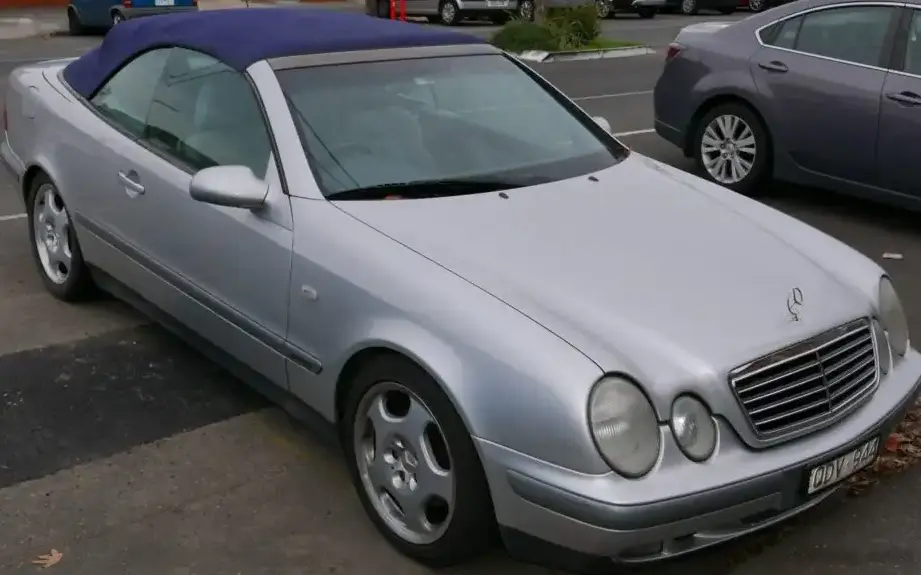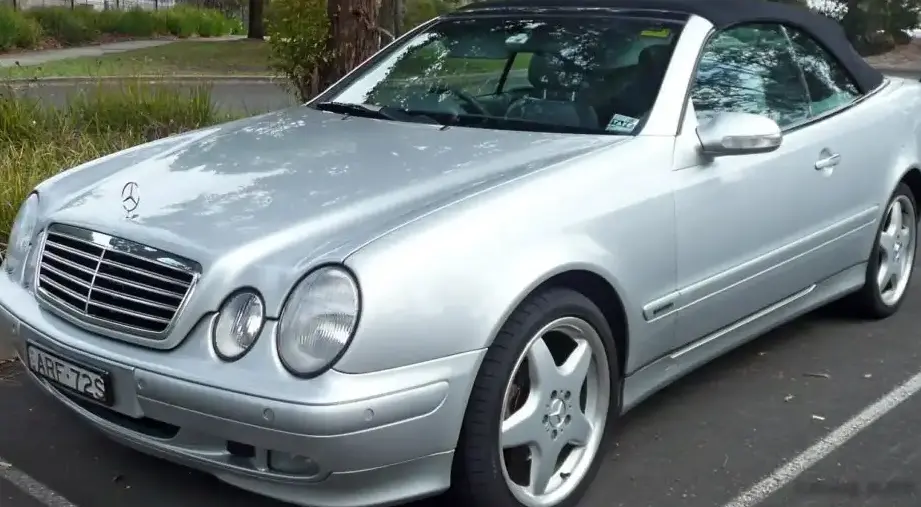
The Mercedes-Benz CLK 430, produced from November 1997 to March 2003, represents the high-performance variant of the W208 (and later facelifted A208) CLK series. Positioned as the flagship engine option, it offered a significant step up in power and refinement compared to the CLK 320 and entry-level CLK 230 Kompressor models. Available as both a coupe and a convertible (cabriolet), the CLK 430 aimed to deliver a luxurious grand touring experience with a focus on effortless power and comfortable cruising. The A208 facelift, introduced in 1999, brought subtle styling revisions and improvements to interior trim and technology.
Technical Specifications
| Brand | Mercedes-Benz |
| Model | CLK |
| Generation | CLK (A208, facelift 1999) |
| Type (Engine) | CLK 430 (279 Hp) 5G TRONIC |
| Start of production | November, 1997 |
| End of production | March, 2003 |
| Powertrain Architecture | Internal Combustion engine |
| Body type | Cabriolet |
| Seats | 4 |
| Doors | 2 |
| Fuel consumption (urban) | 17.7 l/100 km (13.3 US mpg, 16 UK mpg, 5.6 km/l) |
| Fuel consumption (extra urban) | 9 l/100 km (26.1 US mpg, 31.4 UK mpg, 11.1 km/l) |
| Fuel consumption (combined) | 12.2 l/100 km (19.3 US mpg, 23.2 UK mpg, 8.2 km/l) |
| Fuel Type | Petrol (Gasoline) |
| Acceleration 0 – 100 km/h | 7.4 sec |
| Acceleration 0 – 62 mph | 7.4 sec |
| Acceleration 0 – 60 mph | 7 sec |
| Maximum speed | 250 km/h (155.34 mph), Electronically limited |
| Weight-to-power ratio | 6.3 kg/Hp, 159 Hp/tonne |
| Weight-to-torque ratio | 4.4 kg/Nm, 227.9 Nm/tonne |
| Power | 279 Hp @ 5750 rpm |
| Power per litre | 65.4 Hp/l |
| Torque | 400 Nm @ 3000-4400 rpm (295.02 lb.-ft. @ 3000-4400 rpm) |
| Engine layout | Front, Longitudinal |
| Engine Model/Code | M 113.943 |
| Engine displacement | 4266 cm3 (260.33 cu. in.) |
| Number of cylinders | 8 |
| Engine configuration | V-engine |
| Cylinder Bore | 89.9 mm (3.54 in.) |
| Piston Stroke | 84 mm (3.31 in.) |
| Compression ratio | 10:1 |
| Number of valves per cylinder | 4 |
| Fuel injection system | Multi-port manifold injection |
| Engine aspiration | Naturally aspirated engine |
| Valvetrain | SOHC |
| Engine oil capacity | 8 l (8.45 US qt | 7.04 UK qt) |
| Coolant | 11 l (11.62 US qt | 9.68 UK qt) |
| Kerb Weight | 1755 kg (3869.11 lbs.) |
| Max. weight | 2080 kg (4585.62 lbs.) |
| Max load | 325 kg (716.5 lbs.) |
| Fuel tank capacity | 62 l (16.38 US gal | 13.64 UK gal) |
| Length | 4567 mm (179.8 in.) |
| Width | 1722 mm (67.8 in.) |
| Height | 1382 mm (54.41 in.) |
| Wheelbase | 2690 mm (105.91 in.) |
| Front track | 1505 mm (59.25 in.) |
| Rear (Back) track | 1474 mm (58.03 in.) |
| Minimum turning circle | 10.70 m (35.1 ft.) |
| Drivetrain Architecture | The Internal combustion engine (ICE) drives the rear wheels of the vehicle. |
| Drive wheel | Rear wheel drive |
| Number of gears and type of gearbox | 5 gears, automatic transmission 5G TRONIC |
| Front suspension | Double wishbone, Transverse stabilizer |
| Rear suspension | Independent multi-link spring suspension with stabilizer |
| Front brakes | Ventilated discs |
| Rear brakes | Disc |
| Assisting systems | ABS (Anti-lock braking system) |
| Steering type | Cone worm with recirculation balls |
| Power steering | Hydraulic Steering |
| Tires size | 205/55 R16 |
| Wheel rims size | 7J x 16 |
Powertrain & Engine Architecture
The heart of the CLK 430 is the M113.943 4.3-liter V8 engine. This naturally aspirated powerplant is a significant departure from the smaller, often supercharged engines found in other CLK models. The M113 engine family was a cornerstone of Mercedes-Benz’s performance offerings in the late 1990s and early 2000s, known for its smooth power delivery and robust construction. It features a single overhead camshaft (SOHC) design per cylinder bank, utilizing three valves per cylinder (two intake, one exhaust). Fuel is delivered via multi-port fuel injection, and the engine benefits from a relatively high 10:1 compression ratio. The 5G-TRONIC automatic transmission, a five-speed unit, was specifically chosen to handle the V8’s substantial torque output. This transmission offered smooth shifts and a relatively quick response for its time, although it lacked the manual shift capabilities found in some competing models.
Driving Characteristics
The CLK 430 delivers a distinctly different driving experience compared to its four-cylinder or supercharged six-cylinder siblings. The V8 provides a broad torque curve, offering strong acceleration from low RPMs without the need for constant downshifting. While not a sports car in the purest sense, the CLK 430 feels significantly faster and more capable than the lower-spec models. The 5G-TRONIC transmission, while smooth, can feel slightly hesitant during aggressive driving, and the gear ratios are tuned more for comfortable cruising than outright performance. The rear-wheel-drive configuration contributes to a balanced feel, but the car’s weight (approximately 3869 lbs) is noticeable during cornering.
Equipment & Trim Levels
The CLK 430 was generally well-equipped, reflecting its position as the range-topping model. Standard features typically included leather upholstery, power-adjustable seats with memory function, automatic climate control, a premium sound system, and wood trim throughout the interior. Optional extras included a sunroof, navigation system, upgraded sound systems (often Bose or Harman Kardon), and various cosmetic enhancements. The A208 facelift brought improvements to interior materials and design, with a more modern dashboard layout and updated switchgear.
Chassis & Braking
The CLK 430 utilizes a double wishbone front suspension and an independent multi-link rear suspension, providing a comfortable ride and reasonable handling. Stabilizer bars are fitted to both axles to reduce body roll. Braking duties are handled by ventilated discs at the front and solid discs at the rear, equipped with ABS (Anti-lock Braking System). The braking system is generally adequate for the car’s performance, but the weight of the vehicle can require a firm pedal input during hard stops.
Market Reception & Comparison
The CLK 430 was generally well-received by automotive critics, who praised its powerful engine, comfortable ride, and luxurious interior. However, some reviewers noted the car’s weight and the slightly dated feel of the 5G-TRONIC transmission. Compared to the CLK 320, the 430 offered a substantial performance upgrade, but at a higher price point. The CLK 430 also competed with other grand touring coupes and convertibles from BMW and Audi, offering a different blend of luxury and performance. Fuel economy was, unsurprisingly, lower than the smaller-engined CLK models, averaging around 19.3 US mpg in combined driving.
Legacy
The M113 V8 engine used in the CLK 430 is known for its durability and reliability, provided it receives regular maintenance. While not immune to age-related issues, these engines are generally capable of high mileage. Today, the CLK 430 represents an affordable entry point into the world of Mercedes-Benz V8 ownership. The car’s classic styling and comfortable driving experience continue to appeal to enthusiasts, and well-maintained examples are becoming increasingly collectible. Common issues to look for include wear and tear on the suspension components, potential leaks from the engine and transmission, and the functionality of the electronic systems.