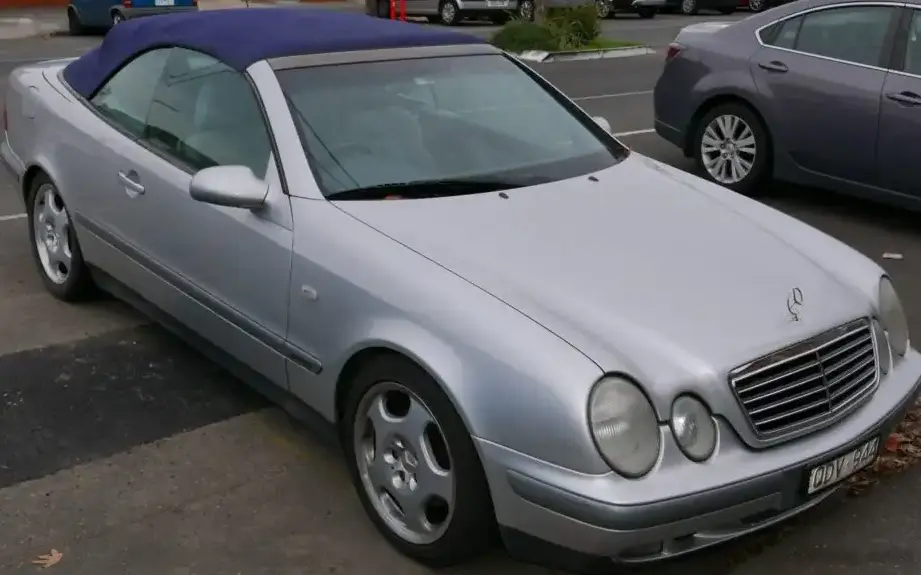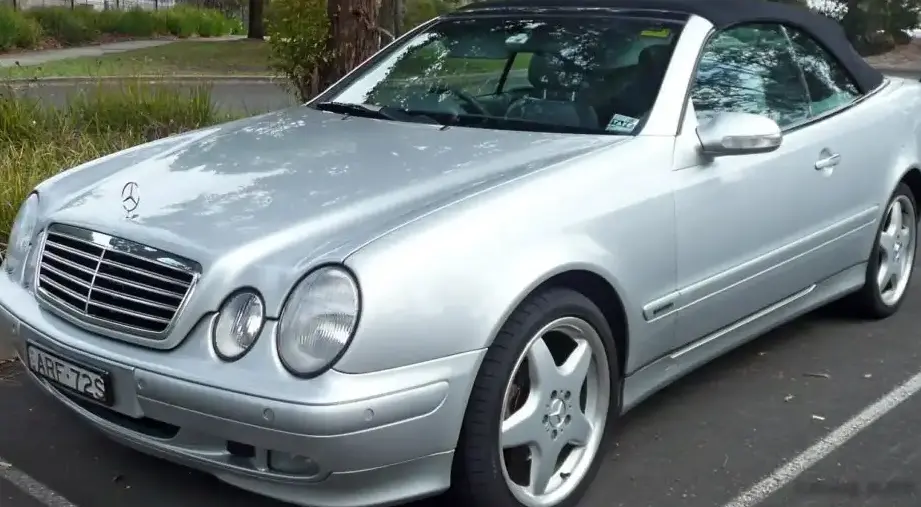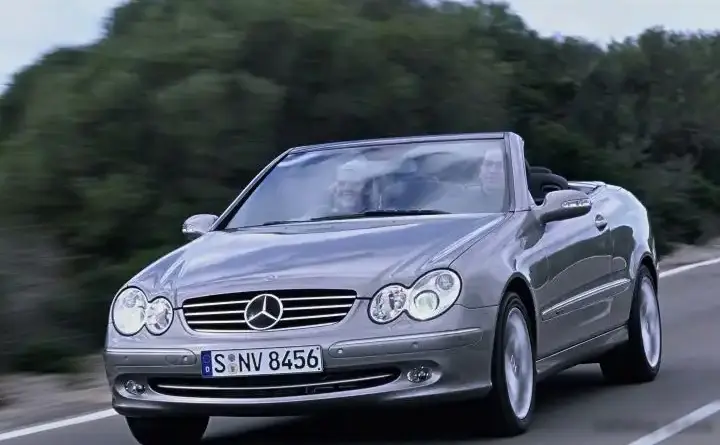
The Mercedes-Benz CLK 240 V6, produced between March 2003 and May 2005, was a variant of the A209 series CLK-Class, a mid-size luxury coupe and convertible. Positioned as a mid-range offering within the CLK lineup, it aimed to provide a balance between performance and comfort, appealing to buyers seeking a refined driving experience without the higher price tag of the more powerful CLK 320 or CLK 55 AMG models. The A209 generation CLK built upon the success of its predecessor (the C208), offering improved styling, a more modern interior, and enhanced technology. This particular 240 V6 model was primarily sold in European and Asian markets, with limited availability in North America.
Technical Specifications
| Brand | Mercedes-Benz |
| Model | CLK |
| Generation | CLK (A209) |
| Type (Engine) | CLK 240 V6 (170 Hp) 5G-TRONIC |
| Start of production | March, 2003 |
| End of production | May, 2005 |
| Powertrain Architecture | Internal Combustion engine |
| Body type | Cabriolet |
| Seats | 4 |
| Doors | 2 |
| Fuel consumption (economy) – urban (NEDC) | 15 l/100 km (15.7 US mpg, 18.8 UK mpg, 6.7 km/l) |
| Fuel consumption (economy) – extra urban (NEDC) | 7.5 l/100 km (31.4 US mpg, 37.7 UK mpg, 13.3 km/l) |
| Fuel consumption (economy) – combined (NEDC) | 10.1 l/100 km (23.3 US mpg, 28 UK mpg, 9.9 km/l) |
| CO2 emissions (NEDC) | 242 g/km |
| Fuel Type | Petrol (Gasoline) |
| Acceleration 0 – 100 km/h | 10.2 sec |
| Acceleration 0 – 62 mph | 10.2 sec |
| Acceleration 0 – 60 mph | 9.7 sec |
| Maximum speed | 230 km/h (142.92 mph) |
| Emission standard | Euro 4 |
| Weight-to-power ratio | 9.6 kg/Hp, 104.6 Hp/tonne |
| Weight-to-torque ratio | 6.8 kg/Nm, 147.7 Nm/tonne |
| Power | 170 Hp @ 5500 rpm |
| Power per litre | 65.5 Hp/l |
| Torque | 240 Nm @ 4500 rpm (177.01 lb.-ft. @ 4500 rpm) |
| Engine layout | Front, Longitudinal |
| Engine Model/Code | M 112.912 |
| Engine displacement | 2597 cm3 (158.48 cu. in.) |
| Number of cylinders | 6 |
| Engine configuration | V-engine |
| Cylinder Bore | 89.9 mm (3.54 in.) |
| Piston Stroke | 68.2 mm (2.69 in.) |
| Compression ratio | 10.5:1 |
| Number of valves per cylinder | 3 |
| Fuel injection system | Multi-port manifold injection |
| Engine aspiration | Naturally aspirated engine |
| Valvetrain | SOHC |
| Engine oil capacity | 8 l (8.45 US qt | 7.04 UK qt) |
| Coolant | 10.5 l (11.1 US qt | 9.24 UK qt) |
| Kerb Weight | 1625 kg (3582.51 lbs.) |
| Max. weight | 2155 kg (4750.96 lbs.) |
| Max load | 530 kg (1168.45 lbs.) |
| Trunk (boot) space – minimum | 276 l (9.75 cu. ft.) |
| Trunk (boot) space – maximum | 390 l (13.77 cu. ft.) |
| Fuel tank capacity | 62 l (16.38 US gal | 13.64 UK gal) |
| Permitted trailer load with brakes (12%) | 1500 kg (3306.93 lbs.) |
| Permitted trailer load without brakes | 750 kg (1653.47 lbs.) |
| Length | 4638 mm (182.6 in.) |
| Width | 1740 mm (68.5 in.) |
| Width including mirrors | 1991 mm (78.39 in.) |
| Height | 1413 mm (55.63 in.) |
| Wheelbase | 2715 mm (106.89 in.) |
| Front track | 1493 mm (58.78 in.) |
| Rear (Back) track | 1474 mm (58.03 in.) |
| Front overhang | 840 mm (33.07 in.) |
| Rear overhang | 1083 mm (42.64 in.) |
| Drag coefficient (Cd) | 0.30 |
| Minimum turning circle (turning diameter) | 10.76 m (35.3 ft.) |
| Drivetrain Architecture | The Internal combustion engine (ICE) drives the rear wheels of the vehicle. |
| Drive wheel | Rear wheel drive |
| Number of gears and type of gearbox | 5 gears, automatic transmission G-TRONIC |
| Front suspension | Independent type McPherson, Transverse stabilizer |
| Rear suspension | Independent multi-link suspension, Transverse stabilizer |
| Front brakes | Ventilated discs, 300×28 mm |
| Rear brakes | Disc, 290×10 mm |
| Assisting systems | ABS (Anti-lock braking system) |
| Steering type | Steering rack and pinion |
| Power steering | Hydraulic Steering |
| Tires size | Front wheel tires: 205/55 R16 Rear wheel tires: 225/50 R16 |
| Wheel rims size | Front wheel rims: 7J x 16 Rear wheel rims: 8J x 16 |
Powertrain & Engine Architecture
The CLK 240 V6 was powered by the M112.912 engine, a 2.6-liter naturally aspirated V6. This engine featured a single overhead camshaft (SOHC) design per cylinder bank and utilized multi-port fuel injection. The engine produced 170 horsepower at 5500 rpm and 240 Nm (177 lb-ft) of torque at 4500 rpm. The engine’s architecture was a 60-degree V-configuration, known for its relatively smooth operation. The transmission was a 5G-TRONIC automatic gearbox, a five-speed torque converter automatic transmission developed by Mercedes-Benz. This transmission was designed for smooth shifting and optimized fuel efficiency. The engine was mounted longitudinally in the front of the vehicle, driving the rear wheels.
Driving Characteristics
The CLK 240 V6 with the 5G-TRONIC transmission offered a comfortable and refined driving experience. Acceleration from 0 to 60 mph took approximately 9.7 seconds, and the top speed was electronically limited to 230 km/h (143 mph). While not a sports car, the engine provided adequate power for everyday driving and cruising. The 5G-TRONIC transmission contributed to smooth gear changes, but it wasn’t as responsive as a manual transmission. Compared to the more powerful CLK 320, the 240 V6 felt less eager to accelerate, but it offered better fuel economy. The automatic transmission’s gear ratios were tuned for comfort and efficiency rather than outright performance.
Equipment & Trim Levels
The CLK 240 V6 typically came standard with features such as automatic climate control, power windows, power seats, and a premium audio system. Leather upholstery was standard, and options included a sunroof, navigation system, and upgraded sound systems. The interior design was typical of Mercedes-Benz at the time, with a focus on luxury and comfort. Trim levels varied depending on the market, but generally, the 240 V6 was positioned as a well-equipped mid-range model. Optional extras allowed buyers to personalize their vehicles with features like wood trim, heated seats, and parking sensors.
Chassis & Braking
The CLK 240 V6 utilized an independent suspension system, with McPherson struts at the front and a multi-link setup at the rear. This suspension configuration provided a comfortable ride and good handling characteristics. The braking system consisted of ventilated disc brakes at the front and solid disc brakes at the rear. Anti-lock Braking System (ABS) was standard. The car’s weight of approximately 1625 kg (3583 lbs) influenced the suspension tuning and braking performance. Stabilizer bars were fitted to both the front and rear axles to reduce body roll during cornering.
Market Reception & Comparison
The CLK 240 V6 was generally well-received by automotive critics as a comfortable and stylish coupe/convertible. However, some reviewers noted that the engine lacked the punch of the larger V6 and V8 engines available in the CLK lineup. Fuel economy was considered reasonable for a luxury car of its size and class. Compared to the CLK 320, the 240 V6 offered a lower price point and slightly better fuel efficiency, making it an attractive option for buyers who prioritized value and comfort over outright performance. The 240 V6 was often seen as a more sensible choice than the more expensive and powerful AMG models.
Legacy
The M112 engine family, including the 2.6-liter variant in the CLK 240 V6, is generally considered to be a reliable and durable powertrain. While not without its potential issues (such as occasional oil leaks and sensor failures), the engine is known for its longevity when properly maintained. Today, the CLK 240 V6 can be found on the used car market at relatively affordable prices. It remains a popular choice for buyers seeking a stylish and comfortable luxury coupe or convertible with a proven track record of reliability. Parts availability is generally good, and the car’s relatively simple mechanical design makes it relatively easy to maintain.