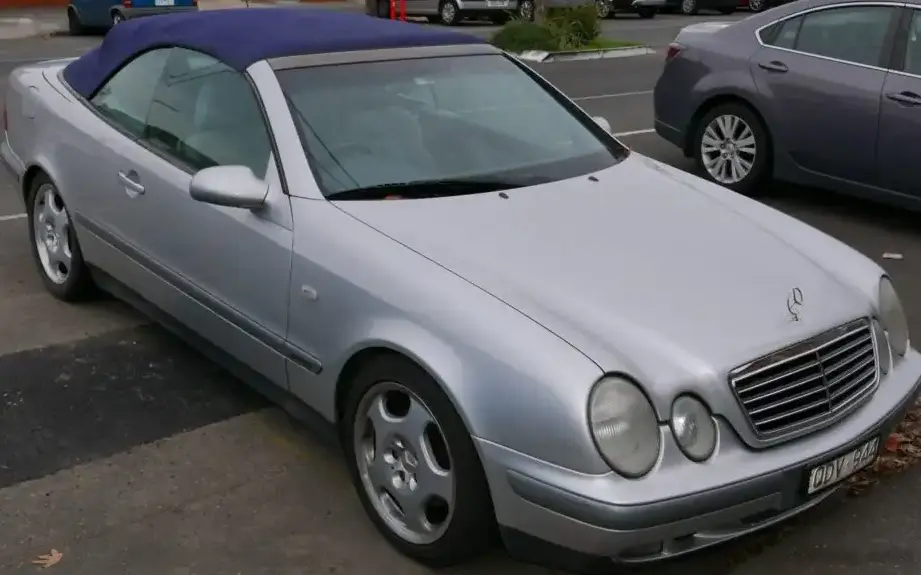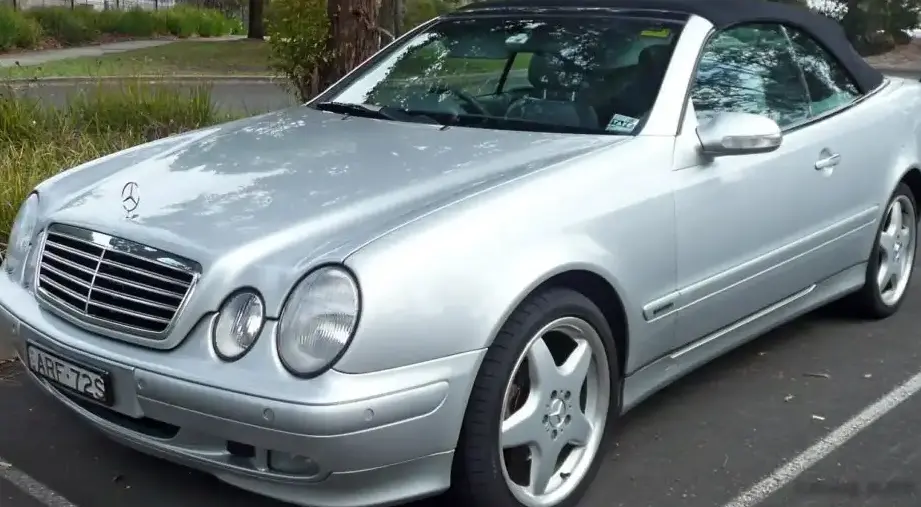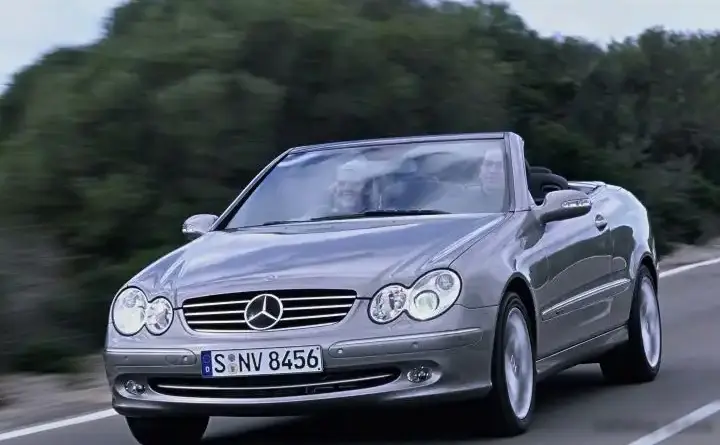
The Mercedes-Benz CLK 320 (A209) represents a compelling blend of luxury and performance within the second-generation CLK-Class range, produced between March 2003 and May 2005. Positioned as a mid-range offering, it slotted between the entry-level CLK 240 and the higher-performance CLK 500. The A209 chassis, shared with the W203 C-Class, provided a solid foundation for this stylish two-door convertible, aimed at buyers seeking a sophisticated open-air driving experience. This variant was primarily sold in European and North American markets, offering a more accessible price point than the flagship models while still delivering a premium Mercedes-Benz experience.
Technical Specifications
| Brand | Mercedes-Benz |
| Model | CLK |
| Generation | CLK (A209) |
| Type (Engine) | CLK 320 (218 Hp) 5G-TRONIC |
| Start of production | March, 2003 |
| End of production | May, 2005 |
| Powertrain Architecture | Internal Combustion engine |
| Body type | Cabriolet |
| Seats | 4 |
| Doors | 2 |
| Fuel consumption (economy) – urban (NEDC) | 15.7 l/100 km (15 US mpg, 18 UK mpg, 6.4 km/l) |
| Fuel consumption (economy) – extra urban (NEDC) | 7.7 l/100 km (30.5 US mpg, 36.7 UK mpg, 13 km/l) |
| Fuel consumption (economy) – combined (NEDC) | 10.4 l/100 km (22.6 US mpg, 27.2 UK mpg, 9.6 km/l) |
| CO2 emissions (NEDC) | 250 g/km |
| Fuel Type | Petrol (Gasoline) |
| Acceleration 0 – 100 km/h | 8.2 sec |
| Acceleration 0 – 62 mph | 8.2 sec |
| Acceleration 0 – 60 mph | 7.8 sec |
| Maximum speed | 241 km/h (149.75 mph) |
| Emission standard | Euro 4 |
| Weight-to-power ratio | 7.6 kg/Hp, 131.7 Hp/tonne |
| Weight-to-torque ratio | 5.3 kg/Nm, 187.3 Nm/tonne |
| Power | 218 Hp @ 5700 rpm |
| Power per litre | 68.1 Hp/l |
| Torque | 310 Nm @ 3000-4600 rpm (228.64 lb.-ft. @ 3000-4600 rpm) |
| Maximum engine speed | 6000 rpm |
| Engine layout | Front, Longitudinal |
| Engine Model/Code | M 112.955 |
| Engine displacement | 3199 cm3 (195.21 cu. in.) |
| Number of cylinders | 6 |
| Engine configuration | V-engine |
| Cylinder Bore | 89.9 mm (3.54 in.) |
| Piston Stroke | 84 mm (3.31 in.) |
| Compression ratio | 10:1 |
| Number of valves per cylinder | 3 |
| Fuel injection system | Multi-port manifold injection |
| Engine aspiration | Naturally aspirated engine |
| Valvetrain | SOHC |
| Engine oil capacity | 8 l (8.45 US qt, 7.04 UK qt) |
| Coolant | 10.5 l (11.1 US qt, 9.24 UK qt) |
| Kerb Weight | 1655 kg (3648.65 lbs.) |
| Max. weight | 2185 kg (4817.1 lbs.) |
| Max load | 530 kg (1168.45 lbs.) |
| Trunk (boot) space – minimum | 276 l (9.75 cu. ft.) |
| Trunk (boot) space – maximum | 390 l (13.77 cu. ft.) |
| Fuel tank capacity | 62 l (16.38 US gal, 13.64 UK gal) |
| Permitted trailer load with brakes (12%) | 1500 kg (3306.93 lbs.) |
| Permitted trailer load without brakes | 750 kg (1653.47 lbs.) |
| Length | 4638 mm (182.6 in.) |
| Width | 1740 mm (68.5 in.) |
| Width including mirrors | 1991 mm (78.39 in.) |
| Height | 1413 mm (55.63 in.) |
| Wheelbase | 2715 mm (106.89 in.) |
| Front track | 1493 mm (58.78 in.) |
| Rear (Back) track | 1474 mm (58.03 in.) |
| Front overhang | 840 mm (33.07 in.) |
| Rear overhang | 1083 mm (42.64 in.) |
| Drag coefficient (Cd) | 0.30 |
| Minimum turning circle (turning diameter) | 10.76 m (35.3 ft.) |
| Drivetrain Architecture | The Internal combustion engine (ICE) drives the rear wheels of the vehicle. |
| Drive wheel | Rear wheel drive |
| Number of gears and type of gearbox | 5 gears, automatic transmission G-TRONIC |
| Front suspension | Independent type McPherson, Transverse stabilizer |
| Rear suspension | Independent multi-link suspension, Transverse stabilizer |
| Front brakes | Ventilated discs, 300×28 mm |
| Rear brakes | Disc, 290×10 mm |
| Assisting systems | ABS (Anti-lock braking system) |
| Steering type | Steering rack and pinion |
| Power steering | Hydraulic Steering |
| Tires size | Front wheel tires: 205/55 R16 Rear wheel tires: 225/50 R16 |
| Wheel rims size | Front wheel rims: 7J x 16 Rear wheel rims: 8J x 16 |
Powertrain & Engine Architecture
The CLK 320 is powered by the M112.955 3.2-liter naturally aspirated V6 engine. This engine, a hallmark of Mercedes-Benz engineering in the early 2000s, features a 60-degree V-angle and utilizes a single overhead camshaft (SOHC) design per cylinder bank. The engine employs multi-port fuel injection, delivering fuel directly into the intake ports, and boasts a compression ratio of 10:1. The engine’s output of 218 horsepower at 5700 rpm and 310 Nm (228.64 lb-ft) of torque between 3000-4600 rpm provided a smooth and refined power delivery. Paired with the engine is the 5G-TRONIC automatic transmission, a five-speed unit known for its smooth shifting and adaptability. This transmission was designed to enhance both comfort and efficiency, offering selectable driving modes to suit different driving conditions.
Driving Characteristics
The CLK 320 with the 5G-TRONIC transmission offers a distinctly grand touring experience. While not overtly sporty, the combination provides ample power for comfortable cruising and confident overtaking. The automatic transmission, while smooth, isn’t particularly quick to downshift, resulting in a slightly less responsive feel compared to the available manual transmission options. The gear ratios are tuned for relaxed highway driving, with a focus on minimizing engine revs at cruising speeds. Acceleration from 0-60 mph takes approximately 7.8 seconds, which was respectable for a luxury convertible of its era. The rear-wheel drive configuration contributes to balanced handling, although it doesn’t offer the agility of some more performance-focused competitors.
Equipment & Trim Levels
The CLK 320 typically came standard with a generous array of features, befitting its luxury positioning. Interior appointments included leather upholstery, wood trim, and automatic climate control. Standard safety equipment included ABS, traction control, and multiple airbags. Optional extras included a premium sound system, navigation system, heated seats, and a wind deflector for open-top driving. Trim levels were relatively limited, with most customization occurring through the selection of individual options. The interior dashboard configuration was typical of Mercedes-Benz at the time, featuring a classic analog instrument cluster and a centrally mounted infotainment screen.
Chassis & Braking
The CLK 320 utilizes an independent suspension system at all four wheels. The front suspension employs a McPherson strut design with a transverse stabilizer bar, while the rear features a multi-link setup, also with a stabilizer bar. This configuration provides a comfortable ride quality while maintaining reasonable handling characteristics. Braking duties are handled by ventilated discs at the front and solid discs at the rear. ABS (Anti-lock Braking System) is standard, enhancing braking performance and stability. The steering system is a hydraulic power-assisted rack and pinion setup, offering precise and responsive steering feel.
Market Reception & Comparison
The CLK 320 was generally well-received by automotive critics, who praised its comfortable ride, refined engine, and stylish design. However, some reviewers noted that the 5G-TRONIC transmission could feel somewhat sluggish compared to manual options or more modern automatic gearboxes. Compared to the CLK 240, the 320 offered a significant performance upgrade, while remaining more affordable than the range-topping CLK 500. Fuel economy was a common criticism, with the 3.2-liter V6 consuming a considerable amount of fuel, particularly in urban driving. Reliability was generally good, although preventative maintenance was crucial to avoid potential issues with the engine’s timing chain and the transmission’s electronic control unit.
Legacy
Today, the Mercedes-Benz CLK 320 (A209) represents an attractive entry point into classic Mercedes-Benz ownership. The M112 engine, while requiring regular maintenance, is known for its durability and smooth operation. The 5G-TRONIC transmission, while not the most technologically advanced, is generally reliable if properly serviced. Values for well-maintained examples have been steadily increasing in recent years, reflecting the growing appreciation for this era of Mercedes-Benz design and engineering. The CLK 320 remains a desirable option for those seeking a stylish and comfortable open-air driving experience with a touch of German luxury.