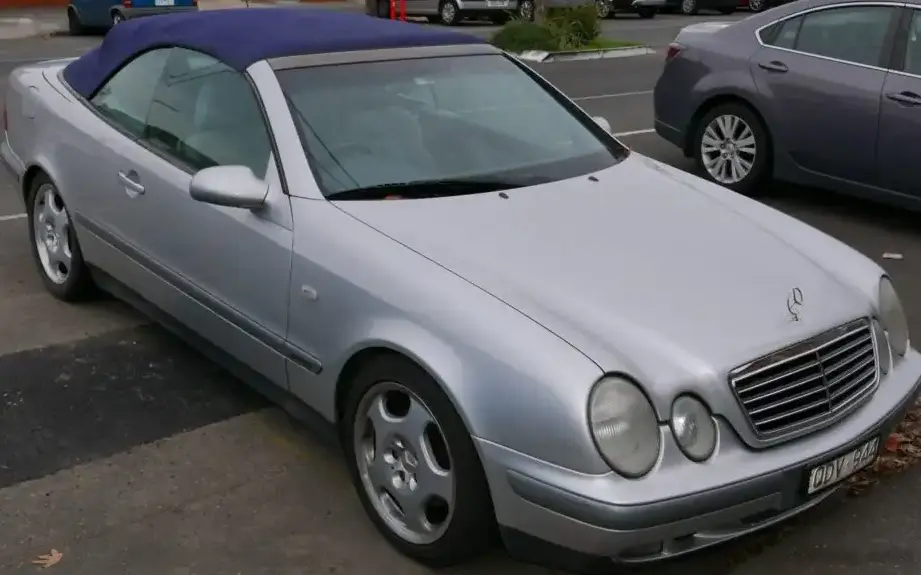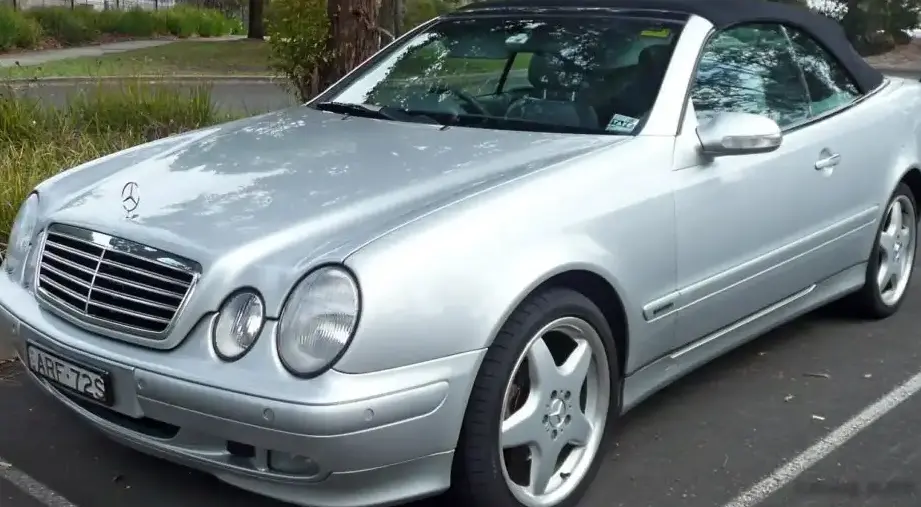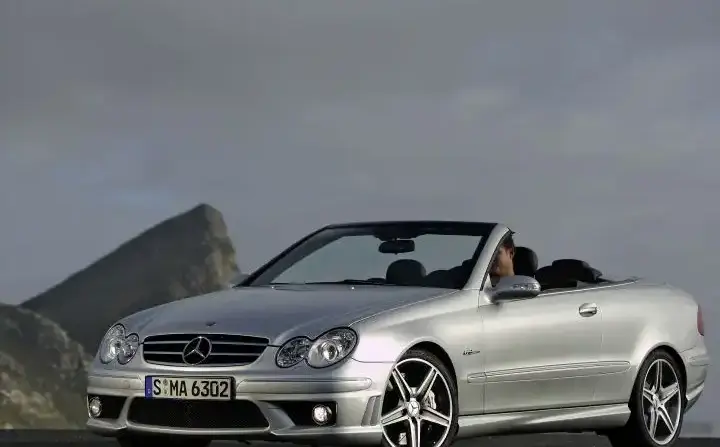
The Mercedes-Benz CLK 200 Kompressor, produced from May 2005 to April 2007, was a key variant within the A209 facelift generation of the CLK-Class. Positioned as an entry-level offering in many markets, particularly Europe, it provided a blend of Mercedes-Benz luxury and performance at a more accessible price point. This model was exclusively offered as a two-door cabriolet, appealing to drivers seeking open-air motoring with the prestige of the three-pointed star. It sat below the more powerful CLK 320 and CLK 55 AMG models in the lineup, offering a different driving experience geared towards fuel efficiency and comfortable cruising rather than outright speed.
Technical Specifications
| Brand | Mercedes-Benz |
| Model | CLK |
| Generation | CLK (A209, facelift 2005) |
| Type | CLK 200 Kompressor (163 Hp) 5G-TRONIC |
| Start of production | May, 2005 |
| End of production | April, 2007 |
| Powertrain Architecture | Internal Combustion engine |
| Body type | Cabriolet |
| Seats | 4 |
| Doors | 2 |
| Fuel consumption (urban) | 12.6-12.8 l/100 km (18.7 – 18.4 US mpg, 22.4 – 22.1 UK mpg, 7.9 – 7.8 km/l) |
| Fuel consumption (extra urban) | 6.5-6.8 l/100 km (36.2 – 34.6 US mpg, 43.5 – 41.5 UK mpg, 15.4 – 14.7 km/l) |
| Fuel consumption (combined) | 8.7-9 l/100 km (27 – 26.1 US mpg, 32.5 – 31.4 UK mpg, 11.5 – 11.1 km/l) |
| CO2 emissions | 207-214 g/km |
| Fuel Type | Petrol (Gasoline) |
| Acceleration 0 – 100 km/h | 10.5 sec |
| Acceleration 0 – 62 mph | 10.5 sec |
| Acceleration 0 – 60 mph | 10 sec |
| Maximum speed | 223 km/h (138.57 mph) |
| Emission standard | Euro 4 |
| Weight-to-power ratio | 9.8 kg/Hp, 102.5 Hp/tonne |
| Weight-to-torque ratio | 6.6 kg/Nm, 150.9 Nm/tonne |
| Power | 163 Hp @ 5500 rpm |
| Power per litre | 90.8 Hp/l |
| Torque | 240 Nm @ 3000 rpm (177.01 lb.-ft. @ 3000 rpm) |
| Engine layout | Front, Longitudinal |
| Engine Model/Code | M 271.940 |
| Engine displacement | 1796 cm3 (109.6 cu. in.) |
| Number of cylinders | 4 |
| Engine configuration | Inline |
| Cylinder Bore | 82 mm (3.23 in.) |
| Piston Stroke | 85 mm (3.35 in.) |
| Compression ratio | 9.5:1 |
| Number of valves per cylinder | 4 |
| Fuel injection system | Multi-port manifold injection |
| Engine aspiration | Supercharger, Intercooler |
| Valvetrain | DOHC |
| Engine oil capacity | 5.5 l (5.81 US qt | 4.84 UK qt) |
| Coolant | 8 l (8.45 US qt | 7.04 UK qt) |
| Kerb Weight | 1590 kg (3505.35 lbs.) |
| Max. weight | 2135 kg (4706.87 lbs.) |
| Max load | 545 kg (1201.52 lbs.) |
| Trunk (boot) space – minimum | 276 l (9.75 cu. ft.) |
| Trunk (boot) space – maximum | 390 l (13.77 cu. ft.) |
| Fuel tank capacity | 62 l (16.38 US gal | 13.64 UK gal) |
| Length | 4652 mm (183.15 in.) |
| Width | 1740 mm (68.5 in.) |
| Width including mirrors | 1991 mm (78.39 in.) |
| Height | 1413 mm (55.63 in.) |
| Wheelbase | 2715 mm (106.89 in.) |
| Front track | 1493-1497 mm (58.78 – 58.94 in.) |
| Rear track | 1474-1478 mm (58.03 – 58.19 in.) |
| Front overhang | 854 mm (33.62 in.) |
| Rear overhang | 1083 mm (42.64 in.) |
| Minimum turning circle | 10.76 m (35.3 ft.) |
| Drivetrain Architecture | Rear wheel drive |
| Number of gears | 5 |
| Gearbox type | automatic transmission G-TRONIC |
| Front suspension | Independent, type McPherson with coil spring and anti-roll bar |
| Rear suspension | Independent multi-link spring suspension with stabilizer |
| Front brakes | Ventilated discs |
| Rear brakes | Ventilated discs |
| Assisting systems | ABS (Anti-lock braking system) |
| Steering type | Steering rack and pinion |
| Power steering | Hydraulic Steering |
| Front tires | 205/55 R16; 225/45 R17 |
| Rear tires | 225/50 R16; 245/40 R17 |
| Front wheel rims | 7J x 16; 7.5J x 17 |
| Rear wheel rims | 8J x 16; 8.5J x 17 |
Powertrain & Engine Architecture
The CLK 200 Kompressor was powered by the M271.940 1.8-liter inline-four cylinder engine. This engine was a significant development for Mercedes-Benz, featuring a supercharger (Kompressor in Mercedes terminology) and multi-port fuel injection. The supercharger, a Lysholm-type unit, provided increased torque at lower engine speeds, improving drivability. The engine utilized a double overhead camshaft (DOHC) valvetrain with four valves per cylinder, optimizing gas flow and contributing to its power output. The 5G-TRONIC automatic transmission, a five-speed torque converter automatic, was the sole transmission option. This transmission was known for its smooth shifts and adaptability to various driving conditions. The engine’s longitudinal mounting and rear-wheel drive configuration were typical of Mercedes-Benz vehicles of this era, contributing to a balanced driving experience.
Driving Characteristics
The 163 horsepower and 240 Nm (177 lb-ft) of torque delivered by the CLK 200 Kompressor provided adequate, though not exhilarating, performance. Acceleration from 0 to 60 mph took around 10 seconds, and the top speed was 138.57 mph. Compared to the more powerful CLK 320, the 200 Kompressor felt noticeably less responsive, particularly during overtaking maneuvers. However, the supercharger helped to mitigate some of the power deficit at lower RPMs, making it more tractable in everyday driving. The 5G-TRONIC transmission offered smooth gear changes, but could sometimes feel hesitant when downshifting for quick acceleration. The gear ratios were tuned for fuel efficiency and comfort rather than outright performance. Overall, the driving experience was refined and comfortable, prioritizing a relaxed grand touring feel over sporty handling.
Equipment & Trim Levels
The CLK 200 Kompressor typically came equipped with a respectable level of standard features. These included automatic climate control, power windows and mirrors, a multi-function steering wheel, and a basic audio system. Interior upholstery was generally cloth, with leather options available as an upgrade. Common optional extras included a premium sound system, navigation system, heated seats, and parking sensors. The dashboard layout was typical of Mercedes-Benz at the time, featuring a blend of analog gauges and a central display screen. Trim levels were relatively simple, with most customization options being individual add-ons rather than distinct packages.
Chassis & Braking
The CLK 200 Kompressor utilized an independent suspension system at all four wheels. The front suspension employed McPherson struts with coil springs and an anti-roll bar, while the rear featured a multi-link setup with a stabilizer bar. This suspension configuration provided a comfortable ride quality, absorbing bumps and imperfections in the road effectively. Braking duties were handled by ventilated disc brakes on all four wheels, providing adequate stopping power. Anti-lock Braking System (ABS) was standard, enhancing safety and stability during emergency braking situations. The steering was a hydraulic power-assisted rack and pinion system, offering precise and responsive control.
Market Reception & Comparison
The CLK 200 Kompressor was generally well-received by automotive critics as an accessible entry point into the CLK-Class range. It was praised for its comfortable ride, refined interior, and fuel efficiency. However, some reviewers noted its lack of outright performance compared to the more powerful variants. In terms of fuel economy, the CLK 200 Kompressor offered a noticeable improvement over the CLK 320, achieving around 27-26.1 US mpg in combined driving. Reliability was generally good, although the supercharger system required periodic maintenance. Compared to the CLK 320, the 200 Kompressor was significantly more affordable to purchase and maintain, making it a popular choice for buyers seeking a stylish and comfortable convertible without breaking the bank.
Legacy
The CLK 200 Kompressor, while not the most sought-after variant of the A209 generation, has proven to be a relatively reliable and durable vehicle. The M271 engine, when properly maintained, can provide many years of service. In the used car market today, these models represent a relatively affordable way to experience Mercedes-Benz ownership. However, potential buyers should be aware of the need for regular supercharger maintenance and potential issues with the automatic transmission. Overall, the CLK 200 Kompressor remains a stylish and comfortable convertible that offers a good balance of luxury, performance, and affordability.