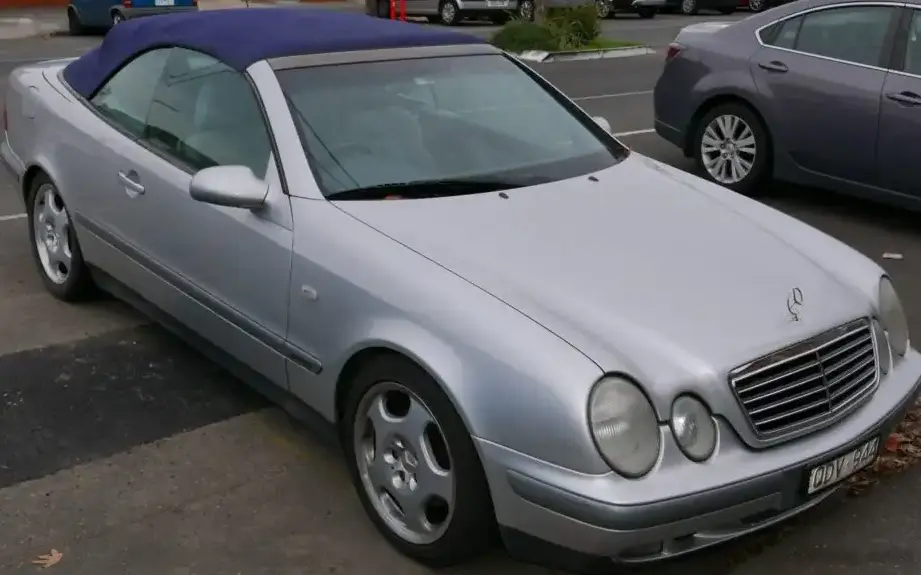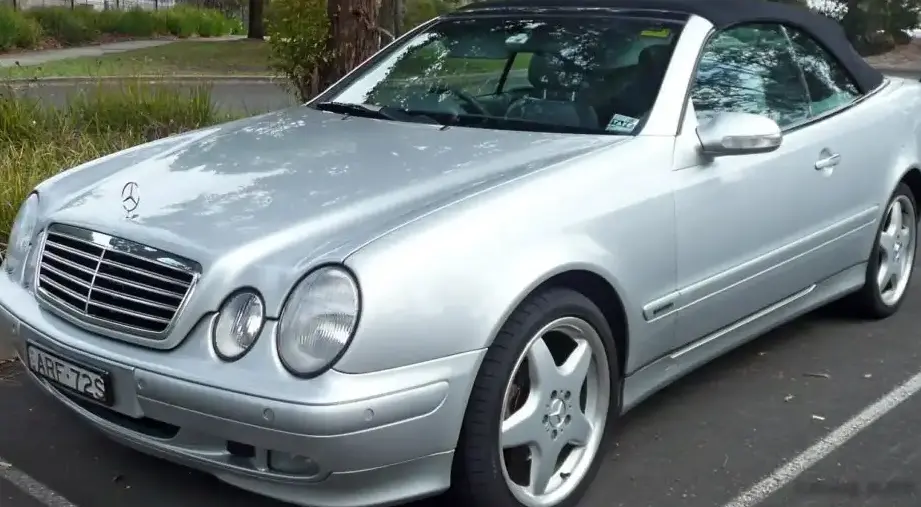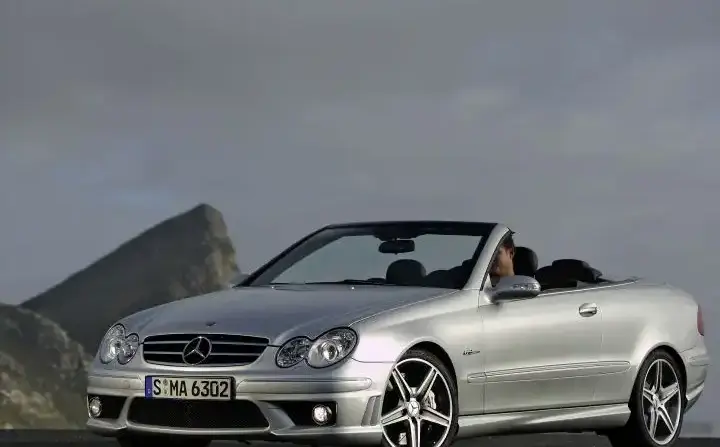
The Mercedes-Benz CLK 280 V6, produced from July 2005 to August 2009, represents a compelling blend of performance and luxury within the A209 CLK facelift generation. Positioned as a mid-range offering in the CLK lineup, it catered to buyers seeking a more potent engine than the entry-level models, but without the outright performance and price tag of the CLK 55 AMG or the more focused CLK 350. Available exclusively as a two-door coupe or convertible (Cabriolet), the CLK 280 V6 aimed to deliver a refined grand touring experience, combining Mercedes-Benz’s renowned comfort with a respectable level of power. This variant was primarily marketed in Europe, North America, and Asia, offering a sophisticated alternative to rivals like the BMW 3 Series Convertible and Audi A5 Cabriolet.
Technical Specifications
| Brand | Mercedes-Benz |
| Model | CLK |
| Generation | CLK (A209, facelift 2005) |
| Type | CLK 280 V6 (231 Hp) 7G-TRONIC |
| Start of production | July, 2005 |
| End of production | August, 2009 |
| Powertrain Architecture | Internal Combustion engine |
| Body type | Cabriolet |
| Seats | 4 |
| Doors | 2 |
| Fuel consumption (urban) | 13.3-13.6 l/100 km (17.7 – 17.3 US mpg, 21.2 – 20.8 UK mpg, 7.5 – 7.4 km/l) |
| Fuel consumption (extra urban) | 7-7.3 l/100 km (33.6 – 32.2 US mpg, 40.4 – 38.7 UK mpg, 14.3 – 13.7 km/l) |
| Fuel consumption (combined) | 9.3-9.6 l/100 km (25.3 – 24.5 US mpg, 30.4 – 29.4 UK mpg, 10.8 – 10.4 km/l) |
| CO2 emissions | 222-229 g/km |
| Fuel Type | Petrol (Gasoline) |
| Acceleration 0 – 100 km/h | 7.8 sec |
| Acceleration 0 – 62 mph | 7.8 sec |
| Acceleration 0 – 60 mph | 7.4 sec |
| Maximum speed | 245 km/h (152.24 mph) |
| Emission standard | Euro 4 |
| Weight-to-power ratio | 7.1 kg/Hp, 141.7 Hp/tonne |
| Weight-to-torque ratio | 5.4 kg/Nm, 184 Nm/tonne |
| Power | 231 Hp @ 6000 rpm |
| Power per litre | 77.1 Hp/l |
| Torque | 300 Nm @ 2500-5000 rpm (221.27 lb.-ft. @ 2500-5000 rpm) |
| Engine layout | Front, Longitudinal |
| Engine Model/Code | M 272.940 |
| Engine displacement | 2996 cm3 (182.83 cu. in.) |
| Number of cylinders | 6 |
| Engine configuration | V-engine |
| Cylinder Bore | 88 mm (3.46 in.) |
| Piston Stroke | 82.1 mm (3.23 in.) |
| Compression ratio | 11.3:1 |
| Number of valves per cylinder | 4 |
| Fuel injection system | Multi-port manifold injection |
| Engine aspiration | Naturally aspirated engine |
| Valvetrain | DOHC |
| Engine oil capacity | 8 l (8.45 US qt | 7.04 UK qt) |
| Coolant | 10 l (10.57 US qt | 8.8 UK qt) |
| Kerb Weight | 1630 kg (3593.53 lbs.) |
| Max. weight | 2170 kg (4784.03 lbs.) |
| Max load | 540 kg (1190.5 lbs.) |
| Trunk (boot) space – minimum | 276 l (9.75 cu. ft.) |
| Trunk (boot) space – maximum | 390 l (13.77 cu. ft.) |
| Fuel tank capacity | 62 l (16.38 US gal | 13.64 UK gal) |
| Length | 4652 mm (183.15 in.) |
| Width | 1740 mm (68.5 in.) |
| Width including mirrors | 1991 mm (78.39 in.) |
| Height | 1413 mm (55.63 in.) |
| Wheelbase | 2715 mm (106.89 in.) |
| Front track | 1493-1497 mm (58.78 – 58.94 in.) |
| Rear (Back) track | 1474-1478 mm (58.03 – 58.19 in.) |
| Front overhang | 854 mm (33.62 in.) |
| Rear overhang | 1083 mm (42.64 in.) |
| Minimum turning circle | 10.76 m (35.3 ft.) |
| Drivetrain Architecture | Rear wheel drive |
| Drive wheel | Rear wheel drive |
| Number of gears | 7 |
| Gearbox type | automatic transmission G-TRONIC |
| Front suspension | Independent, type McPherson with coil spring and anti-roll bar |
| Rear suspension | Independent multi-link spring suspension with stabilizer |
| Front brakes | Ventilated discs |
| Rear brakes | Ventilated discs |
| Assisting systems | ABS (Anti-lock braking system) |
| Steering type | Steering rack and pinion |
| Power steering | Hydraulic Steering |
| Tires size (Front) | 205/55 R16; 225/45 R17 |
| Tires size (Rear) | 225/50 R16; 245/40 R17 |
| Wheel rims size (Front) | 7J x 16; 7.5J x 17 |
| Wheel rims size (Rear) | 8J x 16; 8.5J x 17 |
Powertrain & Engine Architecture
The heart of the CLK 280 V6 is the M272.940 3.0-liter naturally aspirated V6 engine. This engine, a cornerstone of Mercedes-Benz’s mid-2000s lineup, features a 60-degree V-angle and utilizes a magnesium block with aluminum cylinder heads. It employs a three-valve-per-cylinder (two intake, one exhaust) DOHC valvetrain and a multi-port fuel injection system. The engine’s output of 231 horsepower at 6,000 rpm and 300 Nm (221 lb-ft) of torque between 2,500 and 5,000 rpm provides a smooth and responsive power delivery. Paired exclusively with the 7G-TRONIC seven-speed automatic transmission, the CLK 280 V6 offered seamless gear changes and contributed to its refined driving experience. The 7G-TRONIC, a significant advancement over previous Mercedes-Benz automatics, allowed for both fully automatic operation and manual gear selection via steering wheel-mounted paddles or the gear selector.
Driving Characteristics
The CLK 280 V6 delivers a comfortable and composed driving experience. While not overtly sporty, the engine provides sufficient power for confident overtaking and cruising. The 7G-TRONIC transmission is well-matched to the engine, offering smooth and quick shifts. Compared to the more powerful CLK 350, the 280 feels less urgent in its acceleration, taking approximately 7.8 seconds to reach 60 mph. However, this difference is often offset by the 280’s slightly lighter weight and more balanced handling. The gear ratios in the 7G-TRONIC are optimized for both fuel efficiency and relaxed highway cruising. The suspension, tuned for comfort, absorbs bumps and imperfections in the road effectively, making it a pleasant grand tourer.
Equipment & Trim Levels
The CLK 280 V6 typically came standard with features such as leather upholstery, automatic climate control, power-adjustable front seats, a premium sound system, and a sunroof (often a panoramic sunroof on Cabriolet models). Optional extras included navigation system, upgraded sound systems (such as Harman Kardon), heated seats, and various cosmetic enhancements. Interior trim options ranged from wood veneers to aluminum accents. The Cabriolet version featured a fully automatic retractable hardtop, providing open-air driving enjoyment with the security and refinement of a coupe when closed.
Chassis & Braking
The CLK 280 V6 utilizes a McPherson strut front suspension and a multi-link independent rear suspension. This setup provides a good balance between ride comfort and handling precision. Braking duties are handled by ventilated disc brakes on all four wheels, coupled with ABS (Anti-lock Braking System). The steering is a hydraulic power-assisted rack and pinion system, offering a reasonably direct and responsive feel. Stabilizer bars are fitted to both the front and rear axles to reduce body roll during cornering.
Market Reception & Comparison
The CLK 280 V6 was generally well-received by automotive critics. It was praised for its comfortable ride, refined interior, and smooth powertrain. However, some reviewers noted that its performance wasn’t as exhilarating as some of its rivals. Compared to the CLK 350, the 280 offered a more affordable entry point into the CLK range, while still providing a luxurious and enjoyable driving experience. Fuel economy was respectable for a V6-powered luxury car, averaging around 25 mpg combined. The CLK 280 V6 offered a compelling alternative to the BMW 3 Series Convertible and Audi A5 Cabriolet, appealing to buyers who prioritized comfort and refinement over outright sportiness.
Legacy
The M272 engine family, including the 3.0-liter V6 found in the CLK 280, is generally considered to be a reliable and durable powertrain. While preventative maintenance is crucial, these engines are known to withstand high mileage with proper care. The 7G-TRONIC transmission has also proven to be relatively reliable, although fluid changes are essential to maintain its smooth operation. Today, the CLK 280 V6 represents a relatively affordable entry point into the Mercedes-Benz convertible market. Well-maintained examples are sought after by enthusiasts who appreciate their classic styling, comfortable ride, and reliable powertrain. However, potential buyers should be aware of potential issues such as oil leaks and wear on suspension components, common in vehicles of this age.