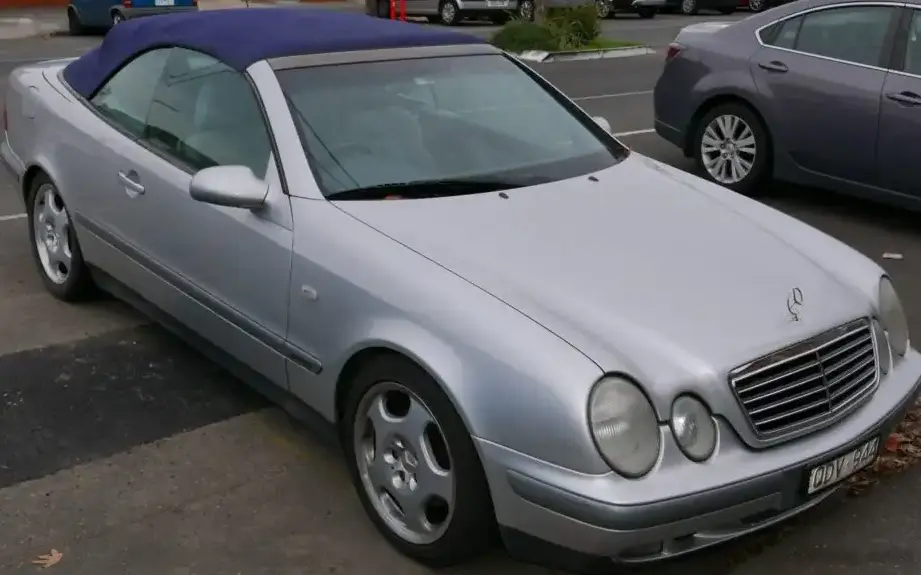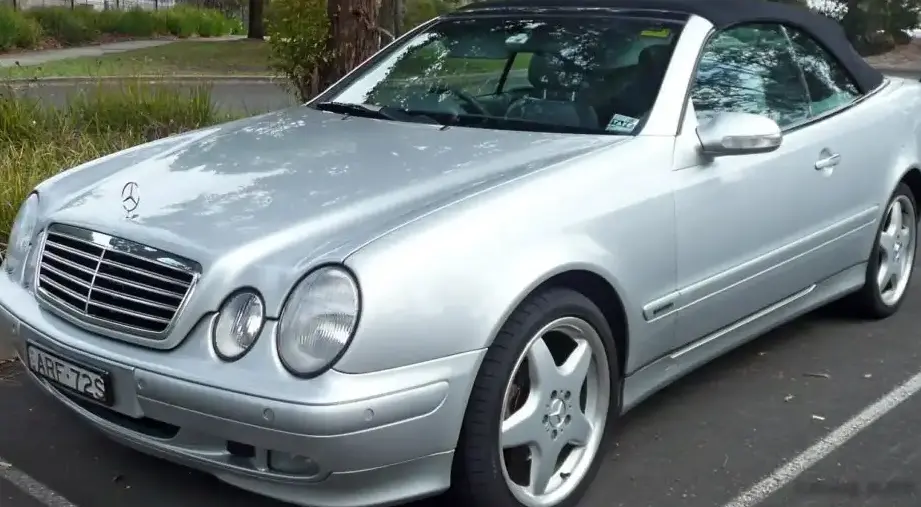
The Mercedes-Benz CLK 200 Kompressor, produced from March 2000 to May 2002, was a key variant within the C208 CLK facelift range. Positioned as a mid-range offering, it aimed to balance performance and affordability within the coupe lineup. This model represented Mercedes-Benz’s attempt to broaden the CLK’s appeal, offering a more accessible entry point than the higher-performance CLK 320 or the more expensive CLK 430 AMG. The “Kompressor” designation indicated the presence of a supercharger, enhancing the engine’s output compared to naturally aspirated versions. It was built on the W208/C208 platform, sharing components with the contemporary C-Class sedan.
Technical Specifications
| Brand | Mercedes-Benz |
| Model | CLK |
| Generation | CLK (C208, facelift 1999) |
| Type (Engine) | CLK 200 Kompressor (163 Hp) 5G-TRONIC |
| Start of production | March, 2000 |
| End of production | May, 2002 |
| Powertrain Architecture | Internal Combustion engine |
| Body type | Coupe |
| Seats | 4 |
| Doors | 2 |
| Fuel consumption (economy) – urban (NEDC) | 13.4 l/100 km (17.6 US mpg, 21.1 UK mpg, 7.5 km/l) |
| Fuel consumption (economy) – extra urban (NEDC) | 7 l/100 km (33.6 US mpg, 40.4 UK mpg, 14.3 km/l) |
| Fuel consumption (economy) – combined (NEDC) | 9.3 l/100 km (25.3 US mpg, 30.4 UK mpg, 10.8 km/l) |
| Fuel Type | Petrol (Gasoline) |
| Acceleration 0 – 100 km/h | 9.5 sec |
| Acceleration 0 – 62 mph | 9.5 sec |
| Acceleration 0 – 60 mph | 9 sec |
| Maximum speed | 220 km/h (136.7 mph) |
| Weight-to-power ratio | 8.7 kg/Hp, 115.2 Hp/tonne |
| Weight-to-torque ratio | 6.2 kg/Nm, 162.5 Nm/tonne |
| Power | 163 Hp @ 5300 rpm |
| Power per litre | 81.6 Hp/l |
| Torque | 230 Nm @ 2500-4800 rpm (169.64 lb.-ft. @ 2500-4800 rpm) |
| Engine layout | Front, Longitudinal |
| Engine Model/Code | M 111.956 |
| Engine displacement | 1998 cm3 (121.93 cu. in.) |
| Number of cylinders | 4 |
| Engine configuration | Inline |
| Cylinder Bore | 89.9 mm (3.54 in.) |
| Piston Stroke | 78.7 mm (3.1 in.) |
| Compression ratio | 9.5:1 |
| Number of valves per cylinder | 4 |
| Fuel injection system | Multi-port manifold injection |
| Engine aspiration | Supercharger, Intercooler |
| Valvetrain | DOHC |
| Engine oil capacity | 5.5 l (5.81 US qt | 4.84 UK qt) |
| Coolant | 8 l (8.45 US qt | 7.04 UK qt) |
| Kerb Weight | 1415 kg (3119.54 lbs.) |
| Max. weight | 1840 kg (4056.51 lbs.) |
| Max load | 425 kg (936.96 lbs.) |
| Trunk (boot) space – minimum | 420 l (14.83 cu. ft.) |
| Fuel tank capacity | 62 l (16.38 US gal | 13.64 UK gal) |
| Length | 4567 mm (179.8 in.) |
| Width | 1722 mm (67.8 in.) |
| Width including mirrors | 1969 mm (77.52 in.) |
| Height | 1371 mm (53.98 in.) |
| Wheelbase | 2690 mm (105.91 in.) |
| Front track | 1505 mm (59.25 in.) |
| Rear (Back) track | 1474 mm (58.03 in.) |
| Front overhang | 860 mm (33.86 in.) |
| Rear overhang | 1017 mm (40.04 in.) |
| Minimum turning circle (turning diameter) | 10.7 m (35.1 ft.) |
| Drivetrain Architecture | The Internal combustion engine (ICE) drives the rear wheels of the vehicle. |
| Drive wheel | Rear wheel drive |
| Number of gears and type of gearbox | 5 gears, automatic transmission G-TRONIC |
| Front suspension | Coil spring, Double wishbone, Transverse stabilizer |
| Rear suspension | Independent multi-link spring suspension with stabilizer |
| Front brakes | Ventilated discs |
| Rear brakes | Disc |
| Assisting systems | ABS (Anti-lock braking system) |
| Steering type | Cone worm with recirculation balls |
| Power steering | Hydraulic Steering |
| Tires size | 205/55 R16 |
| Wheel rims size | 7J x 16 |
INTRODUCTION
The CLK 200 Kompressor, launched in 2000 as part of the C208 facelift, aimed to provide a more accessible entry point into the CLK coupe range. The facelift brought revised styling, improved interior materials, and updated engine options. This variant was designed to appeal to buyers who desired the CLK’s elegant styling and comfortable ride without the higher price tag of the more powerful models. It occupied a space between the base CLK 180 and the more performance-oriented CLK 320, offering a balance of efficiency and respectable performance. The 5G-TRONIC automatic transmission was a key feature, providing smooth gear changes and enhancing the overall driving experience.
Powertrain & Engine Architecture
At the heart of the CLK 200 Kompressor lies the M111.956 2.0-liter inline-four cylinder engine. This engine is notable for its supercharger (Kompressor in Mercedes terminology), which provides a significant boost in power compared to naturally aspirated engines of similar displacement. The supercharger, an Eaton M62 unit, is belt-driven and delivers boost across a wide RPM range, minimizing turbo lag. The engine utilizes multi-port fuel injection and a double overhead camshaft (DOHC) valvetrain with four valves per cylinder. The 5G-TRONIC automatic transmission, a five-speed unit, was specifically tuned to complement the engine’s characteristics. This transmission featured a torque converter lock-up clutch to improve fuel efficiency at cruising speeds. The engine’s layout is front-mounted and longitudinal, driving the rear wheels.
Driving Characteristics
The CLK 200 Kompressor offered a comfortable and refined driving experience. While not a sports car, the supercharger provided a noticeable surge of power, resulting in a 0-60 mph time of around 9 seconds and a top speed of 136.7 mph. The 5G-TRONIC transmission shifted smoothly, contributing to a relaxed driving style. Compared to the manual transmission options available on other CLK models, the automatic prioritized comfort over outright performance. The gear ratios were optimized for fuel efficiency and smooth acceleration, rather than aggressive downshifts. Compared to the CLK 320 with its V6 engine, the 200 Kompressor felt less powerful, particularly at higher speeds, but offered better fuel economy.
Equipment & Trim Levels
The CLK 200 Kompressor came standard with a respectable level of equipment. Interior features typically included cloth upholstery, power windows, power mirrors, and a basic audio system. Air conditioning was standard. Optional extras included leather upholstery, sunroof, upgraded audio systems, and automatic climate control. The dashboard layout was typical of Mercedes-Benz at the time, featuring a wood trim and a clear, functional design. Safety features included ABS brakes, airbags, and traction control. The trim level was generally considered mid-range, offering a good balance of features and affordability.
Chassis & Braking
The CLK 200 Kompressor utilized a coil spring, double wishbone suspension setup at the front, with a multi-link independent suspension at the rear. A transverse stabilizer bar was fitted to both axles to reduce body roll. The braking system consisted of ventilated discs at the front and solid discs at the rear. ABS (Anti-lock Braking System) was standard. The suspension was tuned for comfort, providing a smooth ride over most road surfaces. The chassis was designed to provide a stable and predictable handling experience, although it wasn’t as sporty as some of its competitors.
Market Reception & Comparison
The CLK 200 Kompressor was generally well-received by automotive critics. It was praised for its comfortable ride, refined interior, and the added performance provided by the supercharger. However, some critics noted that the automatic transmission could feel slightly sluggish at times. Compared to the CLK 320, the 200 Kompressor offered better fuel economy (around 25.3 US mpg combined) but lacked the V6’s outright power. Reliability was generally good, although some owners reported minor issues with the supercharger and the automatic transmission over the long term. It was seen as a strong competitor to other entry-level luxury coupes, such as the BMW 3 Series Coupe and the Audi TT.
Legacy
The CLK 200 Kompressor has become a relatively affordable entry point into Mercedes-Benz ownership in the used car market. The M111 engine is known for its durability, although regular maintenance is essential. The 5G-TRONIC transmission, while generally reliable, can require servicing as it ages. Today, these cars are often sought after by enthusiasts who appreciate their classic styling and relatively simple mechanicals. While not a high-performance machine, the CLK 200 Kompressor remains a comfortable and stylish coupe that offers a taste of Mercedes-Benz luxury at a reasonable price.