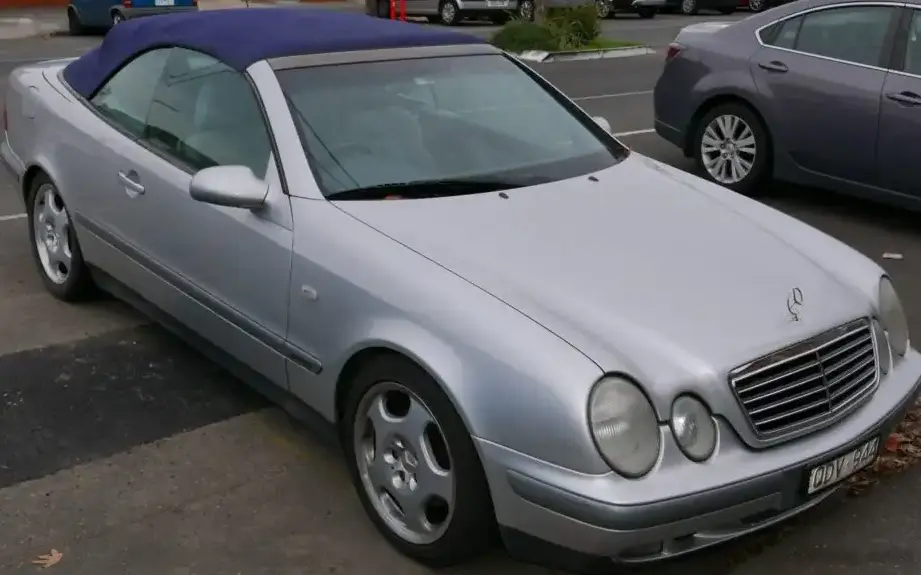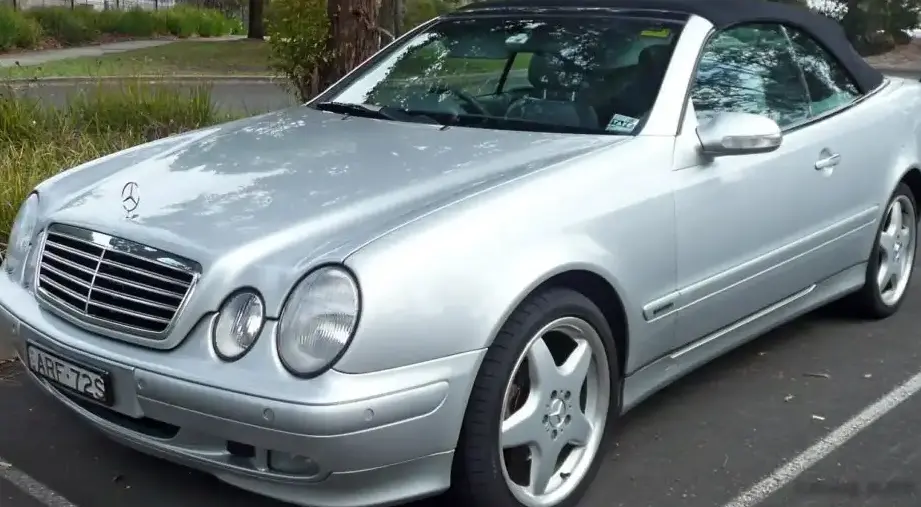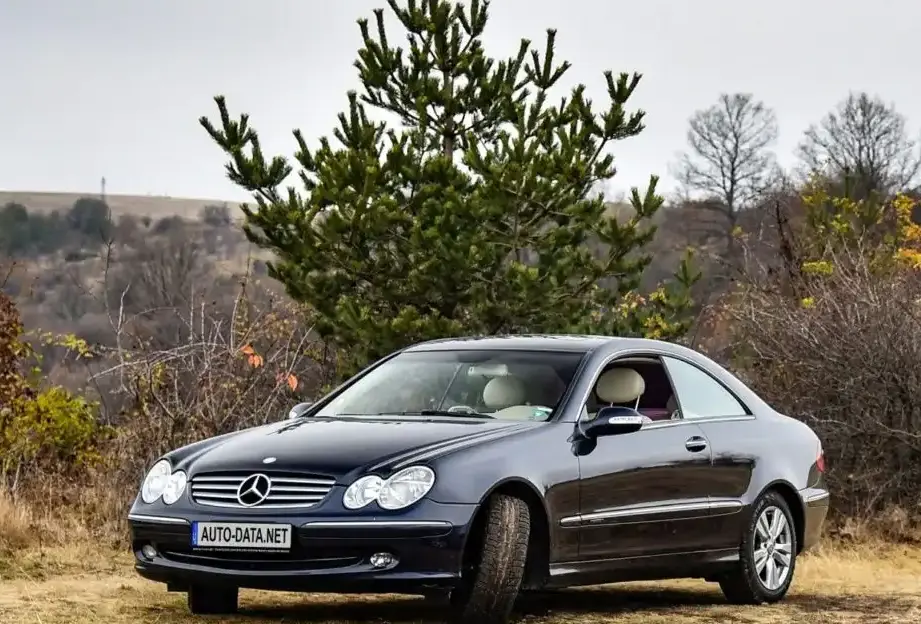
The Mercedes-Benz CLK 200 Kompressor, produced from July 2002 to May 2005, was a key variant within the C209 CLK-Class range. Positioned as an entry-level to mid-range offering, it aimed to provide a blend of Mercedes-Benz luxury and performance at a more accessible price point. Built on the W203 C-Class platform (internally designated 1HX0), the CLK-Class represented a coupe and convertible evolution of the sedan, emphasizing style and a more dynamic driving experience. The 200 Kompressor, with its supercharged 1.8-liter engine and 5G-TRONIC automatic transmission, was a popular choice for buyers prioritizing comfort and fuel efficiency over outright speed.
Technical Specifications
| Brand | Mercedes-Benz |
| Model | CLK |
| Generation | CLK (C209) |
| Type (Engine) | CLK 200 Kompressor (163 Hp) 5G-TRONIC |
| Start of production | July, 2002 |
| End of production | May, 2005 |
| Powertrain Architecture | Internal Combustion engine |
| Body type | Coupe |
| Seats | 4 |
| Doors | 2 |
| Fuel consumption (urban) | 12.7 l/100 km (18.5 US mpg, 22.2 UK mpg) |
| Fuel consumption (extra urban) | 6.4 l/100 km (36.8 US mpg, 44.1 UK mpg) |
| Fuel consumption (combined) | 8.7 l/100 km (27 US mpg, 32.5 UK mpg) |
| CO2 emissions | 209 g/km |
| Fuel Type | Petrol (Gasoline) |
| Acceleration 0 – 100 km/h | 9.9 sec |
| Acceleration 0 – 62 mph | 9.9 sec |
| Acceleration 0 – 60 mph | 9.4 sec |
| Maximum speed | 228 km/h (141.67 mph) |
| Emission standard | Euro 4 |
| Weight-to-power ratio | 9 kg/Hp |
| Weight-to-torque ratio | 6.1 kg/Nm |
| Power | 163 Hp @ 5500 rpm |
| Power per litre | 90.8 Hp/l |
| Torque | 240 Nm @ 3000 rpm (177.01 lb.-ft. @ 3000 rpm) |
| Maximum engine speed | 6000 rpm |
| Engine layout | Front, Longitudinal |
| Engine Model/Code | M 271.940 |
| Engine displacement | 1796 cm3 (109.6 cu. in.) |
| Number of cylinders | 4 |
| Engine configuration | Inline |
| Cylinder Bore | 82 mm (3.23 in.) |
| Piston Stroke | 85 mm (3.35 in.) |
| Compression ratio | 9.5:1 |
| Number of valves per cylinder | 4 |
| Fuel injection system | Multi-port manifold injection |
| Engine aspiration | Supercharger, Intercooler |
| Valvetrain | DOHC |
| Engine oil capacity | 5.5 l (5.81 US qt | 4.84 UK qt) |
| Coolant | 8 l (8.45 US qt | 7.04 UK qt) |
| Kerb Weight | 1465 kg (3229.77 lbs.) |
| Max. weight | 2010 kg (4431.29 lbs.) |
| Max load | 545 kg (1201.52 lbs.) |
| Trunk (boot) space – minimum | 435 l (15.36 cu. ft.) |
| Fuel tank capacity | 62 l (16.38 US gal | 13.64 UK gal) |
| Max. roof load | 100 kg (220.46 lbs.) |
| Permitted trailer load with brakes (12%) | 1500 kg (3306.93 lbs.) |
| Permitted trailer load without brakes | 750 kg (1653.47 lbs.) |
| Length | 4638 mm (182.6 in.) |
| Width | 1740 mm (68.5 in.) |
| Width including mirrors | 1991 mm (78.39 in.) |
| Height | 1413 mm (55.63 in.) |
| Wheelbase | 2715 mm (106.89 in.) |
| Front track | 1493 mm (58.78 in.) |
| Rear track | 1474 mm (58.03 in.) |
| Front overhang | 840 mm (33.07 in.) |
| Rear overhang | 1083 mm (42.64 in.) |
| Drag coefficient (Cd) | 0.28 |
| Minimum turning circle | 10.76 m (35.3 ft.) |
| Drivetrain Architecture | Rear wheel drive |
| Drive wheel | Rear wheel drive |
| Number of gears and type of gearbox | 5 gears, automatic transmission |
| Front suspension | Independent type McPherson, Transverse stabilizer |
| Rear suspension | Independent multi-link suspension, Transverse stabilizer |
| Front brakes | Ventilated discs, 288×25 mm |
| Rear brakes | Disc, 278×9 mm |
| Assisting systems | ABS (Anti-lock braking system) |
| Steering type | Steering rack and pinion |
| Power steering | Hydraulic Steering |
| Tires size | Front wheel tires: 205/55 R16 Rear wheel tires: 225/50 R16 |
| Wheel rims size | Front wheel rims: 7J x 16 Rear wheel rims: 8J x 16 |
INTRODUCTION
The CLK 200 Kompressor, launched in 2002, served as a crucial entry point into the C209 CLK-Class range. Mercedes-Benz aimed to broaden the appeal of the CLK by offering a more affordable and fuel-efficient option alongside the more powerful CLK 320 and later, the high-performance CLK 55 AMG. The “Kompressor” designation indicated the presence of a mechanically driven supercharger, enhancing the engine’s torque output and providing a more responsive driving experience compared to naturally aspirated alternatives. This model was primarily marketed in Europe and other regions where smaller displacement, fuel-efficient engines were highly valued.
Powertrain & Engine Architecture
At the heart of the CLK 200 Kompressor lies the M271.940 1.8-liter inline-four cylinder engine. This engine, part of Mercedes-Benz’s new generation of four-cylinder powerplants, featured a supercharger (branded as “Kompressor”) and an intercooler to increase air density and boost power. The engine utilized multi-port fuel injection and a double overhead camshaft (DOHC) valvetrain with four valves per cylinder. The supercharger, driven by the engine’s crankshaft via a belt, provided instant boost, mitigating turbo lag commonly associated with turbocharged engines. Paired with the engine was the 5G-TRONIC automatic transmission, a five-speed unit known for its smooth shifting and adaptability. This transmission featured a torque converter and electronically controlled gear changes, optimizing fuel efficiency and driving comfort. The engine code, M271.940, is crucial for identifying specific parts and service requirements.
Driving Characteristics
The CLK 200 Kompressor offered a comfortable and refined driving experience, prioritizing ease of use over outright performance. With 163 horsepower and 240 Nm (177 lb-ft) of torque, acceleration from 0 to 60 mph took approximately 9.4 seconds, and top speed was limited to 141.67 mph. While not a sports car, the supercharger provided a noticeable boost in low-to-mid range power, making everyday driving and overtaking maneuvers relatively effortless. The 5G-TRONIC transmission contributed to a smooth and seamless driving experience, although it lacked the responsiveness of a manual gearbox. Compared to the CLK 320 with its larger V6 engine, the 200 Kompressor felt less powerful, but it offered significantly better fuel economy. The automatic transmission’s gear ratios were tuned for comfort and efficiency, rather than aggressive acceleration.
Equipment & Trim Levels
The CLK 200 Kompressor typically came equipped with a respectable level of standard features, reflecting Mercedes-Benz’s commitment to luxury. Standard equipment included automatic climate control, power windows and mirrors, a multi-function steering wheel, and a basic audio system. Upholstery was typically cloth, although leather options were available. Optional extras included a premium sound system, sunroof, heated seats, and parking sensors. Trim levels were relatively limited, with most customization options available as individual add-ons. The interior design was consistent with other C209 CLK models, featuring a classic Mercedes-Benz dashboard layout with wood trim accents.
Chassis & Braking
The CLK 200 Kompressor utilized a McPherson strut front suspension and a multi-link independent rear suspension, providing a comfortable ride and predictable handling. Stabilizer bars were fitted to both axles to reduce body roll during cornering. The braking system consisted of ventilated discs at the front and solid discs at the rear. Anti-lock Braking System (ABS) was standard, enhancing braking performance and stability. The suspension was tuned for comfort, prioritizing ride quality over sporty handling. The weight distribution was reasonably balanced, contributing to stable and predictable handling characteristics.
Market Reception & Comparison
The CLK 200 Kompressor was generally well-received by automotive critics as a sensible and well-rounded offering. It was praised for its comfortable ride, refined interior, and relatively good fuel economy. However, some critics noted that its performance was not particularly exciting compared to its more powerful siblings. Compared to the CLK 320, the 200 Kompressor offered a significant fuel economy advantage, but at the cost of performance. The 1.8L engine was also considered easier and cheaper to maintain than the larger V6. In terms of reliability, the M271 engine proved to be generally robust, although issues with the supercharger and timing chain were occasionally reported.
Legacy
The CLK 200 Kompressor remains a relatively affordable entry point into Mercedes-Benz ownership in the used car market. The M271 engine, while not without its potential issues, is generally considered reliable if properly maintained. The 5G-TRONIC transmission is also known for its durability. Today, these cars are often sought after by enthusiasts looking for a stylish and comfortable coupe at a reasonable price. Parts availability is generally good, although some specific components may be becoming increasingly difficult to find. The CLK 200 Kompressor represents a significant step in Mercedes-Benz’s efforts to offer a wider range of models to appeal to a broader customer base.