Technical Specifications
| Brand | Mercedes-Benz |
| Model | CLK |
| Generation | CLK (C209) |
| Type (Engine) | CLK 240 (170 Hp) |
| Start of production | February, 2002 |
| End of production | May, 2005 |
| Powertrain Architecture | Internal Combustion engine |
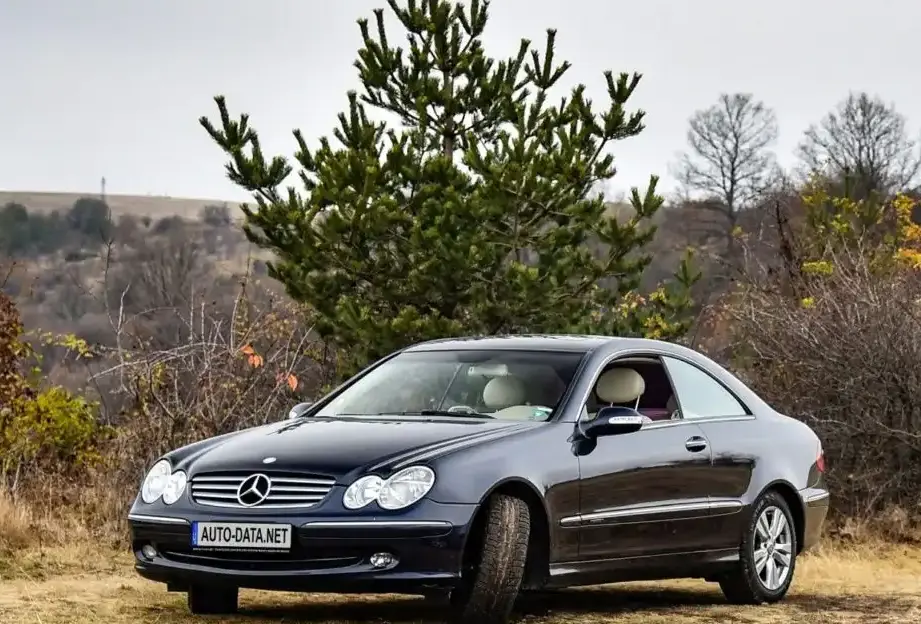
| Body type | Coupe |
| Seats | 4 |
| Doors | 2 |
| Fuel consumption (economy) – urban (NEDC) | 16 l/100 km (14.7 US mpg, 17.7 UK mpg, 6.3 km/l) |
| Fuel consumption (economy) – extra urban (NEDC) | 7.8 l/100 km (30.2 US mpg, 36.2 UK mpg, 12.8 km/l) |
| Fuel consumption (economy) – combined (NEDC) | 10.8 l/100 km (21.8 US mpg, 26.2 UK mpg, 9.3 km/l) |
| CO2 emissions (NEDC) | 259 g/km |
| Fuel Type | Petrol (Gasoline) |
| Acceleration 0 – 100 km/h | 9.2 sec |
| Acceleration 0 – 62 mph | 9.2 sec |
| Acceleration 0 – 60 mph | 8.7 sec |
| Maximum speed | 236 km/h (146.64 mph) |
| Emission standard | Euro 4 |
| Weight-to-power ratio | 8.8 kg/Hp, 113.3 Hp/tonne |
| Weight-to-torque ratio | 6.3 kg/Nm, 160 Nm/tonne |
| Power | 170 Hp @ 5500 rpm |
| Power per litre | 65.5 Hp/l |
| Torque | 240 Nm @ 4500 rpm (177.01 lb.-ft. @ 4500 rpm) |
| Maximum engine speed | 6000 rpm |
| Engine layout | Front, Longitudinal |
| Engine Model/Code | M 112.912 |
| Engine displacement | 2597 cm3 (158.48 cu. in.) |
| Number of cylinders | 6 |
| Engine configuration | V-engine |
| Cylinder Bore | 89.9 mm (3.54 in.) |
| Piston Stroke | 68.2 mm (2.69 in.) |
| Compression ratio | 10.5:1 |
| Number of valves per cylinder | 3 |
| Fuel injection system | Multi-port manifold injection |
| Engine aspiration | Naturally aspirated engine |
| Valvetrain | SOHC |
| Engine oil capacity | 8 l (8.45 US qt | 7.04 UK qt) |
| Coolant | 10.5 l (11.1 US qt | 9.24 UK qt) |
| Kerb Weight | 1500 kg (3306.93 lbs.) |
| Max. weight | 2030 kg (4475.38 lbs.) |
| Max load | 530 kg (1168.45 lbs.) |
| Trunk (boot) space – minimum | 435 l (15.36 cu. ft.) |
| Fuel tank capacity | 62 l (16.38 US gal | 13.64 UK gal) |
| Max. roof load | 100 kg (220.46 lbs.) |
| Permitted trailer load with brakes (12%) | 1500 kg (3306.93 lbs.) |
| Permitted trailer load without brakes | 750 kg (1653.47 lbs.) |
| Length | 4638 mm (182.6 in.) |
| Width | 1740 mm (68.5 in.) |
| Width including mirrors | 1991 mm (78.39 in.) |
| Height | 1413 mm (55.63 in.) |
| Wheelbase | 2715 mm (106.89 in.) |
| Front track | 1493 mm (58.78 in.) |
| Rear (Back) track | 1474 mm (58.03 in.) |
| Front overhang | 840 mm (33.07 in.) |
| Rear overhang | 1083 mm (42.64 in.) |
| Drag coefficient (Cd) | 0.28 |
| Minimum turning circle (turning diameter) | 10.76 m (35.3 ft.) |
| Drivetrain Architecture | The Internal combustion engine (ICE) drives the rear wheels of the vehicle. |
| Drive wheel | Rear wheel drive |
| Number of gears and type of gearbox | 6 gears, manual transmission |
| Front suspension | Independent type McPherson, Transverse stabilizer |
| Rear suspension | Independent multi-link suspension, Transverse stabilizer |
| Front brakes | Ventilated discs, 300×28 mm |
| Rear brakes | Disc, 290×10 mm |
| Assisting systems | ABS (Anti-lock braking system) |
| Steering type | Steering rack and pinion |
| Power steering | Hydraulic Steering |
| Tires size | Front wheel tires: 205/55 R16 Rear wheel tires: 225/50 R16 |
| Wheel rims size | Front wheel rims: 7J x 16 Rear wheel rims: 8J x 16 |
The Mercedes-Benz CLK 240, produced from February 2002 to May 2005, was a significant variant within the C209 CLK-Class range. Positioned as a mid-range offering, it bridged the gap between the entry-level CLK 200 Kompressor and the more powerful CLK 320. The C209 generation marked a departure for the CLK, moving away from its shared platform with the C-Class and adopting a more independent design. This model aimed to deliver a blend of luxury, performance, and everyday usability, appealing to buyers seeking a stylish coupe experience.
Powertrain & Engine Architecture
The CLK 240 was powered by the M112.912, a 2.6-liter naturally aspirated V6 engine. This engine, part of Mercedes-Benz’s modular V6 and V8 family, featured a 60-degree V-angle and a single overhead camshaft (SOHC) design per cylinder bank. The M112 engine was known for its smooth operation and relatively simple design, eschewing complex technologies like turbocharging or direct injection in favor of proven reliability. Fuel delivery was handled by a multi-port fuel injection system, providing precise fuel metering for optimal combustion. The engine produced 170 horsepower at 5500 rpm and 240 Nm (177 lb-ft) of torque at 4500 rpm. The engine was longitudinally mounted, driving the rear wheels. The standard transmission was a 6-speed manual, although a 5-speed automatic transmission was also available, and was a popular choice for buyers prioritizing comfort and ease of use.
Driving Characteristics
The CLK 240 with the manual transmission offered a reasonably engaging driving experience. While not a sports car, the V6 provided adequate power for comfortable cruising and occasional spirited driving. The 0-60 mph time of around 8.7 seconds was respectable for the era. The automatic transmission, while smooth, did slightly diminish performance and responsiveness. Gear ratios were tuned for a balance between acceleration and fuel economy. The rear-wheel-drive configuration contributed to balanced handling, although it lacked the all-weather capability of all-wheel-drive variants. Compared to the CLK 320, the 240 offered less outright performance, but it was lighter and more nimble. The 200 Kompressor, on the other hand, offered similar power but with a different torque curve, feeling more responsive at lower speeds.
Equipment & Trim Levels
The CLK 240 came reasonably well-equipped as standard. Interior features typically included leather upholstery, automatic climate control, power-adjustable front seats, and a multi-function steering wheel. The dashboard layout was typical of Mercedes-Benz at the time, emphasizing a clean and elegant design. Optional extras included a premium sound system, sunroof, navigation system, and heated seats. Trim levels were relatively simple, with most customization coming through individual option selections. The overall ambiance was one of understated luxury, focusing on quality materials and build craftsmanship.
Chassis & Braking
The C209 CLK-Class utilized an independent suspension system all around. The front featured a McPherson strut setup with a transverse stabilizer, while the rear employed a multi-link suspension, also with a stabilizer bar. This configuration provided a comfortable ride and good handling characteristics. Braking duties were handled by ventilated discs at the front and solid discs at the rear, equipped with ABS (Anti-lock Braking System) as standard. The braking system was generally considered adequate for the car’s performance, providing confident stopping power in most conditions.
Market Reception & Comparison
The CLK 240 was generally well-received by automotive critics. It was praised for its stylish design, comfortable ride, and refined interior. However, some reviewers noted that the engine lacked the punch of its larger siblings. Fuel economy was considered average for a V6 coupe of its size. Compared to the CLK 320, the 240 offered a more affordable entry point into the CLK range, making it appealing to a wider range of buyers. The 200 Kompressor provided a similar price point but with a different driving experience, prioritizing low-end torque over overall power.
Legacy
The M112 engine family, including the 2.6-liter variant in the CLK 240, is known for its durability and reliability. With proper maintenance, these engines can accumulate high mileage without major issues. The CLK 240 remains a relatively affordable and stylish coupe on the used car market. While not as sought-after as some of the higher-performance CLK variants, it offers a compelling combination of luxury, comfort, and reliability, making it a good choice for buyers seeking a classic Mercedes-Benz coupe experience.