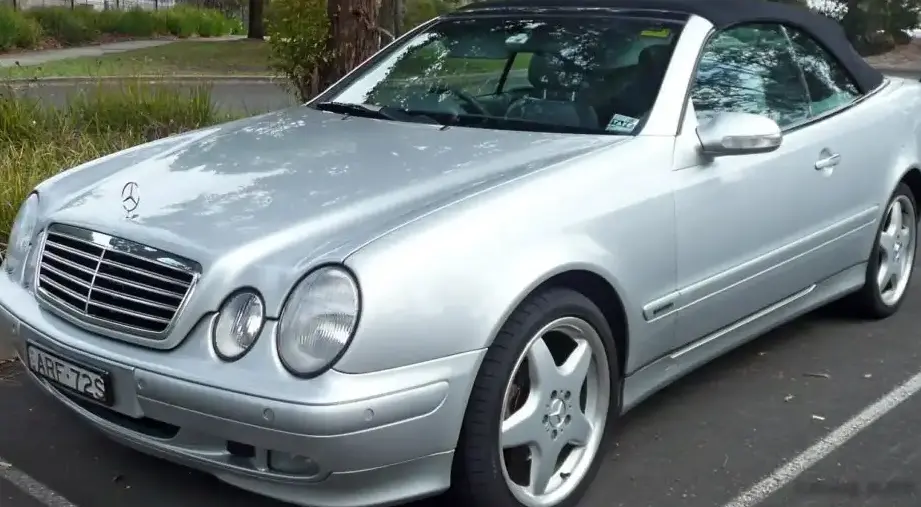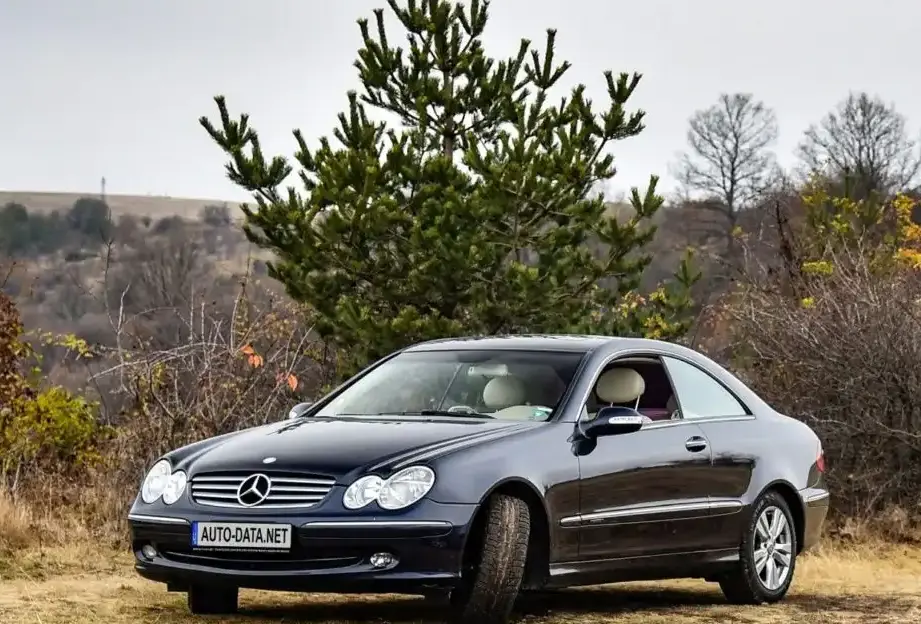
The Mercedes-Benz CLK 270 CDI, produced between September 2002 and May 2005, was a coupe variant within the C209 CLK generation. Positioned as a diesel-powered offering in the CLK lineup, it aimed to provide a blend of luxury, performance, and fuel efficiency. This model distinguished itself with its five-cylinder common rail diesel engine paired with Mercedes’ 5G-TRONIC automatic transmission. It served as a more economical alternative to the gasoline-powered CLK variants, appealing to buyers prioritizing fuel economy and long-distance comfort without sacrificing the Mercedes-Benz experience.
Technical Specifications
| Brand | Mercedes-Benz |
| Model | CLK |
| Generation | CLK (C209) |
| Type (Engine) | CLK 270 CDI (170 Hp) 5G-TRONIC |
| Start of production | September, 2002 |
| End of production | May, 2005 |
| Powertrain Architecture | Internal Combustion engine |
| Body type | Coupe |
| Seats | 4 |
| Doors | 2 |
| Fuel consumption (urban) | 9.2 l/100 km (25.6 US mpg) |
| Fuel consumption (extra urban) | 5.3 l/100 km (44.4 US mpg) |
| Fuel consumption (combined) | 6.9 l/100 km (34.1 US mpg) |
| CO2 emissions | 184 g/km |
| Fuel Type | Diesel |
| Acceleration 0 – 100 km/h | 9.4 sec |
| Acceleration 0 – 62 mph | 9.4 sec |
| Acceleration 0 – 60 mph | 8.9 sec |
| Maximum speed | 228 km/h (141.67 mph) |
| Emission standard | Euro 3 |
| Weight-to-power ratio | 9.2 kg/Hp |
| Weight-to-torque ratio | 3.9 kg/Nm |
| Power | 170 Hp @ 4200 rpm |
| Torque | 400 Nm @ 1800-2600 rpm (295.02 lb.-ft.) |
| Maximum engine speed | 4750 rpm |
| Engine layout | Front, Longitudinal |
| Engine Model/Code | OM 612.962 |
| Engine displacement | 2685 cm3 (163.85 cu. in.) |
| Number of cylinders | 5 |
| Engine configuration | Inline |
| Cylinder Bore | 88 mm (3.46 in.) |
| Piston Stroke | 88.3 mm (3.48 in.) |
| Compression ratio | 18:1 |
| Number of valves per cylinder | 4 |
| Fuel injection system | Diesel Commonrail |
| Engine aspiration | Turbocharger, Intercooler |
| Valvetrain | DOHC |
| Engine oil capacity | 6.5 l (6.87 US qt | 5.72 UK qt) |
| Coolant capacity | 12.4 l (13.1 US qt | 10.91 UK qt) |
| Kerb Weight | 1570 kg (3461.26 lbs.) |
| Max. weight | 2100 kg (4629.71 lbs.) |
| Max load | 530 kg (1168.45 lbs.) |
| Trunk (boot) space (minimum) | 435 l (15.36 cu. ft.) |
| Fuel tank capacity | 62 l (16.38 US gal | 13.64 UK gal) |
| Max. roof load | 100 kg (220.46 lbs.) |
| Permitted trailer load (braked) | 1500 kg (3306.93 lbs.) |
| Permitted trailer load (unbraked) | 750 kg (1653.47 lbs.) |
| Length | 4638 mm (182.6 in.) |
| Width | 1740 mm (68.5 in.) |
| Width (including mirrors) | 1991 mm (78.39 in.) |
| Height | 1413 mm (55.63 in.) |
| Wheelbase | 2715 mm (106.89 in.) |
| Front track | 1493 mm (58.78 in.) |
| Rear track | 1474 mm (58.03 in.) |
| Front overhang | 840 mm (33.07 in.) |
| Rear overhang | 1083 mm (42.64 in.) |
| Drag coefficient (Cd) | 0.28 |
| Minimum turning circle | 10.76 m (35.3 ft.) |
| Drivetrain | Rear wheel drive |
| Number of gears | 5 |
| Gearbox type | Automatic transmission |
| Front suspension | Independent type McPherson, Transverse stabilizer |
| Rear suspension | Independent multi-link suspension, Transverse stabilizer |
| Front brakes | Ventilated discs, 300×28 mm |
| Rear brakes | Disc, 290×10 mm |
| Assisting systems | ABS (Anti-lock braking system) |
| Steering type | Steering rack and pinion |
| Power steering | Hydraulic Steering |
| Front tires | 205/55 R16 |
| Rear tires | 225/50 R16 |
| Front wheel rims | 7J x 16 |
| Rear wheel rims | 8J x 16 |
Powertrain & Engine Architecture
The CLK 270 CDI was powered by the OM 612.962, a 2.7-liter inline five-cylinder diesel engine. This engine was a cornerstone of Mercedes-Benz’s diesel offerings in the early 2000s, known for its robust construction and relatively quiet operation for a diesel. It featured a cast iron block and aluminum cylinder head, incorporating a turbocharger with an intercooler to boost power and efficiency. The engine utilized a second-generation common rail direct injection system, delivering fuel at extremely high pressures for improved combustion and reduced emissions. The 5G-TRONIC automatic transmission, a five-speed unit, was specifically calibrated to work with the engine’s torque characteristics, providing smooth shifts and optimized fuel economy. This transmission was known for its adaptive learning capabilities, adjusting shift points based on driving style.
Driving Characteristics
The CLK 270 CDI offered a distinctly different driving experience compared to its gasoline-powered siblings. While not as overtly sporty as the CLK 320 or CLK 500, it provided ample torque – 400 Nm (295 lb-ft) – from low engine speeds, making it a relaxed and capable cruiser. Acceleration to 60 mph took around 9.4 seconds, and it had a top speed of 141.67 mph. The 5G-TRONIC transmission contributed to a smooth and refined driving experience, although it could sometimes feel slightly hesitant during quick downshifts. The gear ratios were optimized for fuel efficiency and effortless highway cruising, rather than outright performance. Compared to the manual transmission options available on other CLK models, the automatic prioritized comfort and ease of use.
Equipment & Trim Levels
The CLK 270 CDI typically came well-equipped, reflecting Mercedes-Benz’s luxury positioning. Standard features included automatic climate control, power windows and mirrors, a multi-function steering wheel, and a high-quality audio system. Interior upholstery was generally a combination of fabric and leatherette, with full leather options available as an upgrade. Optional extras included a sunroof, heated seats, a navigation system, and upgraded audio systems. The dashboard layout was typical of Mercedes-Benz at the time, with a focus on elegant design and intuitive controls. The trim level could vary depending on the market, but generally, the 270 CDI occupied a mid-range position in the CLK lineup, offering a good balance of features and price.
Chassis & Braking
The CLK 270 CDI utilized a McPherson strut front suspension and a multi-link independent rear suspension, providing a comfortable and controlled ride. Stabilizer bars were fitted to both axles to reduce body roll during cornering. The braking system consisted of ventilated discs at the front and solid discs at the rear, equipped with ABS (Anti-lock Braking System) as standard. The suspension was tuned to prioritize comfort and stability, rather than aggressive handling. The steering was hydraulic power-assisted, providing a smooth and responsive feel.
Market Reception & Comparison
The CLK 270 CDI was generally well-received by automotive critics, who praised its fuel efficiency, comfortable ride, and refined interior. However, some reviewers noted that its performance was not as exhilarating as the gasoline-powered CLK models. Compared to the CLK 320, the 270 CDI offered significantly better fuel economy but lacked the same level of outright power. Against other diesel-powered coupes of the time, the CLK 270 CDI stood out for its luxurious interior and Mercedes-Benz brand prestige. Reliability was generally good, although the complex common rail injection system required careful maintenance.
Legacy
The OM 612 engine, found in the CLK 270 CDI, has proven to be a durable and reliable powerplant when properly maintained. Today, the CLK 270 CDI represents an affordable entry point into Mercedes-Benz ownership. While finding well-maintained examples can be challenging due to their age, they offer a compelling combination of style, comfort, and fuel efficiency. Common issues include wear and tear on the turbocharger, potential problems with the fuel injectors, and the need for regular maintenance of the automatic transmission. Despite these potential issues, the CLK 270 CDI remains a popular choice among enthusiasts seeking a classic Mercedes-Benz coupe with a diesel engine.