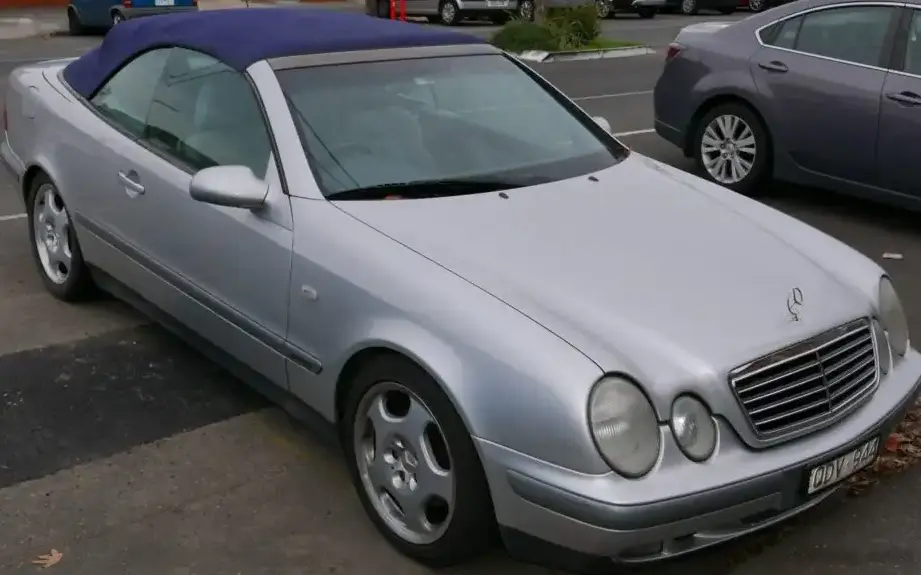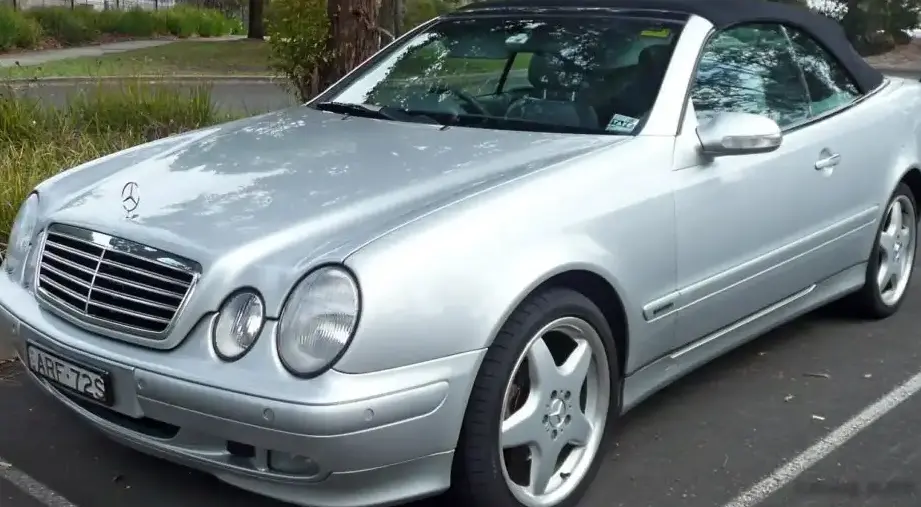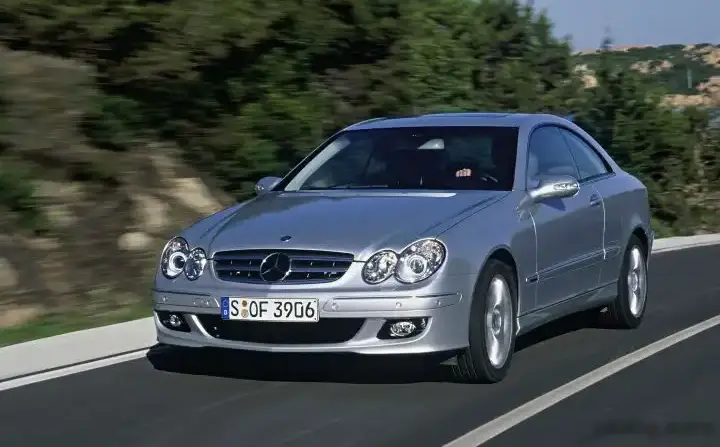
The Mercedes-Benz CLK 320 CDI, produced from 2005 to 2009 as part of the C209 facelift generation, represented a compelling blend of performance and efficiency within the CLK lineup. Positioned as a mid-range offering, it catered to buyers seeking the prestige of a Mercedes-Benz coupe with the added benefits of a modern common-rail diesel engine. This variant distinguished itself from the gasoline-powered CLK models and the lower-output diesel versions, offering a significant step up in torque and overall driving experience. The C209 CLK series, built on the W203 C-Class platform, aimed to bridge the gap between the more practical C-Class and the luxurious E-Class, offering a stylish and sporty alternative.
Technical Specifications
| Brand | Mercedes-Benz |
| Model | CLK |
| Generation | CLK (C209, facelift 2005) |
| Type (Engine) | CLK 320 CDI (224 Hp) |
| Start of production | 2005 |
| End of production | 2009 |
| Powertrain Architecture | Internal Combustion engine |
| Body type | Coupe |
| Seats | 4 |
| Doors | 2 |
| Fuel consumption (economy) – urban (NEDC) | 9.7-10 l/100 km (24.2 – 23.5 US mpg, 29.1 – 28.2 UK mpg, 10.3 – 10 km/l) |
| Fuel consumption (economy) – extra urban (NEDC) | 5.6-5.7 l/100 km (42 – 41.3 US mpg, 50.4 – 49.6 UK mpg, 17.9 – 17.5 km/l) |
| Fuel consumption (economy) – combined (NEDC) | 6.9-7.3 l/100 km (34.1 – 32.2 US mpg, 40.9 – 38.7 UK mpg, 14.5 – 13.7 km/l) |
| CO2 emissions (NEDC) | 182-194 g/km |
| Fuel Type | Diesel |
| Acceleration 0 – 100 km/h | 8.2 sec |
| Acceleration 0 – 62 mph | 8.2 sec |
| Acceleration 0 – 60 mph | 7.8 sec |
| Maximum speed | 246 km/h (152.86 mph) |
| Emission standard | Euro 4 |
| Weight-to-power ratio | 7.1 kg/Hp, 141.3 Hp/tonne |
| Weight-to-torque ratio | 3.8 kg/Nm, 261.8 Nm/tonne |
| Power | 224 Hp @ 3800 rpm |
| Power per litre | 75 Hp/l |
| Torque | 415 Nm @ 1400-3800 rpm (306.09 lb.-ft. @ 1400-3800 rpm) |
| Engine layout | Front, Longitudinal |
| Engine Model/Code | OM 642.910 |
| Engine displacement | 2987 cm3 (182.28 cu. in.) |
| Number of cylinders | 6 |
| Engine configuration | V-engine |
| Cylinder Bore | 83 mm (3.27 in.) |
| Piston Stroke | 92 mm (3.62 in.) |
| Compression ratio | 17.7:1 |
| Number of valves per cylinder | 4 |
| Fuel injection system | Diesel Commonrail |
| Engine aspiration | Turbocharger, Intercooler |
| Valvetrain | DOHC |
| Engine oil capacity | 8.5 l (8.98 US qt | 7.48 UK qt) |
| Coolant | 7.5 l (7.93 US qt | 6.6 UK qt) |
| Kerb Weight | 1585 kg (3494.33 lbs.) |
| Max. weight | 2115 kg (4662.78 lbs.) |
| Max load | 530 kg (1168.45 lbs.) |
| Trunk (boot) space – minimum | 435 l (15.36 cu. ft.) |
| Fuel tank capacity | 62 l (16.38 US gal | 13.64 UK gal) |
| Max. roof load | 100 kg (220.46 lbs.) |
| Permitted trailer load with brakes (12%) | 1500 kg (3306.93 lbs.) |
| Permitted trailer load without brakes | 750 kg (1653.47 lbs.) |
| Permitted towbar download | 75 kg (165.35 lbs.) |
| Length | 4652 mm (183.15 in.) |
| Width | 1740 mm (68.5 in.) |
| Width including mirrors | 1991 mm (78.39 in.) |
| Height | 1415 mm (55.71 in.) |
| Wheelbase | 2715 mm (106.89 in.) |
| Front track | 1497 mm (58.94 in.) |
| Rear (Back) track | 1478 mm (58.19 in.) |
| Front overhang | 854 mm (33.62 in.) |
| Rear overhang | 1083 mm (42.64 in.) |
| Drag coefficient (Cd) | 0.28 |
| Minimum turning circle (turning diameter) | 10.76 m (35.3 ft.) |
| Drivetrain Architecture | The Internal combustion engine (ICE) drives the rear wheels of the vehicle. |
| Drive wheel | Rear wheel drive |
| Number of gears and type of gearbox | 6 gears, manual transmission |
| Front suspension | Independent type McPherson, Transverse stabilizer |
| Rear suspension | Independent multi-link suspension, Transverse stabilizer |
| Front brakes | Ventilated discs |
| Rear brakes | Disc |
| Assisting systems | ABS (Anti-lock braking system) |
| Steering type | Steering rack and pinion |
| Power steering | Hydraulic Steering |
| Tires size | Front wheel tires: 225/45 R17Rear wheel tires: 245/40 R17 |
| Wheel rims size | Front wheel rims: 7.5J x 17Rear wheel rims: 8.5J x 17 |
Powertrain & Engine Architecture
The heart of the CLK 320 CDI is the OM 642.910 3.0-liter V6 diesel engine. This engine, a cornerstone of Mercedes-Benz’s diesel offerings in the mid-2000s, utilizes a common-rail direct injection system, delivering fuel at extremely high pressures for optimized combustion. The engine features a single turbocharger with an intercooler, boosting power and torque output. The DOHC (Double Overhead Camshaft) valvetrain, with four valves per cylinder, further enhances breathing and efficiency. A compression ratio of 17.7:1 is typical for a diesel engine, contributing to its thermal efficiency. The 6-speed manual transmission was standard, providing drivers with full control over the engine’s power. The engine is longitudinally mounted, driving the rear wheels, a configuration consistent with traditional Mercedes-Benz coupes.
Driving Characteristics
The CLK 320 CDI offered a distinctly different driving experience compared to its gasoline counterparts. The substantial 415 Nm (306 lb-ft) of torque, available from a low 1400 rpm, provided effortless acceleration and strong mid-range punch. While not as outright quick as the CLK 500, the diesel offered a more relaxed and refined driving experience, particularly on long journeys. The 6-speed manual transmission allowed for precise gear selection, but the relatively long gearing emphasized fuel economy over outright performance. Compared to the lower-powered CLK 220 CDI, the 320 CDI offered a noticeable increase in performance, making it a more engaging and capable grand tourer.
Equipment & Trim Levels
The CLK 320 CDI typically came well-equipped, reflecting its position as a mid-range model. Standard features included automatic climate control, power windows and mirrors, a multi-function steering wheel, and a high-quality audio system. Interior upholstery was typically a combination of cloth and leatherette, with full leather options available as an upgrade. Optional extras included a sunroof, navigation system, premium sound system, and sport seats. The dashboard layout was typical of Mercedes-Benz at the time, with a focus on elegance and functionality.
Chassis & Braking
The CLK 320 CDI utilized an independent suspension system, with McPherson struts at the front and a multi-link setup at the rear. This configuration provided a comfortable ride and good handling characteristics. Stabilizer bars were fitted front and rear to reduce body roll during cornering. The braking system consisted of ventilated discs at the front and solid discs at the rear, providing ample stopping power. ABS (Anti-lock Braking System) was standard, enhancing safety and control.
Market Reception & Comparison
The CLK 320 CDI was generally well-received by automotive critics. It was praised for its refined engine, comfortable ride, and stylish design. Fuel economy was a significant selling point, particularly in Europe where diesel engines were more popular. Compared to the gasoline-powered CLK models, the 320 CDI offered better fuel efficiency and a more relaxed driving experience. However, some critics noted that the diesel engine was slightly noisier than the gasoline engines. Reliability was generally good, although diesel particulate filter issues could occasionally arise.
Legacy
The OM 642 engine family, including the 320 CDI variant, has proven to be remarkably durable and reliable. Well-maintained examples continue to provide years of service. On the used car market, the CLK 320 CDI represents a compelling value proposition, offering a luxurious and capable coupe at a relatively affordable price. The combination of performance, efficiency, and Mercedes-Benz prestige ensures its continued appeal to enthusiasts and discerning buyers.