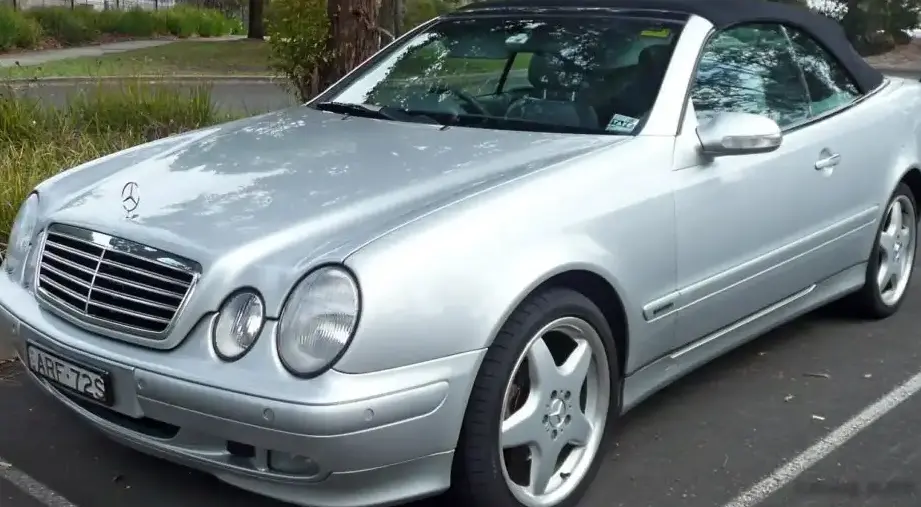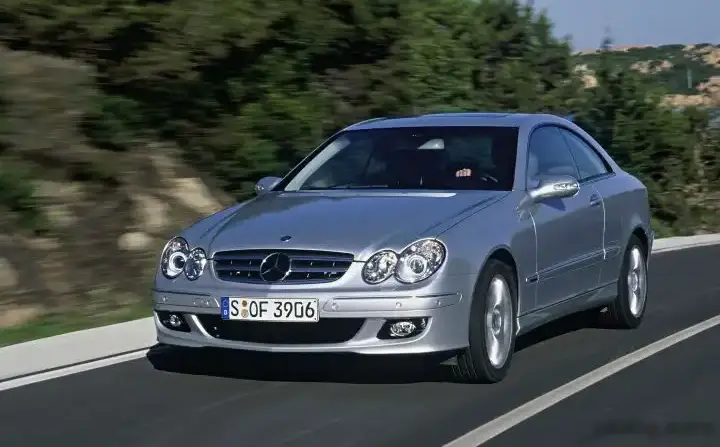
The Mercedes-Benz CLK 320 CDI, produced from 2005 to 2009 as part of the C209 facelift generation, represented a compelling blend of performance and efficiency within the CLK lineup. This coupe, powered by a 3.0-liter turbocharged diesel engine and paired with the 7G-TRONIC automatic transmission, occupied a middle ground, offering a more refined and economical alternative to the gasoline-powered CLK variants while providing more power than the entry-level models. It was positioned as a grand tourer, aimed at drivers seeking a comfortable and capable vehicle for long distances.
Technical Specifications
| Brand | Mercedes-Benz |
| Model | CLK |
| Generation | CLK (C209, facelift 2005) |
| Type (Engine) | CLK 320 CDI (224 Hp) 7G-TRONIC |
| Start of production | 2005 |
| End of production | 2009 |
| Powertrain Architecture | Internal Combustion engine |
| Body type | Coupe |
| Seats | 4 |
| Doors | 2 |
| Fuel consumption (economy) – urban (NEDC) | 9.9-10.3 l/100 km (23.8 – 22.8 US mpg, 28.5 – 27.4 UK mpg, 10.1 – 9.7 km/l) |
| Fuel consumption (economy) – extra urban (NEDC) | 6-6.2 l/100 km (39.2 – 37.9 US mpg, 47.1 – 45.6 UK mpg, 16.7 – 16.1 km/l) |
| Fuel consumption (economy) – combined (NEDC) | 7.4-7.7 l/100 km (31.8 – 30.5 US mpg, 38.2 – 36.7 UK mpg, 13.5 – 13 km/l) |
| CO2 emissions (NEDC) | 193-205 g/km |
| Fuel Type | Diesel |
| Acceleration 0 – 100 km/h | 6.9 sec |
| Acceleration 0 – 62 mph | 6.9 sec |
| Acceleration 0 – 60 mph | 6.6 sec |
| Maximum speed | 250 km/h (155.34 mph) |
| Emission standard | Euro 4 |
| Weight-to-power ratio | 7.2 kg/Hp, 139.6 Hp/tonne |
| Weight-to-torque ratio | 3.1 kg/Nm, 317.8 Nm/tonne |
| Power | 224 Hp @ 3800 rpm |
| Power per litre | 75 Hp/l |
| Torque | 510 Nm @ 1600-2800 rpm (376.16 lb.-ft. @ 1600-2800 rpm) |
| Engine layout | Front, Longitudinal |
| Engine Model/Code | OM 642.910 |
| Engine displacement | 2987 cm3 (182.28 cu. in.) |
| Number of cylinders | 6 |
| Engine configuration | V-engine |
| Cylinder Bore | 83 mm (3.27 in.) |
| Piston Stroke | 92 mm (3.62 in.) |
| Compression ratio | 17.7:1 |
| Number of valves per cylinder | 4 |
| Fuel injection system | Diesel Commonrail |
| Engine aspiration | Turbocharger, Intercooler |
| Valvetrain | DOHC |
| Engine oil capacity | 8.5 l (8.98 US qt | 7.48 UK qt) |
| Coolant | 7.5 l (7.93 US qt | 6.6 UK qt) |
| Kerb Weight | 1605 kg (3538.42 lbs.) |
| Max. weight | 2115 kg (4662.78 lbs.) |
| Max load | 510 kg (1124.36 lbs.) |
| Trunk (boot) space – minimum | 435 l (15.36 cu. ft.) |
| Fuel tank capacity | 62 l (16.38 US gal | 13.64 UK gal) |
| Max. roof load | 100 kg (220.46 lbs.) |
| Permitted trailer load with brakes (12%) | 1500 kg (3306.93 lbs.) |
| Permitted trailer load without brakes | 750 kg (1653.47 lbs.) |
| Permitted towbar download | 75 kg (165.35 lbs.) |
| Length | 4652 mm (183.15 in.) |
| Width | 1740 mm (68.5 in.) |
| Width including mirrors | 1991 mm (78.39 in.) |
| Height | 1415 mm (55.71 in.) |
| Wheelbase | 2715 mm (106.89 in.) |
| Front track | 1497 mm (58.94 in.) |
| Rear (Back) track | 1478 mm (58.19 in.) |
| Front overhang | 854 mm (33.62 in.) |
| Rear overhang | 1083 mm (42.64 in.) |
| Drag coefficient (Cd) | 0.28 |
| Minimum turning circle (turning diameter) | 10.76 m (35.3 ft.) |
| Drivetrain Architecture | The Internal combustion engine (ICE) drives the rear wheels of the vehicle. |
| Drive wheel | Rear wheel drive |
| Number of gears and type of gearbox | 7 gears, automatic transmission G-TRONIC |
| Front suspension | Independent type McPherson, Transverse stabilizer |
| Rear suspension | Independent multi-link suspension, Transverse stabilizer |
| Front brakes | Ventilated discs |
| Rear brakes | Disc |
| Assisting systems | ABS (Anti-lock braking system) |
| Steering type | Steering rack and pinion |
| Power steering | Hydraulic Steering |
| Tires size | Front wheel tires: 225/45 R 17Rear wheel tires: 245/40 R 17 |
| Wheel rims size | Front wheel rims: 7.5 J x 17Rear wheel rims: 8.5 J x 17 |
Powertrain & Engine Architecture
The heart of the CLK 320 CDI is the OM 642.910, a 2,987 cc (182.28 cu. in.) V6 diesel engine. This engine utilizes a common rail direct injection system, delivering fuel at extremely high pressures for optimized combustion. A variable geometry turbocharger with an intercooler further enhances performance and efficiency. The engine boasts a robust 17.7:1 compression ratio, contributing to its high torque output. The 7G-TRONIC automatic transmission, a seven-speed unit, was a key feature, offering smooth and efficient gear changes. This transmission was known for its adaptability, providing both comfort-oriented and sport-focused shifting modes. The engine’s longitudinal mounting and rear-wheel drive configuration were typical of Mercedes-Benz’s performance-oriented coupes.
Driving Characteristics
The CLK 320 CDI offered a distinctly different driving experience compared to its gasoline counterparts. While not as overtly sporty as the CLK 350 or CLK 500, the CDI delivered substantial torque from low engine speeds – 510 Nm (376.16 lb.-ft.) available between 1600 and 2800 rpm. This made it exceptionally capable for effortless cruising and overtaking. The 7G-TRONIC transmission, while smooth, could sometimes feel slightly hesitant in quick downshifts compared to a manual gearbox. The gear ratios were tuned for fuel efficiency and relaxed highway driving, rather than outright acceleration. Acceleration to 60 mph took approximately 6.6 seconds, a respectable figure for a grand touring coupe.
Equipment & Trim Levels
The CLK 320 CDI typically came well-equipped, reflecting Mercedes-Benz’s luxury positioning. Standard features included leather upholstery, automatic climate control, a multi-function steering wheel, and a premium audio system. Optional extras included a panoramic sunroof, heated seats, navigation system, and upgraded interior trim options. The interior design was characterized by its elegant and understated aesthetic, with high-quality materials and meticulous attention to detail. Trim levels were often differentiated by wheel designs, exterior chrome accents, and the availability of certain interior packages.
Chassis & Braking
The CLK 320 CDI utilized an independent suspension system, with McPherson struts at the front and a multi-link setup at the rear. This configuration provided a comfortable ride quality while maintaining good handling characteristics. Stabilizer bars were fitted to both axles to reduce body roll during cornering. The braking system consisted of ventilated discs at the front and solid discs at the rear, coupled with ABS (Anti-lock Braking System) for enhanced safety. The steering was a hydraulic power-assisted rack and pinion system, offering precise and responsive control.
Market Reception & Comparison
The CLK 320 CDI was generally well-received by automotive critics. It was praised for its refined engine, comfortable ride, and fuel efficiency. Compared to the gasoline-powered CLK models, the CDI offered significantly better fuel economy, making it an attractive option for drivers covering long distances. However, some critics noted that the diesel engine lacked the responsiveness and aural excitement of the gasoline engines. Compared to the CLK 220 CDI, the 320 CDI offered a substantial power increase, justifying its higher price point. The CLK 320 CDI competed with other luxury coupes, such as the BMW 3 Series Coupe and Audi A4 Coupe, offering a different blend of performance and efficiency.
Legacy
The OM 642 engine family, including the 642.910 found in the CLK 320 CDI, is known for its durability and reliability. While diesel engines generally require diligent maintenance, these engines are capable of high mileage with proper care. In the used car market, the CLK 320 CDI remains a desirable option for those seeking a comfortable and economical grand tourer. However, potential buyers should be aware of the potential maintenance costs associated with diesel engines, such as diesel particulate filter (DPF) maintenance and injector servicing. The CLK 320 CDI represents a significant step in Mercedes-Benz’s development of efficient and powerful diesel engines, and it continues to be appreciated by enthusiasts today.