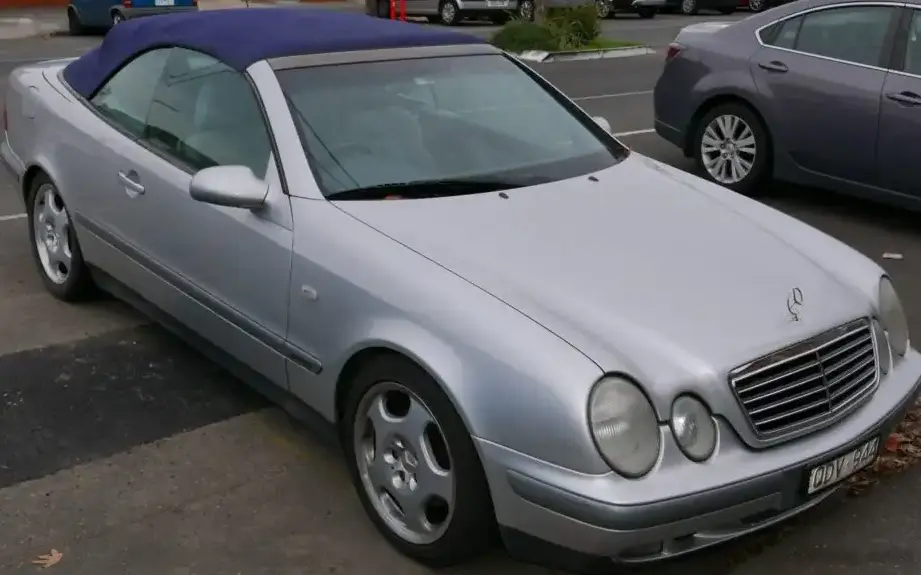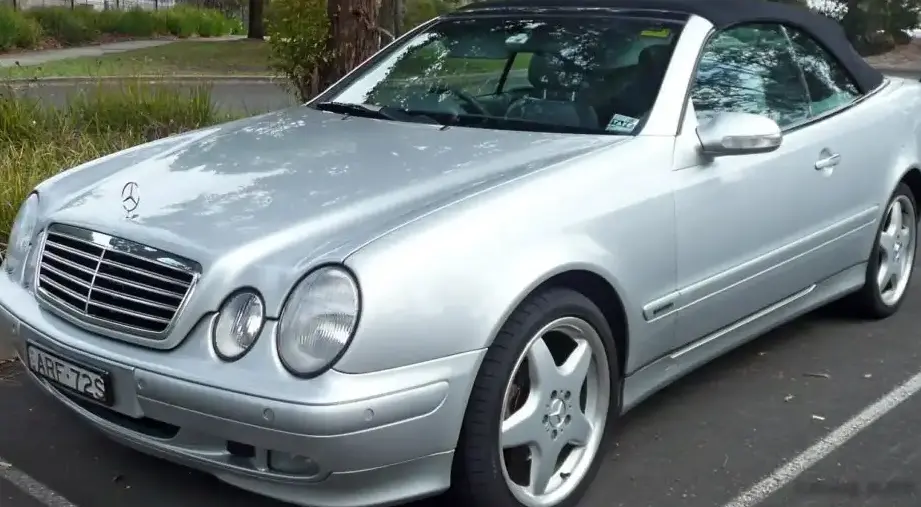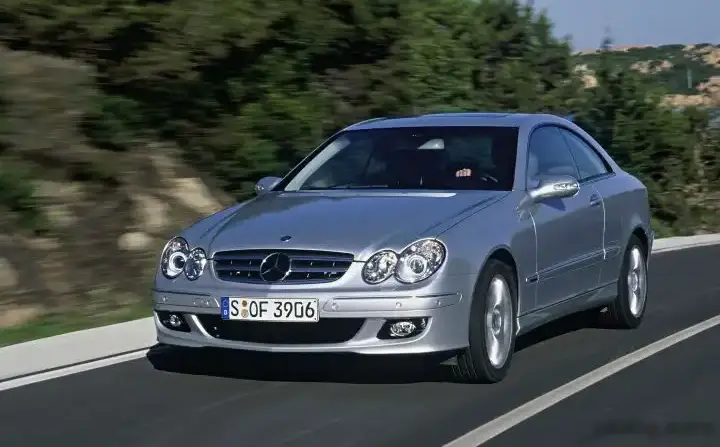
The Mercedes-Benz CLK 500, produced from 2006 to 2009 as part of the C209 facelift generation, represented the performance pinnacle of the CLK coupe and convertible range. Positioned as the flagship model, it offered a substantial upgrade in power and refinement compared to the more common CLK 350 and smaller-engined variants. The C209 CLK series, built upon the W203 C-Class platform, aimed to blend the luxury and comfort expected of Mercedes-Benz with a more sporting character, appealing to buyers seeking a stylish grand tourer. The CLK 500 specifically targeted those desiring a powerful, naturally aspirated V8 experience in a relatively compact package.
Technical Specifications
| Brand | Mercedes-Benz |
| Model | CLK |
| Generation | CLK (C209, facelift 2005) |
| Type (Engine) | CLK 500 (388 Hp) 7G-TRONIC |
| Start of production | 2006 |
| End of production | 2009 |
| Powertrain Architecture | Internal Combustion engine |
| Body type | Coupe |
| Seats | 4 |
| Doors | 2 |
| Fuel consumption (economy) – urban (NEDC) | 16.7-16.8 l/100 km (14.1 – 14 US mpg, 16.9 – 16.8 UK mpg, 6 – 6 km/l) |
| Fuel consumption (economy) – extra urban (NEDC) | 8.3-8.4 l/100 km (28.3 – 28 US mpg, 34 – 33.6 UK mpg, 12 – 11.9 km/l) |
| Fuel consumption (economy) – combined (NEDC) | 11.4-11.5 l/100 km (20.6 – 20.5 US mpg, 24.8 – 24.6 UK mpg, 8.8 – 8.7 km/l) |
| CO2 emissions (NEDC) | 270-273 g/km |
| Fuel Type | Petrol (Gasoline) |
| Acceleration 0 – 100 km/h | 5.2 sec |
| Acceleration 0 – 62 mph | 5.2 sec |
| Acceleration 0 – 60 mph | 4.9 sec |
| Maximum speed | 250 km/h (155.34 mph), Electronically limited |
| Emission standard | Euro 4 |
| Weight-to-power ratio | 4.1 kg/Hp, 242.5 Hp/tonne |
| Weight-to-torque ratio | 3 kg/Nm, 331.3 Nm/tonne |
| Power | 388 Hp @ 6000 rpm |
| Power per litre | 71 Hp/l |
| Torque | 530 Nm @ 2800-4800 rpm (390.91 lb.-ft. @ 2800-4800 rpm) |
| Engine layout | Front, Longitudinal |
| Engine Model/Code | M 273.965 |
| Engine displacement | 5461 cm3 (333.25 cu. in.) |
| Number of cylinders | 8 |
| Engine configuration | V-engine |
| Cylinder Bore | 98 mm (3.86 in.) |
| Piston Stroke | 90.5 mm (3.56 in.) |
| Compression ratio | 10.7:1 |
| Number of valves per cylinder | 4 |
| Fuel injection system | Multi-port manifold injection |
| Engine aspiration | Naturally aspirated engine |
| Valvetrain | DOHC |
| Engine oil capacity | 8.5 l (8.98 US qt | 7.48 UK qt) |
| Coolant | 7.5 l (7.93 US qt | 6.6 UK qt) |
| Kerb Weight | 1600 kg (3527.4 lbs.) |
| Max. weight | 2130 kg (4695.85 lbs.) |
| Max load | 530 kg (1168.45 lbs.) |
| Trunk (boot) space – minimum | 435 l (15.36 cu. ft.) |
| Fuel tank capacity | 62 l (16.38 US gal | 13.64 UK gal) |
| Max. roof load | 100 kg (220.46 lbs.) |
| Permitted trailer load with brakes (12%) | 1500 kg (3306.93 lbs.) |
| Permitted trailer load without brakes | 750 kg (1653.47 lbs.) |
| Permitted towbar download | 75 kg (165.35 lbs.) |
| Length | 4652 mm (183.15 in.) |
| Width | 1740 mm (68.5 in.) |
| Width including mirrors | 1991 mm (78.39 in.) |
| Height | 1415 mm (55.71 in.) |
| Wheelbase | 2715 mm (106.89 in.) |
| Front track | 1497 mm (58.94 in.) |
| Rear (Back) track | 1478 mm (58.19 in.) |
| Front overhang | 854 mm (33.62 in.) |
| Rear overhang | 1083 mm (42.64 in.) |
| Drag coefficient (Cd) | 0.28 |
| Minimum turning circle (turning diameter) | 10.76 m (35.3 ft.) |
| Drivetrain Architecture | The Internal combustion engine (ICE) drives the rear wheels of the vehicle. |
| Drive wheel | Rear wheel drive |
| Number of gears and type of gearbox | 7 gears, automatic transmission G-TRONIC |
| Front suspension | Independent type McPherson, Transverse stabilizer |
| Rear suspension | Independent multi-link suspension, Transverse stabilizer |
| Front brakes | Ventilated discs |
| Rear brakes | Ventilated discs |
| Assisting systems | ABS (Anti-lock braking system) |
| Steering type | Steering rack and pinion |
| Power steering | Hydraulic Steering |
| Tires size | Front wheel tires: 225/45 R 17Rear wheel tires: 245/40 R 17 |
| Wheel rims size | Front wheel rims: 7.5 J x 17Rear wheel rims: 8.5 J x 17 |
Powertrain & Engine Architecture
The heart of the CLK 500 is the M273.965 5.4-liter naturally aspirated V8 engine. This engine, a cornerstone of Mercedes-Benz’s V8 offerings in the mid-2000s, features a three-valve per cylinder design (two intake, one exhaust) and a relatively high 10.7:1 compression ratio. It utilizes multi-port fuel injection and a sophisticated engine management system to deliver a smooth and responsive power delivery. The engine produces 388 horsepower at 6000 rpm and a substantial 530 Nm (390.91 lb-ft) of torque between 2800 and 4800 rpm. This broad torque curve contributes to effortless acceleration in real-world driving conditions. Paired with the engine is the 7G-TRONIC seven-speed automatic transmission, known for its smooth shifts and ability to keep the engine in its optimal power band. This transmission offered a more refined experience than earlier five-speed automatics.
Driving Characteristics
The CLK 500’s driving experience is defined by its effortless power and refined ride. The 7G-TRONIC transmission is well-matched to the V8, providing quick and seamless gear changes. While not a dedicated sports car, the CLK 500 offers ample performance for spirited driving, with a 0-60 mph time of around 4.9 seconds. Compared to the CLK 350, the 500 provides a significantly more potent acceleration experience. The gear ratios are tuned for both comfortable cruising and responsive overtaking. The relatively high weight of the vehicle (1600 kg / 3527.4 lbs) is noticeable, but the V8’s torque mitigates this to a large extent. The steering is precise, though it lacks the ultimate feel of some more focused sports coupes.
Equipment & Trim Levels
The CLK 500 typically came well-equipped as standard, reflecting its position as the range-topping model. Standard features included leather upholstery, automatic climate control, power-adjustable seats with memory function, a premium sound system, and a sunroof. Optional extras included features like COMAND navigation system, upgraded leather packages, and various driver assistance systems. The interior design was characterized by Mercedes-Benz’s typical emphasis on luxury and build quality, with high-quality materials and a comfortable layout.
Chassis & Braking
The CLK 500 utilized a McPherson strut front suspension and a multi-link independent rear suspension. Stabilizer bars were fitted front and rear to reduce body roll during cornering. The braking system consisted of ventilated discs on all four wheels, providing ample stopping power. ABS (Anti-lock Braking System) was standard. The suspension tuning prioritized comfort and stability over outright sportiness, resulting in a smooth and controlled ride.
Market Reception & Comparison
The CLK 500 was generally well-received by automotive critics, who praised its powerful engine, refined transmission, and luxurious interior. However, some reviewers noted its relatively high fuel consumption and weight. Compared to the CLK 350, the 500 offered a significant performance advantage but came at a higher price point. The CLK 500 also competed with other grand tourers such as the BMW 6 Series and the Porsche 911 (base models), offering a different blend of luxury and performance. Fuel economy was a common criticism, with combined figures around 20.6-20.5 US mpg.
Legacy
The M273 V8 engine, found in the CLK 500, is generally considered a reliable unit when properly maintained. However, like any complex engine, it is susceptible to age-related issues such as oil leaks and sensor failures. The 7G-TRONIC transmission is also generally reliable, but regular fluid changes are crucial for longevity. Today, the CLK 500 represents a relatively affordable entry point into the world of V8-powered Mercedes-Benz coupes. Its combination of performance, luxury, and relative reliability makes it a desirable option for enthusiasts seeking a classic grand tourer.