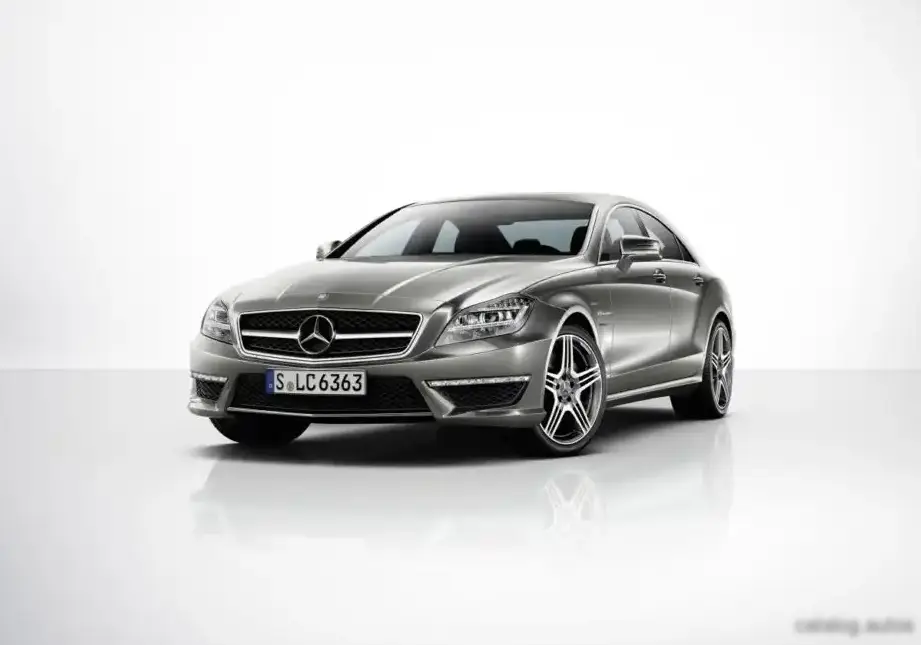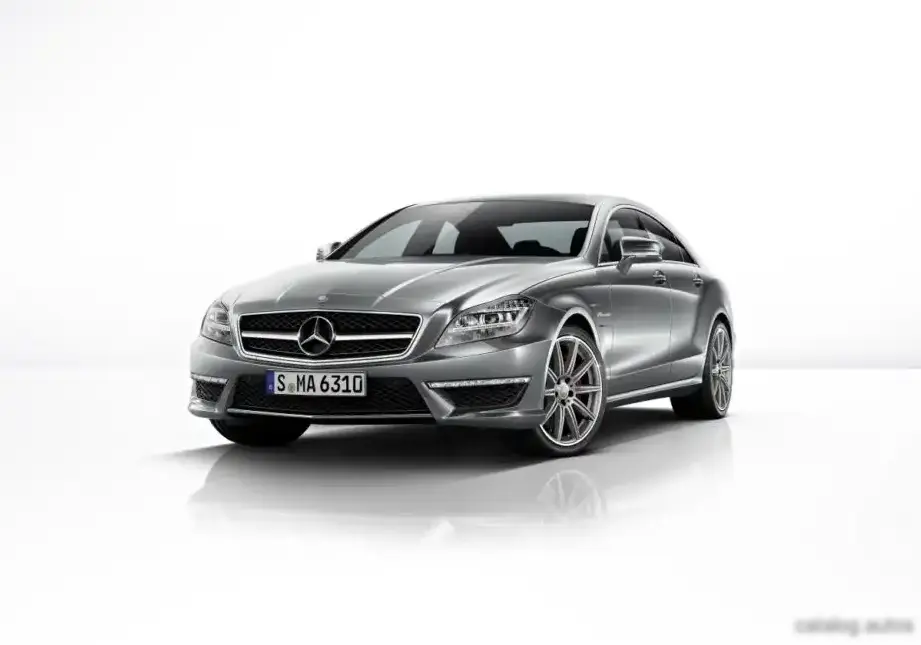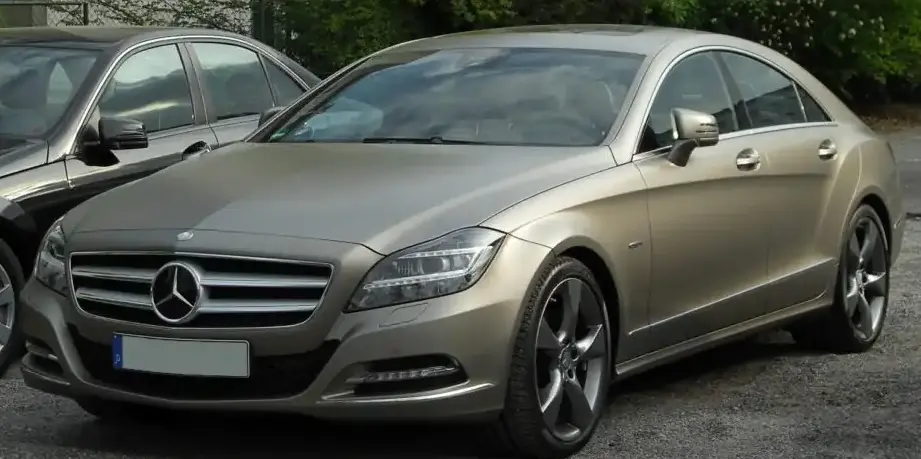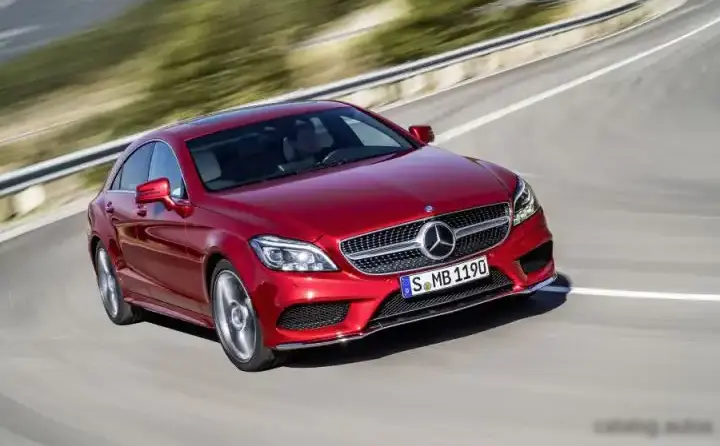
The Mercedes-Benz CLS 220 BlueTEC (C218 facelift) was a diesel-powered variant of the second-generation CLS-Class, produced from July 2014 to December 2017. Positioned as an entry-level offering within the CLS range, it combined a 2.1-liter four-cylinder diesel engine with the sophisticated 9G-TRONIC nine-speed automatic transmission. This model aimed to deliver a blend of luxury, efficiency, and respectable performance, appealing to buyers seeking a stylish coupe with lower running costs than the more powerful six and eight-cylinder options. The C218 facelift brought updated styling, improved technology, and refined engine options to the CLS lineup, solidifying its position as a desirable four-door coupe.
Technical Specifications
| Brand | Mercedes-Benz |
| Model | CLS |
| Generation | CLS coupe (C218 facelift, 2014) |
| Type (Engine) | CLS 220 BlueTEC (170 Hp) 9G-TRONIC |
| Start of production | July, 2014 |
| End of production | December, 2017 |
| Powertrain Architecture | Internal Combustion engine |
| Body type | Coupe |
| Seats | 4 |
| Doors | 4 |
| Fuel consumption (economy) – urban (NEDC) | 5.5-5.6 l/100 km (42.8 – 42 US mpg, 51.4 – 50.4 UK mpg, 18.2 – 17.9 km/l) |
| Fuel consumption (economy) – extra urban (NEDC) | 4.1-4.2 l/100 km (57.4 – 56 US mpg, 68.9 – 67.3 UK mpg, 24.4 – 23.8 km/l) |
| Fuel consumption (economy) – combined (NEDC) | 4.6-4.7 l/100 km (51.1 – 50 US mpg, 61.4 – 60.1 UK mpg, 21.7 – 21.3 km/l) |
| CO2 emissions (NEDC) | 120-123 g/km |
| Fuel Type | Diesel |
| Acceleration 0 – 100 km/h | 8.3 sec |
| Acceleration 0 – 62 mph | 8.3 sec |
| Acceleration 0 – 60 mph | 7.9 sec |
| Maximum speed | 226 km/h (140.43 mph) |
| Emission standard | Euro 6 |
| Weight-to-power ratio | 10.1 kg/Hp, 99.1 Hp/tonne |
| Weight-to-torque ratio | 4.3 kg/Nm, 233.2 Nm/tonne |
| Power | 170 Hp @ 3000-4200 rpm |
| Power per litre | 79.3 Hp/l |
| Torque | 400 Nm @ 1400-2800 rpm (295.02 lb.-ft. @ 1400-2800 rpm) |
| Engine layout | Front, Longitudinal |
| Engine Model/Code | OM 651.924 |
| Engine displacement | 2143 cm3 (130.77 cu. in.) |
| Number of cylinders | 4 |
| Engine configuration | Inline |
| Cylinder Bore | 83 mm (3.27 in.) |
| Piston Stroke | 99 mm (3.9 in.) |
| Compression ratio | 16.2:1 |
| Number of valves per cylinder | 4 |
| Fuel injection system | Diesel Commonrail |
| Engine aspiration | BiTurbo, Intercooler |
| Valvetrain | DOHC |
| Engine oil capacity | 6.5 l (6.87 US qt | 5.72 UK qt) |
| Coolant | 10.4 l (10.99 US qt | 9.15 UK qt) |
| Kerb Weight | 1715 kg (3780.93 lbs.) |
| Max. weight | 2275 kg (5015.52 lbs.) |
| Max load | 560 kg (1234.59 lbs.) |
| Trunk (boot) space – minimum | 475 l (16.77 cu. ft.) |
| Fuel tank capacity | 59 l (15.59 US gal | 12.98 UK gal) |
| AdBlue tank | 25.5 l (6.74 US gal | 5.61 UK gal) |
| Max. roof load | 100 kg (220.46 lbs.) |
| Length | 4937 mm (194.37 in.) |
| Width | 1881 mm (74.06 in.) |
| Width including mirrors | 2075 mm (81.69 in.) |
| Height | 1418 mm (55.83 in.) |
| Wheelbase | 2874 mm (113.15 in.) |
| Front track | 1596 mm (62.83 in.) |
| Rear (Back) track | 1626 mm (64.02 in.) |
| Front overhang | 898 mm (35.35 in.) |
| Rear overhang | 1165 mm (45.87 in.) |
| Drag coefficient (Cd) | 0.26 |
| Minimum turning circle (turning diameter) | 11.18 m (36.68 ft.) |
| Front suspension | Coil spring, Independent multi-link suspension, Transverse stabilizer, Air Suspension – Optional |
| Rear suspension | Independent multi-link spring suspension with stabilizer, Air Suspension – Optional |
| Front brakes | Ventilated discs |
| Rear brakes | Disc |
| Number of gears and type of gearbox | 9 gears, automatic transmission G-TRONIC |
Powertrain & Engine Architecture
The CLS 220 BlueTEC utilized the OM651.924 2.1-liter inline-four cylinder diesel engine. This engine was a mainstay in the Mercedes-Benz lineup, known for its efficiency and durability. It featured a common-rail direct injection system, delivering fuel at extremely high pressure for optimized combustion. A twin-turbocharger setup, employing a small and a large turbocharger, minimized turbo lag and provided a broad torque curve. The engine also incorporated an intercooler to further enhance performance. The 9G-TRONIC nine-speed automatic transmission was a key component, offering close gear ratios for improved fuel economy and smooth shifts. This transmission allowed the engine to operate within its optimal efficiency range more frequently. The inclusion of a Start & Stop system further contributed to fuel savings in urban driving conditions.
Driving Characteristics
The CLS 220 BlueTEC, with its 170 horsepower and 400 Nm (295 lb-ft) of torque, offered a comfortable and refined driving experience. While not overtly sporty, it provided sufficient power for relaxed cruising and overtaking maneuvers. Acceleration from 0-60 mph took around 7.9 seconds. The 9G-TRONIC transmission played a crucial role in masking the engine’s limitations, providing quick and seamless gear changes. Compared to the more powerful CLS 350 or CLS 550 models, the 220 BlueTEC prioritized fuel efficiency over outright performance. The gear ratios were tuned for economy, meaning the engine could feel slightly strained when pushed hard. However, for everyday driving, the engine delivered a smooth and responsive experience. The long gearing also contributed to a quiet cabin at highway speeds.
Equipment & Trim Levels
The CLS 220 BlueTEC typically came well-equipped, reflecting the luxury positioning of the CLS-Class. Standard features included leather upholstery, automatic climate control, a high-resolution infotainment system with navigation, and a suite of safety features such as adaptive brake assist and collision prevention assist. Optional extras included a panoramic sunroof, premium sound system, advanced driver assistance systems (like lane keeping assist and blind spot monitoring), and various interior trim options. The interior design was characterized by flowing lines, high-quality materials, and a focus on creating a comfortable and sophisticated atmosphere. Trim levels were often differentiated by wheel design, interior trim materials, and the availability of certain optional packages.
Chassis & Braking
The CLS 220 BlueTEC featured a sophisticated chassis designed to balance comfort and handling. It utilized a multi-link independent suspension system at both the front and rear, providing a smooth and controlled ride. Air suspension was available as an option, further enhancing ride quality and allowing for adjustable ride height. The braking system consisted of ventilated discs at the front and solid discs at the rear. Anti-lock braking system (ABS) and electronic stability control (ESP) were standard features, ensuring safe and confident braking performance. The steering was a rack-and-pinion system with electric power assistance, providing precise and responsive steering feel.
Market Reception & Comparison
The CLS 220 BlueTEC was generally well-received by automotive critics, who praised its fuel efficiency, comfortable ride, and luxurious interior. However, some reviewers noted that the engine lacked the punch of the more powerful alternatives. Compared to the CLS 350, the 220 BlueTEC offered significantly better fuel economy but slower acceleration. Against competitors like the Audi A7 and BMW 5 Series Gran Turismo, the CLS 220 BlueTEC stood out with its distinctive coupe-like styling and refined interior. Its fuel economy was competitive within its segment, making it an attractive option for buyers prioritizing efficiency.
Legacy
The OM651 engine family, including the version used in the CLS 220 BlueTEC, has proven to be remarkably durable and reliable. With proper maintenance, these engines can accumulate high mileage without major issues. The 9G-TRONIC transmission has also demonstrated good long-term reliability. In the used car market, the CLS 220 BlueTEC represents a relatively affordable entry point into the CLS-Class range. Its combination of luxury, efficiency, and reliability makes it a popular choice for buyers seeking a stylish and practical coupe. However, potential buyers should be aware of the maintenance requirements associated with diesel engines, including the diesel particulate filter (DPF) and AdBlue system.