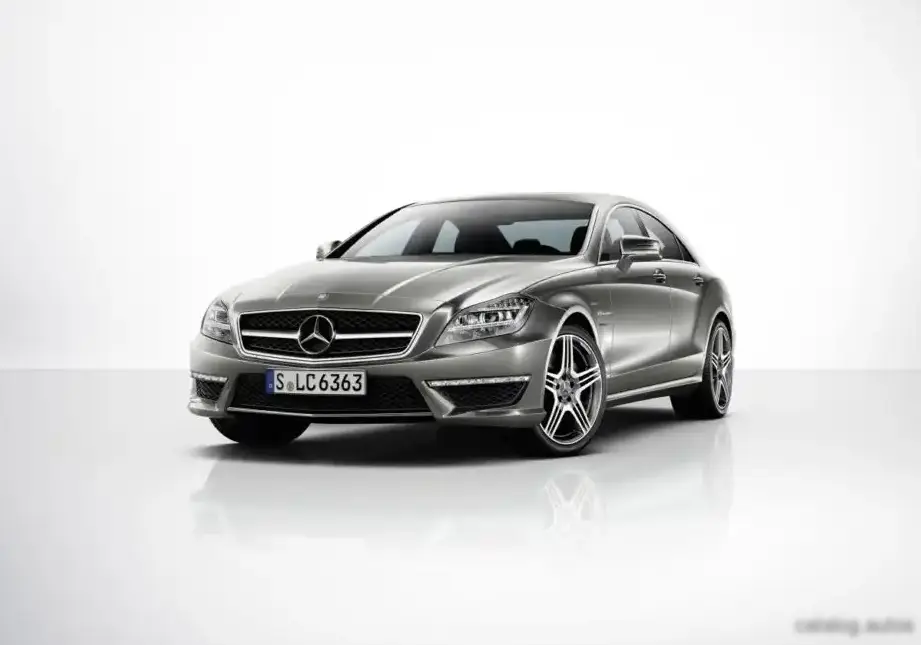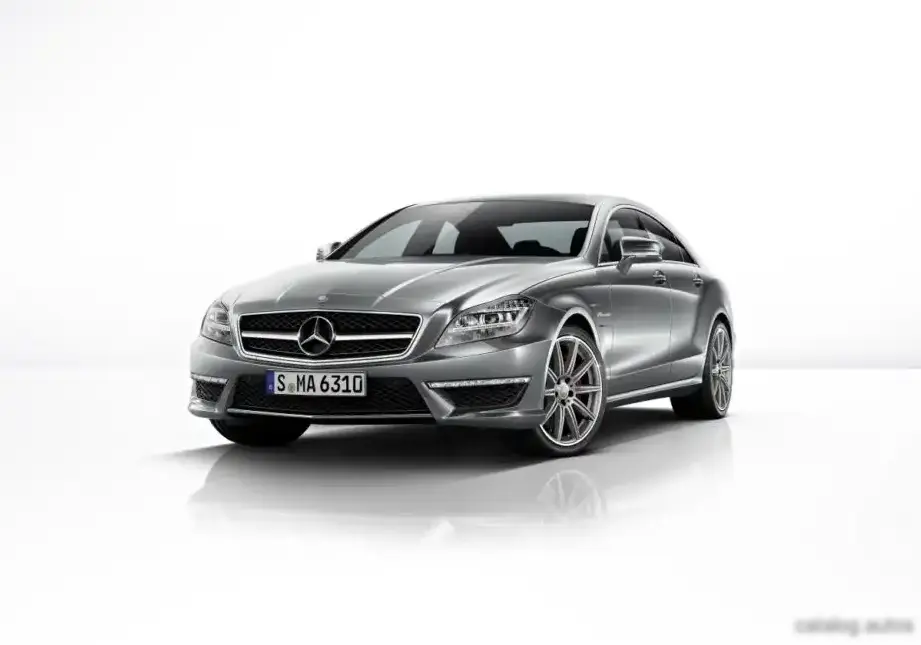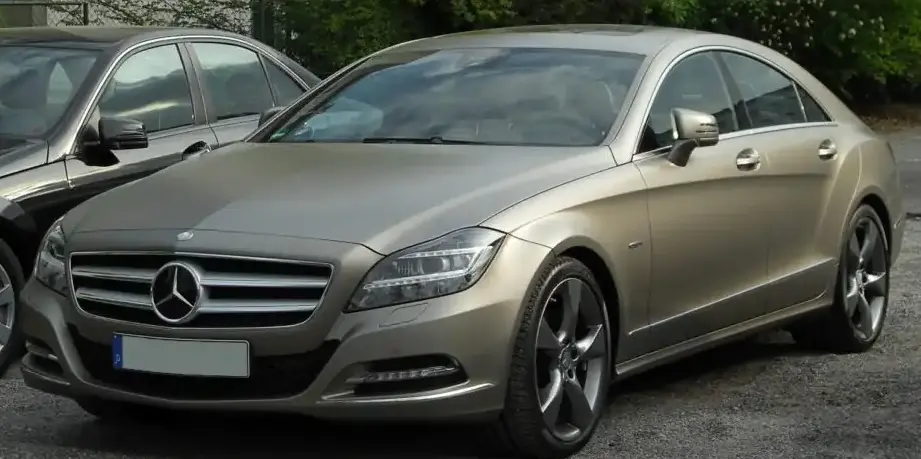
The Mercedes-Benz CLS 300, specifically the C219 facelift model produced from April 2009 to September 2010, represented a compelling entry point into the four-door coupe segment. Positioned as a more accessible alternative to the higher-performance CLS 500 and CLS 63 AMG models, the CLS 300 combined elegant styling with a refined driving experience. It was primarily marketed in Europe and other international markets, offering a blend of luxury, technology, and reasonable running costs within the Mercedes-Benz lineup. This variant utilized a naturally aspirated 3.0-liter V6 engine paired with the sophisticated 7G-TRONIC automatic transmission.
Technical Specifications
| Brand | Mercedes-Benz |
| Model | CLS |
| Generation | CLS coupe (C219, facelift 2008) |
| Type | CLS 300 V6 (231 Hp) 7G-TRONIC |
| Start of production | April, 2009 |
| End of production | September, 2010 |
| Powertrain Architecture | Internal Combustion engine |
| Body type | Coupe |
| Seats | 4 |
| Doors | 4 |
| Fuel consumption (urban) | 14.1-14.4 l/100 km (16.7 – 16.3 US mpg) |
| Fuel consumption (extra urban) | 7.5-7.9 l/100 km (31.4 – 29.8 US mpg) |
| Fuel consumption (combined) | 10-10.2 l/100 km (23.5 – 23.1 US mpg) |
| CO2 emissions | 233-237 g/km |
| Fuel Type | Petrol (Gasoline) |
| Acceleration 0 – 100 km/h | 7.7 sec |
| Acceleration 0 – 60 mph | 7.3 sec |
| Maximum speed | 245 km/h (152.24 mph) |
| Emission standard | Euro 5 |
| Weight-to-power ratio | 7.2 kg/Hp |
| Weight-to-torque ratio | 5.5 kg/Nm |
| Power | 231 Hp @ 6000 rpm |
| Torque | 300 Nm @ 2500-5000 rpm (221.27 lb.-ft.) |
| Maximum engine speed | 6500 rpm |
| Engine layout | Front, Longitudinal |
| Engine Model/Code | M 272.943 |
| Engine displacement | 2996 cm3 (182.83 cu. in.) |
| Number of cylinders | 6 |
| Engine configuration | V-engine |
| Cylinder Bore | 88 mm (3.46 in.) |
| Piston Stroke | 82.1 mm (3.23 in.) |
| Compression ratio | 11.3:1 |
| Number of valves per cylinder | 4 |
| Fuel injection system | Multi-port manifold injection |
| Engine aspiration | Naturally aspirated |
| Valvetrain | DOHC |
| Engine oil capacity | 8 l (8.45 US qt | 7.04 UK qt) |
| Coolant capacity | 10 l (10.57 US qt | 8.8 UK qt) |
| Kerb Weight | 1655 kg (3648.65 lbs.) |
| Max. weight | 2195 kg (4839.15 lbs.) |
| Max load | 540 kg (1190.5 lbs.) |
| Trunk space (minimum) | 505 l (17.83 cu. ft.) |
| Fuel tank capacity | 80 l (21.13 US gal | 17.6 UK gal) |
| Length | 4917 mm (193.58 in.) |
| Width | 1873 mm (73.74 in.) |
| Width including mirrors | 2107 mm (82.95 in.) |
| Height | 1430 mm (56.3 in.) |
| Wheelbase | 2854 mm (112.36 in.) |
| Front track | 1593 mm (62.72 in.) |
| Rear track | 1603 mm (63.11 in.) |
| Drivetrain Architecture | Rear wheel drive |
| Number of gears | 7 |
| Gearbox type | Automatic transmission G-TRONIC |
Powertrain & Engine Architecture
The CLS 300 was powered by the M272.943 engine, a 2,996 cc (182.8 cu in) naturally aspirated V6. This engine featured a 60-degree V-angle, contributing to its smooth operation. It utilized a multi-port fuel injection system and a double overhead camshaft (DOHC) valvetrain with four valves per cylinder. The engine produced 231 horsepower at 6,000 rpm and 300 Nm (221 lb-ft) of torque between 2,500 and 5,000 rpm. The 7G-TRONIC automatic transmission, a seven-speed unit, was standard. This transmission was known for its smooth shifts and efficiency, offering both automatic and manual shift modes. The engine’s longitudinal mounting and rear-wheel-drive configuration were typical for Mercedes-Benz vehicles of this era.
Driving Characteristics
The CLS 300’s driving experience was characterized by refinement and comfort rather than outright performance. While the 7.7-second 0-62 mph acceleration was respectable, it wasn’t as brisk as the CLS 500 or AMG variants. The 7G-TRONIC transmission played a crucial role in optimizing fuel economy and providing smooth gear changes. The gear ratios were tuned for relaxed cruising, making it well-suited for long-distance journeys. Compared to a manual transmission, the automatic offered less driver engagement but greater convenience. The engine delivered adequate power for everyday driving, but overtaking maneuvers required more planning. The suspension, while comfortable, wasn’t particularly sporty, prioritizing ride quality over handling precision.
Equipment & Trim Levels
The CLS 300 came reasonably well-equipped as standard. Typical features included leather upholstery, automatic climate control, a multi-function steering wheel, and a premium audio system. Optional extras included a panoramic sunroof, upgraded leather packages, wood trim, and advanced driver-assistance systems like Distronic adaptive cruise control and Parktronic parking assist. The interior design mirrored that of other Mercedes-Benz models of the period, emphasizing luxury and build quality. The dashboard layout was clean and functional, with intuitive controls. While not as lavishly appointed as the higher-end CLS models, the 300 offered a comfortable and sophisticated cabin environment.
Chassis & Braking
The CLS 300 utilized an independent multi-link suspension system at both the front and rear axles. This suspension design provided a good balance between ride comfort and handling. Stabilizer bars were fitted to both axles to reduce body roll during cornering. Depending on the specific configuration, air suspension was available as an option, further enhancing ride quality. The braking system consisted of ventilated discs on all four wheels, providing ample stopping power. Anti-lock braking system (ABS) was standard. The steering was a hydraulic power-assisted rack and pinion system, offering precise and responsive control. Standard tire size was 245/45 R17 or 245/40 R18, depending on the wheel size.
Market Reception & Comparison
The CLS 300 was generally well-received by automotive critics as a more attainable entry point into the CLS range. It was praised for its elegant styling, comfortable ride, and refined interior. However, some critics noted that its performance was not as exhilarating as the more powerful CLS models. Compared to the CLS 500, the 300 offered significantly lower running costs, making it a more practical choice for many buyers. The 300 also provided a more fuel-efficient alternative to the diesel-powered CLS 320 CDI. In terms of reliability, the M272 engine proved to be generally robust, although regular maintenance was essential to prevent issues with the timing chain tensioners and oil leaks.
Legacy
The CLS 300 (C219) has established itself as a desirable used car, particularly among those seeking a stylish and comfortable coupe without the high price tag of the AMG models. The M272 engine, while requiring regular maintenance, is known for its longevity when properly cared for. Parts availability is generally good, and the 7G-TRONIC transmission has proven to be reliable. Today, well-maintained examples of the CLS 300 represent a compelling value proposition, offering a taste of Mercedes-Benz luxury and sophistication at an affordable price point. Its enduring appeal lies in its unique blend of style, comfort, and practicality.