Technical Specifications
| Brand | Mercedes-Benz |
| Model | CLS |
| Generation | CLS coupe (C257, facelift 2021) |
| Type (Engine) | CLS 220d (194 Hp) 9G-TRONIC |
| Start of production | 2021 |
| End of production | 2023 |
| Powertrain Architecture | Internal Combustion engine |
| Body type | Coupe |
| Seats | 5 |
| Doors | 4 |
| Fuel consumption (urban) | 5.8-6.1 l/100 km (40.6 – 38.6 US mpg) |
| Fuel consumption (extra urban) | 4.3-4.6 l/100 km (54.7 – 51.1 US mpg) |
| Fuel consumption (combined) | 4.8-5.1 l/100 km (49 – 46.1 US mpg) |
| CO2 emissions | 128-135 g/km |
| Fuel Type | Diesel |
| Acceleration 0 – 100 km/h | 7.5 sec |
| Acceleration 0 – 62 mph | 7.5 sec |
| Acceleration 0 – 60 mph | 7.1 sec |
| Maximum speed | 235 km/h (146.02 mph) |
| Emission standard | Euro 6D-ISC-FCM |
| Weight-to-power ratio | 8.9 kg/Hp |
| Weight-to-torque ratio | 4.3 kg/Nm |
| Power | 194 Hp @ 3800 rpm |
| Torque | 400 Nm @ 1600-2800 rpm (295.02 lb.-ft.) |
| Engine layout | Front, Longitudinal |
| Engine Model/Code | OM 654.920 |
| Engine displacement | 1950 cm3 (119 cu. in.) |
| Number of cylinders | 4 |
| Engine configuration | Inline |
| Cylinder Bore | 82 mm (3.23 in.) |
| Piston Stroke | 92.3 mm (3.63 in.) |
| Number of valves per cylinder | 4 |
| Fuel injection system | Diesel Commonrail |
| Engine aspiration | Turbocharger, Intercooler |
| Valvetrain | DOHC |
| Engine oil capacity | 6.3 l (6.66 US qt | 5.54 UK qt) |
| Coolant capacity | 13 l (13.74 US qt | 11.44 UK qt) |
| Kerb Weight | 1725 kg (3802.97 lbs.) |
| Max. weight | 2410 kg (5313.14 lbs.) |
| Max load | 685 kg (1510.17 lbs.) |
| Trunk (boot) space (minimum) | 520 l (18.36 cu. ft.) |
| Fuel tank capacity | 50 l (13.21 US gal | 11 UK gal) |
| AdBlue tank capacity | 23.5 l (6.21 US gal | 5.17 UK gal) |
| Max. roof load | 100 kg (220.46 lbs.) |
| Permitted trailer load (with brakes) | 1900 kg (4188.78 lbs.) |
| Permitted trailer load (without brakes) | 750 kg (1653.47 lbs.) |
| Permitted towbar download | 76 kg (167.55 lbs.) |
| Length | 4988 mm (196.38 in.) |
| Width | 1890 mm (74.41 in.) |
| Width including mirrors | 2069 mm (81.46 in.) |
| Height | 1429 mm (56.26 in.) |
| Wheelbase | 2939 mm (115.71 in.) |
| Front track | 1618 mm (63.7 in.) |
| Rear track | 1622 mm (63.86 in.) |
| Drag coefficient (Cd) | 0.26 |
| Minimum turning circle | 11.6 m (38.06 ft.) |
| Drivetrain | Rear wheel drive |
| Number of gears | 9 |
| Gearbox type | Automatic (9G-TRONIC) |
| Front suspension | Independent multi-link |
| Rear suspension | Independent multi-link |
| Front brakes | Ventilated discs |
| Rear brakes | Ventilated discs |
| Tire size (Front) | 245/45 R18, 245/40 R19, 245/35 R20 |
| Tire size (Rear) | 275/40 R18, 275/35 R19, 275/30 R20 |
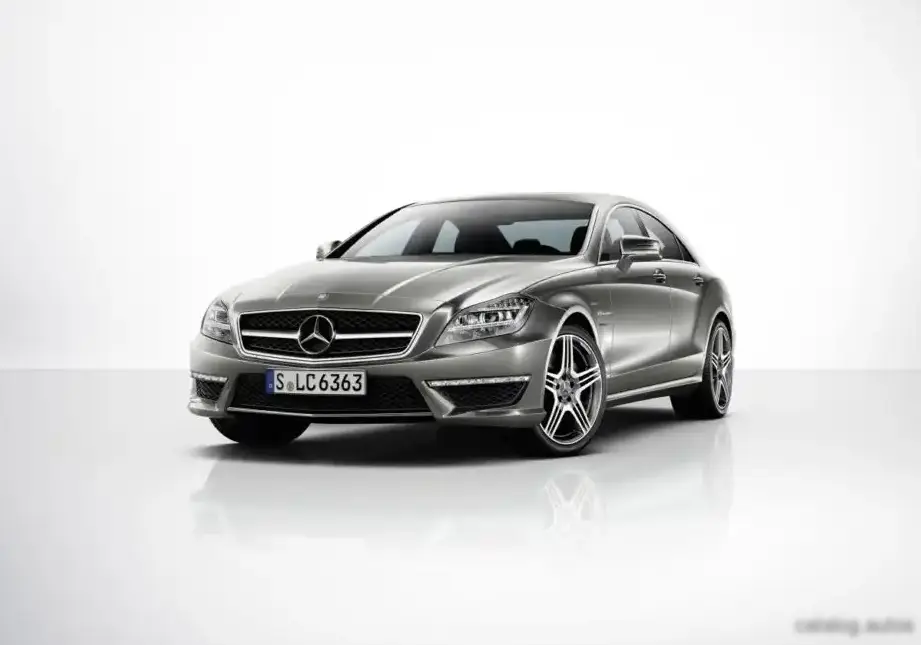
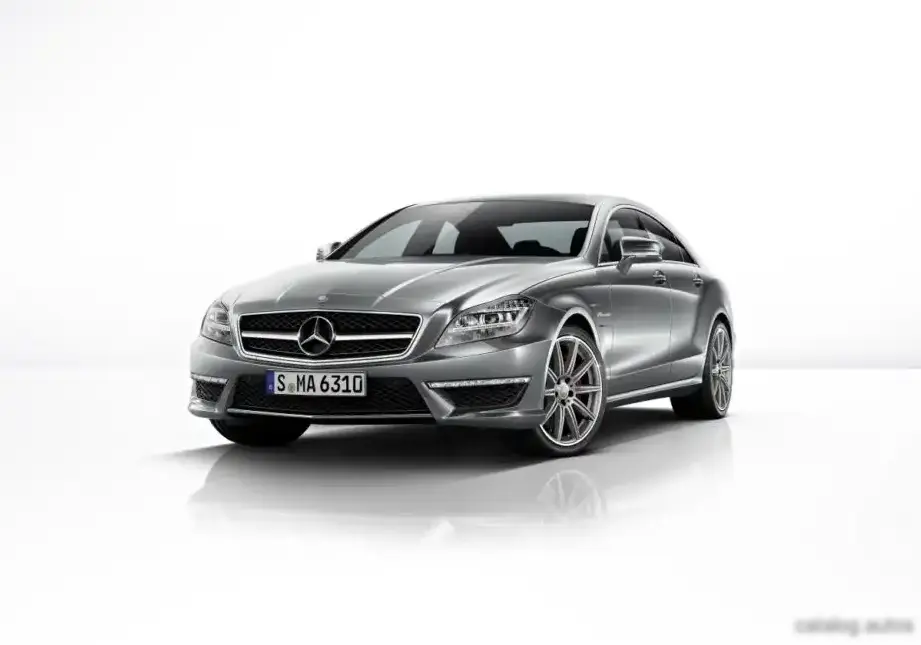
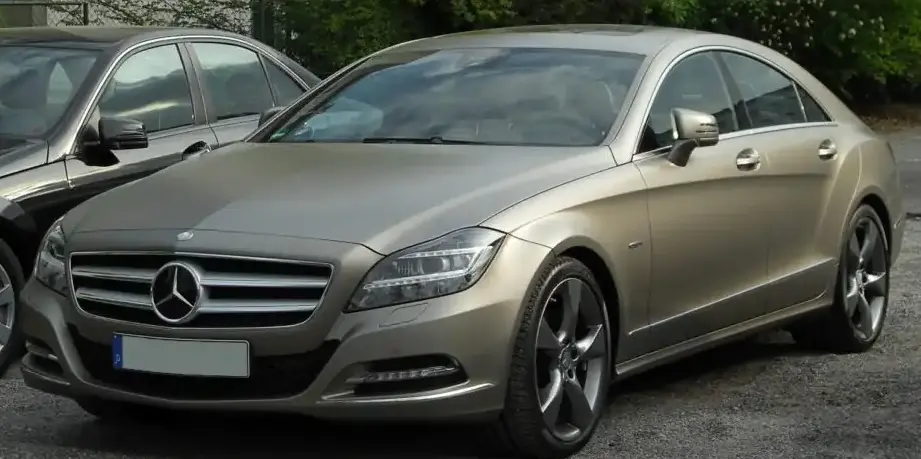
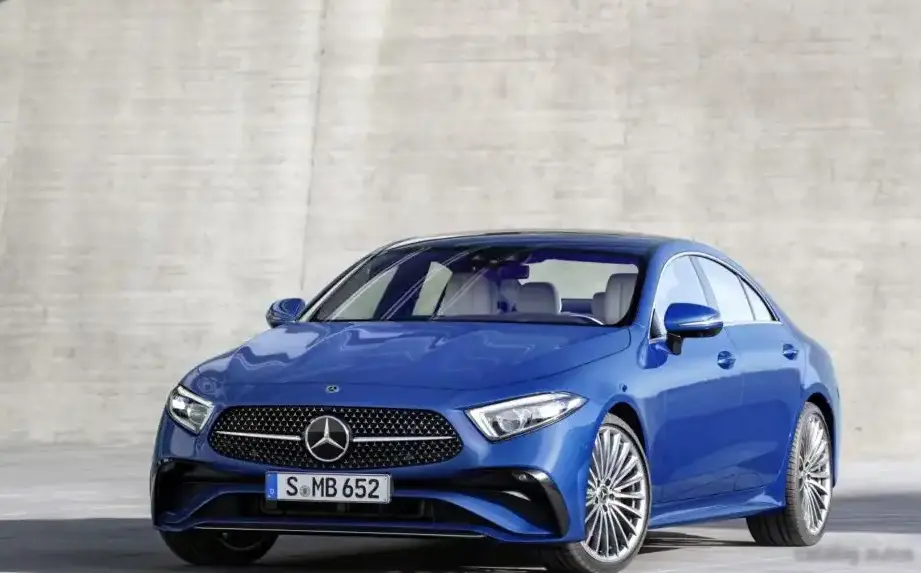
The C257 generation Mercedes-Benz CLS, launched in 2018, continued the tradition of the CLS as a stylish, four-door coupe. The 2021 facelift brought significant updates to the exterior and interior, along with advancements in technology. The CLS 220d, powered by a 2.0-liter turbocharged diesel engine producing 194 horsepower, served as the entry-level model in many markets. It was designed to appeal to buyers who desired the CLS’s elegant design and luxurious interior but prioritized fuel efficiency and lower running costs over outright performance. It slotted below the CLS 300d and the performance-oriented AMG variants.
Powertrain & Engine Architecture
The heart of the CLS 220d is the OM 654.920, a 2.0-liter inline-four cylinder diesel engine. This engine is a highly advanced design, featuring a cast iron block, aluminum cylinder head, and a sophisticated turbocharging system with an intercooler. It utilizes a common-rail direct fuel injection system operating at extremely high pressures (typically around 2,700 bar) for optimized combustion and reduced emissions. The engine also incorporates variable valve timing (DOHC) and a particulate filter to meet stringent Euro 6d emission standards. The 9G-TRONIC nine-speed automatic transmission is standard, offering smooth and efficient gear changes. This transmission is known for its wide gear ratio spread, contributing to both fuel economy and relaxed highway cruising. The transmission features a torque converter lock-up clutch that engages in most gears to minimize slippage and improve efficiency.
Driving Characteristics
The CLS 220d, with its 194 hp and 400 Nm (295 lb-ft) of torque, delivers respectable performance. Acceleration from 0-100 km/h (0-62 mph) takes around 7.5 seconds. While not as quick as the higher-powered CLS variants, the 220d provides sufficient power for everyday driving and comfortable highway overtaking. The 9G-TRONIC transmission is well-tuned to the engine’s characteristics, providing seamless shifts and keeping the engine within its optimal torque band. The gear ratios are optimized for fuel efficiency, with higher gears designed for relaxed cruising. Compared to the more powerful CLS 300d, the 220d feels less urgent in its acceleration, but the difference is often subtle in normal driving conditions. The focus is more on refinement and efficiency than outright speed.
Equipment & Trim Levels
The CLS 220d typically came well-equipped, even in base trim. Standard features often included leather upholstery, automatic climate control, a large infotainment screen with Mercedes’ MBUX system, and a suite of driver-assistance features such as adaptive cruise control, lane-keeping assist, and automatic emergency braking. Optional extras included a premium sound system, panoramic sunroof, head-up display, and various interior trim upgrades. The interior design emphasized luxury and modernity, with high-quality materials and a sleek dashboard layout. Trim levels varied by market, but generally offered increasing levels of luxury and technology.
Chassis & Braking
The CLS 220d features a sophisticated chassis designed for comfort and handling. It utilizes an independent multi-link suspension at both the front and rear, providing a smooth and controlled ride. The suspension is tuned to prioritize comfort, but still offers decent body control in corners. Braking is handled by ventilated discs on all four wheels, providing ample stopping power. Anti-lock braking system (ABS) and electronic stability control (ESC) are standard safety features. The steering is electrically assisted, offering a precise and responsive feel.
Market Reception & Comparison
The CLS 220d was generally well-received by automotive critics. It was praised for its stylish design, luxurious interior, and fuel efficiency. However, some reviewers noted that the engine could feel a bit underpowered for a vehicle of its size and weight. Compared to the CLS 300d, the 220d offered a more affordable entry point into the CLS range, but at the expense of some performance. Its fuel economy was a significant advantage, making it a popular choice for drivers who cover long distances. Reliability reports suggest the OM654 engine is generally robust, but like all modern diesels, it requires regular maintenance and the use of high-quality diesel fuel and AdBlue.
Legacy
The CLS 220d (C257) represents a compelling blend of luxury, efficiency, and style. The OM 654 engine has proven to be a reliable and fuel-efficient powerplant. On the used car market, these models offer a relatively affordable way to experience the CLS’s elegant design and luxurious interior. Maintenance costs are generally reasonable, although diesel particulate filter (DPF) issues can occur if the vehicle is primarily used for short trips. Overall, the CLS 220d remains a desirable option for buyers seeking a sophisticated and efficient four-door coupe.