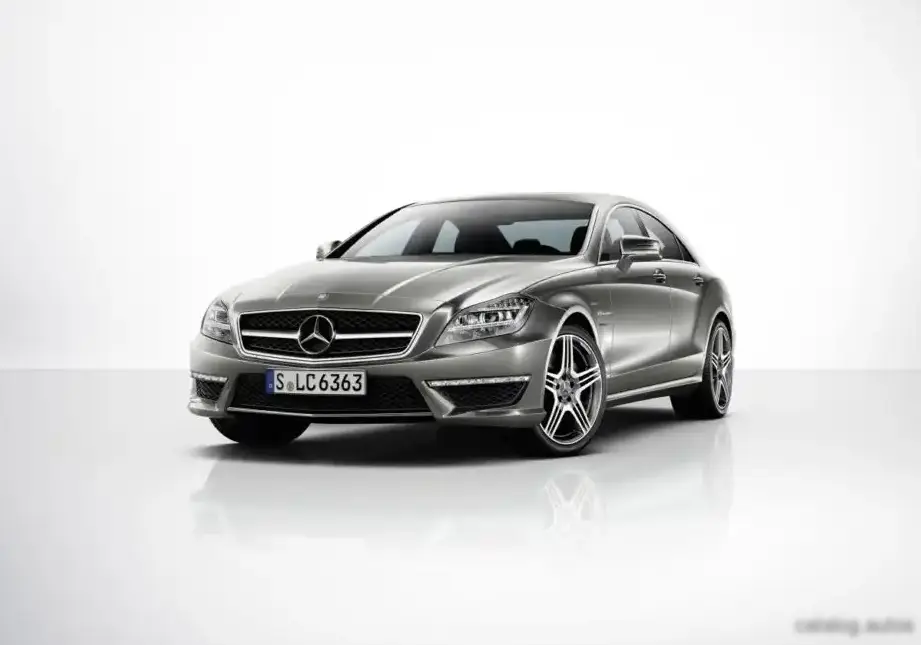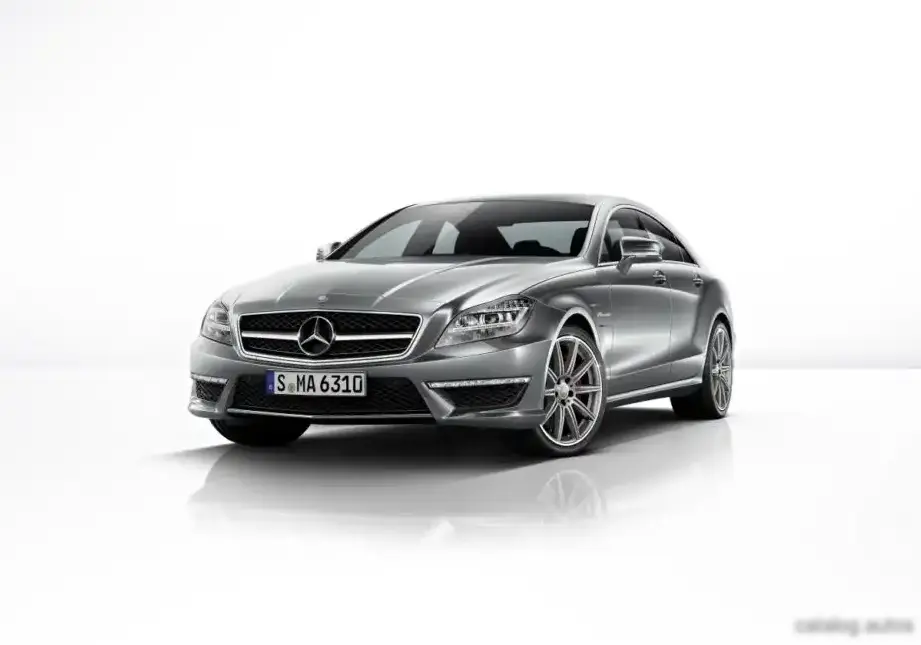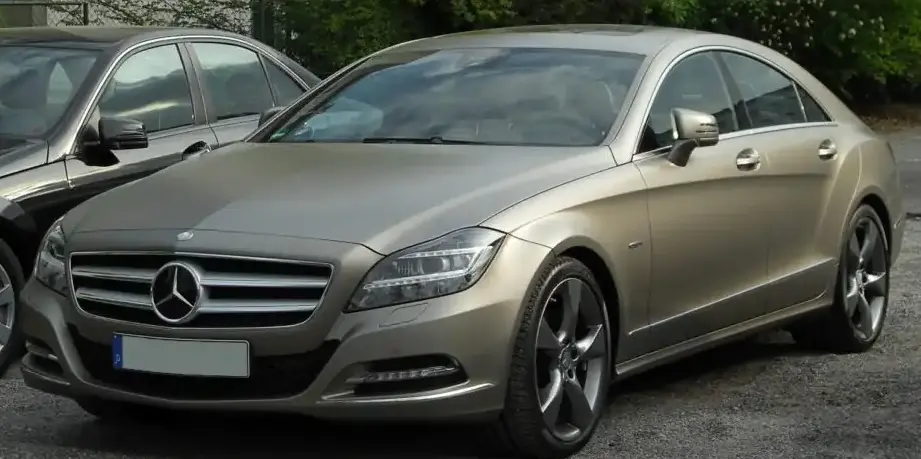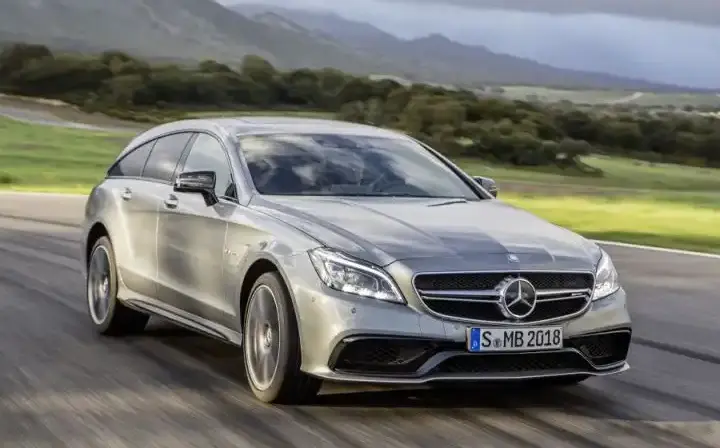
The Mercedes-Benz CLS 400 V6, part of the X218 Shooting Brake facelift introduced in 2014, represented a compelling blend of performance, luxury, and practicality within the Mercedes-Benz lineup. Produced through 2015, this variant occupied a mid-to-upper position in the CLS range, offering a significant step up in power and refinement compared to the base CLS 350 models, while remaining more accessible than the high-performance CLS 63 AMG. The X218 generation, launched in 2012, was notable for being the first CLS offered as a five-door “shooting brake” – essentially a stylish wagon – broadening the appeal of the traditionally coupe-like CLS. This particular 400 V6 model aimed to deliver a sophisticated grand touring experience with a focus on comfortable, yet spirited, driving.
Technical Specifications
| Brand | Mercedes-Benz |
| Model | CLS |
| Generation | CLS Shooting Brake (X218, facelift 2014) |
| Type | CLS 400 V6 (333 Hp) 7G-TRONIC PLUS |
| Start of production | 2014 |
| End of production | 2015 |
| Powertrain Architecture | Internal Combustion engine |
| Body type | Station wagon (estate) |
| Seats | 5 |
| Doors | 5 |
| Fuel consumption (urban) | 10.3-10.2 l/100 km (22.8 – 23.1 US mpg) |
| Fuel consumption (extra urban) | 6.0-5.9 l/100 km (39.2 – 39.9 US mpg) |
| Fuel consumption (combined) | 7.6-7.5 l/100 km (30.9 – 31.4 US mpg) |
| CO2 emissions | 177-175 g/km |
| Fuel Type | Petrol (Gasoline) |
| Acceleration 0 – 100 km/h | 5.4 sec |
| Acceleration 0 – 62 mph | 5.4 sec |
| Acceleration 0 – 60 mph | 5.1 sec |
| Maximum speed | 250 km/h (155.34 mph) |
| Emission standard | Euro 6 |
| Weight-to-power ratio | 5.3 kg/Hp |
| Weight-to-torque ratio | 3.7 kg/Nm |
| Power | 333 Hp @ 5250-6000 rpm |
| Torque | 480 Nm @ 1200-4000 rpm (354.03 lb.-ft.) |
| Engine layout | Front, Longitudinal |
| Engine Model/Code | M 276.850 |
| Engine displacement | 3498 cm3 (213.46 cu. in.) |
| Number of cylinders | 6 |
| Engine configuration | V-engine |
| Compression ratio | 10.5:1 |
| Fuel injection system | Direct injection |
| Engine aspiration | BiTurbo, Intercooler |
| Engine oil capacity | 6.5 l (6.87 US qt | 5.72 UK qt) |
| Coolant capacity | 9.6 l (10.14 US qt | 8.45 UK qt) |
| Kerb Weight | 1770 kg (3902.18 lbs.) |
| Max. weight | 2370 kg (5224.96 lbs.) |
| Max load | 600 kg (1322.77 lbs.) |
| Trunk (boot) space – minimum | 590 l (20.84 cu. ft.) |
| Trunk (boot) space – maximum | 1550 l (54.74 cu. ft.) |
| Fuel tank capacity | 59 l (15.59 US gal | 12.98 UK gal) |
| Max. roof load | 100 kg (220.46 lbs.) |
| Permitted trailer load with brakes (12%) | 2100 kg (4629.71 lbs.) |
| Permitted trailer load without brakes | 750 kg (1653.47 lbs.) |
| Length | 4953 mm (195 in.) |
| Width | 1881 mm (74.06 in.) |
| Width including mirrors | 2075 mm (81.69 in.) |
| Height | 1419 mm (55.87 in.) |
| Wheelbase | 2874 mm (113.15 in.) |
| Front track | 1596 mm (62.83 in.) |
| Rear track | 1629 mm (64.13 in.) |
| Front overhang | 898 mm (35.35 in.) |
| Rear overhang | 1181 mm (46.5 in.) |
| Drag coefficient (Cd) | 0.30 |
| Minimum turning circle | 11.18 m (36.68 ft.) |
| Drivetrain Architecture | Rear wheel drive |
| Number of gears | 7 |
| Gearbox type | Automatic transmission G-TRONIC |
| Front suspension | Independent, type McPherson with coil spring and anti-roll bar |
| Rear suspension | Independent multi-link suspension |
| Front brakes | Ventilated discs |
| Rear brakes | Ventilated discs |
| Assisting systems | ABS (Anti-lock braking system) |
| Steering type | Steering rack and pinion |
| Power steering | Electric Steering |
| Tires size | 245/45 R17 |
| Wheel rims size | 17 |
Powertrain & Engine Architecture
The CLS 400 V6 was powered by the M276.850 3.5-liter V6 engine. This engine was a key component of Mercedes-Benz’s modular engine family, known for its efficiency and smooth power delivery. The M276 featured direct fuel injection, a sophisticated multi-spark ignition system, and twin turbochargers. These turbochargers, along with intercooling, helped to boost power and torque across a broad rev range. The engine produced 333 horsepower at 5250-6000 rpm and 480 Nm (354 lb-ft) of torque between 1200-4000 rpm. This broad torque curve was a significant advantage, providing strong acceleration in everyday driving situations. The engine was paired with Mercedes-Benz’s 7G-TRONIC PLUS seven-speed automatic transmission. This transmission was renowned for its smooth and quick shifts, contributing to both performance and fuel efficiency. The 7G-TRONIC PLUS offered selectable driving modes, allowing drivers to tailor the transmission’s behavior to their preferences.
Driving Characteristics
The CLS 400 V6 offered a refined and comfortable driving experience. The 333 hp engine and 7G-TRONIC transmission provided brisk acceleration, with a 0-60 mph time of around 5.1 seconds. While not as overtly sporty as the CLS 63 AMG, the 400 V6 delivered ample power for confident overtaking and highway cruising. The automatic transmission’s gear ratios were well-chosen, providing responsive acceleration in most situations. Compared to the CLS 350, the 400 V6 offered a noticeable improvement in performance, particularly in mid-range acceleration. However, it lacked the aggressive exhaust note and sharper handling characteristics of the AMG model. The ride quality was generally excellent, thanks to the sophisticated suspension system, absorbing bumps and imperfections in the road with ease.
Equipment & Trim Levels
The CLS 400 V6 typically came well-equipped as standard. Common features included leather upholstery, power-adjustable front seats with memory function, dual-zone automatic climate control, a premium sound system, and a navigation system. The interior featured high-quality materials and a modern design. Optional extras included a panoramic sunroof, upgraded leather packages, a rear-seat entertainment system, and advanced driver-assistance systems such as lane-keeping assist and adaptive cruise control. Trim levels were often differentiated by interior finishes and the availability of certain option packages. The CLS 400 V6 aimed for a balance between luxury and technology, offering a comfortable and well-appointed cabin.
Chassis & Braking
The CLS 400 V6 featured a fully independent suspension system, with McPherson struts at the front and a multi-link setup at the rear. This suspension design provided a comfortable ride and good handling characteristics. The car was equipped with ventilated disc brakes on all four wheels, providing ample stopping power. Anti-lock braking system (ABS) and electronic stability control (ESC) were standard features, enhancing safety and control. The steering was precise and well-weighted, providing a confident feel on the road. The X218 chassis was designed to balance comfort and handling, offering a stable and predictable driving experience.
Market Reception & Comparison
The CLS 400 V6 was generally well-received by automotive critics. It was praised for its powerful engine, smooth transmission, luxurious interior, and stylish design. Critics noted that it offered a compelling alternative to traditional luxury sedans, with its unique shooting brake body style. Compared to the CLS 350, the 400 V6 was seen as a worthwhile upgrade for those seeking more performance. However, some critics felt that it didn’t quite match the overall driving experience of the CLS 63 AMG. Fuel economy was respectable for a vehicle of its size and performance, averaging around 30.9-31.4 US mpg in combined driving. Reliability was generally good, although some owners reported minor issues with electronic systems.
Legacy
The Mercedes-Benz CLS 400 V6 (X218) has established itself as a desirable used car. The M276 engine, while requiring regular maintenance, is generally considered reliable. The 7G-TRONIC transmission is also known for its durability. The CLS Shooting Brake’s unique styling continues to appeal to buyers looking for a distinctive and practical luxury vehicle. As with any used luxury car, potential buyers should carefully inspect the vehicle’s maintenance history and consider a pre-purchase inspection by a qualified mechanic. The CLS 400 V6 represents a sweet spot in the X218 lineup, offering a compelling blend of performance, luxury, and practicality at a more accessible price point than the high-performance AMG models.